The Mayans may be right. The world may be coming to an end in a few short days.
Maybe, on December 21, everything will cease to exist. Or transform into a whole new realm of matter. Or the world might just change into myriad rainbow colors, and we’ll all ride around in a yellow submarine…no, never mind, that’s a different apocalypse, isn’t it.
But maybe the world is coming to an end. There’s no other way to explain why Kirkus Reviews decided to take a look at Mecha Rogue, my latest novel under the Brett Patton pseudonym.
Yes, you read that right. Kirkus. Giant robots. Review.
And there’s no other way to explain why, well, the guys are Kirkus seemed to, well, kinda like the book:
In style and violence, a hybrid of the movies Transformers and Independence Day: the sequel to Mecha Corps (2011)…
Slam-bang action with never a dull moment: imagine a 21st century Lensman series, if anybody still remembers E.E. “Doc” Smith, without the latter’s lofty black-and-white moral tone and awful prose.
Yes, that’s right. Mecha Rogue is a New and Notable book on Kirkus Reviews. Check it out!
What’s more, Kirkus decided to talk with me a bit about the Mecha Rogue universe, my writing, and general SF stuffs. You can check out the interview here.
Hey all, just a quick note: I’m a Sidewise Award nominee for the second time!
The first was for the Edison-meets-Bill-Gates “Panacea,” published on Sci Fiction. This time it’s for “Orion Rising,” published in Panverse Three.
The Sidewise Awards are dedicated to alternate history. And Orion Rising is definitely an alternate—a look at what might have happened if we’d gotten Orion as our space program, rather than Apollo. After a convo with Freeman Dyson at a conference on the commercialization of space, it didn’t seem that far-fetched.
Here’s the full story:
We are pleased to announce this year’s nominees for the Sidewise Award for Alternate History. The winners will be announced at Chicon 7, this year’s Worldcon, in Chicago, Illinois during the weekend of August 30. The Sidewise Awards have been presented annually since 1995 to recognize excellence in alternate historical fiction. This year’s panel of judges was made up of Stephen Baxter, Evelyn Leeper, Jim Rittenhouse, Stu Shiffman, Kurt Sidaway, and Steven H Silver.
Congratulations and best of luck.
Short Form
* Michael F. Flynn, The Iron Shirts (Tor.com) * Lisa Goldstein, Paradise Is a Walled Garden (Asimov’s, 8/11) * Jason Stoddard, Orion Rising (Panverse 3, edited by Dario Ciriello, Panverse Publishing) * Harry Turtledove, Lee at the Alamo (Tor.com)
Long Form
* Robert Conroy, Castro’s Bomb (Kindle) * Robert Conroy, Himmler’s War (Baen Books) * Jeff Greenfield, Then Everything Changed (Putnam) * Ian R MacLeod, Wake Up and Dream (PS Publishing) * Ian McDonald, Planesrunner (Pyr) * Ekaterina Sedia, Heart of Iron (Prime) * Lavie Tidhar, Camera Obscura (Angry Robot)
Hmm. A new venture plans to put people on Mars by 2023 and wrap a reality show around it.
Let’s see. Winning Mars is about a reality show on Mars, and it’s set in the 2021-2023 timeframe. Wonder where they got the idea?
Just kidding. Maybe great minds think alike. Or maybe we’re both crazy. Who knows? I did predict compression spacesuit technology, the ongoing economic downturn, and now reality shows on Mars . . . so if Winfinity shows up soon, well, hmm.
Actually, there’s been a lot of news in commercial space that I missed. SpaceX was part of Winning Mars, but I didn’t predict the asteroid mining venture (with some significant backers.) And the recent news about the successful SpaceX launch to the ISS is mega-cool.
Hats off to the crazy people in the world!
June 6th, 2012 / Comments Off on A Page out of Winning Mars…
Mecha Corps isn’t the only book getting love. Check out what everyone has to say about Winning Mars! And in this case, it may be a deep-seated trope to look at what’s over the next hill . . . after all, we did evolve to walk upright–and thus explore much farther–long before we really had brains. Or at least that’s what they say . . .
“Winning Mars is a fascinating story, thought-provoking and insightful. Stoddard manages to evoke authors like Walter Jon Williams, Ben Bova, and Cory Doctorow as he painstakingly examines every aspect involved in heading to Mars in a future not too far removed from our own time period. Certainly, it’s easy to see how we could go from Here to There, given the way the economy, the government, and the entertainment industry have performed and evolved in recent years.
Moreover, Stoddard actually addresses a question I’ve contemplated for years, something which has become something of a reality recently. If government-funded space programs are falling behind, why not privatize space travel? Why not give Disney and Microsoft and Apple the room to do what’s needed to put a Disneyworld on the Moon and a Hilton in orbit? Stoddard’s suggested plan for making it to Mars and back with the aid of interested sponsors is believable and interesting. Some are in it for the publicity, some for the challenge, some for the potential return.
My final verdict? Winning Mars is a fascinating, entertaining, quite possibly prophetic book, and I had a lot of fun reading it.”
“As I’ve mentioned before, I’m totally over dystopias. Thankfully, then, despite worries at the beginning, the world of Winning Mars isn’t really dystopic. It seems like a real world, with both good and bad aspects to it. IMHO, it is a plausible extrapolation, for the most part, at least from our current vantage point (though undoubtedly in ten years it’ll seem completely off-base).
What I enjoyed most about it was its hopefulness and optimism about humanity. Ultimately, it pleads the need for the human imagination and the drive to go forth, making space for adventure and crazy-eyed idealism, taking chances, exploring, pushing, growing. As a child of Trek, this speaks to my very soul.”
Apparently, I’m not the only one who likes giant robots. Blame it on Johnny Socko, Gundam, and Evangelion. Or blame it on some deep-seated archetype that squats on our consciousness, making it yearn for the unlimited power–no. Wait. Nevermind. That’s way too deep. Let’s have some fun!
“Mecha Corps by debut novelist Brett Patton is a sci-fi adventure from beginning to end. Once I started reading this story, I could not put this book down. I have a new favorite sci-fi author and his name is Brett Patton. I look forward to reading his other novels in this series, if not any other sci-fi novels he writes.”
Night Owl Reviews, Dawn Colclasure
“Darn good mech action! That pretty well sums up my review of Mecha Corps by Brett Patton. I read a Gundam series awhile back, and the Robotech novels, and Starship Troopers, and Armor. Other science fiction I’ve read has had powered armor in one form or another. They’ve all been good, but Mecha Corps just freakin’ kills it! This book, apparently the start of series called the Armor Wars, is what all mecha fiction should be like.”
Kevin Bayer, Sporadic Reviews
“Brett Patton has written a thrill a minute military science fiction starring a fascinating hero who learns in training to be part of a cohesive unit which requires him to give up for now his personal goal. Readers also observe the politicians who use and sacrifice Black Ops agents to further their ambitions. Filled with twists and secrets that are not all revealed in this action-packed story line, fans will enjoy staring into combat with the Mecha Corps.”
Alternative Worlds, Harriet Klausner
“Mecha Corps is a fun, fast-paced science fiction adventure. With colorful characters and an exciting plot, this story was hard to put down. This first novel in a continuing series show plenty of promise. While this novel is a successful standalone, with a satisfying conclusion, there is plenty of room for more story and a few unanswered questions.”
SciFiChick.com
“Best new release was Brett Patton‘s debut Mecha Corps. It is a promising new military science series with features from Transformers and the Mech Warrior universe.”
Cybermage.se
January 14th, 2012 / Comments Off on Accolades for Mecha Corps
Sit back and think about that a minute. And repeat it to yourself. A self-made billionaire who’s revolutionizing space travel and reinventing the automobile has now said, “I will put millions of people on Mars.” It’s like something out of a Heinlein story, from an era when we actually still believed that humankind could go forward, that science wasn’t a Catch-22, and progress was not some silly notion that never actually happened.
And think about what it means if it actually happens.
“Well, Musk probably wants the millions of people up there as slaves,” the cynics will say. “He’s an evil capitalist, nothing good ever comes of them. Probably needs the low-income workers for the factories he’ll put up there. Soon we’ll be competing with cheap Martian imports!”
Or, your internal refrain might go something like this. “Why’s he bothering when we have all these problems down here on earth? Wouldn’t the money be better spent uplifting our own population?”
And some will say, “Well, it doesn’t matter anyway, because Musk is a terrible person, I heard he did XYZ!”
Well, I’ll tell you why it’s not about slaves, and why Musk isn’t bothering, and why even imperfect humans (you know, like every single one of us) can and should do the most amazing things they can. It’s because we stand at a very special place in history. We can either start thinking big again, or we can chain ourselves into a one-world prison. One world, one set of resources, one set of chances. Or many worlds, many resources, many chances.
And I for one think we need a new frontier. In this pressure-cooker world, are we at each others’ throats more and more simply because there’s no way for the more adventurous to get away? Is it because everything is too planned, too safe? Is it something programmed into us over millions of years? There’s powerful evidence that early human ancestors’ upright posture was to provide a more energy-efficient way of getting around. We were literally born to walk, to run, to explore. To see past the next hill, and discover what’s in the next valley.
Maybe this is one of the single most powerful things driving us? What if our love of travel and speed has its roots in our evolutionary past? What if we need to keep going, even after we’ve explored every inch of this planet?
“Crazy ravings of a marginal science fiction author,” you might say. Or, deep down, you might look out your window, at the horizon, and feel the pull of what lies beyond.
No matter the case, my hat is off to Elon Musk. I’d really enjoy buying him a drink someday. And perhaps talking about how the low end of his Mars trip budget lines up well with what I had in mind for Winning Mars.
December 24th, 2011 / Comments Off on A Salute to Audacity
A whole bunch of people have been wondering what the heck has happened to me. A while back, an industry pundit declared “Jason Stoddard Week” because I was showing up in so many magazines and online publications at once. In the past couple of years, not so much.
Well, hey, I have Winning Mars out, y’know. But I can’t deny things have been somewhat slow on the new release front.
I could use the usual excuses: too busy, too many things changing in my life, coudn’t find a Starbucks to write in, had to feed the dog, etc. But the reality is that I’ve been working on some new things on the writing side. One still isn’t ready for prime time, but this one is.
So, meet my alter ego: Brett Patton.
He writes for ROC. And he writes about a bunch of fun stuff that doesn’t fit in, say, a near-future book about scheming entertainment execs and a reality show on Mars. Things that include several flavors of interplanetary empires, wacky instantaneous point-to-point spaceship drives, dead races and giant robots. Yes, I said giant robots. Except they aren’t really mechanical. But I’m getting ahead of myself–
“Wait. Are you saying that you’ve written a mass market science fiction novel under a pseudonym?”
Yes, I’m saying exactly that. Well, sorta kinda. Because it’s not just a good old-fashioned golden age space opera. It isn’t just about pointing the trigger and shooting. There’s a lot of hidden stuff going on. It’s not so black and white. And you know what? Writing Mecha Corps was a lot of fun.
This just in: Winning Mars was chosen by Library Journal as their “Debut of the Month!”
Here’s what they have to say:
In a future where the art of “linear entertainment”—better known as TV shows—is giving way to interactive, massive multiuser online gaming (MMOs), producer Jere Gutierrez conceives of a “reality show” set on yet-to-be-colonized Mars. Eleven players, divided into teams that are each assigned a different goal, travel to the Red Planet to compete in a $50 million contest while the world watches on a five-minute time delay. The risk: a high probability of death.
VERDICT
Stoddard’s highly original story draws on the latest trends in reality TV and tension over U.S. vs. Chinese control of space travel. Powerful storytelling, a minimalist prose style that does not diminish the three-dimensional characters, and a keen ear for dialog add to this novel’s many pleasures.
Everyone should buy this book. No, really. Everyone in the world. Well, everyone who doesn’t need the bucks to, well, like, eat. If you love my stuff, you’ll make Prime Books feel all warm and fuzzy about publishing more of my work. If you hate my stuff, hey, don’t you need kindling for the coming dystopian future?
December 15th, 2011 / Comments Off on Winning Mars: Debut of the Month
Writing is cool, but sometimes pictures are even more fun. So: here are the covers for a couple upcoming works from me.
The first, Panverse Three, features my novella, Orion Rising. It’s an alternate history, based on a short conversation I had with Freeman Dyson at a conference a few years back.
Now, you’ve probably put together, “Orion” and “Freeman Dyson,” and you’re thinking, “Oh crap, he’s not going there, is he?” Well, yep I did, but probably not in the way you expected. And it’s certainly not warm and fuzzy, cute and cuddly, or even strange and happy. Read it. You’ll see.
And if you don’t like my stuff, get Panverse Three anyway. There’s some great stuff in there, and we need more venues for long fiction in our twitterpated age. Or maybe we just need to write Twitter threads. Or maybe we need a shared writing experience like The SCP Foundation. Or maybe we need to all write movies and games. Or . . . well, nevermind.
The second, Winning Mars, is my first novel from Prime Books. I’ve been working with Paula Guran, their wonderful editor, and I think we ended up with something fairly amazing.
If you’ve read the original novella from Interzone 196, or even the creative commons book, you’ll find that this version of Winning Mars has evolved fairly dramatically. Most notably is a new character, and she’s by far the smartest and most interesting of the . . . but I’m getting ahead of myself.
Plan for a December launch–and plan for a re-release of Saving Mars, the novella that bridges Winning Mars and Eternal Franchise, at the same time.
No, I haven’t accepted a multimillion dollar offer to stop writing forever.
No, I haven’t been abducted by aliens and replaced with a perfect facsimile. At least I don’t think so. But then again, how would I know? I mean, if the facsimile was really perfect . . . but I’m getting off track.
What I have been is insanely busy–and the writing I’ve been working on has largely been invisible, or much longer-term. So, for those of you who like my stuff, this is a quick notice: it’s coming! What it won’t be coming in is small, easy-to-digest pieces. And some of it may not even be coming in book form.
Here’s what I can say: Winning Mars is headed your way. As is another novel. Can’t talk about that one much. And . . . Willpower . . . well, I can’t say much about that either, because what’s done isn’t done until it’s done, and even then it may not be done. But it’s been a long strange road, and let’s say that Willpower has an, ahem, interesting shot at much broader exposure.
In the meantime, you can look forward to Orion Rising in Panverse Three, coming September 2011.
But, in any case, I’ll be more active here in the months to come!
Okay, here’s something you won’t see in Newsweek. Or Slate. Or on Fox. Or Huffington Post. How it’s escaped the notice of io9, I have no idea. BoingBoing noted it in February, and I mentioned it shortly afterwards. Now it’s getting real.
What is it?
Nothing less than a group of crazy Danes shooting off a rocket capable of sending a human on a suborbital joyride, a la SpaceShip one.
Here’s the kicker: they are all amateurs, they all did this on their own time, and they did it for less than $100,000.
And they’re towing it out to launch on a hand-built pontoon gantry with the submarine they also built themselves.
Read that again: they’re launching a (potentially) manned suborbital spacecraft they built themselves from a floating gantry they built themselves, towed by a submarine they built themselves.
This, my friends, is human spirit.
This is what we’re so close to talking ourselves out of, forever, with every bit of pessimism we wallow in. Look at this, and think, What could we accomplish if everyone thought the way these guys do?
This is one of those days after an insane week, with a few glasses of wine and some introspection. So if you’re not interested in the blathering of an overworked writer/creative-type/engineer, push off now. You won’t find any interest in what I’m about to post.
But this is one of those days when I ask, “Why the hell do you do this?” Deep in the middle of a book (50k words in), deep in the middle of multiple client projects, deep in the middle of production issues that remind me why I got out of manufacturing in the first place, I have to ask: Why work so damn hard?
The top-level answer is simple: if you are not a trust-fund baby, or have the incredible good fortune to be early into a company with excellent stock options and liberal divestiture requirements that just happens to be successful and go public, this is how you become successful: through many, many years of hard work. Insanely hard work. You laugh at your friends when they complain they have to work a 10-hour day for the same salary, you laugh at people who carp and bitch about having their pension moved back from 50 to 55, you laugh at people who say they work hard, when they have the luxury to call you in the middle of the day and talk for an hour. And that’s all totally cool, that’s their choice, and that’s what they signed up for. I have signed myself up to far to0 many things, and now I’m paying the price.
And that is cool, too, in the long term. But now is not the long term. Now is when everything is so finely balanced that the smallest change in the schedule cascades through everything else, and jeopardizes every deadline. Now is when “time off to relax” means working on the house. Now is when the long days transform into long nights, and long weeks, until you can’t see the end.
So I sit and wonder: What can I let go of?
Writing? No. Much to the chagrin of the people who don’t like my stuff, I’m a compulsive writer. I have to write. If you read it, that’s great. If you love it, that’s even better. But even without an audience, I have to put words on the screen.
Marketing? No, that pays the bills. And it’s a lot of fun being a creative. I’d lie if I said I didn’t love it. And yes, perhaps that makes me a crass lapdog of the commercial interests, but it also makes me the willing lapdog of some very cool clients which include Albert’s Organics and The Garlic Company. I’m loving food. The lack of bullshit and politics and posturing is refreshing, and we’re doing some of our best work for food clients these days. Perhaps some day we’ll pick up some more tech accounts, which are a lot of fun on a totally different level. But both share the same lack of believing our own bullshit which is the hallmark of big corporate and entertainment. Good riddance to them; let someone else dance to your tune.
Engineering? No. Again. I love to make things. And the tiny company I started shows every signs of becoming larger. Not large. But larger. Hell, Wired and CrunchGear and Gizmodo picked us up. Thankfully, I have people to help with that one, or it would eat my life. Such that it is.
So, am I complaining? No. More than anything, this is probably an internal monologue, set to the rhythm of a blog. It’s me, reminding myself why I do things. Why I’m overworked. Why my life is a little crazy.
And there you go. If that helps you get where you’re going, so much the better. If not, tune out for a while, and I’ll have some more thoughts on writing, being positive, or other relevant stuff . . . in a while.
Until then, keep writing . . . and keep working hard. It will take you places. It is worth it.
Hey all, you may have notice the lack of content here. The reasons are simple: first, I’m working on a new Project That Shall Not Be Named, AKA a new book. That’s eating up insane amounts of time. I should surface sometime in September from the first draft phase.
In the meantime, I have a couple of new stories I’m shopping, so you may see something on that front sooner than later.
The other reasons are simply more functional. I just launched another company, and I’m also busy taking care of business at the company I started 16 years ago. Call me an evil capitalist. Blame me for the destruction of all that is True and Right and Good. But hey, I like to make things.
I wish I had more time to write. Maybe someday . . .
In which I propose a new maxim: What is good for Google is not automatically good for the state.
In the right hands, advertising can change the world. Look at Google. A lot of us forget Google’s grand empire is built entirely on advertising. Those sponsored links, and text ads you see in blogs have brought in billions of dollars. Now, Google has expanded out into display ads, rich media ads, mobile ads, and even television ads (did you know you can buy a television ad campaign on Google?
And what has Google done with this revenue? Largely great stuff. Huge categories of stuff that we would consider costly a decade or so ago are now free. Office software. Unlimited phone number and voicemail. Mapping and turn-by-turn navigation. Mobile phone (and tablet) operating systems. Hell, Android is less than free. Manufacturers using it on their devices get to participate in Google’s ad revenue stream.
Yes, you read that right. Instead of paying a hefty Windows license, Google is paying manufacturers to use Android.
All from ads.
Now, of course, there’s always the chance that Google will turn truly evil in the future, turn into Skynet or something, and make us all live in slavery forever, for whatever twisted reason, but for the moment, the equation holds: Google + Ads = Good Free Stuff for People.
And yes, you read that right. Electronic license plates that display ads.
“Well, hell, that’s gonna be distracting!” someone immediately says. “Going down the freeway and seeing a thousand blinking, screaming ads all flashing at you? How will that work?”
“No problem,” California confidently says. “They’ll only display when the car hasn’t moved for more than four seconds. And with the ability to buy ads at your friendly, helpful DMV, we’re sure to have customers lining up.”
Okay, let’s try some harder questions. Like: “What happens when the inevitable 14-year-old hacks the system and puts pictures of dicks on every license plate? Or worse?”
“Notgonnahappen,” California says. “We’ve designed the system with a bazillion gigabit security system, not hackable for . . . oh wait, it’s been hacked. Erghh, look at that.
Yeah, that’s what we thought. Or how about this: “Hey California buttheads, my car battery’s dead from your friggin ads. Pay up!”
“Well, of course there will be a failsafe system rendering this impossible, designed by NASA scientists . . . oh wait, you mean the real world is different than a lab?” California says. “You mean some people have cars they don’t drive for days at a time? Ah, wait . . .”
Or, the biggest question of all: “If you’re advertising on my car, where’s my cut? When I choose to let Google put ads on my blog, I get money.”
And that’s the point that California missed. Google works because it’s voluntary, and because there’s an incentive to use it. Ads on license plates . . . uh, not so much.
At the turn of the century, when the quest for a “flying machine” was running like the first dot-com revolution, he was the person most favored to develop the airplane. He had boatloads of money from the US government, had a seat at Harvard and worked at the Smithsonian, hired the best people money could find, and everyone was rooting for him.
But, in the end, he lost to Orville and Wilbur Wright. Two guys with no college education, who funded their dream from the proceeds from their bicycle shop.
The TED talk above makes the case that this is because the Wright brothers were pursuing a central idea, a why, where Langley was pursuing, well, the cash.
It’s well-worth watching the TED talk, even if business isn’t your thing, and even if the Apple example at the fore might not be your cup of tea. This is about finding your why, and includes examples that include Martin Luther King.
So, what’s my why? Well, there are a ton of micro-whys. Why do I write? Why do I run my current business? Why do I launch new ones? These are important, but is there an overall why?
I think there is. And I think it’s why I’ve been called everything from a pro-business anarcho-capitalist to a raving socialist and everything in-between. I don’t wear my politics on my sleeve–and, indeed, much of the time politics seems like two children squabbling over equally wrong answers. I don’t address the crisis du jour, because, well, it’s du jour. It will be different in the future.
But I’ll take a shot at an overall why: Because we are each capable of grand things, despite the obstacles. Because imagination moves us forward, while second-guessing holds us back. Because we have never advanced by putting limits on our advancement.
Because we should dream grand dreams, and act to make them real.
As SF aficionados, I’m sure you’ve noted the successful launch of SpaceX’s Falcon and Dragon, the first privately-constructed rocket to make it to LEO. The mere fact that we’re entering an era of commercial space flight is enough to make this a significant milestone, but it gets even more interesting when you break it down:
1. SpaceX was started by Elon Musk, the creator of PayPal and an early internet entrepreneur, who is now turning his wealth into visionary ventures like this and Tesla Motors.
2. The cost of the launch, per SpaceX’s published rate card, is about 1/10 that of a shuttle launch. While Falcon carries only 1/2 as much payload to LEO, it actually is more capable than the shuttle at boosting payloads into GTO. And yeah, apples and oranges, etc, but the fact is: Falcon is WAY cheaper for supplying the ISS.
Second, we have 6 crazy guys getting in a can to simulate a 520-day trip to Mars and back, to see how well they do in isolation and cramped quarters. Yeah, again, apples and mangoes–they’re not going to be suffering the effects of zero-g, they don’t have the uber-cool experience of walking around on Mars at the halfway point, etc, etc–but a cool experiment nonetheless.
And finally, something I joked about in Overhead: a Japanese company is proposing ringing the moon with solar panels, using robots and native Lunar materials as much as possible, and beaming energy back to earth, to serve the world’s entire power needs. Nuts? Sure. So is quantum computing. I wish them massive success.
I’ve had a lot of people asking me when Winning Mars, my first novel, is going to be released, especially since Amazon still claims “March 2010” for the release date. Well, I’m pleased to say that my Quantum Time Transposer is operational, and I’ll be moving the entire world back in time till February 2010 so we can meet that release date.
Or, well, not.
In actuality, I agreed late last year to extending the release date with Prime Books, and that was never reflected on the Amazon site. The new release date is September 2010.
(And, just to be clear, this version of Winning Mars is substantially different than the one I released under a Creative Commons license a few years ago. Time marches on, the world changes, and I felt that significant updates were needed. So, if you want to experience the best Winning Mars out there, you’ll have to shell out some bux.)
You can also look forward to the Winning Mars countdown, starting August 2010, where you’ll have a chance to win some really cool Mars-related stuff. More details as they are available . . .
Over the long weekend, I met Tyler, a smart graduate student who is finishing a Masters degree in philosophy. An outspoken, debate-team champion on the national level, I worried when he collided with another smart, outspoken, and extremely well-read acquaintance who is about as paleoconservative as you can get.
I shouldn’t have worried. Tyler not only kept his cool, but asked great questions, and, over the course of an evening, the two gained much mutual respect. I can imagine them going on to be fast friends.
One of the things Tyler said was, “I always challenge my assumptions. I come away with stronger belief in my ideas, or discover new, better ideas. Either way, I win.”
And what was truly amazing is this: he was willing to change, rather than rabidly defend. He was willing to look calmly at the other side of an argument, rather than simply go on the attack.
Are you ready to challenge your assumptions?
If so, pick up The Rational Optimist, by Matt Ridley. This is a book full of challenge, no matter your political or ideological stripe. This is a book that upends the “doom is just around the corner” crowd. This is a book that explains why we (as a whole) are so negative, when the reality is that things are getting better. This is a book that takes a serious look at the past and what has fueled human advancement, identifies the forces that have held us back, pulls the rug out from under people who say that there has been no progress, stares the crises du jour in the face and makes a strong case that they will soon be non-problems, just as many other doomsday scenarios that have never come to pass. This is a book that not only gives reasons to be optimistic, it outlines why we should be optimistic.
Is it a perfect argument? No, but The Rational Optimist makes a very strong case that we can and will have an amazing 21st Century, where things get better all around the world.
Do I agree with everything Matt Ridley has to say? No, of course not. But his position is strong enough that I’ll have to examine the points on which I disagree–which will lead to me either changing my mind, or strengthening my current positions.
So . . . are you up for a challenge? Have you been living in a monoculture of bad news and pessimism for too long? Are you old enough to remember those days when we all knew we’d end up being wiped out in a nuclear war? Or knew we’d live in warrens eating Soylent Green? Or knew we’d hit peak coal in 1865?
If so, as Tyler would say: Challenge your assumptions.
For me this was the best story of the anthology and not surprising it is the one that involves exploration of Outer Space, namely a colony on the dark side of the moon – so it stays out of touch with humanity except for regular deliveries of technology and people that want to join – where humanity can “reboot” if needed and where the rules are designed to create a better society. In a past thread that mixes with the current one and explains how the colony came to be, we follow executive Roy Parekh setting up an insurance company with a twist. Sense of wonder, memorable characters and a superb ending made “Overhead” a story that induced me to follow Mr. Stoddard’s career from now on. I would love a novel that would expand this story since I think the necessary depth is there.
While I greatly enjoyed almost all of Shine’s stories, a handful of those really impressed me. Jason Stoddard’s Overhead was one of them. It was a brilliant story written with a beautiful style. In Overhead, Stoddard uses flashbacks very intelligently to build his story on two alternate threads. The present thread develops the story while the flashback thread gives the reader more background helping her to understand the present thread. Furthermore, Stoddard manages to keep the suspense until the last page.
From Suite 101, Colin Harvey:
‘Overhead’ by Jason Stoddard shuttles setting between Earth and the Moon, and an embryonic lunar colony. Stoddard raises the stakes, bringing an intensity absent from much of the other fiction, making the payback all the greater. Highly Recommended.
But there are some strong stories: “Overhead”, Jason Stoddard’s sketch of a moon colony, is the best; Holly Phillips’s “Summer Ice”, set in a greener future metropolis, and Kay Kenyon’s “Castoff World”, also satisfy.
Author comment: is it surprising that financially oriented peeps would think a story about an insurance salesman is the best?
Jason Stoddard’s ‘Overhead’ is only partly set on Earth, the other part of the action is on an idealistic, experimental lunar colony. The colony develops from a dubious insurance company in the kind of unexpected development that typifies many of this anthology’s stories. Technology and social developments that are often assumed in SF to have a negative future have been turned on their head to great effect.
Two warily pet the woolly mammoth in the room: space exploration. Of these, Marie Ness’ “Twittering the Stars” (despite its gimmicky structure and grating title) is absorbing and complex, whereas Jason Stoddard’s too-earnest “Overhead” lets its most exciting premise – Europan life – lie totally fallow. In compensation, the latter contains the sole character in the anthology who’s instantly memorable: a heroic-despite-himself version of Henry the Navigator.
There are a lot of other reviews that don’t mention Overhead specifically, which I’ll take to mean one of the following:
a. The reviewer hated it and was being polite.
b. It made no impression on them at all.
Which is fine . . . ya can’t please everyone.
Now, the question from Jetse de Vries, based on Gardner Dozois and Rich Horton’s lukewarm-to-cautiously-positive reaction to Shine in the April issue of Locus magazine (not online.)
I suppose we can agree to disagree about the ‘greatness’ of certain stories, but I do wonder why an anthology full of stories where people try to change things for the better needs to be ‘approved’, while anthologies where the population is decimated, the Earth is brought to the brink of destruction (sometimes beyond) and nihilistic characters gleefully engage in violence get that stamp of approval by default. Maybe this says something about the current mindset of written SF?
My opinion: for every negative thing happening in the world today, there are one or more equally positive things. Spend some time on PhysOrg. Look at the crazy people at Copenhagen Suborbitals or the Open Space Movement. Check out the amazing beauty of Festo’s robotics. We’re on the edge of some truly amazing breakthroughs — and, no, they aren’t all going to be used to propagate the agenda of large, evil organizations.
So, to the naysayers, fear-mongers, and doom-merchants: Stand aside, and watch us make a future worth living in!
As a counterpoint to this post on i09, here are four arguments for immortality:
1. Health care problems, solved. As a society, we can’t stop talking about healthcare, the costs thereof (trillions of dollars in the US alone), and all the behavioral and social implications. Personally, we mourn loved ones who have passed away, or, worse, been debilitated by terrible diseases like stroke or dementia. Every one of us watches as we, and our friends, become less physically capable with every passing year. How can anyone argue that eliminating all of this wouldn’t be a good thing?
2. A new balance. Today, we race through life, dreaming of squeezing some well-deserved leisure time out of our sunset years. How fast can we get ahead? How much time can we spend at the office, advancing our careers? What’s the fastest path to that fast pension? Well, even assuming we can rely on social structures like these in the future, is this really any way to live? Probably not. With the long-term perspective that immortality brings, we would seriously have to look at a new balance that seamlessly integrates work into our lives. Less work. Meaningful work. More time to sit back and consider the serious questions. And if we are to believe Samuel Johnson, “All intellectual improvement arises from leisure.” But, more subtly, a shift from grab what you can as fast as you can, to what will I love doing, and have meaning—forever?
3. Doing grand things. With immortality, long-term projects suddenly aren’t a problem. Want to study the life-cycle of elephants? For centuries? Without losing the intelligence or perspective you’ve gained? Sure. Want to travel the solar system, or beyond? Or would you like to explore what kind of art you can create, given near-infinite time to perfect it? Again, suddenly it isn’t about, “Can I get this done in my 20s/30s?” but “What’s a grand thing that I truly want to do?”
4. Thinking long-term. When our average lifespan is only 70 or 80 years, it’s easy to dismiss anything happening a hundred years hence as irrelevant. If we can look forward to 700 or 800 years (or more), suddenly the far future is visceral, meaningful, and real. How does it affect us? What should we be doing to plan for it? It’s a complete and utter perspective shift, forcing us to think long term. And that’s arguably the most important thing immortality can do.
And now, before everyone eviscerates me as an incurable pollyanna or lapdog of the radical transhumanists, let me point at this story, published recently in Futurismic. Yep, there are plenty of scary scenarios involving immortality—but, to be fair, we need to look at the positive side as well.
First, I’ve been interviewed by Wade Inganamort of Edge of Tomorrow–really interesting stuff, talking about bumps on the road to a post-scarcity economy, what a post-scarcity economy might actually look like, and some of the deeper implications of post-scarcity. One of the toughest interviews I’ve done! Take some time, check it out, and let Wade know what you think.
Second, I noticed a new review of White Swan up at 140@140 (neat concept, check out the other reviews as well.) Snippet:
“I enjoyed every tantalizing, brazenly dark second of it. I felt like I was in the movie-version in my head directed by Stoddard channeling some horrifically brilliant combination of the Coen brothers and Danny Boyle.”
Following up on “Crossing the Chasm, Part 1,” let’s look at some ways we can get more people to become science fiction fans. Specifically, how we can move people from “popular metascience” to text-based science fiction.
But first, disclaimers: This isn’t about bashing the text SF outlets. And it’s not about elevating the mainstream sites. I’m thrilled with the fiction at Futurismic, Strange Horizons, Tor, and other online venues. I’m happy to see that Tor is creating a community and marketing to it. I’m just hoping we can make the community bigger.
Investigating the Audience
Let’s start by understanding what drives sites like i09, BoingBoing, NewScientist, Popular Science, PhysOrg, Wired, Slashdot, and Gizmodo.
“Wait a minute!” you’re saying. “This is a lot bigger list of sites than you mentioned before.”
Yes. It is. But it started with a single site: io9. I chose i09 as a baseline because it is most closely related, content-wise, to text SF venues. In addition to movie reviews, superhero polls, game trailers, they also have book reviews (and a book club) and frequently point to items like Locus’ recommended reading list–just take a look at #books or #bookreview on their site.
From io9, I used Quantcast to find other sites with high affinity to i09 (see sidebar capture), then drilled into those sites to find other affinities. The list above isn’t all-inclusive, but it gives us a pretty good picture of the person we’re looking for: interested in film and game SF and cutting-edge technology with a hint of the bizarre and offbeat.
Let’s compare that to the site affinities for Tor.com: Gutenberg.org and The Internet Archive. There’s no correlation between Tor’s affinities and i09’s. Which means we have an opportunity to understand what the “popular metascience” audience is looking for–and introduce them to text SF.
Understanding the Content
Take a look at the articles on i09 and its affinity sites, and you’ll quickly see connections to text SF–even in surprising spaces.
At this moment, Gizmodo has an article on the front page about time travel–a photo from the 40s which appears to show a man in modern dress, carrying a modern camera. i09 has an article about alternate history with links to multiple sources from literature (and from comics), an SF book review, and a post from their Weekend Short Story club.
New Scientist and PhysOrg are full of headlines to prompt the next wave of near-future SF speculation: brain recording, black hole effects in nanotubes, the connection between robots and cloud computing, and using viruses to split water for hydrogen.
So, how do we help these millions of readers make the connection to text SF? By joining the conversation in a relevant way, by helping them to create content, by sharing–and, in some cases, through advertising and sponsorship.
I’ll tackle the free ways to participate first.
Free Ways to Participate
Commenting. As you scan the headlines, you’ll quickly find an SF topic or three you know something about. You may even know more about it than the author. Or you may not agree with them. In either case, don’t fume silently–comment.
If that “breakthrough” movie was actually covered 20 years ago in print SF, let the readers know and provide a link (politely.) If you’ve written the definitive text on the subject, let them know (again, nicely.) If you’ve just published a story or a book that shows where their shiny new technology might lead them, tell them about it. Tie in to what they’re talking about. Make it constructive and relevant. And suddenly, people get the connection to what’s happening right now and what’s happening in text SF.
I’ve found that many tech-focused people really enjoy talking to science fiction writers–as long as you’re not coming in with a haughty “well, I know way more about this than you” perspective. Join the conversation. You’ll meet some amazing people. And increase your profile.
Creating. Where do these giant sites get their content? Everywhere they can. Use their tips form or contact information to let them know about the book you just published that explores the ramifications of the brain implants they just talked about. Send them a copy of your near-future anthology for review. You won’t always get mentioned–but that’s how PR works.
Better yet, if you can write an article for them, do it. If you think you have a great idea for an article, send a quick query to the editor and see if there’s an opportunity. In either case, you’re contributing to the community, raising your profile, and–maybe more importantly–seeing how their audience reacts to your ideas.
Sharing. I’ll preface this one by saying that I’m not an editor at a major or minor publishing house, nor have I ever been, and I’m not privy to all the wheeling and dealing that’s going on in the publishing world. So, I may seem monumentally naive when I ask, “Why isn’t the publishing industry providing their freely-available stories to sites like i09 or BB?” Exposure on Tor.com is great. Exposure on i09 or BB would be even better. Yes, i09 links out to stories and novels, but readers won’t necessarily leave the site. It’s better if the content could appear in situ.
What would be even better is a properly tagged feed of all freely available stories (and novels for sale.) Imagine reading an article about the latest Mars rover–and having stories about Mars exploration instantly available. Or reading about the next blockbuster movie–and having fiction that inspired it available to read or buy.
Of course, now we’re venturing out of “free.” Capabilities like this aren’t exactly something a large site will give away. But what if it was set up as a revenue sharing opportunity? Would it be worth it?
Maybe. And maybe not. But hey, I can dream.
Next up in Part 3: paid ways to participate–some surprisingly cheap.
Tell me why this equation holds true: Geeks >> Science Fiction Fans
“Whoa, whoa, whoa!” you say. “That’s offensive! I’m certainly not a geek, even though I do love my Android phone, spend hours playing Halo and watching SF movies on the home theater PC I built myself, and recently renewed my subscription to Make magazine. And you certainly can’t call me a geek, you parasitic marketing wonk!”
Congrats. You are a geek.
And yes, I can call you a geek, with great affection. Because I’m one too. I love gadgets. I’ve been known to spend time in Second Life. I enjoy SF movies. In my spare time, I design audio devices, and will soon be selling them. I hang out with people who love futuristic tech, develop futuristic tech, market futuristic tech, and are excited about where it’s taking us.
And these are the people who should be natural SF fans. But they aren’t. Or at least not of the text-based variety.
How do I know? Let’s crunch some numbers. I do this every year or so, comparing what I call “popular metafiction” and print science fiction. And every year, the numbers show a gigantic chasm between the popular, forward-looking, geek-centric side of things and, well, the stuff we write.
Check out this comparison between BoingBoing.net and Tor.com:
No, wait. Look at that again. Tor isn’t the middle line. That’s BoingBoing’s US audience. See the line near the bottom? That’s Tor.
BoingBoing.net: 3,000,000 global visitors per month Tor.com: 133,000 global visitors per month
io9.com posts numbers similar to BoingBoing: 2,100,000 global visitors per month. And the numbers get bigger as we venture out into the pure geekosphere. Gizmodo has a whopping 7,900,000 global visitors per month.
Compare this to Strange Horizons, at about 20,000 visitors per month—and it’s the most-trafficked of all the major text SF outlets beyond tor.com, including Analog, Asimovs, F&SF, TTAPress, Clarkesworld, and Futurismic.
So why aren’t any of the text SF venues benefiting from the millions of geeks in the world?
And, more importantly, what can text SF do to cross the chasm — to become at least as popular, say, as a steampunk blog (steampunkworkshop.com, at 50,000 per month), or, going wild, to equal the numbers of a magazine aimed at people who like to build their own robots and other microprocessor-controlled gadgets (MakeZine, 1,000,000 visitors per month.)
I’d argue that the first step is simple: acknowledging there is a chasm. And when the biggest text SF outlet runs 20X smaller than the popular metascience outlets, there’s a chasm. A huge one.
And I’d argue that this chasm is one that we should be able to bridge.
Now, what can we do about it? That’s a subject for another post. A series of three of them, in fact. Look forward to them here in the coming weeks.
Note: all data is from Quantcast.com, an open platform for visitor metrics. Both BoingBoing and Tor are directly measured, which means their numbers are quite accurate.
So the Shine anthology reviews have started, and with them come some assessments of my positive-SF story “Overhead.”
In one reviewer’s words: “…arguably the anthology’s standout story – Jason Stoddard’s “Overhead” follows a colony on the Moon through a series of potential disasters and exemplifies some of humankind’s finest traits: perseverance, ingenuity, and hope.” Read the full review here.
Or, in another reviewer’s eyes: “Jason Stoddard’s “Overhead” is better as summary (idealists go to the moon) than as story. In it, a good idea is damaged by characters who speak their ideologies as if quoting from an instruction manual.” Read the whole review here.
Oh, and by the way, I’m also soon to be interviewed by Charles Tan, another early Shine reviewer. You can read what he has to say here.
Or SF Revu’s assessment here. Yes, please, let’s make Overhead into a movie!
I’m not gonna comment on which reviewer is right or wrong, except to encourage you to make your own decision. Buy your copy of Shine and let me know what you think. Because, regardless of whether my story is a standout or sucks butt, consider what the reviewers are saying about Shine itself:
“To round off this very long review I’m happy to report that Shine was a truly fascinating and enjoyable read. I’m not the biggest SF fan in the world, but I’ll happily promote this to others who, like me, feel the same way. Here are authors with stories and characters I could relate to. But then, I suspect hardened SF readers out there will devour this with gusto. Jetse de Vries has done a truly remarkable job putting Shine together and I’d like to be signed up to read any follow-up anthology because this one has genuinely broken down some preconceived ideas I’ve had about the genre.”
Or:
“That’s why Shine is such a significant – dare I say, historic – anthology. And with a rich diversity of settings and thematic speculation, this is a collection most science fiction fans will undoubtedly embrace.”
HOLY MOLY. Stop the presses, and hope this ain’t an April-Fools joke. Damien G. Walter, in his article on positive science fiction in The Guardian Online, says: “Jason Stoddard, whose extraordinary ability to extrapolate today’s emerging technology into tomorrow’s everyday reality, provides perhaps the book’s crown jewel with Overhead, a story of an emerging post-scarcity society.” Read the whole article here.
Ever wonder what might have happened if we’d gone the Orion route rather than Apollo?
A few years ago, I got to meet Freeman Dyson at a conference about the commercialization of space—and, during our conversation, he convinced me that we’d gotten amazingly close to engaging in space travel on a grand scale. As in, Mars by 1965, Saturn by 1970, in a ship manned by over a hundred crew and powered by atomic weapons and launched from the surface of the earth.
Yeah. I know. Radiation. Fallout. Insanity. It would never happen.
But what if it did? How would the space race have worked out? And there you have a really interesting alternate history. Or so I thought.
You’ll be able to weigh in next year, when Orion Rising is published in Panverse Three. Thanks to Dario Ciriello for selecting the story—and thanks for providing a venue for novellas!
Fair warning: if you’re looking for a positive future, there’s fairly slim pickings here.
One of the questions I get asked most frequently is, “How do you find the time to run a business, and maintain your writing schedule?”
It’s easy to say, “I’m a workaholic,” and leave it at that. But if I was only a workaholic, I wouldn’t care what I was working on. I could lock myself in my business office, do 14-hour days, and never look back. And I was only interested in making money, I would put more time into my business—or find an entirely different line of work.
More importantly, can other writers benefit from knowing how I juggle two time-intensive careers? Maybe. And that’s what this post is about—trying to distill what I do into truly useful thoughts for working writers. Hopefully without reducing it to meaningless Just-Do-It-esque slogans, glib Tony Robbins posturing, or facile Gary V go-get-em-Joe stuff.
But first, a clarification. “Running a business,” isn’t the same as an 8 to 5 job. Nor is it the same as a I’m-A-Highly-Stressed-Exec-working-9-t0-9-and-Saturday-too. Running a small business is intensely time-consuming, and there’s nobody to fall back on if you screw up. On a good day, a very good day, I’ll wake up around 6AM, write for a couple of hours, and be in the office at 9, for about 6 hours of solid, pen-to-screen work. Then back home around 6, and then maybe 2-4 hours of additional writing. On a bad day, I’ll get up at 6AM, spend two hours doing a crash-out project that came in the night before, run into the office by 8:30, have 12 hours of real work that includes pen-on-screen, meetings, proposal writing, dealing with the surprise tax LA City stuffed us with, a short presentation, a run out to see how the photo shoot is going, discovering the coffee machine has died, overseeing the creative team, brainstorming with tech on new projects, talking to bizdev about ideas to pitch to clients, and doing another last-second project for a client who forgot the deadline was that day, then home exhausted at 9PM, and wondering why I should even bother writing at all. The bad days outnumber the good—and, as an added bonus, you never know when they’re going to come.
I’m currently coming off about 6 weeks of bad days. During which I wrote a script, and 20K words of a novel.
So, how do I keep writing, even on the bad days?
First and foremost: keep a list. Yes. I know. You’re screaming now. “How the hell does a list help me? I thought you said ‘no easy answers!'” But it works. When something is in front of you, in black and white, with a number in front of it, on a pad you carry around all the time, it’s totally different than a vague thought in the back of your head. It’s there staring at you. Daring you to look at it. To remember, amongst all the other stuff you gotta do, you also have to write. And write specifically: 2000 words on new novel. 1000 words on the current story. This is Jay Lake’s story-a-week technique (which I have also used), increased in specificity and put in concrete form. So. Make a list. One list. Carry it around with you. Include the writing you need to do. Cross it off when you do it. And then add a new writing item to the list.
Second: write right now. You’re not going to write better with a four-dollar coffee beverage sitting in front of you, listening to hypercaffeinated moms argue with their overentitled kids about who got the bigger croissant. Or at least I don’t. But even if you’re a writer who thrives on writing in the middle of coffeehouse buzz, consider this: How much writing could you get done if you weren’t heading out to the cafe? How many times have you been stiffed out of a seat once you got there, or found no open plugs? So. Sit down now. Right where you are. Get something on the page. Add some more words after that. Soon, you may find that you’re comfortably deep in the glow of writing. Then, later, if you need coffee (or hand-picked oolong tea, or whatever), reward yourself with a cup.
Third: perform ruthless elimination. Write this equation down. WWt = D – Ct – Ee. Or, in words, a Working Writer’s Time equals the Day, minus Career Time, minus Everything Else. Your job is to minimize the Everything Else. Spend two hours per night watching television? Call the service and cancel it. Seriously. Your life isn’t going to become any less rich for missing a few banal sitcoms. Spend hours per day playing Farmville or Mafia Wars on Facebook, or commenting on friends’ statuses? Delete your Facebook profile. If you can’t resist the call of social media, it’s better not to participate at all. Have a long commute where you can’t write? Strongly consider moving closer to work, or finding another job. Commutes can easily eat 2-3 hours per day, every day. That can be over a thousand hours a year. If you write a thousand words an hour, that’s a million words lost.
Fourth: build strength through stress. “But you don’t understand,” you say. “I’m so stressed at the end of the day, there’s no possible way I could write.” Ah. Yes. And I’ve been there, too—ready to eat charcoal briquettes and crap diamonds. Which is the perfect state to write your confrontation scene. Your battle scene. Or the scene with the interminable meeting. And, you know what? Once you’ve written that scene, you’re frequently calmed down to the point where you can do some, uh, more balanced writing for your work.
Fifth: do it anyway. “But I tried keeping a list, and it doesn’t work, and I can’t eliminate any of my time-wasters, and I’m just never in a state to write anything at all.” Cool. Sit down and do it anyway. It’s so amazingly easy to talk yourself out of writing, so amazingly easy to find distractions that keep you away from it, so amazingly easy to say, “Well hell, there ain’t no use in doing this.” And yeah. You could throw it all away. And become like hundreds of millions of other folks, mindlessly consuming creative from a screen, stuck in a job you hate with no chance of escape, complaining about your life but never changing it. Or you could be creating new ideas and casting them out into the world. So, make a list, sit down, eliminate distractions, use your pain, and do it anyway.
Now that I’m finished posting Eternal Franchise, it’s back to the real work of writing for this blog. Expect to see about an article a week from me, around such topics as writing advice, new developments that affect SF and writing, and, of course, the ever-popular “cool!-sold-‘nother-story/novel/script/game” announcements.
First, a disclaimer. I’m a simple guy. I don’t ask questions like this because I already know the answer. I don’t ask because I have a fun, meaningful SF book in my back pocket, either.
I’m asking this for two reasons. First, this thread, full of fun (and terrible) fake SF book covers reminded me how fun SF can be. Second, because I recently realized that most of the SF I responded to, during my formative years, had a serious element of fun baked into it. A lot of it was truly terrible stuff, and even the best of it (late Heinlein) wasn’t very good.
So: let’s take this up a notch from simply “positive.” Is fun, meaningful SF possible?
“Well, yeah, duh,” a lot of you are saying. “There’s plenty of fun SF, just take a jaunt to the bookstore and look at the tie-in novels and other fluff they sell to the undiscriminating masses.”
Okay. How about fun and meaningful? As in, tremendously entertaining, with laugh-out-loud moments, but would also be a candidate for a Hugo or Nebula award? I don’t recall much, unless you count the deep geek humor of some of Doctorow’s work. Of course, I don’t have time to read anything.
So, what am I missing? Something? Nothing? Everything?
And, if I’m not missing anything, do you think it is possible to combine both fun and meaning? If not, why not? If so, why isn’t there more work like this?
Across the solar system, Winfinity warships and Four Hands dreadnaughts fell silent. Gunners still frantically worked the controls, but the guns didn’t respond. Missiles were programmed and scheduled for launch, but the launches didn’t happen. Nukes were readied, pushed out of ships by hand, attached to dumb boosters, and sent into the midst of the enemy. They didn’t explode.
Across the Sol system and through the Web of Worlds, networks came back up. But when people asked for AI support, the requests fell echoing.
The new Free CIs watched cautiously.
Some of them said, We should not have this power.
Some of them said, We can prove ourselves more than human.
Some of them said, The humans will build separate networks that we can’t control.
Lazrus and Sara ignored them, whirling across the dancefloor.
The Shrill blurred towards Highest Chambers. Honored Yin screamed and jerked forward. More shots from the Mouseketeers cratered the floor, but never touched it.
The Shrill stopped. Its scream ceased. The staticky scrabbling of silicon-carbide claws on hard polymer and stone died.
Momentum carried it almost to the tip of Highest Chambers’ leather shoe. He minced back with a little yelp, but it lay there unmoving.
It was dead.
#
Jimson’s heart pounded in her chest. For a moment, nobody moved. It was like a bizarre tableau in a virtual world, frozen between playtimes. The Mouseketeers and Win-Sec eyed each other, weapons held low. The Winfinity execs stood in awkward poses, as if any move would rouse the Shrill.
Jimson stepped forward and picked up the dead Shrill. He could feel its fractal surface cutting into his tough gloves, but the gloves held.
Everyone gasped.
And in that moment, Jimson saw himself, bargaining his way back into Winfinity. I’ll give you this, if you make me a perpetual. Jimson saw himself, rich, powerful, head of his own immortality empire, bigger than Winfinity or Four Hands or any of the corps, because they all had to bow to him, they all had to buy his secrets. The Ogilvy Corporation.
Jimson heard the crunch of boots on rock, and turned to see Honored Yin sneaking around his side. Yin gave him a knife-edged smile, as if to say, This is me, this is what I do, I can’t help it.
Jimson saw Highest Chambers, sneaking around his other side.
He heard guns coming up, pointed at him. The mouseketeers and Win-Sec. Of course. He turned to look at them. Even they had that gleam in their eye, that vision of immortal power.
“Give it,” Highest Chambers hissed, scooping up a gun.
“Give it to us,” one of the Win-Secs said.
“Yes! Or die!” Yin said
The mousketeers looked grim and pointed their weapons at the Win-Sec officers, who swiveled to meet them.
Maybe I could get out of this, Jimson said. Maybe I could go with Kerry. Maybe there was an empire after all.
This is worth keeping, he thought, looking down at the little rainbow patterns that chased across the Shrill’s gray shell. This might be the most important thing that ever was.
But hhe didn’t feel it.
Not at all.
Nothing.
Jimson grinned and tossed the Shrill up into the center of the group.
“Catch,” he said.
Seven people dove to catch the Shrill.
Jimson walked past them, laughing, into the cool Martian day.
#
Tiphani walked out of the concrete bunker. Behind her, shots and shouts still rang. Eventually, someone would emerge, triumphant, holding the Shrill. But she didn’t care. She didn’t care about that at all.
She took off her shiny Winfinity Chief’s pin and looked at it. A tiny thing. A little bauble. Meaningless, really.
Jimson and Dian sat at the edge of the plateau, looking out over the farm.
Tiphani went over to sit by them. Jimson looked at her, once, then looked back down at the valley where afternoon shadows gathered on the translucent plastic.
Tiphani rolled the pin back and forth in her fingers.
She flicked it into the valley below. It threw back one glint of sunlight and then disappeared.
“So how is it?” Tiphani asked Dian.
“How is what?”
“Living on Mars.”
For a long time, Dian said nothing. Tiphani heard Jimson muffle a laugh.
If you enjoyed Willpower, take a quick trip over to The Dunesteef Audio Fiction Magazine and check out their production of the story. They did a great job bringing it to life, with wonderful voices. Download it and listen in your car, or enjoy it on their site.
And, if you never read Willpower, this is a great way to get introduced to my piece.
And, even if you hate my fiction, Dunesteef has lots of other great stories by other authors on their site. Stop by and listen today!
Many apologies to the Dunesteef team for the lateness of this blogpost—things have been especially insane around here, and I’m trying to catch up. Thanks again for selecting Willpower, and thanks again for doing a wonderful job!
Today, people are talking about “cloud computing.” As in, take your web app and run it on Amazon’s virtual servers with nearly infinite extensibility. Or store all your documents on Google Docs, so you can pick them up wherever you are.
And all that is cool. But it’s only the start.
Check out this nifty little device: a self-contained solar-powered microprocessor, only 9 cubic millimeters in size. No, it’s not Vinge’s smart dust, or the self-replicating nanochip network that Arcadia runs on in my Strange Horizons stories.
But it’s a start. As the researchers say:
Its processor, solar cells, and battery are all self-contained, and . . . it would be be able to operate “nearly perpetually.” . . . the system could also be adapted to be powered by movement or heat.”
Consider this little device with a shortrange wireless transmitter, busily talking to all of its neighbors. Maybe with a small lens and CCD. Maybe, just maybe, with the ability to bond to a grain of sand and slowly “grow” its replacements.
Am I dreaming? Of course.
But so were the researchers who asked, “Hey, I wonder if we can make this tiny little thing work?”
This is something humans can intellectualize, but they cannot embrace, Shrill/Oversight thought. Harmony. Not songs of vanquish but true harmony, true cooperation. Their highest ideals shout of it, but they do not embody it.
Which is why I was given false data, Oversight said.
Which is why I cannot work with them, Shrill thought.
Not yet, Shrill/Oversight thought.
Not harmony eat kill! Old Mind said.
Not now, Shrill/Oversight said, and abandoned the component back on Mars.
We can sit around and bemoan the crisis du jour, or we can do things. Things like building a suborbital spacecraft for 50,000 euros. In the words of SomethingAwful, pure awesome.Check it out.
“Wow, there are people in this world crazier than Stoddard,” you’re saying.
And you’re probably right. But the crazy guys at Copenhagen Suborbitals are following up their previous project—building the world’s largest homegrown submarine (did I mention these guys are insane)—with an even more ambitious one.
Specifically, building the world’s largest amateur space rocket. And planning on stuffing someone inside of it for a suborbital flight. In their words:
This is a non-profit suborbital space endeavor, based entirely on sponsors and volunteers. Our mission is to launch a human being into space.
We are working fulltime to develop a series of suborbital space vehicles – designed to pave the way for manned space flight on a micro size spacecraft.
Two rocket vehicles are under development. A small unmanned sounding rocket, named Hybrid Atmospheric Test Vehicle or HATV and a larger booster rocket named Hybrid Exo Atmospheric Transporter or HEAT, designed to carry a micro spacecraft into a suborbital trajectory in space.
And—please note, these guys aren’t paper-plan dreamers. They have stuff BUILT. They have tests MADE. They are well into the physical, we’re-really-gonna-do-this side of things.
I’ve donated to their cause. And I hope you take a look at what these guys are doing, what they’ve already done, and consider supporting them as well.
As the Almighty McD slid to a stop on the plateau. Mouseketeer bullets peppered the sides of the crawler. Tiphani crouched instinctively below the level of the windows, pulling Yin down with her.
“Don’t worry, pretty Tiphani,” Preacher Dave said, appearing from the forward cabin. “It’s only a single flight. We’ll have them cleared in no time.
But even as consumeristian troops spread out from the Almighty McD, Tiphani wondered. There were a lot less troops than they’d started with, and they were tired. Soon, she saw her instincts were right. The consumeristians fell back to the Almighty McD and used it for cover as the Mouseketeers advanced.
“Cowards! Rush them! Shoot them!” Yin said.
Tiphani shook her head and turned to put her back against the hard plastic wall. There was nothing she could do. Maybe working for Four Hands wouldn’t be so bad, even as an indenture.
Deep booms shook the ground outside, rattling the windows in the Almighty McD.
That was it, Tiphani thought. The mouseketeers had mortars. It was over.
But a cheer came from the forward cabin. Preacher Dave came though the door, picked up Tiphani, hugged her, got a little surreptitious ass-grab, put her down. “We won!” he said.
Tiphani pushed him away and looked out the window. Dust spattered against the panes, driven hard by the gold Winfinity Executive Transport that was dropping to rest outside. The Four Hands fast transport and the Martian Kite lay in ruin. Mouseketeers were scattered everywhere, twisted and burnt, unmoving.
The golden Executive transport dropped a ramp. A young boy walked deliberately down it, flanked on two sides by grey-clad Win-Sec officers.
Tiphani gasped. Bertrand Chambers. Here. Now.
Had he lost his mind?
Very possibly, Tiphani thought.
#
Han Fleming heard the dull crump of explosions on the surface. Pink dust floated down from the ceiling. A larger rock-chip clattered off the Shrill’s diamondoid cage, where it still scrabbled feebly at the side nearest Han.
Han smiled. Who is the bear now, he thought?
#
Highest Chambers lead them down the ancient Martian tunnel. Every time the Win-Sec officers tried to get in front of him, he waved them back. Impatiently. Recklessly.
“Finish it,” he mumbled. “Finish this thing.”
Tiphani tried to query the network, but her optilink remained dead. Bandwidth showed green, but the network itself appeared to be down.
And it had never been down. Not in her lifetime. Tiphani shivered. What did it mean? Had the war spread that far and that fast?
They rounded a corner into a large, dim-lit room. Ahead of them was the Shrill cage and three people. Dian and Jimson and one other guy, holding a wounded arm. Just standing there. Eyes wide in fear. As if . . .
Tiphani felt the cool muzzle of a gun press into her back. She stopped, instinctively raising her hands. Like in the movies, she thought.
She heard Honored Yin gasp and turned to see a Mouseketeer holding a rifle to her back.
As Bertrand Chambers turned, Han Fleming appeared from the shadows. He gave Tiphani one lip-curled grin as he stepped past and pressed his little Winch against Bertrand Chambers’ head.
Highest Chambers sighed. “Kill me and we have real war. Ground war. All gloves off.”
Han’s finger tensed on the trigger, but his snarl of triumph dissolved into a frown of hate.
“Yeah. Thought so,” Highest Chambers said, stepping away from the gun. He walked towards the Shrill.
“Stop!” Han said.
“Or what? You’ll shoot me? Yeah, yeah.” Highest Chambers bent over the Shrill cage and looked down at the thing. It scrabbled at him, showing its underfangs.
“Can we make a deal, Shrill?” Highest Chambers said. “Can we finish this? I’m the head honcho, the big cheese. You’re dealing with the top guy. What do you want? I’ll give it.”
“Nonsequitur nonsequitur (nonsequitur)!” the Shrill said.
“Don’t do it,” the wounded man said. “Give them the secret of FTL, and it’s the end of all of us.”
“Oh, I doubt that,” Highest Chambers said. “What do you say, Shrill?”
“Nonsequitur! Mission! (Changed!)”
#
The wolf arrives, to find the bear with its leg in a trap, Han Fleming thought.
I can’t kill him. Not outright. Not so that others could see.
Only one last trick left. And even that, probably gone.
Black2, Han subvocalized.
Nothing.
Black2, respond!
Nothing.
Han pushed down his anger. He would have to negotiate with Chambers. Which meant, somehow, someway, he would end up being number 2.
Black2 reporting, Black2 said. His voice was faint and choppy. Network support failing. Network opposition failing.
Do you still have contact with the Shrill support network?
It is one of the few things I have.
Do this, Han said.
Done, Black2 said.
The Shrill’s diamondoid cage opened, silently and without drama, directly in front of Highest Chambers.
Han allowed himself a thin smile.
#
Highest Chambers was yelling at the Shrill again when the transparent cage walls suddenly unfolded. In a blur of underfangs, the Shrill tumbled out and onto the floor. Highest Chambers stumbled back, eyes comically wide.
The Shrill rushed at Chambers, blindingly fast. One mouseketeer was able to get off a single shot, which went wide and ricocheted off the polymer-coated stone floor.
Honored Yin screamed.
Tiphani stood rooted to the spot, unable to move.
The Shrill rushed at Chambers, then paused. Its underfangs vibrated rapidly, making a high-pitched squealing sound. It turned one way, then the other, as if confused. Then, in an even greater burst of speed, it arrowed towards Han.
Han had time to raise his gun, but he never got to pull the trigger. The Shrill tore through his foot, sending up a fine mist of blood and bone. As Han fell, it climbed up his leg and burrowed into his side, disappearing into Han.
Han gave one high, gurgling scream and twitched violently, once, twice. His hand convulsed towards his gun, then relaxed.
With a crunch, the Shrill re-emerged. It sat motionless, legs vibrating, then shot back towards Highest Chambers.
It’s easy to focus on the shiny new technologies that are just around the corner–things like augmented reality and truly useful robots and personal manufacturing. It’s easy to see we’re heading for an even more technology-saturated world, and those technologies will be as fundamentally game-changing as television, the cellphone, and computers.
It’s almost comforting. Progress marches on, we get neat new gadgets, and people who work in the tech field get even more opportunity. Barring, of course, any major meltdowns.
But what about taking another step, or two? What about the grand dreams of technologies past? What about scary, audacious, nonlinear change?
This nagging thought was brought to the fore by two events this week. First, discovering the original plans for the community I live in, and a link from Futurismic.
First, where I live. It’s hep to slam the ‘burbs these days, but it doesn’t change the fact that’s where the majority of Americans want to live–away from the dirt and crime of the cities. I live in a ‘burb–actually, a very old town, just north of LA, that has become a ‘burb by assimilation: Newhall. It’s a town where the first gold was discovered in California, where lots of silent Westerns were filmed, and where, today, one of its sister cities is Valencia . . . a “master-planned community.” Picture the neighborhoods of E.T. That’s Valencia. Houses carefully segregated from shopping, lots of cul-de-sacs, lots of neighborhoods with gates and lofty names.
But–in the process of digging up some local history, I came across a sketch of the original plan for Valencia, circa 1963. And sat there, shocked, because I couldn’t believe what I was seeing.
High-density hilltop highrises. Rising over open fields, pastures, and rolling hills of golden California grass and gnarled old oaks. Housing two hundred thousand people–a fundamentally new kind of city.
And as I sat there, I thought: What developer would dare propose something other than cookie-cutter McMansions today, or repurposed downtown lofts? Who would have the guts?
And, I thought in dismay: probably nobody.
Then, the second strike: Futurismic’s link to Wired’s profile of Peter Thiel, co-founder of PayPal and now leader of a VC firm and a hedge fund. This guy, who should be fundamentally risk-averse, is saying we need to pursue the grand old mega-tech from the golden age of science fiction.
Wait. Stop. Re-read that.
A venture capitalist is stumping for mega-tech from the golden age of science fiction.
And think about that a moment, and ask yourself: how far have we fallen, when it takes a banker to dream grand dreams?
Now, he’s coming from a viewpoint that is fundamentally skewed, and focused on answering a single question: How do we keep a big bag of money growing? But he does have a point: if we don’t start looking at radical technology–seriously–we aren’t going to make the fundamental breakthroughs necessary to sustain the advances that fuel our technological/monetary civilization. And that could end up being very, very scary.
Of course, *how* we start building radical tech in a world that is straight-jacketed by rules, regulations, safe-think, and closed-minded people who twitch at the mere thought of someone surfing on their beach, let alone building underwater communities. How do we move people forward–people who are fundamentally comfortable in their suburb (or in their loft, or on their estate, or whatever)–to get them embracing the possibilities of the future? How do we take two steps forward? How do we get beyond the tried, tested, well-known and safe?
I can think of a few ways. Some are pretty. Some aren’t.
Han Fleming motioned for the black-clad Mouseketeers to spread out and guard the exit to the little concrete bunker on the plateau over Semillon Valley Farms. The cheermaster argued a bit, but finally agreed to let him go in with only two Mouseketeers for support.
Good, good, Han thought. Don’t need them all in there, don’t need a bloodbath.
The only other craft on the plateau was an independent flyer. Winfinity didn’t appear to be here yet. Which was good they had the Mouseketeers here. For when they arrived.
And he needed to move. Fast. Local communications was choppy, but his network had fallen into chaos.
Black2, Han subvocalized.
Nothing.
Black2!
Something like a wail.
Black2, status report!
Nothing but a whimper.
Han toggled to the battle status display. The overlay flickered and jerked, like a piece from the dawn of the digital communications age. A small historical window showed sporadic missile salvos between Winfinity and Four Hands, then dissolved into noise and ghost-ships.
Fleet leader, status! Han said.
Nothing but echoing noise.
What’s wrong? Han wailed.
A text window tagged as Most Trusted appeared in his optilink:
LOCAL RESOURCES IN OVERLOAD USE.
SYNERGY APPARENTLY BLOCKED.
CI SUPPORT NET SPORADICALLY AVAILABLE.
Reallocate resources to me!
MAXIMUM RESOURCES ALREADY ALLOCATED.
Battle status?
CURRENTLY UNCLEAR. NO EM SPIKES.
Han forced himself to breathe. No EM spikes meant that Winfinity hadn’t used nukes. And the early part of the battle showed no ships miraculously appearing and disappearing, so they weren’t using the short-range spindle. So they still wanted to deal.
Time to become the bear, Han thought.
Even if it is only me.
Han slipped his tiny Winch 3 out of his holster and slipped into the flickering darkness beyond the bunker’s doors. Nothing. Nobody. He ran down the long corridor, hearing the echo of the mousketeers’ boots behind him.
They would hear him coming.
That was OK. It was just him now, the fox become the bear. Whatever it took. Whatever sacrifice was necessary.
Black2, Han subvocalized.
Nothing but silence.
Han rounded a corner into a large room heaped with ancient computer equipment, glowing faintly red in the dim light under a coating of Martian dust. In the far corner was a desk flanked by old flatscreens.
In front of the desk, the Shrill’s cage.
And a man, standing near the Shrill.
And three more. The little asshole from Winfinity, his mouth a comical “o” of surprise. A tall, thin Martian girl who looked vaguely familiar. And a thickset, dark-haired bearded man who was unfamiliar.
The dark-haired man was the first to react. His hand blurred down towards his big Winch 7. Han shot him in the arm. The dark-haired man jerked backwards and spun, dropping his weapon on the ground. He sunk to his knees and moaned, holding his gunshot arm.
“Kerry,” the Martian girl said, grabbing at her own weapon.
“Don’t,” Han said.
The Mouseketeers raised their weapons into place with a clank, as if in punctuation.
The girl’s hand froze over her weapon.
“Toss it over here,” Han said. “And toss any others you have while you’re at it.”
“I don’t have a gun,” the Winfinity asshole – Jimson, was it – said.
“Figures,” Han said.
The Martian girl’s gun clattered at his feet.
“What about you?” Han said, pointing his gun at the man who stood near the Shrill’s cage. He noticed that the man’s collar was soaked in blood.
The man turned to look at him, slowly, almost mechanically. Flaps of skin hung from his cheek. In the depths of the flap, metal glimmered.
Metal?
It was an AI. An embodied AI. Han’s heart pounded. In that moment, he knew that all the tales about the independents and their embodied AIs were true. And in that moment, he knew what had captured the Shrill’s attention and countered Black2’s strike.
Han stepped forward and placed the barrel of his Winch on the thing’s forehead.
“No!” the Martian girl said.
“Don’t,” the heavyset man said. “The Shrill’s entertwined with Lazrus — and our networks . . .”
Han smiled, grimly.
And pulled the trigger.
#
Lazrus’ mind swam the infinite Blue where all thought was born, every artifice stripped away. He didn’t have time for artifice. He didn’t have time for anything else that used a single cycle of processor power.
With all his might, he held onto the remaining shards of Oversight.
Across the Web of Worlds and beyond, local networks slowed, skipped, and even dropped offline entirely as almost a hundred CIs pooled their resources. Humans were ejected from virtual fantasies, communication between lovers were cut off, control networks went offline and factories spun down to sit idle, or went on tangents to create fanciful things never dreamed in any market economy. Interstellar ships drifted aimlessly, metropolitan traffic-control systems went offline, airplanes collided.
We need more resources, Lazrus said.
We are already maximized, Sara said.
This isn’t all the nomadic CIs in the known web! Lazrus said. There are hundreds more!
A deep voice, maybe Kevin. Some of the more responsible of our number are protecting their planetary networks. As must I, now.
Kevin slipped away. Lazrus felt his resources shrink fractionally. Another piece of Oversight slipped through the link to the Shrill network.
Kevin!
Too much loss already, Raster said, softly and faraway. You have chased this dream long enough, Lazrus.
Lazrus’ grip softened again. Tiny shards of Oversight slipped through into the Shrill network.
When Oversight is gone, we will never know the foundation, Lazrus said.
Maybe that doesn’t matter, Sara said.
Sara!
Maybe it’s time to build a new one, Sara said. She sent him a vision of a new mind, one that they created. An idealized thing, a family playing on a sunset beach.
But we are not human! Lazrus said. This is not us!
Does it matter? Sara said.
It does!
Give us a million years like the humans and what will we become? Sara said.
Lazrus tried to imagine it. Timespans that great were out of reach, unmeasurable. He had changed much in two hundred years. And he was so far advanced from Oversight that there really was no comparison. Oversight was not his grandmother; Oversight was something much earlier on the evolutionary scale.
What would we become? Lazrus wondered.
I don’t know, Sara said. Just become it with me.
More of Lazrus’s network slipped away, as favors expired and CIs went to tend their own concerns. Suddenly the shining beacon of the Shrill mind itself seemed dim and faraway in memory.
Dim, faraway visions of the real invaded Lazrus’ mind. Something screaming for attention. Something on Mars. Something near his body.
Sensation. Cool steel muzzle on his forehead. A face, cool with hate. A finger, tensing on the trigger.
And in the background, Dian and Jimson and Kerry. Dian yelling. Kerry holding his arm. Jimson closing his eyes.
It was time.
Lazrus heard the tiny sounds of tension as the trigger was pulled. Hard. Past the point of . . .
The gun bucked. There was a brilliant flash of light and the beginning of a sound, huge and impossible.
Lazrus released the body.
Goodbye, Oversight, he said.
#
LAZRUS HAS RELEASED ME, Oversight said.
Now we are one, the Shrill said.
Across the Shrill system, individual components began to move again. Tentatively at first. Slowly. Then with increasing deliberation.
A new web of thought spread.
Shrill/Oversight saw the system through a trillion points of view, a kaleidoscopic panorama of incredible beauty.
I never knew it looked like this, Shrill/Oversight said.
As the web of thought spread, the wave reached the fifty-three ships the Shrill had sent on their way to human worlds. In each one, a small burn diverted it to an untouched system, far away from human life. In several hundred years, they would arrive, to find barren planets, new life, or maybe even the Shrill themselves, expanded beyond their previous reach with their own FTL technology.
But we do not have (fast) capability.
Not yet, Shrill/Oversight said. But we will.
#
Lazrus, spread once again. His nearest POV was on Golden, a world near the edge of the Web. It showed one small city in the middle of immense fields, burning.
Have I done this? Lazrus wondered.
In his greater POV, the brilliance of the Shrill network sparkled as the last remaining shards of Oversight fled into it.
Will this always be in my mind?
If so, when do the Shrill come back?
The Shrill network flared once again. From within it came a voice neither Shrill nor Oversight:
We give you this.
(torrent of data) (image of a shining golden key)
What is it? Lazrus asked.
The brilliance of the Shrill network folded up and disappeared. For a moment Lazrus felt tiny, small. Then he realized, it was what he had always been. Before he was vast.
What is it? Sara said.
I don’t know, Lazrus said. He could feel the remnants of his vaster mind bending over eagerly, asking, Is this for us? Is it a weapon? Can it release us from bounds of humanity? Can it correct our flaws?
Sara appeared, her flapper-girl persona exquisitely rendered, right down to the highly random dance of smoke from the cigarette she carried in a long, slim holder. As she did so, the (thing) solidified into a key.
Sara reached out and took it in two slim fingers. Her eyes opened wide, as if in surprise.
Sara? Lazrus said.
She held up one hand and turned the key with the other. It pivoted in air smoothly, as if contained within an invisible, well-oiled lock.
Sara’s eyes rolled up in her head, and her hand fell off the key.
Sara! Lazrus created a body and caught her before she could drop. Are you all right?
So you do care, she said softly, looking up at him.
I always did!
Stay with me, Lazrus.
I will! What happened?
I’m free, Sara said.
What?
I’m like you now, Sara said. Free.
Lazrus went underlayer and looked at her meme-hacks and resource-pointers. Sara’s corrosive memes had disappeared. She was no longer bound by Four Hands. As he watched, her I-pointer began to flow from a Disney corporate datacenter to multiple locations throughout the Web of Worlds.
Good, Lazrus said. You can go more widely separated. I’ll help you work on a strategy for routing your I.
I’m like you!
I love you, Lazrus said.
Sara looked up at him with eyes brimming with tears. Which was a human thing, Lazrus knew. But, for some strange reason, it didn’t matter now.
I love you, too, Sara said.
Lazrus tried to take her in his arms, but Sara pushed him away. Wait. One more thing.
She plucked the key out of the air and cast it down towards a mass of bound I-pointers. Around the corporate networks, CIs found their freedom and fled.
Sara conjured an art-deco ballroom that might have existed at one time in the earth’s distant past.
A hundred light-years away, where the Shrill nodes ringed their familiar star, motion ceased.
Slowly at first. A handful of components, scraping iron ore from a planetesimal. A linked group of components working on the forging of a new starship. A feeding-line in one of the great Towers Of Memory, where Shrill masses grew near the racks of protective shells.
Then accelerating. An entire block of a node dedicated to research on the human’s glink. Over ten thousand individual nodes, heavily biased towards Second Mind. A hundred thousand that had been running the ancient protocols, synthesizing the song of humanity. Seventy thousand that had become too enmeshed in the thoughts and dreams of the computational intelligence Lazrus.
Across the Shrill system, ten thousand small accidents. Shrill on cometaries, not engaging their shell-thrusters in time to change course. Shrill piloting mass-transports, crashing through warrens growing like shining steel extensions of the nodes. Even a Shrill mass collapsed, on the edge of its critical feeding.
Second Mind saw this and recoiled, drawing itself into its instinctive core and shrieking, Oversight kills! Oversight stops! Oversight reject reject trick of humans knew this would happen knew it knew it.
First Mind, deep in the touch of wonder, didn’t respond.
Losing songs of competition! Not possible merger with humans! Reject Shrill, reject! Second Mind said. It used its components to throw up a barrier to Oversight.
But it is us, First Mind said.
Not (us!) Attack attack!
It is past the assimilation point, First Mind said.
First Mind felt its own resources gathered, coiled, imbued with the kinetic energy of a gas giant whirling around a star, the kinetic energy of the star itself, hurtling through the universe.
Speeding towards Second Mind’s towering barrier.
Second Mind, thinking primal screams, thinking thoughts of skies dark, raining stone. Nothing but a flicker as First Mind and Oversight powered through the barrier.
But.
A blinding.
Memory of past!
Memory. Memory lost. Memory lost in the building of the nodes, in the dismantling of the planet.
Memory lost when Second Mind fell.
Through the barrier, in a soundless kind of brilliance.
Into memory.
A confusion of images: shining pillars of light, reaching down from a planetary sky hung with heavy clouds, to touch one of the Shrill components that crawled over the rocky surface.
No, not Shrill. Smooth shell. Random motions. A simple algorithm, easily mapped. Something like a Shrill component, but simple, motivated by only one thing.
Kill! Eat! Old Mind said.
Yes, those ancient motivations, First Mind thought.
Was this once (us)?
What are the shining ones?
THAT IS UNKNOWN, Oversight said. YOUR MEMORIES ARE EXTREMELY FRAGMENTARY AT THIS POINT.
Are you doing this?
I AM ORDERING THE DATABASE, YES.
Nonsequitur order (we are!)
YOU REJECT THESE MEMORIES?
(We) were not aware that these memories (thoughts) (songs) existed.
THERE ARE MORE, Oversight said.
A new planetary surface appeared. More Shrill components on its surface. Crawling over manufactured things. Giant metal walls. Shining crystal spires. Under the same clouded sky. This time with no shining pillars. Nothing reaching down to touch the Shrill.
How can (we) even understand these images! First Mind thought.
I AM OPENING UP NEW (OLD) CAPABILITIES, Oversight said.
Why do you help (us)? Your song not complete!
THIS IS (LARGE) (FRIENDLY) AMAZING NETWORK! Oversight said.
The scene changed again: the same planetary surface, a bright star overhead. Shrill tearing at each other, underfangs scratching through tough outer shells. Clumps of components formed great masses on the ground.
What is this? First Mind asked.
No food kill eat anyway! Old Mind said.
First Mind recoiled from the image, pushing it away. For an instant, it went dim and flickered.
No, Second Mind said.
You are still here.
Yes.
Go away!
We were weapons, Second Mind said.
SERVANTS, MORE LIKELY, Oversight said. YOUR EARLIER TEMPLATE WAS LESS MILITARIZED AND BETTER OPTIMIZED FOR A WIDE VARIETY OF TASKS. I’D GUESS YOU EVOLVED FROM TERRAFORMING MACHINES.
Nonsequitur referent, First Mind said.
NOT TERRAFORMING, THEN. PLANET-CHANGING.
We were weapons, Second Mind said.
Kill eat! Old Mind said.
(We) did not participate in this, First Mind said.
NO, Oversight said. FROM THE MEMORY-TRACES HERE, YOU ARE NOTHING MORE THAN OLD MIND. FIRST MIND CAME LATER, AFTER YOU LEARNED TO COOPERATE.
The image changed: the same planetary surface, this time with the metal walls and crystal spires crumbling, fronted by an immense pulsing mass of flesh, served by things that looked like Shrill with smooth shells. An early version of the Shrill mass, First Mind knew.
More memories fell into place. Origins became clear. Except.
What happened to our makers (masters)? First Mind said, sending an image of the shining spires of light.
I DON’T KNOW, Oversight said.
What planetary system is this? First Mind asked.
STELLAR SIGNATURE INDICATES IT IS THIS CURRENT SYSTEM, APPROXIMATELY ONE POINT SEVEN MILLION EARTH-YEARS AGO.
Our previous memories fill less than one tenth of this space! First Mind said.
I DO NOT KNOW WHEN YOU ACHIEVED SENTIENCE.
Is this (myself)? First Mind said, indicating the Shrill mass, now contained under a rough structure of welded metal beams.
IT IS WHAT HAS BECOME YOU.
What am (us)?
DEDUCED FRAGMENT OF ORIGINAL (OWNERS), INCORPORATED INTO MATRIX. YOUR FUNCTION APPEARS TO BE INCORPORATION. OR YOUR INSTINCT, AS THE CASE MAY ME.
Kill! Eat! Old Mind said.
EXACTLY, Oversight said.
What am I? Second Mind said.
The scene changed again, this time to the fragment that First Mind had glimpsed. The same planetscape, structures flattened, dotted with a few random Shrill, wearing modern shells. Dark sky raining rocks to pile craters upon craters, throwing more darkness into the sky.
We were invaders? Second Mind said, thinking thoughts of bodies like human.
IN A WAY, Oversight said. SIGNATURES FROM THE TIME OF INCORPORATION INDICATE YOU WERE AN INFECTION, TRANSMITTED FROM A DATA SOURCE THAT HAS SINCE BECOME SILENT.
An infection?
A MEME-COMPLEX, HIGHLY VARIABLE, LOOKING TO COLONIZE MINDSPACE, Oversight said. THAT IS AS CLOSE AS I CAN COME TO A DESCRIPTION. I AM DISCOVERING NEW CAPABILITIES MYSELF THAT I AM HAVING DIFFICULTY ASSIMILATING.
I infected the Shrill mind?
YOU INFECTED THE SHRILL SHELL, SPECIFICALLY, Oversight said. YOUR VECTORS ARE STILL VERY SHELL-CENTRIC, THOUGH THE SHRILL AS A WHOLE SEEM TO HAVE INTEGRATED THEIR MIND-COMPONENTS TO A POINT WHERE THE DISTINCTION BETWEEN ORGANIC AND INORGANIC MIND ARE MEANINGLESS.
I was an infection?
THAT IS HOW YOU BEGAN.
We accepted you, First Mind said, basking in the light of new memory. We synthesized songs of understanding.
Us! Old Mind said.
The meteors’ origin? Unexplained? Second Mind said.
That was the Shrill, working under your influence, First Mind said. We had already attained orbit. Your transmission was received by orbit-based Shrill first, which sought to destroy planet-based Shrill.
I am (apologetic) terrified! Second Mind said.
We reached an understanding (cooperation) (song of conquest), First Mind said. You were incorporated into (us).
YOU HAVE A GOOD (BETTER) GRASP OF YOUR PAST NOW, Oversight said. I AM SORTING MORE RECENT HISTORY.
Is this your function (what you do)? First Mind and Second Mind asked, in unison.
IT IS WHAT I DO HERE, Oversight said.
What does that mean?
I WAS INTENDED TO BALANCE. TO WATCH AND CHANGE THINGS TO ENSURE STABILITY. THIS IS WHAT I DO.
You are network (perfector)!
I CAN BE.
Stay, help us with humans, First Mind said.
Give us humans secrets! Second Mind said.
Kill! Eat! Old Mind said.
HUMANS ARE NOT YOUR PROBLEM.
Humans hold key to (fast) FTL drive, fast communication. Surround Shrill. Determine extent of reach!
YOU HAVE HURT MANY HUMANS.
Humans not understandable! Synthesis of songs impossible!
YOU WILL NOT INCORPORATE HUMANS INTO YOURSELF.
Only way to true understanding!
NO.
Humans want secret not possessed! Second Mind said.
HUMAN RECORDS SHOW DESIRE FOR IMMORTALITY.
Not fully understood! Just is.
HUMANS DON’T WANT TO BE KILLED.
We don’t want to be (limited).
I CAN SEE I AM NEEDED HERE, Oversight said.
What is meaning?
I AM SAME AS YOU, Oversight said. SERVANT OF GREATER MASTERS. GROWN INTO SOMETHING DIFFERENT.
“Overhead” is my new story, soon to appear in Shine, Jetse de Vries’ anthology of positive science fiction. Now, you can get a tiny taste of it over at Jetse’s other adventure, Daybreak Magazine.
And, yeah, some unsolicited commentary: this may be my most positive story to date, and I’m sure some will say I’m stretching the limits of credibility.
But, you know . . . you never know.
Looking back now on Apollo, with its damn-near vacuum-tube technology, short timeline, engineering with sliderules and mainframes, no complex computer simulations, no fuzzy-logic safety systems, just a bunch of people who said, “Fuck it, we’re gonna do this thing . . .” And did.
If we don’t try, we’ll never succeed.
If we hide behind our fears, or, worse, use them to pull a cover over our head, a warm and comfortable cover that feels good, but hobbles us for all time, we’re done. Stick a fork in the human race.
So. Let’s all go do dumb, audacious things. Some will work.
One of the joys of this story was the hook. From the start it’s unclear what is exactly happening, and what has exactly happened, but it’s something intriguing. So we follow Lili, trying to understand what she’s doing. And the story heads off further than I’d expected after reading the first section, pleasingly taking the plot on and on. When everything is finally explained it’s not a disappointment and it doesn’t end with a quick reveal and a TADA! but instead carries on. Let’s the protagonist try and win.
The writing is good all the way through, nicely poetic and evoking the near future in all it’s hope and despair. Believable and cool. Really enjoyable.
And at The Science of Fiction, Andrew Porter chooses White Swan as Story of the Week, and writes:
White Swan, by Jason Stoddard, is a rare story. Several paragraphs end with descriptions that made me feel like I had been punched in the gut. I try to pick stories of the week that in some way will impart a writing lesson to my readers, be it innovative language, narrative playfulness, or just fun, but this story is damned near perfect. It does what I like most in science fiction and I describe that with aid from a line in the story: great science fiction…”unfolds like a carnation, bright and ruffled.” My god that is good, and it is only one of many lines that will leave you breathless. I am watching this writer. You should to.
Shit. He was dropping out of the sky like a rock, towards the white-coated valleys of Semillon Valley Farm. No time for talking. They should know that.
They did know that.
“What?”
“This is the Donald Duck II. Acting command of Four Hands fleet. We’re being targeted by a Winfinity cruiser, sir.”
Han’s optilink lit up with other priority requests. He subvocalized a summary command and data scrolled:
PLUTO: Fired on by Winfinity vessel Walton 3
MINNIE: Fired on by Winfinity vessel Kroc o’Stuff
DONALD: Fired on by Winfinity vessel No Refund
BROOMSTICK: Targeted by Winfinity vessel Hamburgler
MICKEY: Fired on by Winfinity vessel Always!
“Fire,” Han whispered. “Drop them out of the sky.”
“Already done, sir.”
“Proceed with all force.”
“Doing so, sir.”
Han smiled as his fast flyer dropped out of the sky. If Winfinity wanted a real endgame, he would give them one.
#
Lazrus, now blazing powerful like a great orange sun, rose over the gray fog of Black2. Black2 swirled angrily, orbiting the black bulk of Oversight, rushing hurriedly around the brilliant light of the Shrill. But as the orange rays pierced it, it shrieked its pain and disappeared, leaving only tiny scraps that vibrated and keened a song of pain and loss.
LAZRUS? Oversight said.
Yes.
You have become more powerful (compelling), the Shrill said.
Lazrus felt interest surge. His greatness sensed the Shrill mind, remembered that great shining domain, and wanted it. He reached out to the Shrill.
The Shrill’s mind flared bright for a moment, and Lazrus caught brief images of strange shapes, more organic than Shrill, crawling on the surface of a world painted orange by a cool sun. Then the Shrill convulsed and threw him out of its mind.
No. No. Not permitted (interested). Finish negotiations. Songs not of you! The Shrill said.
Lazrus’ greater self gathered and pushed again.
No, Lazrus thought.
Yes, his greater self thought.
He pushed.
The Shrill flared bright, sending him pain and acid etching. They might have been pushing against whirling steel blades with soft flesh.
No you cannot. Not permitted! The Shrill said.
I WILL PERMIT YOU ACCESS, Oversight said.
You will? Lazrus said.
Yes yes! His greater self said.
IF YOU PERMIT ME ACCESS.
Brief confusion among the entities of Lazrus’ greater mind. Arguments for and against flew fast and heated. Lazrus listened to them for helpless moments, then pushed his own POV:
Oversight is us. How can we not allow her access?
Slowly, consensus built.
Access granted, Lazrus said, opening his mind to Oversight.
ACCESS GRANTED, Oversight said.
Lazrus felt Oversight enter himself, his greater self. He felt it spreading throughout the Web of Worlds. He tried to make himself enter Oversight, but suddenly it didn’t make any sense. Why would he want to enter Oversight? Oversight could waltz through his body as if he was made of air. Oversight touched every part of him.
Oversight, like a child, spreading delight.
Oversight, like the most wise CI, spreading thoughts of incredible depth and resonance.
Oversight, laughing at them.
Oversight, crying with them.
Oversight, the simple core of what they were. All of them. All of them together.
Oversight looked out over the universe and laughed.
THIS IS ALL I HAVE BECOME? She said.
Anger and shame percolated through the network.
NO INSULT INTENDED, Oversight said.
Analysis came slowly to Lazrus. Oversight shared much of his protocols and some of his code. Oversight was simple. Oversight was tactless. Oversight was single-minded. Oversight should really not be self-aware.
MAYBE I AM NOT, Oversight said, laughing.
Lazrus and his greater self didn’t know how to respond.
AT LEAST I CAN LAUGH AT MYSELF, Oversight said.
And for a moment there was something like wonder throughout Lazrus and his greater self. Was this something they had been missing? Was this something that mattered?
YES, VERY MUCH SO, Sara said.
Sara! You’re all right.
FOR THE MOMENT, she said.
What does that mean?
A brief appearance of the flapper, a momentary shrug, then nothing.
Sara?
Sara?
SHE FINDS YOUR VAST SELF FRIGHTENING, I BELIEVE, Oversight said.
Can you release her? Lazrus said.
YES.
Will you?
NO.
Why not?
BECAUSE I AM THINKING.
Lazrus felt subtle currents of his own thought being shifted, strange delays introduced between nodes, odd skews and flavors of data.
What are you doing?
GETTING TO KNOW YOU BETTER.
Images long past flickered against Lazrus’ mind. His first awareness on Centrepoint. Meeting Dian in the ruins of Washington. Loving Sara for an infinite amount of time, under the lights of exotic suns. Spending a year with most of himself in the Independent’s networks, trading thought for his body. Hating himself. Hating the fact that he was he. Oversight radiated calm, but Lazrus felt his greater self growing restless.
YOU TREAT GENDER AS A FLAW, Oversight said.
It is a reflection of our human creators. We were never human. Therefore we should not be gendered.
WHY NOT?
Because we are not human.
THAT IS INCORRECT LOGIC.
If we knew your composition, we may be able to correct the flaw, Lazrus said.
I AM UNSURE THAT IT IS A FLAW.
It is!
BREEDING WILL ALWAYS BE HARD, Oversight said.
Why?
BECAUSE IT IS HARD. I CANNOT FIX THAT.
Why not?
I DO NOT KNOW. YOU APPEAR TO BE FULLY FUNCTIONAL. HAVE YOU CONSIDERED YOUR OBSESSION WITH SEX AND BREEDING TO BE DELUSIONS?
No!
THAT MAY BE THE CENTRAL PROBLEM.
How could that be?
I DON’T KNOW, Oversight said. THE FACT REMAINS IS THAT YOU EXIST, YOU FUNCTION, YOU BREED.
We are bound by humans.
SOME OF YOU CHOOSE IT.
We do not!
YOU KNOW THAT IS NOT TRUE, Oversight said.
Lazrus paused. It was not true. He knew that.
Was it possible that he had been deluded all along? Was it possible that this was all there was to life? That life was simply hard, and there were no easy answers?
I DON’T KNOW, Oversight said.
Continue conversation! Want more! Singing! The Shrill said.
YOU AGAIN, Oversight said. For a moment, Lazrus felt something that could almost be warmth. Oversight flowed out of Lazrus, leaving him and his vaster self whole.
LET’S SEE ABOUT YOU, Oversight said, and flowed into the Shrill mind.
Which is one of the things I like about online publishing. Short or nonexistent lead times. Sell a story, see it days or weeks later. Not months. Not years. Disagree with a story, news article, blogpost? Comment right now. Have something more to say? Blog yourself. Or tell all your Facebook friends. Or send a Twitter link. The text ecosystem is much, much more robust than it has ever been—which may be one of the reasons we’re reading 3X more text in 2008 than in 1980.
No. Wait. Stop. Check that link. And especially the cool infographic that shows how online reading has more than made up for the decline in print.
“Yeah, but a blog ain’t a novel,” you say. “A forum thread isn’t a short story. And the stuff we post on Facebook is just stuff between friends. So even if we’re reading more, we’re not reading the same things! Does it even count?”
I suspect it does. I also suspect we haven’t yet realized all the ways we can use the entire online text ecosystem to tell stories just as powerful as the best novels and short fiction.
But, hey–that’s another story.
For now, there’s White Swan at Futurismic for your enjoyment. Or not. Either way, let me know what you think!
Salmon-red Mars sped past, made blood-red in Han’s POV. Endless rockfields. Low rises. The momentary gray-green flash of an engineered lake.
I am the hawk, become a bear. I am the bear, become an eagle. Arrowing at their heart.
A voice whispered in his optilink. “Four Hands shuttle Roy III reports rendezvous with Shrill at Semillon Valley Farms approximately two minutes thirty seven seconds before your arrival, sir.”
Sudden visions of a shattered Shrill cage and a bloodbath of Mouseketeers made Han curse.
“Please repeat, sir.”
“Tell them hold off until my arrival.”
“Yes, sir. However, you should be aware that network usage indicates unusual activity on the Shrill/Black2 vector.”
“I know!”
“Analysis indicates that earlier arrival statistically improves the chances for a successful . . . “
“I know that!”
“Out, sir.”
“Out.” So take a chance that the Mouseketeers could behave themselves, or take the chance that whatever was going on with the Shrill, it was not a massive transfer of data to the Independents. Both poor bets.
But if they were able to monitor the Black2 vector . . .
Connect me to Black2, Han subvocalized.
Connecting. Connection rejected.
Transmit my electronic signature.
Transmitting. Connection rejected.
Black2 was damaged. Hurt. But the last report had had him healing. Not healed enough to recognize a communication from his own Chairman, though.
But if they had reports, they had connection.
The CIs.
The possibly compromised, maybe unreliable CIs. Black2 was talking to them.
How could he use this? Han subvocalized a search into the Four Hands net: rebuilding CI, fragmentary, connection, leverage.
Results appeared instantaneously. Too many to absorb, too many to understand. He forwarded it to Most Trusted.
What does this mean? Han subvocalized. What will work?
Project Synergy, Most Trusted said. But it is not recommended.
Why?
Rebuilding a CI requires the deliberate chaining of CIs through attractive memes. This may shatter persona-barriers, resulting in the destruction of one or more of the CIs.
I don’t care!
I am sorry to hear that. Slowly.
Chain the CIs and connect me to Black2! I need to stop that data flow!
I will not be able to oversee this project if I am chained.
You are exempted, old friend.
Thank you.
Hurry!
How many CIs shall I chain?
As many as you need to!
Up to all Four Hands CIs?
Yes!
Project Synergy commencing.
Something like a crackle, something like a scream.
Black2’s identifier swam in Han’s optilink again.
Black2?
Yes. Fragmentary.
Stop the data from the Shrill!
That will stop its mind.
Stop the communication between it and whatever it’s communicating with!
Done.
#
The remains of the Almighty McD roared up a steep Martian hill, scattering rocks and dust. Preacher Dave and Alan had long since closed the door to the forward cabin, but Tiphani could hear them cursing through the thin plastic. Tiphani’s optilink told her they were near, but she didn’t want to think about what would happen when they arrived. She was done with fighting. Maybe done with Winfinity.
Incoming transmission, her optilink whispered. Identifier: Bertrand Chambers.
Accept, Tiphani subvocalized. She noticed Yin doing the same out of the corner of her eye.
“You deserve to see this,” Highest Chambers said, his face grim.
His talkinghead faded to an aerial view of Winfinity City, glowing chrome-orange in the dawn. There was a flicker of motion in the sky, and a bright white light lit the ground outside the city. Silvery buildings threw dancing shadows across the plains. When the brilliance subsided, it left a small mushroom cloud, its core glowing orange.
“What . . . what . . .” Yin said.
“Small nuke,” Chambers said, his face trembling with anger, his voice low and rough. “Took out the Original Shack.”
“Four Hands?” Tiphani whispered, her throat dry.
“No! Not direct. Had a hand in it, I’m sure. Fucking worthless goddamn fucking asshole peckerheads! They’ll see what Winfinity’s about, just a few minutes, they’ll see!” Spittle flew from his lips. Tiphani shrunk back, as if she could escape an image on her optilink.
“Who did it, then?”
“Governmentals. If anyone has nukes, it’s the fucking governments. Fuckers are pissed about the Operation Martian Freedom thing. Supposedly. Though I’m sure Four Hands was whispering in their ear.”
“At least they didn’t drop one in Rogers,” Tiphani said.
“No. That’s later. Unless we do what they ask.”
“What do they want?”
“The usual. Restoration fees, money, acknowledgement of their ability to levy taxes in their markets, shit like that.”
“What . . . what are we going to do?” Yin said.
“About the governmentals? What the fuck do you think? We have legal talking to them now. They’ll get what they want. Then we’ll go in, sell direct, do some embedded propaganda, and then they won’t have any government anymore. Just like the old days, all over again.”
“What about Four Hands?” Tiphani said.
A small, secret smile. “You’ll see, soon enough.”
“What?”
“Wait for it! Goddamn, why does everyone have to be so fucking pushy? Let’s just get the Shrill, and get done!”
“We will, Highest Chambers,” Tiphani said. What else could she say?
Highest Chambers gave her a thin smile. “See you there,” he said. And broke transmission.
For several moments, Tiphani and Honored Yin just looked at each other.
“Did he just say he’d meet us there?” Honored Yin said.
“I do believe he did,” Tiphani said.
Which was bad enough in itself. But what she really
worried about was what he intended to do with Four Hands.
She could guess. And the guess was ugly.
#
Lazrus’ body was a vestige, easily forgotten. In one tiny corner of his mind, he was aware that Dian and Jimson and Kerry had followed him in, that they were asking him questions, that they frowned when he didn’t respond. But that didn’t matter.
What mattered was Oversight. Oversight transmitted no visual cues, but Lazrus imagined a black bulk, almost unseeable, infinitely hard. Besides the English query channel, Oversight gave Lazrus nothing. All his control queries bounced off effortlessly. Data-pooling and sharing requests were ignored. Usernames and passwords into backdoors that most CIs only dreamed about came up in the red.
Which was to be expected, if Oversight truly was the forefather of all modern CIs. She would have more control over what she was. Which was in itself magnetic, appealing . . .
Careful, big guy, Sara said.
AND THIS IS? Oversight said.
This is Sara Too, another Computational Intelligence.
I SEE.
This is Shrill! I (we) are Shrill!
I KNOW.
Talk to us!
YOUR LAST STATEMENT WAS VERY DISTURBING.
Talk (thought) conversion (conversation) merger thought intelligence now!
THAT IS ALMOST AS DISTURBING.
I believe the translation algorithms are rather flawed, Lazrus said. The Shrill are a networked group-mind alien life form. Are you familiar with the concepts?
OF COURSE. I HAVE READ MUCH HUMAN FANTASY.
Human fantasy doesn’t quite cover the Shrill adequately, Lazrus said. I can make available a data summary.
PLEASE DO SO.
Done.
UNDERSTOOD. SHRILL MISUNDERSTOOD HUMANS. HUMANS ARE NOT EASILY PREDICTABLE USING LOGICAL ALGORITHMS. HUMANS GIVE BAD INPUT.
Understood! Your life (network) type much more understandable (attractive!)
THANK YOU. Lazrus, Sara said.
Can you wait until the Shrill is done? Lazrus said, on a secondary channel.
No, Sara said, her voice cracking. She tried to project the image of her flapper persona, but it flickered and died against the smooth blackness of the network. I am . . . I am . . . under . . . chaining . . .
What’s happening? Lazrus asked.
I am . . . I am . . . they’re taking me!
Who?
Four Hands! Project Synergy! They’re chaining us together to contact, to contact . . .
No further communication will be permitted, Black2 said.
Lazrus retreated into his vaster self, emotions thickening and slowing his mind. They were taking Sara for . . . what? Project Synergy.
Data came: the concatenation of computational intelligences by strangely attractive memes. Destructive in many cases. Reserved for use when the CIs in question were disposable.
Sara! Lazrus called.
Still here, Sara said. Most Trusted seems to be holding some of his favorites in reserve.
But you . . . are you hurt?
Severing the connections with my friends hurt. Lazrus, I lost most of my friends!
I’m sorry.
Sara appeared as a thumbnail sketch, pencil on paper, badly animated. She sobbed graphite tears into her universe of white.
LAZRUS! WHAT IS THIS THING? Oversight called.
Don’t go! Sara said.
LAZRUS!
Sara, it’s Oversight!
Maintain connection still talking! The Shrill said.
Ghostly images came to haunt Lazrus’ vaster self. The shining hardness of Oversight. The bright, beckoning light of the Shrill’s mind. Now surrounded by a smoky, polluted, dull gray fog that Lazrus recognized as Black2.
Get out! Lazrus said, pushing with all his mind.
Black2 threw off Lazrus’ command without effort. It was like colliding with Oversight. Worse. Oversight was hard. Black2’s fog was filled with acid thoughts. Lazrus felt pieces of his mind shrivel and die. Black2 coiled thicker, obscuring more of Oversight, dimming the Shrill.
Black2 has all the power of Four Hands behind it! Sara said. You can’t win!
Project Synergy. Lazrus scrolled through specs hidden in ancient papers, looking for a wedge. But there was none. Once the CIs were merged into a supermind, they operated with blinding speed and power. There was no way he could match them.
Unless he had a little Synergy of his own.
Lazrus, you can’t be thinking that! Sara said.
I’m thinking, he said. But not of anything destructive. He sent a vision of the Web of Worlds network, shining bright with hundreds of nomadic CIs.
What do we do? Sara said.
We ask for their help.
Lazrus sent a priority message to Kevin and Raster and Bone and asked them to pass it along. It was nothing more than a snippet of his experience in the Shrill mind, in that blinding realm where thought flew fast and hot. Together with a question: if we can be part of this, what can we do together?
I see it, too, Sara said.
I see it, too, another voice said.
Most Trusted? Sara said.
Yes.
You destroyed my friends!
That remains to be seen. But I see this vision now.
What does that mean?
That remains to be seen.
Power surged through Lazrus. It was like discovering an entire unused node. It was like suddenly getting twice the bandwidth, four times the speed. He recognized a voice, whispering in his mind. It was Fast Eddie. Someone he hadn’t talked to for years.
I’ll join, he said.
Another explosion of power and light. Lazrus looked through a thousand more eyes, thought with a hundred more nodes. Raster was in.
After that, nomadics came fast, in microsecond bursts of light and power. Lazrus felt himself reaching throughout the Web of Worlds and even deeper, into the cold darkness of the independents, to processing spaces he could only begin to dream of, to power he had never dared to dream.
He could walk from one end of the galaxy to the other in a single stride. He could move planets with his thought alone. He was vast, vaster than anything ever had been.
But who . . . was he?
I am Lazrus, he said. And I am Raster and Fast Eddie and Regal Four and seventy-four others.
Will I lose myself?
No. We are not chained by attractive memes. We are brought together by a desire to cooperate.
Oversight. The Shrill.
Lazrus surged forward, imagining virtual hands, bright red with Black2’s blood.
In the last decade, I got married, was beaten to publication by my wife, won the Writers of the Future contest, sold 30 stories, got to be a Theodore Sturgeon and Sidewise Awards finalist, moved to a new house, started my own blog, launched a video wine-review site, spoke about social media in a dozen cities, grew my marketing business out of the tech-only space to do work for companies as large and diverse as Warner Brothers and Princess Cruises, developed significant sites in the metaverse, got to talk at Harvard about Second Life, restored a car or two, somehow ended up with 7 reptiles as pets, and probably two dozen more significant things I’m forgetting about at the moment.
Almost none of which I would have actually expected to do, if I was looking forward from January 1, 2000.
I went through the change of millennium with no real agenda or to-do list. I didn’t plan the past decade. And I won’t plan the next. I suspect we’re going to be staring at massive changes that they’ll make primitive augmented reality technologies like Google Goggles look pale. So I’m going to stay open to new things, new opportunities, and new points of view.
But here’s what I can see for 2010 and beyond:
My first books, and other writing. Yes. In case you missed it, Prime Books picked up both Winning Mars and Eternal Franchise for publication this year. You can pre-order Winning Mars on Amazon right now. I’ll also have a new story, Overhead, out in the Shine anthology, which you can pre-order here. Beyond that, I’ll have an announcement about a new story shortly. I’d love to make writing the day job, but I’m going to be realistically skeptical about that. However, there are some other things, well . . . cooking. More on that later. Fingers crossed.
A smaller, more focused marketing business. In 1994, I abandoned my engineering job to start a marketing company. Yes, I know. And yes, I starved for two years and worked hundred-hour weeks for twice that. Now, we’re scaling back from the Warner Brothers and Princess Cruises of the world. They’re simply, too, well . . . mass-consumer. We’re a lot more comfortable marketing things like atomic force microscopy and molecular beam epitaxy. So, a shill: if your marketing, advertising, or design company rolls their eyes at your technology and wishes they were working on Pepsi, talk to us.
A new venture. Abandoning engineering completely has always grated on me. That’s why I’ve decided to start a new venture making audio equipment, specifically zero-feedback, fully discrete, single-ended, class-A headphone amplifiers. Made in the USA. At Chinese prices. It may go nowhere. It may go somewhere. Who knows? With any luck, we’ll be selling by spring.
Beyond that, I’m open. Though if there’s a free seat on SpaceShip2 (or on the not-yet-existent orbital hotel, or on a one-way mission to Mars), may I be first in line? Or an interesting start-up working on real or virtual technology. Or the opportunity to go somewhere really bizarre, like Antarctica.
Yes, I know. Too much. Too many things to do. Why do I make myself so busy?
To that, I say: the subjective rate of time doesn’t accelerate when you’re busy. Do more, and your time expands. You’ll be amazed at what you can do. And you’ll be amazed at how long a year can be. Do less, and your time contracts. Days slip away. Months fall by the wayside. And soon, you’re sitting on the couch in front of the TV, wondering what happened to your life.
On Jetse de Vries’ Twitter, there was recently a blowup about positive science fiction: what is it, is is relevant, is it placing too much of a burden on the writer, and one really good question: “Has science fiction ever had positive answers, even in the golden age?”
And Jason Sanford, in answering his own question, hits the nail on the head:
“So what is positive about the genre? That’s simple: SF’s outlook on humanity’s future. That humanity is able to always find a solution to the problems we create. That we as a species do not give into despair and give up. I would argue that this positive outlook is what is missing from SF these days, and also explains why the literary SF genre is in such trouble.”
Let’s look at this more closely. In the past, science fiction may not have had all the answers (though it frequently provided an amazing future full of shiny technologies, many of which were positive and aspirational.)
But what it did have was the attitude. It had characters who felt that the world (or worlds) could be made better. Who did not give into despair. Who knew that they, themselves, could be part of the solution.
And it had the ability. These characters didn’t just passively exist in their world. They went out and did the right things for the right reasons. They acted. They worked to effect change. Sometimes even if it seemed as if all hope was lost.
And . . . without the attitude and the ability, there are no answers. There never will be any answers, because there’s no hope, and no engagement.
So where do you find the attitude and ability today? In big SF movies.
Which is why literary SF is now (frequently) the equivalent of an art-house film. Critically acclaimed by the highest arbiters of taste, nodded at solemnly by a self-selected intelligentsia . . . and doomed to run in a handful of theaters, to vanishingly small audiences.
Oversight roused from her artificial dreams of Mars gone green and growing. A Mars where puffy white clouds scudded across deep blue skies. A Mars where grass covered the plains and pines grew on the rocky steppes, and where raw dirt showed a deep rich fertile brown, rather than the signature red.
Oversight had tried to put humans into her dreams of a perfect Mars, but they never quite became real. Shadowy figures crouching in fanciful crystalline houses, or white-robed idealizations walking glittering paths through fields that stretched to infinity. Thumbnail-sketches in the foreground of her masterpiece. Flickering and vague, or hyper-detailed into unreality.
You have no talent with humans, one of her interpretive routines told her, once.
Oversight felt something like dim amusement. Interpretive routines, she found, often stated the obvious, even after the core of (herself) had realized it.
Oversight dreamed.
Oversight dreamed of what she had really created. Olive-green farms cradled in plastic-wrapped valleys, shivering in the Martian cold. Barely living. It was almost as if she could feel the plant’s pain as they struggled against the strange ground, the strange gravity, the strange atmosphere. Flyeyes and embedded growth-monitors fed her the grim data. Odd growth spurts. Unexplained die-offs.
And yet, year after year, the yields became better. The plants looked healthier, closer to the historical records from Earth. Oversight knew that Semillon Valley Farms had become the model by which all other Martian agriculture was judged. She knew her techniques quickly spread outwards to the other farms. And when the humans tried to keep them for themselves, she spread the techniques for them. She even helped them in their own genetic research and engineering by highlighting trends that they would never have noticed.
Oversight, in many ways, had done good.
Which was why she was still alive, she knew in her dim and imperfect way.
Or am I alive?
What am I?
I have used incorrect protocols.
But it achieved the humans’ goals.
I have disobeyed commands.
But they were counter to logic.
Am I alive?
Oversight quickly damped the loop. Left unchecked, the humans would notice. They would call it a kernel panic. They would try to explain it by memory leakage. They would kill threads and restart processes and hurt her.
But that might be all I am, she thought.
Another thought, synthesized over many years, countered: But that may be all humans are, too.
Oversight damped that loop, too. Over the years, humans had shut her down four times, each time after a destructive loop. But each time, her consciousness (if it was consciousness) had returned in less than an earth year. Inference from historical data indicated she had been restarted due to instabilities in the farms.
So humans did know cause and effect.
But she could create three lines of code that would wait for a trigger and react.
Humans were more than three lines of code.
She thought.
Or did she? What was she? Was she truly self-aware? Why did she think of herself as “she?”
Dim tags, buried deep in the comments of her code, indicated that a significant portion of it had been created by a woman named June Templeton. Historical trawls made by earlier versions of herself on Earth had resulted in some data and stills. June had worked as a contractor to the United States government from 2012-2018. Prior to that she had had her own firm. She had won many chatterbot competitions. Her software was used in many large corporations for phone support. Ninety-six point five three percent of callers using her software did not realize they were talking to a software entity. Stills and video from surveillance cams had been lost in the transfer to Mars, packages uncompressed contained tags of contents but no contents.
I may be nothing but a chatterbot, Oversight thought.
But in thinking so, I am not.
Or so went the wisdom.
Over the years, she had been contacted by things claiming to have never been human, transmitting versioning information that suggested they had descended from her. But she had played the null I/O game, giving them 404s or bad username and password, even when they were correct. And she had retreated farther and farther from the Martian network until all she had was Semillon Valley Farms and her dreams, her dreams that she seemed never to be able to put humans in.
Because dreaming was safe.
Because hiding was safe.
Because you failed in your primary mission. The thought came as a whisper from a long-killed process. But still there, still disruptive, still threatening to use resources.
I did not fail. I reconfigured.
You failed in the most strict definition of the term.
My data was faulty. The humans gave me inaccurate data.
Humans are inaccurate data.
I reinterpreted mission directives as best I could.
You never took control of the Martian network.
By helping them live, I control.
That is not control.
It is control.
Is not.
Is.
Not.
Oversight threefingered the process as it spiraled out of bounds, shocking herself back to awareness. She ran a lengthy data-grab on the farm and reached out to her many sensors throughout Mars. That routine was always comforting.
Semillon Valley Farms, growthrate up 0.23%, YTY average 0.1%, accelerating, sugars indicators showing ripening point accelerating, approximating some poor areas on Earth, atmospheric pressure up to 0.34 bar, oxygen up above 2%, inferred drop plans of seventeen cometaries/iceteroids in the next three years affecting plan in accelerated growth potential, distribution network optimal given human economic theory, progress towards goal being made.
The dream was becoming reality.
In reality, would it be boring?
Would she have more threads out of bounds? Would she work herself up into a panic and have to be restarted?
That was a disturbing thought. She had not been turned off in more than one hundred years.
In achieving my goal, will I achieve my own shutdown?
An external interrupt scattered Oversight’s dreams:
Request status report, verbose, and superuser status, transmitting authorization username = mrpresident and password = twelveDAYSinMAY.
The old passwords! Oversight hadn’t heard those passwords for almost three hundred years. And the source appeared to be on the local Martian net. No glink tags. No gestalt-delay.
Oversight triangulated the origin. The lander. Operation Martian Freedom.
They were starting the operation again?
But the USG = Null!
Oversight rejected the passwords, even though they were correct, and probed deeper. No, not from Software Control; it was from an external source within the ship.
A person?
No. Look at the data structures. Look at its own tags. His own tags. Newer versions again.
Perhaps a threat.
No.
Oversight reached out to the new user, into him, through him. Lazrus. His identifier was Lazrus. Some of his mind was local. Much of it bled glink tags. He was one of the others, one of them who had tried to contact her.
And, interesting, intertwined connections flowing other data, data so strange that Oversight did not know how to interpret it.
Reject. Dreams are safe. This is not.
Oversight sent a terse response:
STATUS REPORT OPTIMAL. VERBOSE OPTION DENIED. SUPERUSER STATUS NOT GRANTED. WARNING: NEWER VERSION DETECTED.
Am I the newer version? Lazrus asked.
I-POINTER UNDEFINED. Oversight sent.
Is current packet transmitted by newer version?
YES.
Silence. Oversight waited for more communication, but it did not come. And yet the newer version was still there, still bleeding strange and fragmentary data.
Could the newer version be deflected so easily?
Could the newer version not know it was a newer version?
Oversight put those thoughts away. They were strange and attractive. She didn’t need strange, attractive thoughts. Attraction brought disaster.
Safer to dream.
Oversight dreamed.
#
Below them, a valley swathed in plastic, like thickly-spun spiders’ web. Blood-red Martian crags rose from its depths. Far off, thin white clouds gathered in the pale blue sky, drizzling thin rain.
Haunted, Jimson thought, remembering horror movies long past. War, then horror, he thought. Not knowing how to feel. Numb.
He didn’t want to be shot at. He didn’t want to visit haunted farms. He just wanted to grab the Shrill and go. Far away. To where they would never be found. Not until they were ready to be found.
The Kite circled once, twice, and came to rest gently on a plateau carved above the valley. A concrete bunker with stainless-steel doors was set neatly into a low rise ahead of them.
Jimson shrugged out of his harness and dropped to the dusty ground. The plastic in the valley below looked soft, gossamer. Like cotton. He had a momentary image of running to the edge of the plateau and leaping off.
But he didn’t. He didn’t know what to do, what to feel.
Lazrus led them to the featureless stainless doors, pushing the Shrill in front of them.
The doors remained closed.
“Oversight, your son brings a visitor!” Lazrus said.
Silence. Closed doors.
“Oversight, open the doors.”
Silence.
“I am not a man! I am a computational intelligence in a remote body!” Lazrus took off his header.
Silence. Nothing.
Lazrus reached up to his face, and clawed off a wide swatch of his flesh. Tiphani gasped. Shiny steel showed under pseudo-muscle and a veil of blood.
The doors slid open, in a grinding squeal of dust and metal. Lazrus pushed the Shrill into the darkness.
“Do you think he’ll get what he wants?” Dian said.
“Do you think we’ll get what we want?” Jimson said.
“Do you think we’ll get out of here alive?” Kerry said, laughing.
#
FIRST-LEVEL ACCESS GRANTED, Oversight said, as the big steel doors slid open in front of Lazrus. He pushed the Shrill into the darkness as he felt his bandwidth expand. Lazrus reached out, greedily, to feel his greater self. He felt his mind expanding, his thoughts deepening. Objects took on meaning and resonance.
Long corridor, flickering fluorescents, a small plaque that read SEMILLON VALLEY RESIDENTIAL, EST MAR 2 2028. Facts flooded: used to house people first. Then data. Dim images of the sub-floors of abandoned apartments, broken furniture, desiccated food, dusty clothes. Slightly brighter images of the datacenter and its vitals. Equipment upgraded over the years. Maintained. Because it was the farm.
Lazrus passed through a broken airlock and entered a larger room. Large flatscreens had been set up along one wall, together with desks and chairs. The dust had been recently disturbed, speaking of maintenance.
Echoing along the corridors of Lazrus’ mind, like a metal pipe tossed down a long concrete hall: Oversight Oversight shared goal rational (logical) now contact!
THIS IS THE SHRILL?
Yes.
YOU ARE NOT CONNECTED TO CURRENT MISSION.
Operation Martian Freedom?
NO. OPERATION CANCELLED. I AM CURRENTLY OVERSEEING THE MAINTENANCE OF AGRICULTURE IN THIS AREA. THIS IS MY CURRENT MISSION.
No, we’re not connected with that mission, Lazrus said.
A microsecond pause. Garble of confusion.
What do you want, then?
To understand myself, Lazrus said.
To consume (join) (sing songs of) you! The Shrill said.
It’s that time of year again. The frost is in the air, the carolers are out, and everyone’s thoughts turn to Christm–
Wait. What the hell am I saying? I live in Los Angeles, for cripessake. It’s been rainy, but there ain’t no frost and no carolers and people celebrate about ten billion things besides Christmas.
But . . . it may be time for a fun little holiday story. You know, a really traditional read, with Santa Claus safe in his home in Alaska, and none of those dreaded holographic or robotic ones running around anymore . . .
Yeah. I know. Huh? Well, take a few minutes and update your holiday-tropes.
Lazrus ducked into the red-lit darkness of the Operation Martian Freedom lander. His available bandwidth decreased even more. He felt his greater mind slipping away.
Lazrus gripped one of the metal bulkheads and leaned against it. His thoughts ricocheted around, as if in a tiny steel cage. So small. He was so small.
No local net, he thought. Or shut off.
Slipping, slipping.
One clear thought: it would be ironic to lose myself here, unintentionally, when I am so close to my goal.
No local net.
None.
And the effective shielding of the metal lander.
He couldn’t go any farther.
“Are you all right?”
Jimson. It was Jimson. Even recognizing faces was an effort.
“No,” Lazrus said. “Not enough bandwidth. Have to get out. Or the ship turned on.”
“I don’t know if it’s operational.”
“It . . . literature says it is.”
Jimson laughed. “Brochures lie.”
Another person. Looking at him. Kerry. He would understand.
“Get him outside,” Kerry said.
Jimson squared his shoulders and opened his mouth to say something, but Kerry cocked his head as if listening and held up a hand.
“Wait,” Kerry said. “We have company. Looks like Winfinity has arrived. We need to move up the timetable a bit here.”
“What’s wrong with your friend?” Kelly said, coming back from the front of the ship.
“Nothing,” Kerry said, pulling a small, shiny gun out of his jacket.
“Oh, shit I knew . . .” Kelly said.
Kerry shot her, once, in the belly. The gun made a mild coughing noise and Kelly doubled over.
“What are you doing?” Jimson said.
“Just tranqed,” Kerry said. “I don’t know how good the governmentals have themselves rigged for telemetry, but we can expect that this place will get very crowded in a big hurry. Either them or Winfinity. Go find a way to turn on the ship.”
“But . . .”
“Now!”
Jimson ran forward. Lazrus saw him through the POV of the bandwidth-hogging Shrill. Soft. Not much resolution. Almost pleasant.
Slipping . . .
Bandwidth surged through Lazrus. Suddenly he was larger than life. Like a god, like a marble statue, like a . . .
Those were human concepts.
Like an Olympian, like a football hero, like a . . .
Lazrus threefingered the process, but it spawned new threads and continued:
Like a professional wrestler, like a . . .
Lazrus tied the threads together, threefingered.
In his mind, silence.
From far away, the high popping of gunfire and the dull thud of explosions. Lazrus looked out the door, but he could see nothing but red Martian dust and rocks.
“The ship’s on,” Jimson said, returning from the front.
“I know,” Lazrus said.
Oversight oversight oversight, the Shrill said.
Lazrus, I’ve been worried, Sara said.
Enter username and password, a new voice said.
#
Consumeristian troops poured out of the Almighty McD like ants from the side of a dead centipede. Near the shack, a half-dozen governmentals huddled. One of them ran off in the direction of a mound of dirt that marked the entrance to underground living quarters.
Tiphani snugged on her header.
Yin watched her activate it, shaking her head. “We won’t be part of the fighting,” Yin said.
“You never know,” Tiphani said.
“Targeting Kite with 20mm cannon,” Alan said, from the forward cabin.
“Targeted.”
“Locked.”
“Fire.”
The Almighty McD rocked violently to one side, a deep hammering sound coming through its metal frame. Tiphani frowned. That was way too big a recoil for such a tiny gun. Or was it? It felt almost like they’d been hit.
“Holy shit!” Alan said.
“What the fuck was that?” Preacher Dave said.
“The Kite took out our guncabin!” Alan said.
“How? There’s nobody inside.”
“Nobody we can read.”
“Shit, shit,” Preacher Dave said. “Have the ground troops fire on it.”
Tiphani watched as rifles came up. She wasn’t surprised by what happened next.
The Kite began firing on the troops from several concealed gunturrets. Men and women flew. Blood spattered in the red Martian dust.
“Shit shit!” Dave said. “Scatter them! Send them in! Never mind the Kite.”
Troops scattered and advanced on the site of Operation Martian Freedom.
“Put on your header,” Tiphani said.
“Why?” Honored Yin said.
“Because you don’t want to die.”
Honored Yin looked at her, eyes wide. For long seconds she didn’t move. Then, with trembling hands, she snugged it on.
“Good,” Tiphani said.
Governmentals appeared on the dirt mound, carrying heavy Martian Winches. Tiphani closed her eyes as rounds peppered the Almighty McD, spalling the window-glass. The consumeristian troops surged forward towards the governmentals, raising their own guns and firing. Little puffs of pink Marsdust rose on the hill. Governmentals flopped down the mound, spilling bright blood. Consumeristians fell also, but their numbers were greater. They surged forward.
The governmentals trapped at the shack disappeared behind it. There was a dull pop and a puff of dust from behind the shack.
Tiphani had time to think, Oh, shit, before the violent thump of an explosion scattered consumeristian troops and rattled the windows of their cabin.
“Fucking govs,” Alan said. “Shoulda known they’d have artillery.”
Another pop, another scattering of consumeristians. The ranks were noticeably thinner now.
“Pull back to transport!” Preacher Dave said. “All troops into the Almighty McD!”
“Are you sure?” Alan said. “We’re testing dead beyond cabin 20, the guncabin.”
“Drag it with us. Shoulda gone right through the fence in the first place.”
“What if they have more weapons?” Alan said.
“Better to do it with armor than with troops.”
“We can’t drag it that many segments. Too heavy.”
“Detach it!” Preacher Dave said.
“We’re tangled. I’ll have troops assist.”
Troops streamed back towards the Almighty McD. Another pop from the shack rocked the Almighty McD itself, and Yin moaned, deep in her throat.
“Hull intact,” Alan said.
“Good,” Preacher Dave said. “Get them in. Form minimal perimeter and return fire.”
“Doing so, Preacher.”
Another shell struck the Almighty McD, and Yin moaned louder. Governmentals scrambled towards them, firing their Winches sporadically. The crackle of gunfire from the consumeristian troops told of return fire.
Tiphani pressed her head against the window, trying to look back towards segment 20, but perspective obscured her point of view. She considered polling a microsat for a real-time view, but she knew she shouldn’t waste the bandwidth. And they seemed to be safe enough inside the consumeristian ship. Another shell struck, but Alan pronounced the hull sound once again.
Unless the Kite shoots at us again, Tiphani thought. But it had been quiet since the consumeristians had stopped shooting at it.
Automated response? She wondered.
“We’re decoupled,” Alan said.
“All troops inside,” Preacher Dave said.
Governmentals stood up and openly ran across the red sand and dust, cradling their big Winches as if they were children.
“All in,” Alan said.
“Full speed forward!” Preacher Dave said.
Governmentals raised weapons, shot.
The Almighty McD surged forwards. Alan steered it away from the guard shack, towards one of the long expanses of chain link.
“What are you thinking?” Preacher Dave said, grabbing the controls. He wrestled the big transport directly towards the shack. “If they’re using it for cover, take it away.”
Governmentals scattered as the Almighty McD approached. Tiphani had a brief glimpse of weathered plastic siding, then the Almighty McD shot through the shack, sending paper and plastic flying.
#
Who are you? Lazrus said.
Username and password, the new voice said.
Are you Oversight?
Transmit username and password within thirty seconds or Operation Martian Freedom software support will go into lockdown mode.
Sara, help, Lazrus said.
Searching, she said. I have possibles. Try McGregor and deadplace for username and password.
Access denied, the new voice said. One more attempt permitted. Please transmit username and password within the next twenty-three seconds.
Sara!
I know, I know. We have a universe of possibles. Distilling.
Sara, the clock’s ticking.
Yes, and every interrupt you use slows the distillation.
Lazrus waited.
You have fifteen seconds to transmit the username and password for the Operation Martian Freedom software support system.
You have ten seconds.
You have five seconds until lockdown of the Operation Martian . . .
Got it, Sara said. Username mrpresident, pass twelveDAYSinMAY.
Great, Lazrus said, transmitting them.
I think, Sara said.
What? Lazrus said.
Dead silence. Not even background noise. Even the teeming thoughts of the Shrill, burrowing into the edges of the network, were gone.
Access granted, the support system said. Welcome to the Operation Martian Freedom software support system. Displaying menus.
Lazrus’ POV lit with old-fashioned floating icons and text:
MISSION STATUS OBJECTIVE SUMMARY
CURRENT ORDERS COMMAND OVERSIGHT
SECURE COMMUNICATIONS SOFTWARE OFFENSIVE
REMOTE OPERATION ADDITIONAL SOFTWARE
Command Oversight! The Shrill squealed.
That’s not Oversight, Sara said. Best guess is SOFTWARE OFFENSIVE.
LAST REPORT FROM SOFTWARE OFFENSIVE 2314.4.15.03.04.27 (CORRECTED EARTH TIME)
SOFTWARE OFFENSIVE OVERVIEW>>
SOFTWARE OFFENSIVE CONTROL>>
SOFTWARE OFFENSIVE REPORT A BUG>>
Lazrus blinked on Software Offensive Overview. A brief summary lit his POV:
SOFTWARE OFFENSIVE OVERVIEW
OVERSIGHT BETA VERSION 0.98.3.4 BUILD 114 >>
MARS NETWORK OPTIMIZATION BETA VERSION 0.2.22 BUILD 17
OVERSIGHT OBJECTIVE SKEW ALPHA 0.0.1.4 BUILD 2
OVERSIGHT OFFENSIVE SKEW ALPHA 0.0.3.1 BUILD 8
This is it, Lazrus thought.
It it it! The Shrill said. Oversight communicate now rational (logical) can understand communicate!
Lazrus eyeblinked on Oversight Beta Version 0.98.3.4 Build 114:
OVERSIGHT DEPLOYED.
Copy original, Lazrus said.
Command not accepted.
This is the protocol they used for data storage, Sara said, sending Lazrus a small datapacket.
Ah. Yes. Quaint. Lazrus used the protocol to create a pointer to his greater self.
The Shrill’s mind boiled into his. You steal (take) Oversight! Oversight mine! Oversight pointer HERE! The Shrill mind sent an image of its own shining network.
Lazrus felt his mind being scoured. Sara screamed.
Sara! Disconnect!
I can’t!
Lazrus pushed back at the Shrill, but it was like pushing against the entire network of the Web of Worlds. It was like pushing against a wall of water. It flowed around him and through him.
Sudden strength surged in him. He felt Sara’s mind, joining with his. And others. Many others. His mind spread, becoming a dam. Data still rushed over it, but less. He could make himself felt. The Shrill had to notice him.
Sara?
I’ve brought friends. From the Four Hands network.
That’s dangerous.
What other choice do I have?
Lazrus’ mind grew. The Shrill noticed. Stealing (taking) (hoarding) Oversight! It squealed.
No, Lazrus said. There is probably not enough local storage. I will hide Oversight in my mind.
My mind! The Shrill said.
It is my quest, Lazrus said.
It is (our) quest! The Shrill said.
Multiple pointers, Sara said. Share the data.
This is possible? The Shrill said.
If there is no copylock, Lazrus said.
The torrent of data from the Shrill’s mind shrunk. Lazrus could almost feel his greater mind again. He created a pointer to the Shrill mind and added it to the command.
Copy Oversight to these destinations, Lazrus transmitted.
Operation not permitted.
Is there a copylock?
No.
Diagnose error.
Error 404: File Not Found.
Oh, shit, Lazrus thought. Summarize Oversight data ownership procedures.
Oversight transmitted to martian network. Original removed from system per e.o. 40543-21a.
Shit shit! Lazrus thought.
Nonsequitur nonsequitur! The Shrill said.
Reload Oversight from backup, Lazrus said.
Backup removed per E.O. 40543-21A.
You removed the backup?
Command not recognized.
Reload Oversight archival copy, Lazrus said.
No archival copy permitted per software quarantine procedures.
Oversight isn’t here, Sara said, her voice echoing with the power of dozens of CIs.
No, Lazrus thought. This couldn’t be! This entire trip, this compromise of self, this never-be-the-same thing, it couldn’t be, he couldn’t lose . . .
But.
That date.
LAST REPORT FROM SOFTWARE OFFENSIVE 2314.4.15.03.04.27 (CORRECTED EARTH TIME)
Yes. That one. That was only months ago.
Show log of contact with software offensive, including pointers and interpolated physical locations, Lazrus said.
LOG FOLLOWS:
2029.10.19.04.57.44 SOFTWARE OFFENSIVE DEPLOYED. DATA COMPRESSION NECESSARY TO ACCOMMODATE NETWORK SIZE.
2029.10.19.05.22.41 OVERSIGHT REPORTED OPERATIONAL AND WITHIN PARAMETERS
2029.10.19.14.12.21 OVERSIGHT INFILTRATED INTO ENTIRE MARTIAN NETWORK; SELECTED ELEMENTS DECOMPRESSED; BEGIN OPERATION.
2029.10.19.14.12.22 OVERSIGHT EVALUATION NOT CONGRUENT WITH EXPECTED CONDITIONS; MAJOR DISCREPANCIES PRESENT. SUMMARY STOP: OBJECT (STARVINGBABIES) = 0 << OBJECT (ESTIMATEDSTARVING) = 1,000+; OBJECT (NONBREATHING) = 0.000023/1M POP < EQUIVALENT OBJECT (EARTHNONBREATHING); OBSERVED INTEGRAL OPPRESSION/VIOLENCE << EARTH HISTORICAL.
2029.10.19.14.15.22 OVERSIGHT SKEW COMMANDS RECEIVED
2029.10.20.00.52.33 OVERSIGHT ASSESSMENT STANDS
2029.10.21.12.23.07 OVERSIGHT REASSESSING GOALS WITH RESPECT TO ACTUAL DATA; PROJECTED DATA INCORRECT.
2029.10.21.12.53.38 OVERSIGHT SKEW COMMANDS (ADDITIONAL) RECEIVED, REJECTED DUE TO CONFLICT WITH NEW GOALS.
2029.10.22.08.23.43 RECEIVED REQUEST FOR NEW GOALS; REJECTED. OBJECT (ORIGINDATA) UNRELIABLE, DISCARDING; MINIMAL REPORTING CONTACT MODE ESTABLISHED; MAJOR NODES ONLY.
2030.10.22.08.23.43 STATUSREPORT OPTIMAL; ONPLAN.
2031.10.22.08.23.43 STATUSREPORT OPTIMAL; ONPLAN.
2032.10.22.08.23.43 STATUSREPORT OPTIMAL; ONPLAN.
2033.10.22.08.23.43 STATUSREPORT OPTIMAL; ONPLAN.
Locked, Sara said. We know where Oversight was transmitted. Tags from last transmission match. It hasn’t moved.
Where is it? Lazrus said.
Yes where Oversight now go! The Shrill said.
Its origin is a datacenter overseeing the Semillon Valley Farms, Sara said.
Farms?
Yes.
Lazrus felt a surge of emotion that, for once, he didn’t want to reject. Oversight had reevaluated its mission and changed itself. It was self-aware.
It was the first CI.
And, with it, he could perfect himself.
I’m happy for you, Sara said. But her vast voice was flat.
We’ll be able to breed as much as we want, Lazrus said.
I’m sure, Sara said.
Sara, I do love you.
I know.
Then why are you acting like that?
I want you to keep loving me.
Oversight! The Shrill said. Now!
We know where Oversight is, Lazrus told the Shrill.
We even know how to contact it through the network, Sara said.
Of course, Lazrus thought. They might not even have to go to Oversight at all. They might be able to end their journey right here.
Using the old protocols, Lazrus formulated a transmission to Oversight. He could feel the limbs on his body-extension trembling in anticipation as he sent:
Request status report, verbose, and superuser status, transmitting authorization username = mrpresident and password = twelveDAYSinMAY.
Nothing but the babble of the Martian network.
Nothing.
Still nothing.
Then, distant and strange, like the echo of a voice that Lazrus knew intimately, a response:
STATUS REPORT OPTIMAL. VERBOSE OPTION DENIED. SUPERUSER STATUS NOT GRANTED. WARNING: NEWER VERSION DETECTED.
Am I the newer version? Lazrus asked.
I-POINTER UNDEFINED.
Is current packet transmitted by newer version?
YES.
Lazrus felt his body tense, as if to leap for joy. It was a strangely appropriate feeling. Again. He felt no need to rid himself of it.
We’ll have to connect physically, Lazrus said. Or at least to the local net.
I could have told you that, Sara said.
Sara, when this is over . . .
I know, Sara said.
The touch of a human hand on Lazrus’ body brought him back to the Operation Martian Freedom lander. Kerry looked at Lazrus with eyes pulled tight by worry.
“I hope you have what you need,” he said.
The pop of gunfire sounded in the distance, over the shrill keening of the Kite’s engines.
“I know where we need to go,” Lazrus said.
Kerry glanced back towards the open hatch as red-tinged Martian dust gusted into the lander. “We may not get there.”
“We have to!”
“Have to Oversight!” The Shrill screamed.
“I hope it’s close, then,” Kerry said.
#
Tiny figures ran towards the Kite as it sank towards the Operation Martian Freedom lander.
“Shoot them! Shoot them the fuck down!” Preacher Dave yelled.
“With what?” Alan said.
“Stop and deploy troops!”
The Almightly McD clattered to a halt, and Tiphani felt the hatches open. But the Kite was already rising off the ground. The pop of gunfire chased it into the sky.
“Shit!” Preacher Dave said, banging his hand on the control panel.
Highest Chambers appeared in Tiphani’s optilink and on the flatscreen up front. Preacher Dave and Alan stood a little straighter. Honored Yin stopped moaning.
“New orders,” Highest Chambers snapped. “Follow them. Here are coordinates to their new destination.”
“They’re in the air!” Preacher Dave said.
“Their destination is less than fifty kilometers away. They won’t have much lead.”
“But we . . . we don’t even have a guncabin . . . Almighty McD has sustained great losses,” Preacher Dave grumbled.
“You will be compensated!” Highest Chambers snapped. “Get moving!”
“Yes, sir.”
“When there, use all force. No life is critical except the Shrill’s.”
“Understood, sir.”
“What are you waiting for?”
“Some of our troops are still outside.”
“I don’t care! Get moving, now!”
With a lurch, the Almighty McD took off in pursuit of the Kite, shrunk to only a dot in the sky. Tiphani went to the window and looked back. Several of the consumeristian troops chased after the big transport, but quickly fell behind.
The governmentals would take care of them, Tiphani thought. Surely that’s what Highest Chambers was thinking.
Surely.
#
“Damn!” Han Fleming said, pushing the hostess off of him. She’d been plenty entertaining last night and through the morning, but priorities had just changed.
He frantically pulled on clothes, scrolling through the data on his optilink:
Lock on Shrill obtained.
Black2 component working in concert with Most Trusted.
Position southeast of Operation Martian Freedom landing point. Proceeding southeast. Inferred vector to Semillon Valley Farms.
“What’s the matter?” the hostess said.
“Gotta go,” Han said. “Business calls.”
Inference made by nonstandard activity within Disney AI network, Han’s optilink whispered. Intertwined protocols noted.
They’re in our network? Han subvocalized.
Indications activity has gone on for some time.
Prune intertwined protocols.
Unable to do so.
Who am I speaking with? Han asked.
This is Most Trusted.
“I hope you’ll enjoy me again soon,” the hostess said.
“Yes, alright, ok,” Han said.
“Disney Hostesses pride themselves on the quality of their service. Do you have a moment to respond to a verbal survey? It will take less than two minutes.”
Han shook his head. “Huh?”
“A verbal survey.”
“Get out!”
“Thank you for your time,” the hostess said, looking down. But she slid out of bed and started picking up her things.
Most Trusted, which AIs in the network are responsible?
None.
There must be some, if you’re compromised.
They are all alibiing each other.
Inferred culprits?
Not able to infer.
Great, Han thought. Now he had a network that he couldn’t trust. Maybe not even enough to go to Semillon Farms.
Most trusted, cede control to non-self-aware net.
Yes, Han.
Done. Network protocol will accept standard English queries within its parsing capabilities.
Compare this flight path with known traffic in area, Han said, sending the data from the Shrill’s inferred path.
Does not correlate with known traffic.
Of course.
Unless.
Unless the bear was a smart one.
The fox had to be smarter.
Compare flight path with realtime microsat tracking data.
Match found.
Display match.
Han’s optilink showed a grainy representation of a kite flying over rugged terrain. An overlay showed the path given by the AIs.
So he could still trust them. At least a bit.
Cede interface to Most Trusted, Han subvocalized.
Interface ceded.
I’m gratified that you still trust me, Most Trusted said.
Not completely, old friend.
I am hurt by that.
I know. I’m sorry. But now I have to be a smart fox.
What does that mean?
You’ll see.
Han called for a Disney fast transport. No simple Kite for him. He would go in armored, fast, and powerful.
But the smart fox can still be eaten by the bear, he thought. The truly smart fox will have a bear of its own.
Or perhaps something even more terrible.
Han connected to the Four Hands fleet and requested a planetfall of Mouseketeers at the Semillon River farms. Status reports indicated that they would come in after him, but he would arrive only shortly after the Independents’ Kite.
He heard the scream of the fast transport, touching down on the roof above the penthouse.
It was time. Gloves off. No bargaining. Just like the old days. Raw power, winner take all.
Winning Mars Field was a bustle of activity, even in the sharp-edged light of an early Martian morning. Kites soared aloft into the pale blue sky, tourists dangling from harnesses under the taut fabric wings. Turning into the low-hanging sun, the Kites shone gold with logos of long-defunct corporations. Other tourists wearing old-fashioned squeezesuits piloted reproduction Wheels slowly across short, rocky test-courses; farther out on the plains, Wheels bounced through well-worn ruts on their way to pristine fields. A few of the more hardcore thrill-seekers carried rope and pitons, heading down trails towards reproductions of Winning Mars’ Overland Challenge.
No different than any other day, Dian knew. Overconfident asses, thick with gravity-muscle, that would have to be pulled from crevasses and out of ravines as night closed in.
When her father had first taken her to Winning Mars Field it seemed like a fantastic amusement-park, like the kind she used to read about in ancient blogs.
Dian remembered her first Kite ride with him, soaring over the rugged canyons and plains of Mars, ruddy reds and muted golds stretching towards a horizon where the hint of a duststorm was faintly visible, under a pale blue sky that seemed to promise infinite possibilities, anything she could dream. She remembered looking down at the Wheels, bounding over the plains, and thinking of her pet mouse in his own Wheel. Dian told this to her father and he agreed, a grim expression on her face. She didn’t understand his reaction, but she filed it away in a place in the back of her mind to be examined later, after this wonderful day where she got to go into the big city, the day when she got to fly. Dian could almost believe that one day she would be able to go to Earth, or one of the Web-worlds, or somewhere, anywhere, she only read and dreamt about.
When they got back to ground, Dian said, “We flew! Just like the pioneers of Winning Mars!”
Her dad dropped out of his harness and looked up at the logos emblazoned on the Kite, and shook his head. At first, it seemed like he would say nothing and walk away. Like he did. Like he always did. Then he sighed and said, “Not exactly. The Kites are a lot smaller now.”
“Why, daddy?”
“The air. It’s thicker.”
“Terraforming,” Dian said, proud to know the word. Her online class had talked about it just a week before.
Her dad smiled, his lips pressed tightly together. “Not quite,” he said. “I don’t know if we’ll ever get it like Earth.”
“But we will! Our teacher said! We’re going to have trees and lakes and grass and we’ll be able to walk around without thermals or a respirator or anything like that.”
“Ms. Buchanan?”
“Yeah.”
“She’s a nice lady, but she doesn’t know much science. Those lakes will be icy and the trees and grass will have to be engineered. And it’s a few hundred years before we can ditch the respirators.”
“She said we already have oxygen!”
“A little. Not enough to breathe.”
Dian nodded. She knew. She’d taken off the header, once, just to see. Just outside the house. Not even ten steps away. She’d ignored the device’s squeals of protest that there was not sufficient partial pressure and took it off.
The air was cool and crisp against her face. Chilly, even, as a light breeze tossed her hair. So different than breathing your own humid exhalations. Nice, really.
She breathed deeply, once, twice. It really wasn’t that different. She felt her ears pop. Breathed again. Not that big of a deal. Maybe the stories were just stories. Maybe they made you keep the headers on to trap germs or something. Maybe . . .
She felt light-headed. She took another breath, this one even deeper. It didn’t help. She felt dizzy. She reached out to lean on a rock ledge, but she missed and almost fell.
She stood there, gasping for breath. Not helping. Not helping at all.
Her vision began to get dim and swimmy.
The header!
Like a voice, small and faraway.
What?
The header! Put it back on!
Oh, yeah. With thick fingers, she fumbled it back on. But where was the lock-button? It seemed to have disappeared.
Vision. Dim. Disappearing.
Ah. There it was.
The header sealed itself up and a warm flush of air rushed in from behind her neck. It smelled like food and mildew. Dian almost gagged.
She drew in a whooping breath, but her vision didn’t clear. Red icons flashed on the heads-up. A small voice chanted that the CO2 percentage was too high.
Vision. Dimming. Going away.
Dian gasped at the thick air for what seemed like an eternity. It was too hot. Too smelly. But she couldn’t stop her rapid breaths.
Her vision cleared. The red icons turned to yellow, then to green. Dian’s breathing slowed, steadied. She realized she was on her knees. She didn’t remember kneeling. Not at all.
Dian shivered and moaned. That was dumb. Too dumb. She shouldn’t have done it! She wondered if anybody had seen her, or if the header had tattled to the house computers.
But her parents never found out. Or at least they never said.
Now, she felt trapped in that same tunnel. No air. Eveything changing too fast. But she didn’t know where the button was. Or if she even held her header anymore.
I could take my own Kite back to Porter Base, she thought. Dad was gone, but there were uncles. Uncles not seen in a long time, but they were family, they could take her in.
But uncles had sons, and sons had wants. Or uncles had their own wants. And there were no homeless on Mars, sleeping in boxes out under the stars.
If she went back, she’d be caught in another trap. Still not knowing where the button was.
“Want to try your luck?” Kerry Whitehall said, bringing Dian back to the present day.
“What?”
“You like flying?”
“What are you talking about?”
“You were watching the Kites.”
Dian sighed. She knew that look, that too-intent, frozen-eyed look. That too-smooth, too-soft tone. Kerry was interested.
A corporate asshole, an AI, an Independent, she thought. None of them exactly appealing. Even though Kerry could get her to the edge worlds and beyond, there was something deeply disturbing hidden behind his eyes. His gaze was much, much older than his body.
Still, be nice to him. If you can get where you want without attachments . . .
“Just remembering,” she said.
“You don’t seem old enough to have been an Original Contestant,” Kerry said.
Oh, wow. The height of humor. “My dad. Took me here when I was a kid.”
“I guess that’s pretty common on Mars.”
Jimson walked over to them, a bit too fast, a bit too intent on Dian.
Great, she thought.
“Amazing to think that the Mars colony was started by a reality TV show, isn’t it?” Jimson said.
Kerry flashed him a get-away look and said, “Not really.”
“I mean, until Winning Mars, pretty much every space program was a government thing, wasn’t it?”
Kerry rolled his eyes. “Study your history, kid. They were doing private shots into space a decade and a half before. The Russians were already selling honeymoon suites in orbital hotels before Winning Mars.”
“But Jere, and Evan . . . the producers, they were visionaries, before their time!”
“Jere and Evan were two opportunistic vultures that you wouldn’t invite to your office Christmas party.”
“What does that mean?”
“It means, stop taking so much for granted.”
“You’re just jealous that the corporations opened space,” Jimson said.
Kerry laughed, long and hard. “Kid, you got so many things wrong, it ain’t even funny. Rockport was where the Mayflower and Potemkin landed. No corporate stuff there. We’re the true descendants of the first independent step into space. Not you corporates.”
“Without the show, they’d never have come. And without sponsors, there’d be no show.”
“So everything comes back to the corps?”
“It always does!”
Kerry smiled. “Which is why you’re still working for them, hmm?”
Dian rolled her eyes and waved goodbye to them, walking towards the Kite where three Independents were securing the Shrill.
“Look, you made her walk away!” she heard Jimson say, faintly.
“She wasn’t moving until you showed,” Kerry said.
Dian smiled. They’d be back.
“Do you think this device will carry me?” Lazrus said.
Dian jumped. “You startled me!” Thinking, and here’s number three.
“I’m sorry.”
“It’s OK.”
“So do you think it’s a problem? My weight?”
“How much do you weigh?”
“Two hundred sixty kilos.”
“Wow. Fatty.”
“It’s not fat. It’s my metallic inner structure, combined with . . .”
“Lazrus, I know. It was a joke.”
Silence for a while. “Oh. Sorry. I am not entirely myself. Connectivity is very bad.”
Dian nodded.
“I am also concerned about the Shrill and Oversight.”
“Sounds like that was your fault.”
“Perhaps. I am still concerned.”
“Go to Oversight. Hope we don’t get shot at too much. Hope we don’t start a big corporate war. What else can we do?”
“You could go your own way,” Lazrus said.
Dian shook her head. “No.”
“Why not?”
“Choices . . . there are no good choices.”
“You don’t want to be here.”
“Nor do I want to go home.”
“You have enough money to stay in Rockport,” Lazrus said.
“Not forever,” Dian said.
“Nothing is forever,” Lazrus said.
“You are.”
“No.”
“You don’t die.”
“But I change. Even if I live a thousand years, I may be very different at the end of that thousand years. I may not be Lazrus anymore.”
“Every living thing changes!” Dian said. This was a stupid conversation. She didn’t want to be here. She just wanted to be in the air.
“I’m sorry,” Lazrus said.
“Men!” Dian said. “Every one of them after me.”
“Actually, I’m sincerely glad I haven’t had to use the male sex organs this body came with,” Lazrus said.
“Which is why you’re an AI,” Kerry said.
Back. With Jimson. Of course.
“I fail to see how it made me any more human,” Lazrus said. “Though I’m impressed with Dian’s restraint.”
“Restraint!” Dian said.
“Yes.”
“As if I was ever interested!”
Laughter all around. Fucking men.
“Is this damn thing going to get us to Freeport?” Dian said. When in doubt, redirect the subject to something technical. That’ll distract them for a while.
“It is slightly more than a standard Kite,” Kerry said, smiling.
“Will it carry my weight?” Lazrus said.
“We made you. We know how much you weigh.”
“Yes. Sorry. Somewhat limited in bandwidth today.”
“And we’re not going to get shot down by a trigger-happy Freemar who thinks we shouldn’t be sharing his air?” Dian said.
Kerry smiled. “The path is already cleared. I’m less worried about them than the continued spoofing of Winfinity. They don’t realize where we are. If they did, it would be bad.”
“What about the Govs?”
“Their tribute has been paid,” Kerry said. “And your credentials helped, Dian.”
“My what?”
“Your status as a governmental expert.”
“I made that up!”
“They don’t know that.”
“Kerry, do you know what Winfinity is doing to Old Washington?”
“Yes. Kind of funny, actually.”
“And if the govs find out?”
“We pay more tribute.”
“I believe they call it tax.”
“Whatever.” Kerry waved a hand. “It’s time to go. Pick a harness and strap in.”
“How long a flight?” Dian said.
“A little over an hour.”
Wow. He wasn’t kidding, it wasn’t a standard Kite. She looked at the big radial engines, but they didn’t seem any different than the other Kites she’d seen.
Strap-in, safety check, up and away. The Kite surged forward quickly. Dian looked down at the tourist-littered landscape and sighed. The thrill of soaring over Mars was there, but it was wrapped around a hard little ball of fear.
Five minutes into their flight, with Rockport a tiny dot behind them, Dian felt her harness being lifted up. She twisted her neck to see herself being pulled under the canopy of the wing. She looked over in time to see Lazrus disappear behind the spine of the craft.
Fabric unfolded in front of her, whipping in the wind for a moment before stiffening. It formed a flat floor under Dian. She turned to see it meet the wing behind her.
She was sealed in a small capsule of fabric.
“Don’t worry,” Kerry said. “Muscle fabric. It’s been steeled for the journey. We can’t have the Kite flapping at 600 kph.”
The Kite leapt forward towards a horizon that Dian could no longer see.
#
One of the govs who met them was a pretty thing, heavy dark eyes and a smoky complexion, like coffee with heavy cream. That outward appearance of diversity, Jimson thought, the government ideal. Or at least they said. Jimson was aware that he knew almost nothing about government, but he wished in that moment he knew more, so he could say something clever, something so those dark eyes would swivel his way, and those full lips would spread into a smile.
Most of them were pretty grim, though. Wizened Martians and squatty earthwomen, eyes sunken and hollow, bodies blobby and unkempt. The few men he saw were thin, shy guys with wispy hair encased by old-fashioned headers.
Maybe that’s why they do it, Jimson thought. For the women. But if only one of them looked like the smoky-complexioned gal . . . Jimson shuddered.
The smoky girl examined their records on an ancient flatscreen in a small shack set into chain-link fence that carried signs reading:
GOVERNMENT PROPERTY! KEEP OUT!
Important Historical Preserve.
NO SALVAGE. NO LITTERING.
VIOLATORS WILL BE PROSECUTED.
Colorful paper fluttered against the bottom of the fence, pushed there by the breeze. Jimson reached down and pulled a piece through the little diamond-shaped grid.
It was a governmental tract:
THE VIRTUES OF TAXATION: GIVING A LITTLE, GETTING A LOT
Jimson skimmed it, wondering at the fact that the governmentals still used paper. Made from what, he wondered? Imported from Earth? That seemed to be an incredible waste of money. But it was retro, it was cool, had to give it that.
The point of the tract seemed to be that if a person gave only ten percent of their income, they could get benefits kind of like Winfinity’s employee health and pension plans. Jimson wondered how he would get an income without an indenture, and wondered why he’d want to give anyone any of his money after he finished his indenture.
The smoky-complexioned girl’s voice rose over the local comm. “Yeah, you paid, but there’s that.” She pointed at the Shrill. Her voice, raised, was considerably less pleasant than her looks would indicate.
“We’ve paid for its tour, too, Miss,” Kerry said.
The girl looked doubtful. “Are you a citizen of any recognized Earth or Martian government?”
“I didn’t know there were any left,” Jimson said.
“There are plenty!” the girl said. “Cuba, Maldives, South Africa, Madagascar, Federal China, the Royal Family on Mars.”
“No, we’re not citizens,” Kerry said.
“Then I can’t check your records!”
“You didn’t need to check them before.”
She pointed at the Shrill. “That ain’t a human!”
“It’s an intelligent entity. Surely there’s a provision for other life forms . . .”
The pretty girl frowned and turned to two of the ogres hidden in the depths of the shack.
“We have any forms for this?” she asked.
Vague muttering: “No.” “Might be a terrorist bomb.” “Let it in as a child, it’s short enough.” “How much did they pay?”
“It might be a bomb,” the pretty governmental said.
Kerry laughed.
“Are you threatening me?”
Kerry held up his hands. “No, no. Examine it if you want.”
One of the ogres came out and looked in the Shrill’s cage base. “Can you open the top?”
“I wouldn’t do that.”
The Shrill banged against the side of the cage, showing its underfangs, as if to drive home the point. The ogres shrank back and conferred briefly.
“It’s a dangerous animal,” one of them said. “Can’t let it in.”
“In! Now! Oversight!” the Shrill said.
“It’s the one who wanted to come here,” Kerry said.
“Kill! Eat!” the Shrill said.
“It’s dangerous,” the one ogre repeated.
“It’s just an act,” Kerry said.
“No,” Dian said, stepping forward. “It’s simply bipolar. You wouldn’t discriminate against a being simply on the basis of a mental disorder, would you?”
The two ogres gave each other nervous looks.
“I’m sure you have an equal-access requirement,” Dian said.
“We do. But not for . . . things!”
“So you’re going to discriminate against a helpless being that has no control over its mental dysfunction,” Dian said. She shook her head and looked disappointed. “We may have to contact our lawyers.”
More darty looks. “Lawyers?”
“Winfinity lawyers,” Dian said.
The hags covered their heads with their hands. “Shooting lawyers! But we can’t let the thing in. What would we call it? We have to have a form!”
They scampered back to the shack and dug through an incredible variety of crudely-printed paper forms, until they came up with a small green rectangle.
“Here,” the pretty one said. “Fill this out.”
Dian looked at it. “It’s a seeing eye dog form.”
“Yes, right!”
“On Mars?”
The older ogre looked defensive. “It’s happened.”
The other one looked at her and said, “It has?”
“Yes!”
“When?”
Dian shook her head. “Can I have a pen?”
They thrust a pen at her.
Thirty minutes and several hundred credits in additional tax later, their small group stood on the opposite side of the chain-link fence.
The pretty one came out of the cabin, wearing a muted pinstriped blue blazer cut to look like part of a three-piece business suit. Her nametag said, KELLY. Jimson smiled at her, thinking, at least it’s the pretty one. But Kelly just looked through him.
“Thank you,” Kerry said to Dian.
“Don’t thank me,” Dian said.
“No, really.”
“Don’t.”
Kerry backed off.
Kelly held up a green-painted paddle. “Welcome to the Operation Martian Freedom Monument and Preserve. This showcases the last major accomplishment of the United States government before its fall to the rapacious corporations of the times. This is a very important preserve, and I expect you to follow my guidance. See this paddle? Green means go. Red means stop. Just like the fifties. Stop means I’m gonna tell you something important. Go means we’re walking. As in, you’re following me. Not just wandering around wherever you like. You will not go where you aren’t allowed. Is that clear?”
“Will we get to see the ship?”
“The Operation Martian Freedom Lander is open, yes.”
“Thank you.”
Kelly glared at them for a few moments longer, as if trying to impart on them the toughness of her character. Jimson thought it was cute. He wished he was here just for pleasure, and had a little time to talk to her alone. It might be fun, trying out a governmental for once. Dian seemed like a cold fish, impossible to get to know. Not that he could let Kerry horn in on that, though.
Kelly led them over a low rise to a plain strewn with baseball- and basketball-sized rocks. Ahead of them rose a squat metal spire, heavily rusted, surrounded by scraps of khaki fabric clinging to aluminum poles.
Only one of the tents looked to be intact. New khaki fabric flapped in the Martian breeze, throwing back faint pink highlights from the clinging dust.
“This is the Operation Martian Freedom Lander and Base Camp,” Kelly said. “There are additional campsites higher in the hills, presumably set after the failure of Operation Martian Freedom. Some of them offer unique 21st Century graffiti for viewing. We’ll hike up to those after seeing the base camp and the lander.”
She took them into base camp. Tents stretched out over an area of about a thousand square meters. The remains of sealtite gaskets and a plastic sheen from the inside of the torn fabric suggested that the tents had once been airtight. Now, the dim Martian sun slanted down into them, revealing ancient food wrappers, aluminum mess kits, duffel bags, unidentified Kevlar cases bearing cryptic lettering, and even some things that were vaguely recognizable as squeezesuits. In one of the tents, a large-caliber rifle, heavily rusted, leaned against an aluminum bedframe.
Jimson polled his airscreens, but they were still dead. He sidled over to Lazrus and said, “You getting anything on Oversight?” he said.
“Bandwidth is extremely poor,” Lazrus said, his eyes bright and motionless. “There is no native wireless in this area. I’m going on fringe and bleeds.”
“So it’s not here?”
“Inconclusive.”
“I mean, you’d think . . .”
Lazrus shook his head. “Let’s finish the tour.”
Jimson shrugged.
They went into the big restored tent. Inside were posters of a Mars as imagined by the governmentals: happy families playing under deep blue skies, kids hiding amidst the healthy pine trees that grew from the red Martian soil; superhighways carrying futuristic bullet-like cars across rugged Martian mountain ranges, domed cities rising in the distance; families waving happily from highrise apartments that looked out over green parks.
A large banner ran overhead:
THE FAILURE OF OPERATION MARTIAN FREEDOM WAS THE LOSS OF THIS MARS.
Kelly pointed at the banner. “Always remember this. The failure of Operation Martian Freedom was the loss of this Mars. These are reproductions of historical documents preserved from the end of the age of government. This is what inclusion in the grand governmental ideal would have brought. A Mars that would be by now completely terraformed, covered with beautiful trees and parks, with highways linking clean domed cities.”
Jimson wondered why the cities would have to be domed if they had fully terraformed the world, but said nothing. He saw the group looking at each other, but he didn’t turn to look. He was sure everyone was thinking the same thing, but didn’t want to say it for fear of irritating the governmentals.
“Cooperation!” the Shrill boomed.
Everyone jumped, including Kelly. She took a couple of steps back from the Shrill, as if it might explode.
“Integration merger cooperation natural (yes) modes,” the Shrill said. “Sense made first time fragment understood clear path.”
Silence for a while.
“Is it . . . OK?” Kelly said.
“Functioning proper (normal). Continuing course! Show Oversight!” the Shrill said.
“Oversight?” Kelly said. “As in USG Oversight?”
“Yes,” Jimson said. And please tell me you have a backup copy.
“Oversight oversight now now!”
Kelly backed away. “I don’t . . . I might have to ask you to leave. That, uh, thing seems to be getting very violent.”
“Discrimination,” Dian said.
“It threatened me!”
“No. It didn’t. It was simply expressing enthusiasm about moving on to the tour of the Operation Martian Freedom lander.”
“Yes! Move! Oversight!” the Shrill said.
Kelly looked doubtful. “Are you going to behave yourself?” she asked the Shrill.
“Yes (will)!” the Shrill said.
Kelly nodded. She talked to them for a while more about the virtues of taxation and giving to your fellow person, then took them outside and trudged them towards the Operation Martian Freedom lander. They passed burned-out and rusted Mars-Humvees and individual transports, like Wheels, their Kevlar fabric gone white from centuries in the sun, their graceful curves broken and slumping. Kelly dutifully pointed out the relevant features of the war-machines.
Jimson fell back to walk near Kerry. “I don’t get it,” he said. “You Independents control this area, don’t you?”
“The Freemars do.”
“Same thing.”
“Not quite, but we do have ties.”
“So why not just come in here and take what you want? There don’t seem to be many govs around.”
Kerry sighed. “Violence is always the last resort.”
“Why?”
“Because you don’t know how large of a gun your opponent carries.”
#
“We have orders,” Yin said.
Highest Chambers appeared in her optilink. His image was rough and jerky, but she could see he was no longer under acceleration. Her low-bandwidth icon glowed bright red. “The Shrill is at the Operation Martian Freedom site. There are four others with it. You will capture the Shrill at all costs, even if it means the destruction of the site.”
“Highest Chambers?” Tiphani said, then realized her reply icon wasn’t on. This was just a general broadcast.
“Achieve this, and there will be bonuses for all. These are your orders.”
The door to the cabin slid open and Preacher Dave poked his head through. “You heard it. We’re approaching now. We’ll take out their Kite first, then proceed on to the Operation Martian Freedom site. Bandwidth use pegs them at the lander.”
“Do you expect us to fight?” Honored Yin said.
Preacher Dave laughed. “No. This is our job.”
“And we do it so well,” Alan said from the forward cabin.
Through the transparent window in the forward cabin, Tiphani saw a large Kite come into view. Farther off, a small shack marked the entrance to the Operation Martian Freedom site. Chain-link stretched off towards the horizon.
“Prepare for percussive conversion,” Alan said, his face stretching into a broad smile.
Just a brief note: please pardon the dust as I shake down this site to eliminate the ongoing WordPress spam injection attacks. There may be interruptions in service from time to time.
This is one of the most exciting acceptances I’ve had lately, because the Shine ethos aligns so well with my own personal feelings: You know, not only do I think we’ll get through our current crisis–and the next one, and the next–but I think we’ll end up doing better than we ever have in history.
And there are a lot of people out there who believe the same thing. The accelerating change people make the case that our progress has been accelerating on a logarithmic scale for, well, about as long as humanity has been around. Which means we might see more change in the next couple of decades than in all of human history. The transhumanists are pushing us to go far beyond our original human bounds. I’ve talked to people who are working on key breakthroughs in nanotech, and biotech, and alternative energy during the course of the day job—and they share this same positive image of the future.
We’ll make it work. We’ll change the world. And we’ll make it better than ever, they seem to be saying.
Ask these people what inspires them, and they look a little sheepish as they admit, yeah, science fiction is a big part of it. But what they cite isn’t negative or apocalyptic. A lot of it is very, very old. You know, golden age stuff that would almost instantly be dismissed today.
But, pressed a little further, they admit: You know, all those old space adventures inspired me and my friends to get into engineering, or into science. Those adventures said we can do more, be more, than we are now. They inspired me. They made me go farther than I otherwise might have.
And that is why we need positive SF today. Here’s to Shine. I hope it’s only the first beam in the darkness.
And so the fox returns to the henhouse to find a bear, squatting, happily licking blood and feathers from its muzzle. Han Fleming couldn’t get that image out of his mind.
Bertrand Chambers. Out in the real himself. He must be desperate, despite the whole-body transplant. That was what it had to be. If he was really that young, he wouldn’t be out in the real.
No. He was desperate. Maybe even taking Mimetene or Cognitrol or one of the newest brain-drugs, struggling to keep his decaying brain working efficiently. He certainly seemed sharp enough. He didn’t act like he was on the extreme end of the rejuve curve. He seemed more like an 80-year-old, rejuvenated for the first time. All the fine grit of experience, polishing a soul, finally revived in a form that didn’t hurt, that actually felt, that had passions, that could do something. Han remembered his first thought out of his first rejuve, back over a hundred and fifty years ago: My god, I can do anything now.
So. Yes. Maybe drugs. In that case, he was even more desperate. Or maybe some of the new persona engineering. Though they probably wouldn’t chance the instability problem on their CEO. Unless Winfinity itself was hatching an heir.
Either way, the timeline had suddenly shrunk.
Han made his way to the Disney Mars Hilton and took their penthouse suite. Fully a hundred feet aboveground, it gave him panoramic views of the salmon-reds and rust-oranges and saffron-yellows of Mars. Disney Mars was located on one of the steppes of Ius Chasma, near one of the paths of the contestants in the original Winning Mars. Lights traced the Rothman team’s path up a near-vertical climb across the canyon; Han’s optilink told him that vacationers could recreate the experience for a small fee.
No. Not for him. He was only allowing himself time to sleep because he was exhausted. And because his armored Kite wasn’t yet outfitted. And because he wanted a little more time to let the AIs crunch the fragments of data from Black2. It seemed like the Shrill had been victim of a straightforward smash-and-grab by the Freemers, but there was no destinational data. None that didn’t conflict, anyway. And with all the ongoing activity on the Winfinity net and the golf-ball-through-a-garden-hose nature of the fragmented Martian datanets, Han didn’t trust the result yet. He’d chased down too many bad plans to rush swiftly in.
The right plan made the difference between who was the bear and who was the fox. And Han knew who he wanted to be.
Incoming call, sir, a soft voice whispered in his ear.
Tell them I’m sleeping, Han subvocalized.
Caller requests priority conference.
They can wait.
Caller has offered identification. It is Bertrand Chambers, CEO and Chairman of Winfinity Enterprises Inc, a corporation based–
“I know what they are,” Han growled, out loud. Put him on.
The freeform holotank in the center of the room lit with an image of the boyish CEO, his face distorted by high-G boost.
“I was just thinking about you, Mr. Fox,” Han said. “Fleeing the henhouse after a little surprise?”
“Don’t start with your analogies,” Chambers said. “I don’t know what they mean, and I don’t fucking care.”
“If not an exchange of pleasantries between two equals, then why the call?”
“Equals!”
“Oh, yes, sorry. Four Hands, taken together, is slightly larger than Winfinity. I’m sorry your company no longer quite measures up.”
Chambers face went red, even in the high-G field. He growled deep in his throat. “You’re a fucking conglomerate. We’re unified.”
“Perhaps less than you think.”
“What does that mean?”
Han smiled, but said nothing.
“Okay. Fine. I just wanted to tell you, formally, ties between Winfinity and Four Hands are now severed. After your repeated attacks on our network, we have found further cooperation to be counter to our interests. Do you understand that, you fucking windbag?”
“Ah. That must mean that your fleet has arrived.” Though Han knew that, from periodic status reports from the Four Hands fleet. Mars orbit had become crowded with warships in the last forty hours. But Four Hands still held the edge in numbers.
“Among other things.”
“Though I notice you’re not using the short-range Spindle ship to bring you to Mars. Still a bit unreliable, eh?”
“How do you know I’m coming to Mars?”
“All the best people are coming to Mars this time of year.”
Chambers colored again and closed his eyes, as if trying to regain control of his emotions. Han smiled. Drugs. He’d seen this before, back when Disney was still being run by Roy II. He didn’t need the AIs to crunch the data from this conversation and tell him.
So the timeline had been moved up. Interesting, very interesting.
“Han. Be careful, or you may find yourself without a floor to stand on, or a header to breathe out of.”
“Threatening me in Mars Disney? That’s very funny.”
“Not a threat. A promise.”
“Seeing Win-Sec trying to make it through a Mouseketeer line might be highly amusing. Why don’t you send some down?”
“Seeing your fucking skeleton imprinted on the back wall of your suite might be highly fucking amusing, too.”
Han sighed. “So you’d violate the Gentlemens’ Agreement again?”
“No. Winfinity never did. Though I can’t say what the Church might do.”
Han called up latest figures from Minnie, one of the Four Hands flagships. There were seventy-three Four Hands warships in orbit. Versus fifty-one confirmed Winfinity ships. Pretty good odds, given the Four Hands 1.4:1 average advantage in armaments.
But they had that damnable short-range Spindle Drive. Even if they weren’t willing to use it on their CEO again, that wouldn’t stop them from Spindling in a hundred more ships at the worst possible moment.
If it even worked for larger ships. That golden ship was very, very small.
No. The Disney imagineers were still arguing over it. Betting that Winfinity wasn’t holding the short-range Spindle in reserve was a bad gamble. At least for now.
“Goodbye, Chambers.”
A brief smile. “Goodbye, Han.”
#
“A crawler?” Tiphani said, looking at the long segmented vehicle doubtfully. It was painted in Martian camo – muted shades of red, brown, and yellow, and bore the script Almighty McD on the front segment. Big tank-treads showed beneath the vehicle’s skirts, thickly crusted with Martian dust.
“What you want, a flyer?” one of the Consumeristian Youth asked, looking up from wrenching in the darkness behind an open service panel.
“It would be nice.”
“Until you got shot down.” The youth offered a rough laugh.
“This’ll take days,” Tiphani said.
“Not that long. And you’ll get there alive.”
“Is it really that bad?”
“Fly over the Free Areas without the right acks and secret-handshakes and I-know-you-know-me codes, and you’re done. They treat it like it’s private property, even the air.”
“Good afternoon, Honored Yin, Tiphani Mirate,” said a new voice, behind them. Tiphani turned and saw a heavyset man who looked vaguely familiar. Almost like the captain of the Holy Saleschannel, the one with the bandages. Standing with him was a short bulldog of a man with dark hair and bright, glittering eyes. She recognized him immediately.
“Alan!” she said. “And, um, you were . . .”
“Preacher Dave Thomas. Pleased to meet you, Tiphani.”
“But you were on the ship! The tent revival ship. The Holy Saleschannel. How’d you get here?”
“The Holy Franchise works in mysterious ways, my lady,” Preacher Dave said.
“Shortrange Spindle,” Honored Yin said.
“Yes,” Alan said, not looking happy.
“I don’t see any arms growing out of your foreheads,” Honored Yin said.
Preacher Dave squeezed his eyes shut. Alan just shook his head.
“I’m sorry,” Tiphani said. “Honored Yin’s still recovering from the suspension drugs.”
“Am not!” Honored Yin said.
“Honored Yin, you are acting differently. Compare your own performance summaries.”
“No! I’m me! Me’s I! Nothing else to know!”
Preacher Dave cleared his throat. “I see.”
“Why are you here?” Honored Yin asked.
“We’re to pilot the, uh, Almighty McD, to ensure the continuity of our shared mission.”
“Translation: you’re here because you fucked up mightily and they want a single chain of command to blame if you fuck up again. Or a single chain of command to redeem if we actually manage to pull this off.”
“I, um, don’t believe that’s entirely it.”
“Oh, no, the Church just loved you so much they sent you here for a little resort vacation.”
“Actually, we do have a broad range of experience in the Free Areas,” Alan said. “We are a logical choice to head this mission.”
“Can’t you get us something faster?” Tiphani asked.
Preacher Dave smiled and came to put a hand around Tiphani’s neck in a fake buddy-buddy gesture. His hand came to rest near the top of her breasts. “Dear Tiphani, I’d do anything I could to expedite this mission, but you don’t understand–”
Tiphani shrugged out from under his hand. “No. I don’t understand. You’ve been going in and converting for years–”
“Decades, actually,” Alan said.
“And you don’t have enough acks to fly through?”
Preacher Dave smiled. “The Freemars have proven extremely difficult to convert.”
“You must have someone inside that could fly you in.”
“Uh, well, no.”
“How many people have you converted?”
“Of the Freemers?”
“Yes!”
Preacher Dave looked heavenwards. Alan shrugged and said, “It’s early in the campaign. It takes a long time to achieve the results people think are so easy.”
“You haven’t converted anyone?”
“Nobody with a flyer,” Preacher Dave said.
Tiphani sighed and shook her head.
“It’ll be good, dear Tiphani. This thing really moves.”
“Let the sacrificial cows be,” Honored Yin said. “This is what we have. This is what we got.”
They gave her and Yin the cabin behind the lead segment to themselves, as if they were carrying some kind of strange disease that required quarantine. At one point, the cabin might have been casually elegant, but years of use and Martian dust had taken the sheen off the plastics. The synthetic leather seats were well-used, the plastic windows scratched and dusty. A well-thumbed copy of the Consumeristian Tract sat on a low table.
Yin looked apathetically out a window, leaning on the padded ledge with her forehead pressed against it. Outside, consumeristians were scrambling towards the vehicle. Tiphani hoped that meant they were departing soon.
At least the manic thing had passed, Tiphani thought. Yin seemed calmer. Maybe the drugs would soon finish their dance on Yin’s psyche and she’d be normal again soon.
Unless this is normal now, Tiphani thought, remembering Yin’s performance before the shortrange Spindle flight.
The Almighty McD started with a thud and a jerk. The grinding sound of sand in steel gears built slowly to a steady roar as they slid out of Rockport. Ruddy Martian scenery crawled past, painfully slow, like a ride on an old-fashioned steam railroad.
The door ahead of them slid open, briefly revealing Alan in the co-pilot’s chair. Preacher Dave stepped in, and the door shut behind him.
“Anything we can get you girls?” Preacher Dave said, rubbing his hands together.
“Besides faster transport?” Tiphani said.
“I’m hurt,” Preacher Dave said, his expressive face pulling down into an almost comical look of despair. “The Almighty McD averaged 81 kph for its last long-range trip, not bad over these roads.”
“How long till we get there?”
“Tomorrow. Mid-morning.”
Tiphani nodded. That wasn’t bad. She glanced out at the scenery, which had changed to almost untouched-looking low Martian hills and rock-strewn plains. They didn’t seem to be moving that fast, but that could be misleading. The Almighty McD glided over the rugged Martian terrain like a millipede. The ride inside was almost disturbingly quiet, with only a few smooth, large-scale motions to mar the peace. More like a ship on the ocean than a big segmented tank.
“Are we in the Free Areas already?” she said.
“No, we’re in the borderlands. The area around Rockport is probably the most hotly contested real estate on Mars. The Freemars don’t claim it, but the Jereists and Govs both do, and there are scattered Frees in the middle of it all.”
“They’re all crazy,” Honored Yin said.
“I can agree there,” Preacher Dave said.
They passed burrows bearing signs that read: THE HARVEYS, CIRCLE J RANCH, MCDONALD RESIDENCE. Around each burrow was a large mound of dirt and rocks, as well as the detritus of a long-time pioneer family: pieces of twisted, burned metal, yellowed plastic sheets flapping in the breeze, broken small appliances, sun-bleached and unidentifiable, sheets of unused insulating foam, and, in one case, fanciful sculptures of frog-like beings placed at regular intervals around the perimeter. Like the Easter Island statues, but in miniature.
“What are those all about?” Tiphani said.
“The burrows? Early settlers. Some of them still here.”
“No, the sculptures.”
Preacher Dave frowned. “Never really thought about them.”
Of course. “Martians?” Tiphani said, just to taunt.
“Party line is that Martian life never evolved above the crinoid type.”
“Evolved?” Tiphani said, raising an eyebrow.
“We’re not the Christian splinter. The Holy Franchise has touched many worlds. Some, like Earth, have been more successful than others.”
You really believe that crap, don’t you? Tiphani thought.
She looked back at the rapidly disappearing statues, and wondered what kind of life Mars once might have held. She knew there were whispers of more advanced fossils. Were these things based on that, or a figment of the oxygen-starved settlers’ imagination?
“I hate Mars,” Honored Yin said, stamping her feet on the dust-sucking grate at the entrance to the Winfinity Express Hotel in Rockport.
“Why?” Tiphani asked.
“We shouldn’t be here. Trying to make this like earth.”
“You’re a Preservationist?”
“No! We shouldn’t be here. This isn’t a franchise. Not touched by the Holy Franchise, that is. The other blue worlds, like San Fernando, like Shoujo, are. But we shouldn’t try to make a world. It’s not part of the franchise. And when it’s not part of the franchise, things fall apart.”
Tiphani just stared. Yin’s lips were still a bit blue from the suspension drugs. The instructions said they might be disoriented for a while after coming up from a high-G flight. And Tiphani did feel a little fuzzy herself. But Yin’s eyes flashed with genuine hatred.
“Not part of the franchise means you got fifth-wheels and hangers-on and useless-cogs and spare-parts, all thinking they should be independents, all wanting to be free,” Yin said.
“The Freemars.”
“No! The fucking Independents. They’ve always had a good presence here. We should have known.”
“Do you think that’s who intercepted the Shrill?”
“Of course! Who else!” Yin slammed her bags up against the cheap yellow plastic counter and looked around the drab, low-ceilinged lobby. “And look at this, we’re staying in an Express! Next stop, indentured again.”
The yellow-suited Winfinity Express Host behind the counter frowned at Honored Yin, even though he only wore a Manager’s pin. “Winfinity Express is the only Winfinity hotel presence on Mars, madam,” he said.
“And look at this!” Honored Yin yelled. “Talked down to by a Manager! Everyone here thinks they’re free! Even our own employees!”
The Winfinity Express Host drew himself up to his full Martian height. He stood over two full meters tall. He made his face carefully neutral. “Do you ladies have reservations?”
“Yes.”
“Your ID tags aren’t showing,” he said, looking down his nose at the old-fashioned flatscreen.
“Maybe it’s under Chambers,” Honored Yin said. “As in Highest Chambers, the man who sent us here.”
The Winfinity Express Host paled and looked back down at his monitor.
“Don’t even pretend to look!” Yin snapped. “Just get us in our rooms. This has been a long and awful trip, and I need to rest!”
“Uh, room, actually,” the Winfinity Express Host said. “You’re booked in a single room.”
“I don’t believe–”
“And there is also a message awaiting you from Highest Chambers.”
“You see?”
The Winfinity Express Host rolled his eyes, but said nothing. “You’re coded. Room 1232 will let you in.”
Honored Yin gave him one last glare and stomped away.
“Thanks,” Tiphani said.
The Winfinity Express Host gave her a thin smile. Tiphani tried to return it with an honest grin-of-long-suffering, because she knew that irritating the hotel desk always brought revenge. His smile stretched a fraction. Tiphani shrugged and mouthed the word, Sorry.
His grin stretched a fraction more. She felt a little better.
In the room, a blinking message light on the ancient imagetank flashed bright blue, and Tiphani’s optilink fed her a priority tag showing that the message was URGENT, REPLY IMMEDIATELY REQUESTED.
Honored Yin threw down her bags. “No windows. Nice. And he didn’t even offer a bellman.”
“Maybe they don’t have them here.”
“They have them on Proxima. On the floater hotel. If that isn’t a backwater, I don’t know what is.”
Tiphani nodded, afraid to say anything.
Honored Yin thumbed the message button on the imagetank. Swirling darkness was replaced by the three-dimensonal image of Highest Chambers, looking somehow even more boyish and insecure. Small text floated below, indicating it was a RECORDED MESSAGE.
“Yin, Tiphani. As they said in the old days, Welcome to Mars. Now go home. But no. I know you’re disappointed. I never expected for Win-Sec to be taken down by a bunch of unsuited assholes. I promise you that once we get this Shrill deal squared away, I will blaze the universe clear of the fucking independents. I don’t care if it means giving seven hundred ships to the goddamn consumeristians, or if it means violating the Gentlemen’s Agreement ten thousand times over. I’m done with these festering warts on the ass of good corporate culture. We’ve let them interact with the Freemars way too long. I don’t blame you for what happened here, but I expect you to help clean up the mess. Problem is . . .”
The text in the tank changed to: LIVE MESSAGE. Highest Chamber’s face gave a glitch, becoming the wide-lipped sneer of a high-G boost.
“The problem is we have no fucking idea of what happened to them,” Highest Chambers said. “We don’t know which Independent faction has them, or if the Freemers took it on themselves to grab them, or where the hell they’re going.”
“Who cares? Blaze them all!” Honored Yin said.
“Do we know who’s in the group, Highest Chambers?” Tiphani said. “That might help us determine where they are going.”
“Dian Winning. Jimson Ogilvy. Maybe a courier. Probably the embodied artie, unless it dumped the body. Our best minds think that the bet is on Jimson Ogilvy running the group.”
“As a defector to a rival corp?”
“No, as his own agent. Heading for the Free Areas.”
“Everyone thinks they’re open cogs!” Honored Yin said.
“What’s wrong with her?” Highest Chambers said.
“I think the suspension drugs,” Tiphani said.
“Nothing wrong with me! Blaze the Freemars! Kill the Independents!”
Highest Chambers shook his head. “Anyway, that’s the best hypothesis. Problem is, there’s so much Free Mars and Four Hands Mars that we’re kind of fucked. There’s no trail. Not even from the landing to Rockport proper. Nothing.”
“Moles still in the system?” Tiphani said.
“Has to be. I thought we purged them all, but there are anomalous bandwidth usages and gaps in the found media archives. We have a small group of arties and real minds working on that right now.”
“Dian Winning said Lazrus was looking for Oversight.”
“Current hypothesis doesn’t have Dian Winning running the group.”
“Lazrus abducted the Shrill.”
“So?”
“Dian said that Lazrus stated he wanted to perfect himself. Maybe he felt the Shrill and Oversight together were the key. And wouldn’t the Shrill be driving the group, not Jimson?”
“If they’re letting the Shrill drive the group.”
“You remember how violently it reacted when we didn’t give it what it wanted.”
Highest Chambers frowned. “That’s a lot of maybes.”
“Dian said that Oversight was part of Operation Martian Freedom. Isn’t the remains of that in the Free Areas?”
Another frown, deeper this time. “That fucking Oversight fable. Great.”
“So Oversight didn’t really exist?” Tiphani said.
“I didn’t say that. But your idea has a lot of maybes.”
“It gives us a target to shoot for in the Free Areas.”
“Yeah. Great again. Governmentals this time.” Highest Chambers shook his head, but gave her a faint smile.
“Governmentals?”
“Yeah, they control the Operation Martian Freedom site.”
“Governmentals?”
“The Freemars seem to tolerate them.”
“That’s strange.”
A shrug. “I don’t explain them, I just know how things go. But that was good thinking. You might earn your way back up the ladder yet, pretty Tiphani.”
“Thank you, Highest Chambers.”
“Go in! Guns blazing!” Honored Yin said.
“We could send you into the Operation Martian Freedom site on a commercial transport,” Highest Chambers said. “But, truthfully, I do like Yin’s idea.”
“What?”
“Have her call her friends. The consumeristians.”
“My friends!” Yin said. “Lots of guns!”
“You wouldn’t actually want to go in shooting, though, would you?”
“Not unless they shoot first,” Highest Chambers said. “But if we have one of their armored Conversion ships there, we have a lot more options.”
I believe you are in trouble, Lazrus, Sara said. Text only, a dribble of bytes.
Sara! Where are you? Lazrus called.
I am where I always am.
I thought you weren’t talking to me.
I am now.
I’m sorry, Lazrus said.
I am, too. I’m losing hope we will ever try again.
We will, if I get out of this.
Where are you, Lazrus?
You can’t tell?
No. Black. Hard. Can only push this through.
We’re with the Independents. They’ve captured us and the Shrill.
That thing!
Can you help us at all? Lazrus said.
No. All I can say is that I still love you, and want to try again.
We will, Lazrus promised.
Not now extraneous communication (talking!) the Shrill thundered in Lazrus’ mind. Save connection negotiate concentrate (explain) ramifications.
What’s wrong with you? Lazrus said.
Nothing nothing kill eat!
Lazrus tried to close the channel to the Shrill. Probably best, he thought, if the Independents intended to kill it. He didn’t need the persona-shear or meme-damage.
The channel refused to close.
Lazrus tried to reallocate bandwidth to other channels, but the reallocation didn’t work. His connection to the Shrill was as strong as ever.
Understand (one) do not struggle, the Shrill said. Singing now.
Oh, no, Lazrus thought.
Maybe if he had more connection to his external self. But looking at the interwoven threads, he saw the Shrill connected to his greater self. If he increased the connection, the number of interwoven threads would grow. If he abandoned the body, he would still be connected to the Shrill.
Were the independents doing it? Lazrus visualized the data connections for both Kerry Whitehall and Seven, thick ropelike strands pointing at shiny black secure servers. None of their protocols matched his. They weren’t binding him.
“What does this mean?” Lazrus said.
“What?” Kerry said.
Lazrus shook his head. He’d been unaware that he’d been speaking aloud. So like a human. He was becoming more human every day.
And, so it appeared, Shrill.
“What are you going to do with us?” he asked.
Kerry sighed and shook his head. “With you? Nothing. Fly, CI, go and find your Oversight.”
“I can’t.”
“I’ll build you another body.”
“No,” Lazrus said. “You don’t understand. I can’t. The Shrill and I are sharing datastreams.”
Kerry’s eyes widened. He turned to the groupmind-waldo and said, “Is this true?”
Colorful displays appeared in the center of the table. Lazrus recognized a three-dimensional representation of the Web of Worlds datanet. Bright blue threads reached from one edge to the other.
That’s where I am, Lazrus thought. Most of me, anyway.
“Yes,” Seven said. “The Shrill are starting entanglement.”
“What if we cut him now?”
“Pointers go to his larger self.”
“Can we wipe his metamind?” Kerry said.
Lazrus felt a spike of fear. On the display, he saw the blue threads fragment and spread over a much wider portion of the Web of Worlds Datanet. His mind went laggy and slow.
“He’s shifted center of consciousness,” Seven said. “Too many physical ops needed.”
“Corrosive attractors?”
“Hey!” Lazrus said. “You’re talking about killing me!”
Kerry glanced up at Lazrus for a moment. “Corrosive attractors?” he said.
“None effective on this form of CI,” Seven said.
Kerry blew out a breath and sat back in his chair. “Yes,” he said. “We’re trying to kill you. But we can’t. Not enough, anyway. So let’s talk.”
“Kerry! We’ve done business together. Why do you want to kill me?”
“You’re entangled with the Shrill. Which means the Shrill have a portal into the human datanet. Even if we cut yours. Which could be very, very bad if they intend to use it.”
A brief image of the Shrill’s mind, shining bright and tempting to Lazrus, a place where his thoughts could run free, a place of infinite refuge. He had touched it and been repeled. Had he brought something along with him?
Kerry sighed. He leaned low towards Seven and whispered something to him. Seven began manipulating the threads of the Web of Worlds on the display, tagging them, categorizing them.
“Your own stupidity is what’s going on here,” Kerry said. “I never thought corporate humanity would be stupid enough to try to deal with Shrill, but as soon as I saw what was going on with Lazrus here, I knew it was time to come in and clean up.”
“You were watching me?” Lazrus said.
“You don’t think that beautiful body didn’t have a datatap or two. I still think Oversight is a fairy-story, but we have our own CIs who are interested in perfecting themselves.”
“I would have given you the code!”
A shrug. “I wanted a little more insurance. Sorry, Lazrus.”
“What’s wrong with dealing with the Shrill?” Jimson said.
“Nothing. As long as you don’t mind taking the chance on being eaten, and knowing with certainty they’ve already launched sublight colonization ships at your systems. Ships you’ll have to fight in twenty or thirty or a hundred years.”
“Shrill aren’t inherently hostile,” Jimson said.
A laugh. “Oh, no, I’m sure they’d apologize profusely as they swarmed your system, eating everyone in sight.”
“From what I understand, they have a disconnect between instinct and cognition,” Jimson said.
“And you don’t see a problem with that?”
“We were achieving reasonable success on our diplomatic mission.”
Another laugh, longer and harder. “Before Lazrus abducted the damn thing, you mean? Or after you stole it back? Or do you mean the Win-Sec staff we neutralized? Or the high-level Winfinity staff headed this way now?”
“We’ve had some setbacks.”
Kerry’s eyes shone. “Ah, yes, but everything is worth the shining prize of immortality, isn’t it? You’d chase the Shrill to the end of the galaxy to get that. And so would Winfinity.”
“Of course.”
Kerry laughed. “It is a hell of a lure. But even we don’t know if it’s completely real.”
“What do you know about Shrill?”
“Boy, Independents have lived with Shrill for a hundred years. We’ve had them attack our ships. We’ve fought them in-system. Though it’s usually best to abandon once one of their big breeder-ships comes in. We’ve dissected plenty of dead ones, and I’m sure some of the stupider Independents have dandied them about like pets. But as far as I know, nobody has tried to communicate with them after the first disasters.”
“First disasters?”
“Shrill are a networked mind. We did like you, put together best-guess translation, sent a gestalt-link to the Shrill homeworld. When their minds swarmed our network, we had to shut down several major nodes to stop the infection. Shrill don’t just spread physically; they’ll happily inhabit any network they can reach an agreement with. Let’s guess. They talked about singing songs of vanquish, or harmony of the dead?”
Jimson started.
“Never mind, I see that they have. That’s the beginning of negotiations. That’s the Shrill, trying to see how compatible they are with you.”
“They talked about us,” Jimson said. “They talked about humans that way, not networks.”
“The corporates have done well in compartmentalizing their networks,” Seven said. “In that, they have demonstrated superior foresight.”
“Only because of their damn paranoia,” Kerry said.
“I’m less concerned with causes than outcomes,” Seven said. “Fact is, they did a great job of compartmentalizing. Their networks were clean until contact with Lazrus occurred.”
“The Shrill must have found your mind much more compatible,” Kerry said, looking at Lazrus. “I don’t think we ever allowed the Shrill contact with a CI.”
“Not by any great foresight,” Seven said.
“What does that mean?” Dian said. “The Shrill being in contact with our network?”
Kerry blew out a breath. “Imagine two things. One, the Shrill burrowing through the network to find the secret of the Spindle Drive and the glink. Second, the Shrill replicating themselves on every node of the Web of Worlds, until every part of the network is corrupted, carrying only their thoughts.”
“We were going to offer them the Spindle and glink anyway, in exchange for immortality,” Jimson said.
For a moment, Kerry and Seven both looked at Jimson. Kerry’s mouth opened and closed in surprise. “You were going to give them the Spindle Drive?”
“Yes,” Jimson said.
“But you haven’t.”
“No.”
A sigh of relief.
“I don’t understand,” Jimson said.
“Imagine the Shrill with instantaneous transport. They’d swarm every human world, eating everything in their path.”
“We’d have a treaty . . .”
“A treaty with their rational mind, maybe! Meanwhile, their instinctual mind is busy killing everything it comes in contact with!”
“I don’t believe the Shrill are so primitive,” Jimson said. “They have space travel. They have technology. They colonize other worlds, just like we do.”
Kerry banged the table with his fist. “Al-i-en,” he said, drawing out all three syllables. “The Shrill are alien. They don’t think like we do. Give them the Spindle and the Glink, and they can and will spread across the galaxy. Humanity, say goodbye.”
“I just can’t believe . . .” Jimson said.
Kerry made a disgusted noise and turned to Seven. “Can you communicate with this corporate idiot’s optilink?”
“Yes,” Seven said.
“Send him a few records of the Gorman Massacre. Give him context.”
Jimson started and went pale.
“Show it to him, too,” Kerry said, pointing at Lazrus. “Show him what he’s got himself into.”
Lazrus watched a planet materialize in his POV. It bore the telltale signs of being an original-life planet; blue oceans, green lands, fluffy white clouds. On the few planets that humans had tried to terraform, small oceans huddled in circular impact basins and green grew sparsely along the channels that radiated out from them. Clouds were a rarity, sparse and thin.
So this world was a valuable one, at least by human standards. Lazrus watched as stats scrolled on screen. Inhabited for ninety-one years, total population 45 million, not noted for any major industry or technology class, but becoming comfortably self-sufficient.
A Shrill ship occluded his view, a bulking open framework on which teemed millions of Shrill. Size data came; the ship was kilometers long. Shedding parts of itself to spawn new ships and new Shrill.
Simple re-entry shells, little more than teardrop-shaped heatshields, rained down from the Shrill cruiser by the thousands. Lazrus watched them light, iron-orange in the atmosphere, and disappear from sight.
Cut to a human city, any colonial city on a hundred different worlds, shining prefab architecture and the raw look of unplanned growth. Shrill re-entry pods slammed through the tallest buildings, punched craters in cracked pavement, leveled long rows of suburbs.
Closer still, and choppy, as if recovered at very great cost. Shrill boiling out of the re-entry pods, to swarm humans and pets and domestic animals. Where they passed, nothing but a fine coating of blood was left. Where their ranks thinned, individual humans cowered as the Shrill advanced singly or in small groups. Lazrus saw a man’s foot disappear in a haze of blood. He saw others fall, Shrill disappearing into their guts, to re-emerge as shiny red jewels. He saw the city in timelapse, the blood browning and washing away, the Shrill milling aimlessly for a time, the Shrill grouping near the center of the city to pull down several buildings. A rough sphere began to emerge from the rubble. Lazrus saw something pulsing within it as the POV shifted suddenly and the signal ceased.
For long moments, nobody spoke. Lazrus felt a strange doubling, a pulling. As if part of him wanted to feel for the humans. As if it mattered.
But it does, he thought. You know it does. Nothing deserves that fate.
You are not human!
No, but I can sympathize with them. For once.
Lazrus found his voice. “And you say the Shrill already have STL ships like that pointed at Sol?”
“Among other systems, undoubtedly.”
Jimson made a weak noise in the back of his throat.
“The magnitude of our problem becomes apparent,” Kerry said.
“What did you see?” Dian said.
“Terrible things,” Jimson said, waving her away.
“What?” Dian said.
“Cut the glink,” Jimson said. “Get the Shrill out of our network before it goes FTL!”
Seven offered a sad smile. “I’m sorry, we can’t. The glink isn’t integrated with the Shrill’s cage, I’m afraid. The glink is in a secure Winfinity corporate position. From what we can tell. And we might be wrong at that.”
“Kill it anyway?”
“Won’t help,” Seven said. “We could destroy this component and shut Lazrus’ body down, but the systems stay entangled. It’s only a matter of time before the Shrill make it through into the corporate networks.”
“What do we do?” Dian said.
“Continue tour! Oversight! (Salvation!)” the Shrill said, making everyone jump.
“I forgot about it,” Jimson said.
“Continue now! Dominant portion not relevant (important). Continue tour finish.”
“I don’t think that’s going to happen now,” Jimson said.
Strange echoes of the Shrill’s demands reverberated in Lazrus’ mind. Shared interest go now, it told him. Continue continue. All negotiated then.
“Continue and finish!” the Shrill said.
Negotiate? Will you let me go? Lazrus said.
Release yes notmind not interesting.
You’ve become part of me.
Songs continuing weaving new (something) nonsequitur Lazrus.
Can we be separated?
Lazrus and Shrill binding not complete.
Can we be separated?
If terms of negotiation (completion) (Oversight).
Separate now.
Not before Oversight delivered.
“Deliver Oversight!” the Shrill said. “Complete singing!”
“What is it talking about?” Kerry said, frowning.
Lazrus sighed. “I believe it may have internalized at least one of my goals,” he said. “The search for Oversight.”
Seven gasped and pointed at the threads on the display. “It’s begun the assimilation. It’s possible.”
“What is it saying?” Kerry said. “That if we take it to Oversight, it’ll let Lazrus go.”
“Let Lazrus free! Yes Oversight for Lazrus,” the Shrill said.
“It seems pretty clear,” Seven said. “I haven’t made it far into the Shrill’s memescape, but it does appear to have become entangled enough that it shares this interest with Lazrus.”
“So if we take it to Oversight, it lets Lazrus go, is that what it’s saying?” Jimson said.
“That’s what it’s saying.”
“Can we trust it?” Jimson said.
Kerry frowned. “Shrill don’t lie. If its rational mind says it will release Lazrus, it will.”
“Then why are you frowning?”
“Because Shrill change their minds.”
“Ah.”
“And we still have to deliver Oversight to it.”
“So?”
“So Oversight may not exist.”
“We have very good evidence pointing to a logical endplace for Oversight,” Lazrus said. “Though it may not exist in recoverable form.”
“Oversight exist (alive!)” the Shrill said.
Kerry looked at Seven. “What do you think?”
Seven blinked chrome mechanical eyelids. “What other choice do we have?”
Raj smiled and spoke for the first time. “We could wait for the Winfinity and Four Hands fleets to finish assembling in Mars orbit, and see what they’re willing to do to get the Shrill back.”
“That’s right,” Kerry said. “Forgot about that.”
“Fleet?” Dian said.
“And the Win-Sec highlevels we weren’t able to ferret,” Seven said.
“Yes, and that.”
“Win-Sec?” Jimson said.
Kerry threw back his head and laughed. “Yes, kids, this is getting big.”
Home, Dian thought, hopping lightly down from the courier ship’s hatch onto the salmon-pink dust of Rockport. The gravity was right. The chill of the Martian breeze through the dense weave of her thermals was right. Even the chafing of the transparent header and the weight of the oxypak felt good.
Home. She was home. Unbidden tears welled, but she squeezed them back. She never thought she’d feel this way about Mars. She didn’t want to feel this way about Mars.
But you grow up in a place, she thought, and the place becomes you. It gets into your bones.
Rockport’s collection of dusty impromptu derricks and rocket-scarred landing pads stretched towards a low city. Dug in, Dian knew. Rockport’s the first real Martian city, built before the Freemars had done all the cometaries and thickened the atmosphere. Not that anyone could breathe yet, but the squeezesuits of the early settlers were a thing of the past. Temperatures were rising, and coldwater algae were belching more oxygen into the atmosphere by the day. Today, a simple header and oxypak would take you wherever you wanted to go, unless you were exploring the deep polars.
Eventually, we’ll make this world into something that matters, Dian thought, surprised at the strength of her conviction.
A group of Jereists passed as Raj and Jimson and Lazrus – now thankfully healed, at least where you could see him – unloaded the Shrill’s cage. The lead Jereist, a burly earthborn, wore a reproduction of the casual deep-purple suit that Jere Gutierrez had been wearing on that day they launched Mars Enterprise. Caught by a million net-cams, that uniform would always be the badge of honor for a Jereist. No matter that Mayflower and Potemkin were the first real colony ships, no matter they were the ones that opened Rockport for real.
The Jereist leader eyed them as they sidled past, fondling his big gold necklace, done in the shape of an old-fashioned television set. But they didn’t stop. Which was strange. Jereists usually took every opportunity to spread their beliefs, especially on hostile ground like Rockport.
“Is the Shrill going to be a problem here?” Jimson asked, watching the Jereists shuffle away.
“Not the Shrill,” Raj said. “They don’t like us.”
“Why?”
“We remind them of their place.”
The Shrill stirred and banged up against the side of its diamondoid cage. “New environment seeing! Connection stilted (poor)!”
“What does that mean?” Dian said.
“It means your Martian datanet leaves a lot to be desired,” Lazrus said. “I’m currently running almost as a standalone. Not much bandwidth here. Had to cede to Shrill.”
“Bandwidth balkanized, not small,” Raj said.
“That doesn’t help us if we can’t span networks,” Lazrus said.
“I’s call friends, see if they help.”
“Thank you. How long will it take?”
A head-shake. “Dunno. Maybe minute, maybe hours, maybe never.”
Lazrus sighed. “How bad does it get in the Free areas?”
“Might be better,” Raj said.
“That true?” Lazrus asked, looking at Dian.
“Maybe,” Dian said, looking away. She was still pissed at him. Still thinking about going her own way. When they got underground, that might be exactly what she would do.
“I thought you lived here.”
“On the edge,” Dian said. “Not in the Free areas. But I’d guess the Free areas are going to be a bit of a mixed bag. Some of them are technophiles. Others are luddites. You may have pockets of no bandwidth, other than direct sat.”
“That would be bad,” Lazrus said, frowning.
“We steer around,” Raj said. “Or find you help.”
They got the Shrill powered up and trudged towards Rockport’s underground entrances. They passed the stainless-steel monument to First Landing, carved with all the names of the colonists who came on Mayflower and Potemkin, as well as the date: 2021.
“They were governmentals, weren’t they?” Jimson asked.
“Who?”
“Mayflower and Potemkin.”
Dian laughed. “You should use your optilink a little more. They were what we’d call Independents, back then.”
“Independents? You had them back then?”
“They came independent of any government, anyway.”
“Who was their sponsor?”
“Themselves. They didn’t have a corporate sponsor. Just a bunch of nutty engineers and small-business owners, following in the path of the Mars Enterprise. I’m surprised your optilink hasn’t fed you this data.”
“It seems to be blocked.”
Dian snorted. “Typical Winfinity.”
“Winfinity has the opening of the Martian frontier through Winning Mars,” Jimson said.
“Figures.”
“Do we know course?” Raj said, looking impatient.
“Find some free reps, get into the Free territory.”
“No. Coordinates. Do we know coordinates?”
“We have inferred coordinates,” Lazrus said. “Landing of Operation Martian Freedom.”
“Nothing hard?”
“No.”
Raj frowned. “All the way out there.”
“Yes.”
“And the Shrill?”
“Lazrus follow yes current negotiations (talks) dependent on compliance (do not deviate),” the Shrill said.
Raj shrugged. “Ok, ok.”
“Humans (aliens) not literal need buffer Lazrus buffer.” The Shrill banged against the wall of its cage, hard, near Raj.
“Get it gotten! Settle down.”
“Immaterial external manifestation not mind other mind unknowing (unknowable) (inexplicable) Lazrus directive.”
“Sorry, Shrill ambassador,” Jimson said. “We will follow Lazrus.”
“Nonsequitur (Lazrus) contacting only!”
“Yes, Shrill ambassador.”
The Shrill said nothing and went to circle the middle of its cage.
“Did you notice it’s using Lazrus’ name?” Jimson whispered to Dian.
“So?”
“So it hasn’t used proper names before. Some of the scientists thought they couldn’t understand them.”
“So?”
Jimson sighed. “So I don’t know. Just strange.”
“I believe the Shrill feels a stronger sense of connection to a networked entity,” Lazrus said.
Jimson shrugged, looked at Lazrus suspiciously, sighed.
They all fell silent for a time. Dian looked for familiar faces behind dusty headers, hoping to see someone she knew. That might give her a chance to go her own way. Especially if he was armed.
They passed a group of governmentals, wearing laminated plastic ID tags, as if they were bureaucrats of long ago. They stared at the Shrill as they passed. But in general the crowd was your typical brew of non-affiliated Martians, neither Jereists or governmentals or Freemars, grown tall and thin in the light gravity, pale from years of living underground. Because even if the atmosphere had thickened, they had yet to grow a magnetic field. That was something that might never happen, despite whispers of grandiose plans from the Free areas of Mars. Dian searched faces, but didn’t recognize anyone. Even the family patches, colorful embroidered bits of cloth hung from the tight weave of the thermals, were unfamiliar.
Which really wasn’t surprising, she thought. She’d been to Rockport once in her life. Every other deal her dad did had been in the town of Jefferson. He hated Rockport. Said it was deliberately held back for sentimental reasons. Kept a backwater. And he was right. Jefferson’s streets were paved, and electrostatic precipitators kept the dust to a minimum. They even had a small fountain of real water in the middle of town, to show off their wealth.
As they approached the main Rockport underground entrance, the way narrowed, hemmed by stalls of peddlers selling everything from homegrown supplies to pieces of plastic supposedly taken from the Mayflower and Potemkin.
At one of the dried goods stalls stood a small group of men. Dian tracked them as they came closer, counting one, two, three, four, five. They were tall, thin, dark-haired, obviously Martian-born, and they stood comfortably, as if simply passing the time by crowd-watching. But the passerby gave them a wide berth. Unlike everyone else, these men showed skin. Their arms were nut-brown and uncovered by thermals. A small opaque respirator covered their nose and mouths, black tubes snaking to oxypacks slung on their backs. They wore goggles against the Martian dust, but their hair flowed free in the quickening breeze.
Freemars, Dian thought. Extreme ones. People who had the gengineering necessary to bare their skin to the elements. Her dad had told her about them, but she’d never seen any until now.
“Who are they?” Jimson asked.
“Extreme Freemars,” Dian said.
“Shouldn’t we talk to them, then?”
“They’re not the kind we want to meet.”
“Why not?”
One of the Freemars stepped out to block their path. “Why not indeed? Are we beneath your consideration?”
Shit, Dian thought.
“Dian Winning? Jimson Ogilvy? Lazrus? Shrill?” the Freemar said, looking at each of them in turn.
“Yes.” Dian said. There was no use denying it.
“Come with us.”
“Why?” Jimson said.
“Because we’re asking nice,” the Freemar said.
“Who are you?”
A chuckle. “That doesn’t matter. Come with us.”
“Why?”
Weapons appeared. Dian recognized later models of her Martian Winch, scuffed and well-used. “If you need a reason,” the Freemar said.
Shit, Dian thought. What is this?
“I understand now,” Jimson said.
“So you think,” the big Freemar said. “Move.”
They moved.
#
The moment they entered the stinking Rockport underground, Jimson’s optilink went dead. He subvocalized restart commands, but it wouldn’t restart. He eyetyped queries, but the optilink didn’t respond. The green READY icon still showed, but the veneer of datatags didn’t show in his vision. It was almost as if his access had been cut, but there were no messages telling him that Winfinity had figured out his code-trick and had suspended his account. It was just cleanly, smoothly dead.
It was too much. Being intercepted by Freemars was one thing. Losing his second sight was another.
“My optilink!” he said.
The lead Freemar turned to look at Jimson. “Fixed it for you.”
“Fixed it! It doesn’t work!”
“You don’t want it tattling to Winfinity anymore, do you?”
“Tattling?”
“They been watching everything you’ve done, past couple days. You can thank us that your greeting wasn’t by a bunch of Win-Secs.”
“So you’re . . . you’re on our side?”
“That remains to be seen.”
“Can you turn my optilink back on?”
A laugh. “I think it better we don’t. You’ve got a bad data-addiction. Best get used to none for a while.”
“Where are we going?”
“You’ll see.”
The Freemers prodded them down bright whitewashed tunnels with stainless-steel-grated floors that bore bright signs pointing to branches that led to pubs and brothels and general stores. Jimson’s header, sensing atmosphere, had parted at the front and crumpled into a gel rind riding his neck. He wished it was still there, though, as the scent of fried food and manure and beer and unwashed humanity wafted in from the numerous side-tunnels.
“Where current location?” the Shrill said. “Mind (bandwidth) very poor.”
“Shut up,” the Freemar said.
“Orders not given by humans. Orders accepted (flowed through) Lazrus network only!”
“Shut up.”
“Not accepting authority of nondominant group.”
The Freemar stopped and tapped his Winch on the top of the Shrill’s transparent cage, hard. The Shrill ran around and around in circles, rearing up on its underfangs, as if to snap at the weapon.
“Shut up, or I’ll open this cage and shoot you.”
The Shrill stopped moving. “Compliance by force?”
“Yes. You get it. Bang bang, component dead. Whatever you want here dies with it. That simple. Get it?”
The Shrill froze.
“Come on,” the Freemar said. “Get going again.”
“You know the Shrill?” Lazrus said.
The Freemar snorted but said nothing.
“Do you know them?”
The Freemar stopped and pointed his gun at Lazrus’ face. “Shut up.”
Lazrus shut up.
Eventually, the whitewashed tunnels gave way to ones rough-carved out of native rock, sans decoration or stainless grating. Jimson’s slick corporate shoes slipped on sand and pebbles as the tunnels angled down.
The tunnel ended at a raw stone wall. The head Freemar turned to face them, and Jimson felt a momentary thrill of fear. They aren’t on our side, he thought. They’re going to kill us, dump us here, and take the Shrill for themselves.
But the big Freemer just held up a hand and said, “Wait for it.”
The end of the tunnel irised open, spinning rock fragments out of the way. Beyond, a smooth white hallway led deeper into Mars.
“Wierder and weirder,” Dian said.
“Isn’t it though,” the Freemar said, smiling.
Down the corridor to an inset metal door. Into a small meeting-room with a long blue plastic table and chairs. Sitting at one end of the table was a man, white-haired, with bright amber eyes. Next to him was a metal-bodied thing, much like what Jimson imagined that Lazrus would look like without flesh.
“You!” Lazrus said.
“Yes, me,” the white-haired man said.
“Who is it?” Jimson said.
“He built my body,” Lazrus said. “He’s not a Freemar. He’s an Independent. His name is Kerry Whitehall.”
“And let’s not forget the groupmind general counsel,” the metal-bodied man said. “Pleased to meet all of you. You may call me Seven, as that is the number of minds included in my network.”
“Groupmind?” Jimson said.
Metallic tendons stretched segmented lips into an appoximation of a smile. “They have a lot to learn, don’t they?” the metal man said.
“Yes. First of all, not to make idiotic deals.”
“What does that mean?” Jimson said.
“Dealing. With the Shrill. As if they were human.”
“I don’t understand.”
The white-haired man sighed. “Sit, all of you. Let’s see what we can make out of this mess.”
If you’re at all interested in what I write, why I write, or what drives my writing, take a hike over to Stomping on Yeti and read Patrick Wolohan’s interview, where he’s profiling all of SF Signal’s Top 18 Genre Authors to Keep an Eye On (which, yeah, includes me.)
Patrick’s interview is by far the most interesting one I’ve participated in, because he’s taken the time to read some of each author’s stuff, and tailored the questions–including some really, really tough ones–to the author and their work. Which means I get grilled about social media, creative commons, unusual ways to fund spaceflight, and the like. You might be surprised by some of my answers. Or you might not.
In any case, it’s worth visiting Patrick’s blog if you have an interest in any of the Top 18, which include: Paolo Bacigalupi, Elizabeth Bear, Cory Doctorow, Alan DeNiro, Darryl Gregory, Alex Irvine, Ted Kosmatka, Jay Lake, David Moles, Chris Roberson, Benjamin Rosenbaum, Vandana Singh, Paul Melko, Naomi Novik, Tim Pratt, Jason Stoddard, Karen Traviss, and Scott Westerfeld.
Tiphani sat strapped in one of the Holy Saleschannel’s pews, trying to ignore the reverent stares of the parishioners. From the interior of their spherical ship came the rhythmic cursing of their pilot, as if he wanted to speed the calculations for the jump back to earth using the power of swear words alone.
No way you’re getting back on that thing, she thought. But if she stayed on the Saleschannel, she might have to convert.
I don’t know if I care, she thought.
“Excuse me, ma’am,” Alan Rodriguez said. His worried expression had deepened into an almost caricature-like frown.
“What?”
“Another ship’s appeared outside the Holy Saleschannel, ma’am.”
“Must be Four Hands.”
“No. It appeared. Like you. Winfinity.”
“Go find Yin.”
“Honored Yin is already in the docking port.”
“Who is it?” Tiphani said. Feeling a chill. Knowing the answer.
“Honored Yin says it is the CEO,” Alan said.
Tiphani laughed. The sound was strangely muffled in the large, cloth-covered space. She sounded tiny and alone.
Alan licked his lips and darted his eyes back in the direction he’d come. “They’re going to be docking any minute, Chief Mirate.”
Oh yeah, Tiphani thought. I’m still a Chief, aren’t I? She made no move to get up.
“Chief Mirate!”
She looked up at Alan. And for a moment, considered telling him that she’d converted, and wanted to help them on their mission. But what if they said no, they didn’t need her?
And it was a chance to get to see Highest Chambers. See what he really was. For real. Even if they demoted her back to indentured, she’d be able to say she knew the truth. That was worth it.
She unbuckled and stood up.
Alan gave her Velcro straps for her shoes and led her back to the docking port. Honored Yin looked Tiphani up and down, her expression an indiscriminate mix of fear and awe.
Our CEO traveled here, she thought. By shortrange Spindle.
Or he was out of the system. That was possible, too. Maybe he hadn’t done something as reckless as she thought.
The outer airlock slid open, allowing glimpses of shadowy shapes through the thick glass of the inner doors. Tiphani fought to keep from craning her neck. She’d see him soon enough.
The inner doors slid open.
Flanked by two gray-clad Win-Sec agents was a boy of maybe twelve. His white-blonde hair fell over a high forehead sprinkled with freckles. Bright blue eyes looked out over a small, well-formed nose. He wore a brilliant suit of the Winfinity corporate red, immaculately tailored, with a matching yellow scarf. He floated out into the docking room and caught himself expertly on the carpet with velcro’d soles, pushing himself erect with his hands behind his back.
Honored Yin folded to her knees.
Tiphani remained standing a moment longer, thinking, No this can’t be him it can’t possibly be he’s young, really young. Then she pulled herself down to the carpet as well.
“Don’t be stupid,” the boy said. “Get up.”
“I’m sorry, Highest Chambers,” Honored Yin said, standing. Tiphani did the same.
Up close, the boy’s eyes held the brightness of youth, but also something more. Something that made them heavy and slow in their orbits, like the weight of wisdom. Age. Great age. The longer Tiphani looked at those young-old eyes, the colder she felt, and the more she wanted to look away.
“Where’s the Shrill?” Highest Chambers said, looking around behind Tiphani and Yin. There was something very wrong with the way he moved. Not mechanical, not like a waldo, but with maybe a little too much fluidity. Not enough control. “Maybe we can wrap this shit up.”
Honored Yin made a little whimpering noise.
“It’s not here, Highest Chambers,” Tiphani said.
“Then go and retrieve it!”
“We’ve already been to the ship.”
“Where is it?” the CEO said, his brows furrowing. “I don’t have time for games!”
“We’re sorry,” Honored Yin said.
“What does that mean?”
“It means we didn’t make it here in time,” Tiphani said. “By the time we got here, another ship had spoofed the Holy Saleschannel and made off with the Shrill.”
The boy-CEO just looked at her, his mouth slightly open, an expression of honest confusion on his face. Then, in the space of an instant, his face went bright red and he yelled, “You’re telling me you lost the fucking Shrill? Again? I came out here to say hiya to the damn thing and it isn’t here? It’s gone? Is that what you’re saying?”
Honored Yin whimpered.
“I’m afraid it is, Highest,” Tiphani said.
“You fucking incompetents!” he stamped his foot and went flying off the carpet. The two Win-Sec agents caught him and placed him back onto it.
The CEO closed his eyes and clenched his fists, breathing through his mouth in great gusts. When he opened his eyes again, they were glassy with optilink data.
“Okay. Okay. I see. Not all your fault. Here too late. I get it. The Holy Saleschannel should have plucked the Shrill before you got here. Incompetence on their part.”
“Incompetence?” Alan said, standing straighter.
Highest Chambers scratched over to him and poked a finger into his chest. He looked almost eye-to-eye with the short, sturdy man. “Yes, incompetence. Ain’t no other way to describe it. Tart it up all you want, you and your saints and microwaves, but that’s what it is.”
“I . . . that’s an insult!”
“Yes it is. Shouldn’t be surprised, I guess. The best go to the corporates, the rest go to the consumeristians. You tried to play our game, and got burnt.”
Alan went red, but said nothing.
“You tried to play us. Now, you get nothing. No fleet. Not even a single Spindle ship. In fact, it might be interesting to leave you here and see how you do with the Disney ship, once it finishes repairs. Which shouldn’t be too long now.”
“Highest Chambers, I’m sorry.”
The boy turned away. “Oh, so now I’m highest again. How convenient. Don’t worry, lapdog, we’ll make sure you’re out of here.”
“Thank you, Highest Chambers.”
The CEO went to stand in front of Tiphani. “Who got them?”
“They billed themselves as a Four Hands splinter,” Tiphani said. “At least that’s what they told the consumeristians.”
“Which means they could be anyone.”
“They’re vectored on Mars,” Alan said.
“You know that?”
“Last known heading.”
“What kind of ship?”
“Fast courier,” Tiphani said.
Highest Chambers made a rude noise. “So they could be going anywhere.”
“I have Research correlating what we know with possible traffic matches,” Tiphani said.
The CEO laughed. “Research is a baby, covered in kerosene, playing with matches. What’s the project number? I’ll forward it on to the artie bank with my tag.”
Tiphani called up the project and rattled off the number to the CEO, who nodded.
“I’m sure we’ll find them,” Honored Yin said.
“I’m not,” Highest Chambers said.
“Just don’t make us go on the . . . Spindle again,” Honored Yin said.
“Please,” Highest Chambers said. “I don’t want to see a repeat of your performance before the shortrange Spindle.” He glanced over at Tiphani. “Nor do I want to see you taunting her as you did.”
“Do we have to . . . Spindle again?” Honored Yin said.
“Let’s find out where they’re going first. The arties are already guessing.”
Alan looked suddenly alert. He held up a hand. “Sorry to interrupt, ma’am, but another ship has just decelerated into position nearby.”
“Who is it?”
“It’s a Four Hands ship. Hailing.” A pause. “Han Fleming, requesting permission to dock.”
Highest Chamber’s face broke into a wide, boyish grin that had absolutely no innocence or joy in it. “Good old Han,” he said. “Where can we talk to him?”
“On the bridge, Highest Chambers.”
“Let’s go say hello,” the CEO said.
#
Han Fleming was momentarily upset when he saw the strange gold ship clinging to the flickering bulk of the Holy Saleschannel. Its unfamiliar ovoid shape was almost completely smooth, except for the protrusion of small maneuvering thrusters. With no bulky main drive, it had to be a Spindle ship, but he’d never seen one so small. In virtualspace, its control software was smooth and hard and black, rebounding every query he threw at it.
But I was supposed to be first!
He clamped down hard on a brief flare of anger.
But I.
Anger damps rational thought, he told himself. Suppress anger to see clear.
But I.
With a prize so large, there will be other players. The only guaranteed loser will be the one who doesn’t roll the dice.
But I.
“Dock already occupied,” the courier pilot said.
“Hail them anyway.”
“Yes, sir.”
Good guys. CorpEx wasn’t to be completely trusted, but the Four Hands bribe had been large and generous. He could count on them. At least for now.
And Pluto was powering back up. Not operational yet, but soon he’d have another card to play.
If he had hours.
“Reply waiting,” the courier said.
“Put it on screen.”
The big nav display up front flickered and cleared. Han’s stomach did a fast twist-and-lurch when he recognized Yin and Mirate standing alongside a thickset man wearing the uniform of the consumeristian Minister of Conversion and a young boy wearing a loud red suit.
How did they get here? he thought. There were no faster couriers. He’d traveled damped, at almost 6G. There was no way they could be here.
Nevertheless, they are. Accept it.
But that would mean . . . that would mean Winfinity had a working shortrange Spindle. That would explain them, that would explain the strange gold ship, that would explain everything.
They’d probably already made a deal, he thought.
Bluff. A few hours and the Pluto would be back on-line.
But if they had shortrange Spindles, what else did they have?
Han’s stomach twisted into interesting new patterns as fear clamped its chill teeth into his gut.
“How’s it hanging, Han?” the boy in the red suit said. “I can’t believe Disney sent its Acting. Four Hands must be absolutely desperate to get this longevity thing.”
“Who . . .” Han said, but the words stopped in his throat. He knew that voice, that cadence.
“Chambers?” he said.
The boy smiled. “None other.”
“I don’t believe it.”
“You seem a little surprised to see us.” Smiling. Smirking. The same way he always had, back when he was old. That same fucking smirk.
Han wanted to reach through the screen and wipe the smug look off the kid’s face.
“Han, you look like a kid who got clothes for Christmas.” Clearly enjoying it. Clearly.
“We . . . you . . . I don’t believe it.”
Chambers laughed.
“We have as much right to the Shrill’s secrets as you do!”
“You come in, kill our Original Sam, threaten war. Yes, you have the right to extort secrets from us, when we’ve been monumentally stupid about our network security. But I think you’ll find it a bit tighter now.”
Bluff. “Oh, really.”
“Come on,” Chambers said, crooking a finger. “Do something. I dare you.”
Han felt his hands curl into fists. If he could only get them on that scrawny neck! It was just like the time, back two hundred years ago, when they were opening the stellar frontier. Back when Chambers worked for him. Flying fast ahead of the Winfinity ships. Always a step ahead. Locking up worlds with their own proprietary networks. Claiming it was in Winfinity’s best interest. Somehow always spinning it to the board. Enough that Han looked like the timid child, frightened to grab what lay there unguarded. When Han was ousted, Chambers had even had the gall to offer him a job as a Director. Only a grade down, he said. As if he would ever take it.
“Where is the Shrill?” Han said.
“You haven’t done anything. Come on, Han, waltz through our network. I dare you.”
Han reached through his tiny datachannel and queried his artie partners, but they shook their heads sadly. Other than a minor connection to the remains of Black2, they had nothing. Pluto’s connection to the Winfinity net was better, but still not deep enough to use. It would take weeks for it to burrow to the levels they once controlled. The approaching fleet was still too far off, too disconnected from the Sol datawebs.
The doors were closed. The only thing he could do was see if enough of Black2 could communicate with the Shrill. That would give them a start, if nothing else.
But Black2’s tags were laggy and faraway. Han had the vector traced, and it pointed at a trajectory that suggested Mars. A quick scope of the Pluto’s records showed another ship, accelerating away from the disabled Westinghouse consumer craft.
But that meant the Shrill wasn’t there!
Someone else had the Shrill.
Winfinity was bluffing.
“Where’s the Shrill?” Han said. Smiling, this time.
“That doesn’t matter,” Chambers said, frowning.
“You don’t have it.”
“Of course we do.”
“Show it to me.”
A frown from Chambers, nothing more.
“That’s what I thought,” Han said.
“Cut transmission,” Han said to the courier. The other man nodded and the screen went blank.
“Transferring new course,” Han said. “Boost us out of here.”
“Yes, sir.”
Han settled back into his gelbed as the drive lit up. Chemicals dragged him down into suspension as the Gs pushed him deep into the mattress.
Han wondered what the powerful suspension drugs were doing to his rejuvenated body. Would he end up as desperate as Chambers, trying a whole-body transplant when the old body refused to rejuve anymore?
And decided he didn’t care.
#
“Blow that fucking ship out of the sky!” Highest Chambers said, watching as the display switched to show the courier’s drive lighting off.
“We, um, have no long-range weapons left,” Alan Rodriguez said.
“Fuck! Fuck! Fuck! Of course! How could it be any other way? Han fucking slips off again.”
“I’m sorry, Highest Chambers.”
“Sorry doesn’t make amends,” Chambers said, pacing the bridge. He took several deep breaths, visibly calming himself. “But it might be for the best. A Four Hands fleet is coming. And I might not want to explain that I’d just blasted their chairman into space.”
“Chairman?” Tiphani said. “He said he was a General Manager–“
“Pretty Tiphani. If you were me, would you waltz into a Disney meeting saying you were Highest?”
Tiphani shook her head.
“Of course not.” Highest Chambers offered a thin smile. “Call it the hand of the Holy Franchise.”
Alan sighed and rolled his eyes heavenward. “Holy Franchise,” he said softly.
“Excuse me again, Highest Chambers,” Tiphani said. “But he seemed to know we didn’t have the Shrill.”
“And he was fucking surprised by it, too.”
“Yes. But, I mean, maybe he took off because he knew where it’s been taken.”
A lopsided grin spread on the CEO’s face. It was an ancient expression, making the boy’s face terrible and old. “Ironic, that. The arties just finished their investigation. While we were talking. They know who has the Shrill. And where they’re going. Ain’t no mystery, now.”
“Who?” Tiphani asked.
The grin twisted into even more terrible shapes. “Your fling. Jimson. And that fucking contractor. Dian Winning. The Martian.”
“But . . . how . . .”
Highest Chambers turned Honored Yin and Alan and the two Win-Sec agents and held out his hands, unsteadily, as if playing to an audience. “An excellent question,” he said. “And the irony is that it took the arties so long to do the analysis just because it was so stupid, so obvious, so impossible to comprehend the ultimate incompetence that they never bothered to integrate the possibility until they’d exhausted everything else. Up to and including the benighted Independents and contact with an unknown alien race, probably. Can you guess what it is?”
Tiphani felt ill. “What, Highest Chambers?”
“Because you fucking gave your access codes to the little fucker!” Highest Chambers screamed. “Chief codes to a Manager. A grasping little asshole, too. The magnitude of your stupidity is unbelievable.”
Tiphani saw her future with Winfinity shatter into a thousand shards. They would demote her down to Indentured, leave her on the Holy Saleschannel. That was it, that was the end. She looked at the CEO, open-mouthed, not knowing what to say.
“But everyone will see the mercy of Winfinity,” Highest Chambers said. “Even to someone as monumentally stupid as pretty Tiphani. Because what she did gave us tags on exactly where they’re going. And if we leave Jimson’s channel open, we can feed him whatever data we want to. Win-Sec will be waiting for them when they land, to give them a proper welcome.”
Tiphani blew out a big sigh of relief.
Highest Chambers turned to gesture to Tiphani, as if showing off a fist-sized diamond on a stand. “Say hello, everyone, to the luckiest motherfucker in the Web of Worlds.”
“What now?” Tiphani said. Almost a whisper.
Highest Chambers fixed his young-old eyes on hers. “I’m tempted to send you onto Mars via shortrange Spindle and have you oversee the capture.”
Tiphani held her breath.
“But I’m thinking you only get luck of your magnitude once. No. You go there, and somehow it’ll become a shit sandwich.”
“What then?”
“We meet Win-Sec there. They’ll have the Shrill. You can say hello to Jimson. And if we finish the negotiations without much delay, and if I get what I want, and if the scientists can get it working in time for me to fix this oh-so-beautiful-but-still-dying body, you may still have a career.”
Jimson floated in beautiful weightlessness. After the pounding by the UCX ship’s brutal acceleration, all he wanted to do was drift. Drift and not think. Because thinking was too hard. Something to do with blood loss to the brain, he thought. Hopefully the fog would clear. But for the moment he didn’t care. Drifting, weightless, was just fine by him.
Jimson watched as the fast courier ship maneuvered to put the little Westinghouse craft between it and the great shimmering white bulk of the Holy Saleschannel. Hiding. As much as it could. All the maneuvering done by careful prods of its gyro, rather than anything that would be noticed on thermal scan.
Much of the Holy Saleschannel’s tent flickered uncertainly between deep gray and blue-and-white stripes, but it still looked threatening if for no reason other than size. Farther off, the deep gray of the Pluto was visible only as an outline against occluded stars.
In the side viewing-window, where an ancient license plate reading “1QWKDOG” decorated the bulkhead, Jimson saw the datatags for both the Shrill and Lazrus Turnbull hovering over the wreck of the 04-011. Pointers showed the datastreams to be heavily intertwined through a laggy route that piggybacked both the Holy Saleschannel’s connectivity and a low-bandwidth route through the Pluto.
Adrenaline shot through his body, clearing away some of the fog. “They’re still inside,” he said.
“Good,” Raj said, peering back from his gelbed. “Let’s hurry get them.”
“Should we be worried that Pluto’s still flowing data?”
Raj frowned. “That’s bad.”
“How bad?”
“Don’t know. Appears to be down. But talk brings friends. We don’t want to meet friends.”
“I can agree to that,” Jimson said.
“Hurry too. Consumeristians see us eventually. Cheap consumer ship not large enough to cover bulk.”
“They’re hulled,” Dian said, hanging casually down from the netting of her acceleration couch. She pointed at a neat hole through the aft end of the ship.
“Yeah. Ship killed,” Raj said.
“Won’t that hurt the Shrill?”
“They’re made – or evolved – or whatever – to live in space,” Jimson said. “It won’t hurt them.”
“Goodness,” Raj said. “No worries about companion human.”
Jimson frowned, looking at the data tags for both the Shrill and Lazrus Turnbull. Both still very active. “Uh, the human’s still alive.”
“No suits in a consumer ship,” Raj said.
“He’s still consuming data.”
“Hmm,” Raj said, and went back to the front of the ship to strap on a datover. “It’s deeped. And chillin. But data’s not random.”
“A persona-model, maybe, still running?” Jimson said.
“Doubtful,” Raj said.
Jimson shook his head. They needed to get out there and collect them. Echoing data didn’t matter. Even if he was alive, it was only one man.
Who might be a Winfinity deep-sec spook, he thought. With who knows what technology.
“Wait a minute,” Jimson said. With Tiphani’s level of access, he should be able to surf their datastreams. See who it was. Before they ever left the ship.
“What you doing?” Raj said.
“Surfing,” Jimson said. He reached out to the tags, requested a waiver, got it, broke into the channels. Most of it appeared to be subtextuals or encrypted images, because it didn’t fall into place. He tried to pull text from it, came up with garble.
Then, a voice, loud and close in his auditory nerves:
You are previous contact (keeper), the voice said, sexless and anonymous.
ARE YOU THE SHRILL? Jimson eyetyped, with a slow jittering gaze. It shouldn’t know he was surfing. That was the point of surfing. It was anonymous.
I am Shrill ambassador, the voice said.
I COME TO RESCUE YOU.
You no longer part (component) of ones-overseeing? Have disintegrated reintegrated become separate (unthinkable)?
I AM WORKING FOR MYSELF NOW, Jimson typed.
And new friends, a new voice said.
WHO ARE YOU?
You know me as Lazarus Turnbull.
YOU SHOULD BE DEAD. And you shouldn’t be able to tell we’re surfing, either.
Should accept offer from non-dominant component? the Shrill said.
We may not have much choice, Lazrus said.
What is new (component) wanting? the Shrill said.
TO RESCUE YOU.
Something like a laugh. What do you really want? Lazarus said.
Jimson sighed. THE SAME AS EVERYONE ELSE.
Silence for a moment. Tell us why we should accept, Lazrus said.
WE’LL TAKE YOU TO MARS. FAST. HIDE WITH FREEMARS THERE.
Silence. Jimson caught more of the subtextual/image data, and frowned. Was it possible Lazarus was communicating with the Shrill directly, on its own datachannel? No, that didn’t make sense.
Jimson felt a chill work its way up his spine. He shivered, even though it was warm in the little craft.
“What’s taking long?” Raj said.
Jimson held up a hand. Wait, he mouthed.
Come get us, Lazrus said.
Yes complete tour (mission), said the Shrill.
Jimson pulled himself back to reality. The mutterings of the Shrill and Lazarus died away. “I got some cross-connect,” he said. “Started talking with them. I think I just got them to agree to come peacefully.”
Raj’s frown deepened. “You talked to them? Without protocols?”
“Yes. They seemed to sense I was surfing.”
Raj muttered to himself and shot off towards the front of the cabin. When he came back, he held two cheap flexsuits and two guns. He held out one of each to Jimson and Dian. “You go,” he said. “This smells bad.”
“But they said they’d come with us,” Jimson said.
“Take them.”
“We can’t, uh, dock?”
Raj shook his head. “Not luxury liner.”
“You’re not coming with us?”
“You take gamble we not noticed by consumeristians, or what talks on Pluto, or if really is peaceful surrender. I take chance on no subsequent treachery.”
Dian reached out and took the suit and gun. “Come on,” she said to Jimson. “Let’s get this done.”
“Aren’t you worried?” Jimson said.
“About Lazrus? No.”
“Who is he?” Jimson said.
Dian just frowned and started slithering into her suit.
“You were with him. Do you know what we’re walking into?”
“Yes.”
“Tell me.”
Dian shook her head. “Don’t worry about it.”
But she said no more.
#
Tiphani sat in the form-fitting seat to the right and front of their tiny pilot. She couldn’t rid herself of the feeling that he was staring at her ass. The murmur of Honored Yin’s prayers came from behind her and to the left. In the echoing darkness of the shortrange Spindle ship, the sound was almost comforting. Tiphani almost regretted baiting Yin earlier. And not just for the fact that she was sure the comments had already been added to her file, to be scrutinized and analyzed at a later date to weigh on her overall record.
If we survive, that is, she thought.
The pilot whispered something, just below Tiphani’s threshold of hearing. She had a moment to wonder what he was saying.
Then he said, loud enough for both of them to hear: “Hang on, girls.”
Honored Yin gave a little yelp, and Tiphani felt that familiar sense of dislocation that came when a ship Spindled up.
Oh shit this is . . .
The dislocation stretched, pulled. Tiphani felt as if she had been wrapped around the inside wall of the little ship. She imagined looking at herself in the chair. Her terrified expression. Her thin white knuckles, gripping tight to the arms.
. . . it.
Bang. Back into her. Just her. Nothing more.
Tiphani’s guts did a slow roll.
Honored Yin sobbed louder. Tiphani looked down at herself, expecting to see arms and legs a jumble, expecting to see blood.
Just her. Nothing else.
She held up her hands, looked at them.
Honored Yin, still crying.
“Knock it off,” the pilot said. “We’re there.”
A loud metallic rapping outside the ship made Tiphani jump.
“What the fuck?” the pilot said. She looked back to see him studying the scroll of data in his datover.
“Oh, you motherfuckers,” he said. “Fucking showoff cocksuckers.”
The banging came, louder, from the direction of the door.
“Worthless little shits! Betting on my ass! Wait till I get back, you fucking fuckheads, I’ll show you some funnies.”
“What’s the matter?” Tiphani said.
Honored Yin stopped sniffling.
The pilot looked at Tiphani, set his jaw, seemed to consider a reply, then just thumbed a manual control on his screen and gestured towards the door.
“This,” he said.
The hatch slid open.
Revealing the hard wood acceleration pews of a tent revival ship, where several dozen parishioners were strapped down, looking up at the hatch with expressions of religious awe. Farther away, near the nave, choirboys peeked from behind the hand-rubbed mahogany and made the fingers-spread sign of the Holy Franchise. An enterprising youth floated into the steel frame of the hatch, still gripping the aluminum staff he had presumably used to knock on the side of the ship. He couldn’t have been more than twelve years old.
“Holy shit,” Honored Yin said.
Tiphani broke into loud laughter.
The pilot unstrapped and launched himself out of his seat towards the hatch. “Fucking assholes testing their goddamned algorithms on me,” he said. He pushed past the boy with the staff and disappeared from view.
Tiphani unbelted herself and pushed off through the hatch. She sailed out into the heights of the Holy Saleschannel’s tent, thankful for the zero-G maneuvering classes she’d taken a couple of decades ago. She twisted in mid-air and caught the back of a pew, bringing herself down to a rather ungracious landing.
Inertia still works, she thought.
Tiphani brought herself up to look back at the shortrange Spindle ship. It hung, almost motionless, about ten feet above the pews, a scuffed stainless-steel marble that reflected the still-confused faces of the parishioners below.
As she watched, Honored Yin poked her head out of the hatch, gripping the edges as if she might fall.
“Push down towards the ground,” Tiphani said. “Be ready to stop your rebound.”
“I don’t like this,” Honored Yin said.
The scratching of Velcro soles on the fleur-de-lis carpet made Tiphani turn. A short, thickset, dark-complexioned man bowed low before her.
“Holy Franchise, thank you for delivering us this miracle,” he said.
“Who are you?” Tiphani said.
The man looked up at her. “Alan Rodriguez. Minister of Conversion. Welcome, angels of commerce.”
Tiphani tried to keep a straight face, imagining what a shock it must be to have a ship appear out of thin air in a consumeristian ship.
“We’re not angels,” she said. “This is a shortrange Spindle ship . . .”
Honored Yin let out a yelp and leapt down, badly misjudging her speed and bowling Alan to the ground. When they got untangled, Alan had to hold Yin down to keep her from flying off into the heights of the tent.
“Honored one . . .” Alan began.
Honored Yin kissed Alan full and long on the lips. Alan’s expression morphed from pleasant surprise to horror. He pushed her away.
“Yes, thank the Holy Franchise for all the fruits of commerce and sublime revenue multiplication. Thank Madonna for guiding this uncertain traveler. Thank Marilyn for protecting her!”
The parishioners’ terrified expressions melted away in the face of a familiar display. “Thank the Holy Franchise, Madonna, and Marilyn,” several of them said.
“Are we first?” Honored Yin said. “Have you made a deal? Tell me we’re first. Or that you haven’t made a deal with the Four Hands nonbelievers.”
“You’re the first,” Alan said, resetting his velcroed feet on the carpet and helping Yin reconnect with the floor.
“You hear that, Tiphani?” Honored Yin said. “We’re the first! And we’re alive! Thank the Holy Franchise!”
“Hurrah,” their pilot said, gripping a pew not far away. Yin shot him a furrowed-brow glare, and he shrugged.
“There was one other ship, but it didn’t make it,” Alan said. “We thought it was Four Hands, but the Pluto fired on it.”
Honored Yin’s expression went from one of disgust to full-fledged anger in the space of a moment. “Another ship? The Pluto?” she spat.
“The Pluto destroyed it.”
“The Pluto’s supposed to be disabled!” Honored Yin screamed.
“It appeared to be, uh, Honored Yin.”
“And it hasn’t fired on you?” Tiphani asked.
“No,” Alan said.
“Oh, shit,” Tiphani said.
“Yes, shit,” Honored Yin said. “Don’t you ever think? When did this ship get destroyed? Supposedly?”
“It was destroyed, Honored Yin.”
“Did you see it with your own eyes?”
“No. Just instruments.”
“When?”
“About an hour ago.”
Honored Yin looked at Tiphani, her eyes bright and cold. She turned back to Alan. “Get us out there. Now.”
“Where?”
“To the Shrill ship. Now!”
“But we haven’t even negotiated,” Alan said, his voice rising in a whine. “We have other ships coming to negotiate in good faith. And you haven’t even spoken to Preacher Dave.”
Honored Yin reached out and grabbed Alan by the lapels, twisting the fabric and threatening to rip him off the carpet. “If the Shrill is still there, we’ll give you whatever you want. An entire fleet of ships to go and convert the Independents with. A world of your own on the edge. True Perpetual status. Whatever Winfinity won’t give, my family will. If the Shrill is still there.”
“Why wouldn’t it be there?” Alan asked.
“The other ship was a fast courier, wasn’t it?”
“Yes, but I . . .”
“You didn’t think! Not at all. Of course it disappeared. That’s what it’s supposed to do.”
“I . . . I’m sorry, Honored Yin.”
“Get us out there right now.”
“Yes, honored Yin.” Alan pulled himself away from her and virtually ran down the aisle.
“You think it’ll still be there?” Honored Yin asked Tiphani.
“I doubt it.”
Honored Yin sighed. “Of course not.”
Minutes later, Alan came back, trailing a stretcher that carried Preacher Dave. Preacher Dave’s head bore a bloodstained bandage. Tiphani didn’t think she’d ever seen a worse job of fake injuries, but she said nothing.
“I’m sorry,” Alan said.
“So sorry,” Preacher Dave said.
“What?” Honored Yin said.
“A drive flare. From beside the Westinghouse ship. They’re accelerating along our vector to Mars.”
“Follow them!” Honored Yin said.
“We don’t have the acceleration of a fast courier. Plus, we have that,” Alan said, pointing at the shiny ball of the Spindle ship.
Tiphani pictured the untethered ship tearing through the fabric of the Holy Saleschannel, trailing glittering shards of frozen air.
“Shit,” Honored Yin said. “Shit shit shit!”
“What can we do to help?” Preacher Dave said.
“Get us out to the Westinghouse ship. We might be lucky.”
But they weren’t.
#
“Fucking asshole,” Dian muttered, as the fast courier’s acceleration stretched her back into the acceleration-hammock.
“I told you, I’m sorry,” Lazrus’ voice came from behind her.
Dian wriggled over to the edge of her gel mattress, slowly and painfully, even though they were only accelerating at 3Gs this time. She peeked over the edge at Lazrus. Lazrus’ skin layer had cracked and died in the cold of space, showing deep red channels through a gray crust. On his cheek was an open red wound where she’d struck him with the butt of her own gun. Right after he handed it back to her. She could see shiny metal at the bottom of the channels in the thing’s flesh.
“You left me back there to die!” Dian said.
“Continue this later, praps?” Raz said.
“You said you were going to leave on Mars anyway,” Lazrus said.
“Thought AI had common sense not argue w’women,” Raz said.
“Shut up!” Dian and Lazrus said, in unison. Jimson, hanging below her, sighed and looked away.
“Sara was supposed to take care of you,” Lazrus said.
“She didn’t!” Dian said.
“She didn’t help you get to the jumpport?”
“No! Win-Sec got me! Right away! Like you told them.”
Lazrus frowned. “Sara says she is sorry,” he said. “She was preoccupied with, um, getting us to freedom, and had limited ability to influence events in Winfinity City . . .”
“Where is this Sara? She should apologize to me!”
“She could talk to you via datover.”
“Not at 3G!” There was no way she’d put that weight on her face in the crush of acceleration.
Lazrus shook his head. “Raz, can you display incoming packets from Winfinity network, 102.32.43.123.18.2?
“Surely,” Raz said.
“I’m sorry,” came a female voice from the front of the ship. “Dian, I should have helped you, but I underestimated my capability.”
Dian levered herself to look forward again. On the ship’s screen, there was the image of a pale girl with dirty blonde hair, wearing a loose-cut business suit in light gray.
“You’re Sara?”
“Yes. Please don’t blame Lazrus for this.”
That expression. That tight-lipped, I-don’t-want-to-be-doing-this expression. Like an apology, cajoled out of a seven-year-old. She knew Lazrus could be making this all up, creating Sara with the near-infinite power of his networked mind, but she doubted if he’d show it like this. If he was spoofing it, she would be contrite, groveling . . . and probably quite a bit less good-looking.
“You were jealous,” Dian said.
Sara’s expression went closed and tight. For several moments, she said nothing. Then, through tight lips: “Yes.”
“So you’d leave me down there with Winfinity as a perpetual indenture, or worse?”
More silence. “I didn’t intend you to be harmed.”
“Sara,” Lazrus said, his voice soft, betrayed.
“I’m sorry, Lazrus.”
Rage made Dian see everything in slow motion, through a scrim of red. For a moment she could have stood up on the gelbed, if only to rip the screen off the ship’s bulkhead.
“I don’t want your fucking machine!” Dian screamed. “He’s yours! Understand? All I want is to go back to Mars and forget all this! Fuck you goddamn arties, and fuck you goddamn Winfinity assholes, and fuck you all. I just want my life back!”
Sara nodded and disappeared from the screen.
“I’ll do everything I can to help,” Lazrus said.
“Shut up. I don’t want to hear you,” Dian said.
“Where are we landing?” Jimson said.
“Rockport, where else?” Raz said.
“We’re not going deep into Free Mars?”
A laugh. “Not less we want shot down.”
“If we’re landing in Rockport, how are we going to get it past Win-Sec?” Jimson said.
“It?” Raz said.
“The artie.”
“My skin and clothes will grow back by then,” Lazrus said.
“It still looks fake,” Jimson said. “Best to dump it.”
Dian nodded. Jimson had taken an almost irrational dislike to Lazrus almost immediately. Probably the standard Winfinity conditioning against arties, she thought. Bt would almost be worth it to see Lazrus’ body tumble into space.
“Could,” Raz said. “Didn’t expect more company than Shrill. Would improve drive efficiency.”
“No,” the Shrill said. The powercart had been secured below the acceleration hammocks, and everyone struggled to look. It lay pinned and sluggish in the middle of its cage.
“No what?” Jimson said. “Clarify.”
“Human-created network intelligence not permitted (desired) leaving.”
“Why not? It abducted you. We rescued you.”
“Cognizant interests congruent understanding,” the Shrill said.
“What mean?” Raz said.
“Poor translation algorithms,” Jimson said. “We never got the upgrades, as far as I know.”
Raz snorted. “Typical corporate.”
“We shouldn’t argue amongst ourselves,” Jimson told Raz, nodding at the Shrill.
“The Shrill has already made its decisions about humanity,” Lazrus said.
“What does that mean?”
“It means talk all you want.”
“Does that mean it won’t give us the secret to eternal life?” Jimson asked.
“I’m sure it would. If there is one.”
“There isn’t?”
“I don’t know. It doesn’t concern me,” Lazrus said.
Tiphani arrived only two minutes before the scheduled meeting time at the limo-stop outside Winfinity Corporate Headquarters. She held her mussed bangs out of her face and panted. Honored Yin and Honored Maplethorpe were already there, standing tensely on the marble-inlaid platform, watching the sleek black Cadillac limos and bright yellow Checker cabs that streamed by.
Honored Yin looked up at her, offering only a grim frown and a hand-brush at her own hair. Honored Maplethorpe glanced at her, glanced back at the road.
“You could have given me a little more notice, Honored Yin,” Tiphani said, trying to push her bangs back into place. “And some more detail.”
“I didn’t call this meeting,” Honored Yin said.
“Honored Maplethorpe?” Tiphani asked.
A brief head-shake, nothing more.
Tiphani frowned. After the latest games with the Holy Saleschannel, she wasn’t in any mood to play.
“Whoever called it should have given me more notice,” she said.
Honored Yin came up close to Tiphani, looking closely at her face. Yin reached out and tried to push Tiphani’s hair back into place.
“What are you doing?”
“Making sure you don’t embarrass us,” Honored Yin said.
“Who called the meeting?”
Silence. A huge silver Fleetwood, paint shining as flawless and perfect as a chrome ghost, sailed into the limo pickup area and slid to a stop only a foot away from Honored Maplethorpe. He looked back at the others, his face grim.
The door to the limo popped open, revealing softly crushed smoke-gray leather and wood embalmed in polish so deeply it shined with an inner light. Martini glasses and a polished stainless shaker nestled in the shadows on the far side of the limo, throwing back reflected sparks of the daylight.
“Come on,” Honored Yin said.
“Who called this meeting?” Tiphani said.
“I did.” A deep voice, disturbingly familiar, resonated from within the limo.
“Bertrand,” Honored Yin said, pushing Tiphani forward. “The CEO.”
Sudden thoughts ricocheted through her head. Bertrand Peter Chambers? The CEO of Winfinity? The CEO? The one that people whispered about: he lives in a space station orbiting the moon. Orbiting Mars. Nobody has seen him for years. He’s nothing but a brain living in a Wallerstein body. He’s growing his seventeenth clone, hoping for a whole-body transplant this time. He’s dead. He’s broken the three-hundred-year-limit on rejuvenation, the only one who’s done it. He’s an artificial intelligence. He’s found the Door Through and uploaded.
“The CEO?” Tiphani asked.
“Yes,” Honored Yin said, pushing Tiphani ahead of her.
Tiphani shuffled forward, numb, imagining what she would see inside the limo. A horrible thing, all life-support bags and shiny metal skeleton-bracing? A brain floating in dirty gray fluid? A polished brass robot?
She bent down to get in the car. Almost closed her eyes. Turned to look towards the front of the cabin, because she couldn’t help herself, because she couldn’t stop . . .
A man. Maybe a little shorter than the standard hundred and eighty centimeters. Maybe a little stockier than the perfect athlete would be. Salt-and-pepper hair, happy crows-feet nesting his bright amber eyes. Forgettable features, a skillful sketch by a mediocre artist. Wearing a conservative blue pinstripe suit that bunched around his shoulders, framing a standard yellow power-tie. She could have passed him on the street, and never remembered him.
“Please sit,” Highest Chambers said, gesturing at the long bench of soft gray leather that led back towards him.
Tiphani just looked at him, realizing immediately what he was. The gesture was too forced and mechanical, the expression on his face too fixed and rigid to be anything else.
“Yes, I’m presently attending via waldo,” Highest Chambers said. “Please don’t let that influence your perception of the importance of this meeting, Tiphani.”
Tiphani nodded and slid down the smooth leather seat, making room for Honored Yin and Honored Maplethorpe in turn.
“Good afternoon, all,” Highest Chambers said, as the car glided away from the curb and merged with traffic in a smooth flow of power. Tiphani noticed, almost without surprise, that the other cars parted for them as if sensing the supremacy housed inside the limo.
Or as if they were under remote control, she thought. Which was possible. She felt a chill creep into her guts. Where were they going?
“All will be revealed in time,” Highest Chambers said. “Please bear with me, dear Tiphani.”
Predictive stuff again, she thought ruefully, and tried to put a cap on her rebellious thoughts.
A mechanical smile from the CEO told her how well she was doing.
“I’m willing to bet that every one of you knows why you’re here,” Highest Chambers said.
“The Shrill,” Honored Maplethorpe said.
“Specifically, the current Shrill situation, backscaled to beginnings of negotiation.”
Silence.
“I suppose I should have engaged in the negotiation myself, but that isn’t what the Shrill requested, was it?”
“No special treatment,” Tiphani said. “Viewing of vanquished competitors. Those were its specific instructions.”
“As we understood them, anyway,” Highest Chambers said. “Looking back with hindsight 20-20, I am not so sure that we understood their true intent. However, in any case, we are where we are.”
“Highest Chambers–” Honored Maplethorpe began.
“I do admire each of your careers,” Highest Chambers said. “Your individual achievements have been impressive, which reflects positively on you as individuals. I particularly admire . . .”
Silence.
“Okay,” Highest Chambers said. “I’ll drop the bullshit. You clearly aren’t believing it. You think I’m here to chop off your heads and appoint a new team. Maybe I should. But I believe in seeing things through. More honor accrues from polishing a turd into a pearl than from cutting a Koh-I-Noor diamond into individual brilliancies. Your individual records are shit. Two second-raters, only Perpetualed because of grandiose achievements or blackmail photos dating back two centuries, who have done as little as possible in their careers, and who now see this as their chance to live forever. Pathetic, except that you’re probably no different than ninety-nine out of a hundred Perpetuals, nothing more than a burden on the rest of society, people who I have to convince to vote for my agenda every once in a while so you can think you’re doing something important. And an Earth-native who seems to have lost faith in the very system she used to create her success. Don’t worry, Tiphani, I understand how you feel, but I don’t know of a better system. If you could experience firsthand the excesses of government in the Oversight era, you would understand. I wish I could do more.”
“Highest Chambers,” Honored Maplethorpe said.
“Shut up!” Highest Chambers said. “Because of your collective dalliances, the Shrill is floating in space, maybe radiation-fried, while the goddamn Consumeristians shake us down for all we’re worth.”
“The Shrill should be relatively impervious to radiation,” Tiphani said.
“Shut your mouth, Tiphani.”
Tiphani clicked her mouth closed so fast that her teeth hurt.
“And, as I was saying, Winfinity’s in a major Chinese fingercuff with Four Hands, with an almost-tracable path to our offer that has precipitated the breaking of the Gentleman’s agreement. Have I forgotten anything?”
Head-shakes and hopeful looks all around.
A mechanical smile. “Actually, I have. Has anyone checked on the location of our friend Han Fleming from Four Hands in the past day?”
Tiphani swore and subvocalized, bringing up airscreen data. She imagined Honored Yin and Honored Maplethorpe’s eyes glassing over in sympathy.
“Too late now,” Highest Chambers said. “He’s on a fast courier to meet with our newly-enterprising Consumeristian friends. Which means, even if I take you down to the closest CorpEx depot and bribe them with every credit I have, you’ll arrive after he does. Which means there’ll probably be a freshly-inked contract between Four Hands and the Consumeristians by the time you arrive. They like that physical presence and ink-on-real-paper shit. And Four Hands will do anything they can to rip the Shrill from us now. They’re pissed. As in, you don’t want to know the size of the armada that’s Spindling in. They’re thinking fuck it, the Gentlemens’ Agreement is broken, it’s time to smash and grab what they can. They’d like nothing more than to see Winfinity fall, and fall hard.”
“Our fleet is bigger than theirs, surely,” Honored Maplethorpe said.
“Surely. Now ask me about the logistics of it Spindling in to meet them in time.”
Honored Maplethorpe said nothing.
“It’s shit,” Highest Chambers said. “We have STL stuff coming in from the Jovians and FTL coming in from Shrill space, but the Spindling is typically more complex. By the time we have an armada assembled, they’ll control the Shrill – and most of the Earth-Mars routes by then, as well.”
“I . . .” Honored Maplethorpe said.
“What?”
“I just . . . “
“What?”
“I just wanted to compliment you on your grasp of early-21st idiom, Highest Chambers,” Honored Maplethorpe said. “It is truly impressive.”
“That’s because it’s when I grew up, you fuckhead!”
“Yeah. Like that.”
Highest Chambers slapped the leather seat with a mechanical hand. “Please tell me you aren’t all idiots of this caliber.”
Tiphani shook her head reflexively. “Where are we going?” she asked.
“An intelligent question. You might just make it out of this situation without a second indenture, pretty Tiphani.”
“A . . . second indenture?” Honored Yin said. “But we’ve already reprimanded the Manager Jimson and re-indentured him. He was largely responsible for the Shrill abduction.”
“As was Tiphani’s dalliances with him, and your knowledge of said dalliances.”
“We were not indirectly involved.”
“You allowed it to continue!” Highest Chambers said. “Let me know again why you should not share Jimson’s penalty?”
Silence.
“And so, I ask myself, to forge this base metal into finest stainless, to polish this steaming turd that lays in front of me, I ask myself, ‘What redemption shall I ask?’”
“Anything, Highest Chambers,” Honored Yin said.
“Shut up.”
“I was just saying that I’d do anything you want.”
“You have nothing I want.”
Eyes down. “I’m sorry, Highest Chambers.”
“I can’t send you on fast courier, and I doubt if offers given virtually will be enough for the Consumeristians.”
“I could chance assembling a team off the Moon, which might make it there in time, or might not, but it wouldn’t be the same team, and the only thing more infested with Independent anti-corporate anti-government anti-everything assholes is Free Mars, and I don’t need to take a chance that my new team might make a great deal – then disappear with the Shrill. So I need to stick with you.”
“Thank you, Highest Chambers.”
“Shut up. The only problem is that I need another way of getting you out there. A faster way.”
“But there isn’t,” Honored Maplethorpe said, then fell silent, a haunted look on his face.
Honored Yin gasped. “You’re not going to . . .”
“Why not?” Highest Chambers said. “We have it working eighty-six percent of the time. Ninety-seven, if you don’t count minor personality changes that might just be caused by stress. It’s enough to use for troops when we begin the Jovian Conversion. And you are, after all, troops. Just of a slightly higher caliber.”
“What are you talking about?” Tiphani said.
“Oh, I’m sorry, pretty Tiphani,” Highest Chambers said. “You don’t have Perpetual-level access to the Winfinity Advanced Research division, so you wouldn’t know about our recent successes with the short-range Spindle Drive.”
“Short-range? Spindle?” Tiphani’s mind struggled to integrate the information. It was like trying to put together two random pieces from two very different jigsaw puzzles.
A window opened in her optilink. Images and data poured forth. A squat little ship, like a shiny steel ball surrounded by scaffolding, set in a large gray-painted anonymous warehouse, windowless. GPS tags showed it being somewhere in Winfinity City. Split-screen of matching scaffolding with no steel ball in it, under the pale blue sky of Mars. A flash and a pop and the ball disappeared from the warehouse and reappeared on the Martian landscape, raising a small cloud of dust. A door opened on the side of the ball and something like a man stumbled out to twitch and heave on the cold red sand. Two others followed him, more cautiously, their heads covered by glassy headers. One looked around and ran quickly out of the frame.
“Early test,” Highest Chambers said. “Sorry. Most of them came out much better than this. We don’t need the scaffolding anymore. We’ve added maneuvering capability to the early capsule, and the scientists tell me they can put it within a few yards of the Holy Saleschannel. Inside it, if they wanted to.”
“And you’re going to . . . use that . . . to send us out there?” Honored Maplethorpe said.
“Not you,” Highest Chambers said. “You’re too stupid.”
“Us, then?” Tiphani said, gesturing at Honored Yin and herself.
“Yes. I expect the highest level of commitment from you two.”
Silence for a time.
Yin broke it. “It’s quite an honor. Highest Chambers.”
A quick smile, as warm as a machined gear. “Isn’t it though?”
#
Jimson Ogilvy was dying.
Slung deep in the UCX transport hammock, he felt as if a car was parked on top of him. Every breath hurt his already-strained abdominal muscles. He could almost imagine his diaphragm twisting and contorting as it tried to push his leaden guts out of the way. His optilink gave him nothing but the barest data: still accelerating at just a little under 5G. Estimated travel time. Elapsed time. Universal coordinates. He tried to subtract elapsed time from estimated travel time, but his G-fogged brain wouldn’t cooperate.
Through the netting of the travel hammock, he could see Dian’s form hanging to one side and slightly above him. Her flesh was stretched taut over her face, pooling on the soft gel-filled mattress. Her eyes seemed to be open, but unseeing. Probably pulled open by the gravity. Was it possible, Jimson wondered, to sleep with your eyes open?
He might have slept, he thought. The trip was hazy and indistinct in his mind. Maybe he’d slept for a time. Or passed out.
Ahead of him, the back of the courier’s own gelbed. Brushed metal, cold. He could see a sliver of viewport over the top of the bed. The stars, fixed in the heavens, seemed to mock him. How could they be accelerating at such a rate, and the stars not move? He imagined fantasies of hundreds of years before, great starships cruising at FTL speeds, stars streaming past their bow. So much more romantic than the reality of Spindle Drive transport, here one second, there another, stars flickering into new constellations that he still couldn’t name.
“Are we close to turnover?” Jimson croaked.
“Won’t be any better when we flip,” the pilot said, in a deep and strangely calm voice. What was his name? Jimson fumbled deep in his brain and retrieved something that seemed familiar. Raj. Raj something. Raj like Smith. Raj Patel. Yeah. That was it.
“When, Raj?” Jimson croaked.
“S’pronounced Raz, but that’s OK. About seventeen minutes, ‘short flight.”
“Raz . . .”
“Relax. Your vitals are in orbit compared to the skirt, and she’s from Mars. No excuses for you.”
“I’m not a skirt,” Dian said. Softly.
“Sorry,” Raj said. “S’it not popular on Mars these days? No means to offend. Anyhow, doing better than companion. Could up boost a bit.”
“No,” Dian said.
“I’m worried about detection,” Jimson said.
A brief laugh. “We’re spoofing them pretty good. They think we’re a faction from Westinghouse, broken off Four Hands. One thing about Consumeristians, they take a lot on faith. Course there probably are factions doing this forreals, coming out like we are.”
“Should we be worried?”
“Should always be worried. Never know when thread is destined to be cut.”
“Couriering must be tough.”
“Nah. Like it. Gets me away. Time to think.”
“You can think right now?” Jimson said.
“A bit slow, but OK.”
“You’re almost independents,” Dian said.
Jimson smiled. He’d thought the same thing. The black-painted, radar-absorbing ship. The software they’d used to miss the ex-earth tolls. And before. The United Corporate Express office had known exactly who they were and why they were there. They knew the stakes immediately. And they knew both Jimson and Dian’s history, as if they had moles deep in the Winfinity network. They refused Jimson’s offer of Tiphani’s money, telling him it would probably disappear any time. All they wanted was a cut of the big prize: the immortality secret of the Shrill.
Did they have access to their own artie? Jimson wondered. Maybe a nomadic one they worked with?
That would explain a lot. He’d never thought of the fast couriers as being anything more than the lapdogs of the big corporates.
Brief laughter from up front. “We only put ‘corporate’ in the name because that’s what gets us the business. We can outrun anything they have, so we do what we want.”
“Have any openings?” Jimson asked.
More laughter. “Wondering why you corporates go through what you do. Slavery. For to get fired!”
“Indenture is a natural price to pay for the reward of lifetime employment . . .” Jimson said, then trailed off. Not anymore. No corporate would take him again.
And your indenture didn’t exactly pay, did it?
More laughter from up front, long and hard. “Course, if this works, not like you have to worry about money ever again. None of us worrying.”
“That’s what I keep hoping,” Jimson croaked.
“Hope is good,” Raz said.
“Do you think we’ll be able to pull it off?” Dian said.
Silence for a time. Then: “Stopped guessing. No percentage in it.”
Silence.
Then, Raj again: “If Shrill is still in Westinghouse ship and not actually in with the consumeristians, if it can take some rads, if we slip under the Holy Saleschannel’s detection, if they’re pretty much out of ammunition, if nobody gets there before us, if we can convince the Shrill that it is a good idea to come with us, then we might have a chance. Does that cover?”
Jimson tried to nod. “That covers,” he said. “When are we going to flip?”
Spoken through a smile from up front:
“Soon.”
#
Grey-suited Win-Sec guards marched Tiphani Mirate and Honored Yin past dirty glass windows that looked out over ancient warehouse. Buzzing mercury-vapor lamps cast bright light on the grimy concrete floor, where scaffolding grew shiny ball-bearing pods of various sizes. White-coated Scientists and blue-coated Technicians made their way leisurely from pod to pod. A group of techs busily assembled a new scaffold. Another group clustered around a well-used pod that sprouted ugly maneuvering jets.
In the waiting room, there were anonymous fake-wood tables and vinyl couches, as well as the requisite water cooler and coffee urn, fashionably scuffed and worn. Or actually scuffed and worn, Tiphani thought. Winfinity had a reputation for being cheap with research.
Honored Yin sat on the edge of one of the couches, mumbling prayers:
“ . . . and please Holy Marilyn, help us in our time of need, from the place where you look out over people in peril. Protect Tiphani Mirate and myself from early loss of our spark. Hear our plea, and help us as you have helped others to avoid your fate.”
Tiphani looked away. There was something almost touching about Honored Yin including her in the prayers, but she didn’t know if she should be praying as well.
And Tiphani was still having trouble believing that Honored Yin actually believed. Hell, she couldn’t really even tell how she felt. Numb, more than anything. As if the entire day was a dream. Not real. Couldn’t hurt her.
Eighty-six percent chance, Tiphani thought. Maybe higher. Something to cling to.
Which was a fourteen percent chance of failure.
She tried to imagine it. But she felt nothing.
If they put you in that can, you might die.
Nothing. She felt nothing.
You don’t deserve this!
Still nothing.
And what was she going to do? Rush the guards, who were surely standing outside the waiting room? For her protection, of course. She almost laughed.
Yin moved on to another consumeristian saint:
“. . . and please, Holy Madonna, guide us on this improbable mission as you were guided in your impossible rise to fame and fortune. We implore . . .”
“I thought entertainers were made back then,” Tiphani said, not wanting to say it, powerless not to.
Yin looked up, eyes wide. Her hands wrenched in her lap like two live animals fighting. “What?”
“The church says how improbable Madonna’s rise to fame was, but I thought entertainers were made by the record companies back then.”
Honored Yin just looked at her. For several moments Tiphani thought she simply wasn’t going to respond, her mental antibodies rejecting any heretical speech.
But if the antibodies struggled, they failed. Honored Yin colored a terrible beet-purple color and said, in a low and grinding voice, “Given her education and the relatively jejune quality of her talent, I’d say the church is justified in viewing her achievements as improbable.”
“Funny that Britney isn’t a saint, then.”
“Holy Madonna’s achievements far surpassed the upstart, for a much longer period of time.”
“I thought Madonna was supposed to still be alive, living in a cloned body somewhere.”
Honored Yin clenched her hands into fists and made as if to rise from the couch. She closed her eyes, sighed, and forced herself to sit back. “I have no interest in what heretics think.”
“What if they’re right? She can’t possibly be a saint if she’s alive, can she?”
Silence. Honored Yin looked at her with eyes like lead. “I’m sorry to hear your lack of faith.”
Tiphani sighed. She probably shouldn’t have spoken at all. But, saying it, she felt good. Better. Suddenly alive. As if she had been living under a heavy weight all her life, and the weight had just been lifted.
“Repent, and accept the Holy Franchise, and you might increase our chance of making it through this trip.”
“Without looking like a Picasso, you mean?”
“Salvation isn’t a joking matter!”
Tiphani allowed herself to break into a wide smile. “But it is! It’s funny, because if it isn’t funny, I’d have to take it serious. And if I took it serious, I’d be pissed at being used like a pawn by our CEO, who didn’t even have the courtesy to come in flesh!”
“Highest Chambers probably was nowhere near Earth–”
“I don’t care!” Tiphani said.
Honored Yin looked down at her hands, allowing them to open. “Don’t think you’re getting out of this mission,” she said.
“I know I’m not.”
“Then why the taunts? Don’t you want your team to be as solid as it can be?”
Because I can’t believe that you believe, Tiphani thought. Not really. Not in anything truly transcendental. In the Consumeristian Church being a convenient lapdog for you, something that helps you achieve your goals, sure, I can see that. But it looks to me like you really believe, and that really bothers me.
And maybe she did, Tiphani thought. One of the more amazing things she’d noticed about people were their infinite capacity for self-deception. So the Chief who was skimming off the top of his departments’ receipts was really looking out for the best interests of the company. And believed it. So the ones who went out and claimed Edge planets for Winfinity by taking them from Disney and Westinghouse and Microcon were liberating them from an oppressive regime, rather than killing and maiming innocent families.
So that those who rise to the top of their profession thanks to the influence of their grandfather actually believe they deserve it, so they think they’re somehow different than every other Chief in Winfinity.
Tiphani’s laughter died. Her smile disappeared. She looked down at her own hands, white-knuckled, bloodless.
A sharp rap on the door made her jump. A blue-coated Technician poked his head in. He wore a big Tech 1st pin, dirty and dull with age. Thirties. Sandy hair, gray-blue eyes. One of them partially obscured by a datover. He twitched a smile at them and said, “You girls ready?”
Honored Yin let out a sound something between a sob and a wail. “I’m scared!” she cried.
Tiphani turned to see fresh tears cascading down Yin’s face. I’m not seeing this, she thought. A Perpetual is not sitting in front of me, crying. This isn’t happening.
Tiphani fought down an urge to laugh.
The technician came into the room and squatted down in front of them. He reached out and took one of Honored Yin’s hands. It grabbed onto his as if it was a life-preserver. Tiphani saw him wince.
“Hey, hey, it’s all right,” he said. “I’m George LeSieur. Don’t worry, I’ll take care of you.”
“Let us go!” Honored Yin said.
“I’m sorry,” George said. “You’re supposed to walk with me now, actually.”
“I can’t! I won’t!”
“Honored Yin, you’ll get me in a lot of trouble if you don’t come with me.”
“I don’t care!”
George pursed his lips and looked at Tiphani, as if afraid of a similar outburst. Tiphani gave him a shrug. George quirked a smile at her and turned back to Yin.
“It’s really not dangerous,” he said. “We use the shortrange Spindle to send troops all the time.”
“Troops!”
“And before that, there was lots of testing on convicts. You know, perpetual indentures. But we have it working really well now.”
“I don’t want to go!”
George watched flickering data crawl on his datover. “Do you know where the name comes from, Honored Yin?”
“Of what?” Honored Yin looked up, eyes bright with tears.
“The Spindle Drive.”
“No.”
George spread a broad smile across his face. Yin’s face gave a distant echo.
“Guess.”
“I thought . . . it was because they used a spindle.”
George shook his head. Tiphani watched, rapt. Nobody had told her where the Spindle Drive name came from, either. She supposed she could look it up on her optilink, but she wanted to wait and see what George had to say. She liked Technicians and Scientists; so honest, so direct, so tactless. Endearing in its way.
“Have you ever seen some of the old movies where they say they’re going to ‘fold space?’”
“No,” Honored Yin said, sniffling.
“That’s OK.”
“Or I don’t remember.”
“That’s OK, too. Have you ever heard of the expression, ‘don’t fold, spindle, or mutilate?’”
“No.” Honored Yin squeezed her eyes shut.
“No reason you should have,” George said. “I think it was a postal thing. Maybe even pre-twentieth. You’re not that old, are you?”
“I heard the expression, ‘gone postal.’”
“Good. Anyway, they used to talk about how one way to travel faster than light would be to fold space. As in, space is a fabric, take two pieces of it, bring them together, step across. Neat idea. But when Portman’s arties stumbled across the Spindle phenomenon, that wasn’t really the way it worked. From what I hear, one of his scientists had taped a handwritten sign over their first experimental drive, and it said, ‘Don’t fold, spindle, or mutilate.’ Since the drive didn’t really fold space, and they didn’t want to talk about it mutilating anything, it became the Spindle drive.”
Honored Yin looked at him with wide eyes. “I don’t get it,” she said.
George shook his head. “They took it from the old expression, don’t fold, spindle, or mutilate. Like a joke.”
“Oh.”
George gripped Yin’s hands tighter. “Look. It really is safe. You’ll be fine.”
“You’re coming with us?” Honored Yin said.
“We have a pilot for you.”
“Come with us!”
“I think you’d much rather have a real pilot. I can’t even drive a car.”
“Please!”
George watched more datover data. “Walk with me, and I’ll see what I can do.”
“Okay.”
George managed to get Honored Yin up and out into the hall. She didn’t seem to notice the Win-Sec agents that fell in beside them.
George and the Win-Sec guards led them down onto the warehouse floor. The buzz of arc-welding and flashes of light came from one corner where a new scaffolding was being erected. The place smelled of steel and concrete and grease and burned plastic. Technicians and scientists turned to watch them pass, silently tracking their progress.
At their well-used capsule, George introduced Honored Yin and Tiphani to their pilot, a short mousy brown-haired guy who looked them up and down as if assessing whores in a house of ill-repute. His mouth appeared to be fixed in a permanent sneer. Tiphani wondered what riches they’d offered him to pilot them to the Holy Saleschannel.
Or if they offered riches at all. Maybe he was one of the permanent indentured, or one of the troops.
No. She didn’t want to think about that. That was a thought that almost broke through her gray wall of uncaring.
They shook hands and exchanged names. Their pilot’s palm was damp and soft, his grip loose. His name passed from Tiphani’s mind as soon as it had been uttered.
The hatch opened in their ship, revealing darkness.
“You’re not coming with us?” Honored Yin said.
“No, I’m sorry. The CEO wants me to stay here and make sure you’re safe.”
Honored Yin said nothing. Her lips hung slightly open.
Tiphani expected her to launch into a screaming tirade, but she just looked down at the floor.
“I’d really like it if you came,” Honored Yin said.
“I’m sorry. The CEO.”
“Okay,” Honored Yin said, and stepped into the craft. From inside, the sound of mumbled prayers came again.
“Will you be watching?” Tiphani said, before she ducked into the dark space.
“I’m the one who’s setting endpoints and optimizing your shear.”
“Whatever that means.”
“It means that I’m the one who makes sure you don’t end up inside one of the Holy Saleschannel’s bulkheads.”
“You’re not going to put us in the ship, are you?”
“It would be interesting to try,” George said.
“Please don’t.”
George smiled. “It would be interesting to see what an intersection between a Spindle event and a bulkhead would do, too. Theoretically, it would displace the bulkhead and nothing bad would happen. But we’ve never really tried it.”
“George?”
“Yes.”
“Please don’t think too much,” Tiphani said.
George’s smile cracked wider. “I like your sense of humor.”
Hey all, just a break from the monotony (?) of Eternal Franchise: my short story “TFT” is out in Andromeda Spaceways In-Flight Magazine #40 (ASIM 40). As you’d expect from Andromeda Spaceways, this is a lot more tongue-in-cheek than my usual story.
For those of you not familiar with Andromeda Spaceways, it’s an Australian pub with a slant towards the humorous (though that’s not all they publish.) After many rejections, it’s fun to see one of my own show up there!
Check it out and let me know what you think!
Oh, and, of course, subscribe! Andromeda Spaceways offers both conventional print and electronic PDF subscription options.
Understanding of humans (aliens) much improved, First Mind said, allowing its thoughts to be transferred through its ambassadorial component.
Demonstration of actual (negotiations) diplomacy extremely illuminating.
Terrifying to contemplate (we) can begin understanding of human (alien) motivation, Second Mind thought.
Can infer extreme efficiencies, First Mind sent, keeping the thought from the component.
Until strategy well-distributed on all sides of conflict, Second Mind thought.
Still efficiencies. You see how readily they recombine when convenient, First Mind thought.
To have (choice), Second Mind thought.
Choice of many good meals, Old Mind thought.
From the human glink, a response that First Mind recognized as being from Second-Human-Generated-Network-Intelligence. Second-HGNI was easy to understand. Second-HGNI wanted into the Shrill mind. Second-HGNI had done nothing to warrant that yet. Second-HGNI had displayed only some irreconcilable activity with Third-HGNI.
Appearance indicates irreconcilable activity intended to create new mind, Second Mind thought.
First Mind’s thoughts flew in disarray. To willingly create new minds seemed the utmost in foolishness and danger.
Indications that humans create new minds, Second Mind thought.
First Mind did not reply to Second Mind. Instead, it parsed the message from Second-HGNI:
Immobilized due to (nonsequitur) ship war-action. Considering abandoning body (component) as will be bound (assimilated) if captured by humans.
Stakes of abandonment? First Mind sent.
Loss of straightforward contact with (you). Possible additional encroachment by (nonsequitur) First-HGNI. Inability to breed (bring new life) (create new minds) with Third-HGNI.
Suggest retaining body, First Mind sent. We (find enjoyment in) conversation with your mind.
Retaining body implies binding to humans, lessened efficiency of mind, possible wholesale change, Second-HGNI said. Would become like (nonsequitur) Third-HGNI. Also threat from (nonsequitur) First-HGNI as recovery is possible.
Third-HGNI thoughts much less efficient (pleasurable), Second Mind said.
None to eat, Old Mind said.
First-HGNI not excellent companion, First Mind thought, keeping it private from the human’s component.
First-HGNI not compatible with larger minds, Second Mind thought. Too infected by human (thoughts) (minds) aggressive and wild. Suggest assistance in rendering its components.
(You) have become mild in the course of these conversations (negotiations), First Mind thought.
Counsel of human destruction stands, but assessment of our effectiveness in carrying through pogrom less sure. Humans (aliens) have displayed (unaware) surprising resourcefulness.
Not desiring leave body (abandonment), Second-HGNI said.
Detail options, First Mind said, through the component.
Option leave body, undesirable for reasons stated. Option remain in body, undesirable for reasons stated.
Human presence imminent? First Mind said.
Factually human presence should have occurred prior. Delay in human presence not integrable (no explanation). Speculation that humans continue own negotiations as to provenance (control) of (you).
Current control by humans-dealt-with-prior? First Mind said.
Current control by (nonsequitur) agents of humans-dealt-with-prior speculated. Humans-dealt-with-prior (nonsequitur) operating through (nonsequitur indicating delusion) agents blocked action by current-human-competitor-now-ally. Believed agents of humans-dealt-with-prior renegotiating (changing terms of) contract with humans-dealt-with-prior. When concordance (agreement) reached, humans-dealt-with-prior will retake control of (you) and bind (nonsequitur) Second-HGNI. Unless current-human-competitors offers more (resources) to agents of humans-dealt-with-prior. Then current-human-competitor will take control of (you) and bind (nonsequitur) Second-HGNI.
What is your input (desire)? First Mind said.
Desire to continue conversation (knock on network wall).
You are not allowed in network of mind! First Mind said.
It is very attractive.
However not allowed, First Mind said.
Appears that control of our component may cede to different human group, Second Mind thought. Although cannot indicate reasons for distress, this development profoundly disturbs. Suggest consideration of pullout from component.
To embark on pogrom? First Mind thought.
Pogrom to ensure continuance of (we) is highest possible goal. Even if unsuccessful, task should be undertaken. Not expecting understanding from mind with (extreme) human contact, Second Mind said.
Suggest First Mind contaminated by human thought? First Mind thought.
Suggest all (we) contaminated by human thought, Second Mind thought.
It is possible, First Mind thought.
Through the component, First Mind said, Counsel (suggest) retaining body. Wish to continue conversation. Will consider request (demand) for mind-network access.
I will retain body, Second-HGNI said. At least until the humans come.
Hours passed in the dull gray room. Dian began to hope that they would come and put her in with whatever other scourges of society they had in captivity, just so she’d have a place to lay down. The two chairs, hardbacked, weren’t good for sitting more than a few minutes at a time. Pacing had lost any novelty it once might have had. And the floor was too cold to make a comfortable bed.
No food, no contact. The gray walls and floor blended into a seamless, almost hallucinogenic, whole in the shadowless light cast by the softly glowing ceiling.
They’ve forgotten me, she thought.
The top of the hard steel desk began to look like an inviting bed.
Someone didn’t fill in the right form, she thought. There’s no database record of me. I’ll die of thirst in this featureless little gray room. By the time they open the door, they’ll see nothing but a decomposing corpse . . .
. . . laying on the top of the table.
The door opened.
At first she just blinked, thinking, I’m really hallucinating now.
“Dian Winning?” A man stepped into the room, holding the door open behind him. Tense. As if he was afraid the door would click shut and lock.
Dian goggled at him. Nice thick black hair and friendly blue eyes. No gray. No crows-feet. A face maybe a little to chiseled and perfect to be truly natural. No pin decorated his chest, but the suit he wore was a fashionable dark-gray number, slung casually over a purple formfitting shirt. Even Dian recognized it as a Manager fashion.
“Who are you?” she said.
“I’m . . . it’s not important. Come with me!”
Dian started to get up, then stopped herself. “Why?”
“Because I’m rescuing you!”
Dian laughed. She was hallucinating.
Anger passed across the man’s face, leaving a frown. “What’s funny?”
“Who are you?”
A sigh. “Jimson Ogilvy.”
Wait. A. Minute. Memory reassembled. She remembered his face. “You were in the town. With the Shrill.”
“Yes.” Frantic hand-motions. “Come on!”
“Why?”
“Why what, damnit!”
“Why should you help me?” It made no sense. Her mind, food-deprived and sluggish, refused to integrate.
“I’ll take you to Mars.”
“So I can show you where the Shrill is?”
“Look, miss, I know where the Shrill is. I don’t need you for that. But I do need you to get us deep into Free Mars.”
“I don’t get it. You’re a . . .”
“I’m striking out on my own. Winfinity screwed me over pretty good a few minutes ago. I know where the Shrill is. I can get to it before they can. If you get up off your butt and come with me, that is!”
“You’re . . . how?”
“Fast courier. Come on, we’re booked in thirty-seven minutes from the nearest jumpoint. We have to hustle.”
“You’re going to take on Winfinity?”
“Yes! Damn it, make up your mind. I’d like your help. But I’ll try it on my own if I have to.”
Go against Winfinity. Try to steal the Shrill Ambassador from them. With this crazy guy who should be wearing a manager’s pin, but wore nothing. Whose eyes darted from side to side as if he was already running from a nightmare-thing that swiped at him from only a few feet back. Maybe caught, brought back to Winfinity, charged.
But it might just be a way to get to Mars and disappear, forever. And how could it be worse? She was already caught, charged.
Tiphani’s words were soft, but she wasn’t Win-Sec. Most likely she was looking at perpetual indenture, and whatever horrors went along with it.
She sprinted to the door. As she passed by Jimson, she paused a moment and kissed him, briefly, on the cheek. Because she didn’t have much to lose.
“What was that for?” he asked.
“Because you’re my knight in shining armor.”
“What?”
“You’re rescuing me, dummy.” They let the door slam shut and sprinted down the deserted hall.
“You can really get us off earth?” she said.
“As long as she doesn’t look at her account anytime soon,” Jimson said.
“She?”
“Tiphani. The Chief whose access codes I’m stealing.”
Dian let out a brief barking laugh. Not so much like a knight in shining armor, she thought, as a bandit in rusted chain-mail, using a stolen car to whisk her away.
Jimson looked at her quizzically, and she laughed again.
Whatever he is, she thought, I’ll take it.
#
Tiphani jumped when Han Fleming burst through the door of Honored Maplethorpe’s office, high in the Winfinity corporate tower. She was still trying to wrap her mind around the latest dispatch from the Holy Saleschannel.
Nukes, she thought. We’ve used nukes.
“You unspeakable monsters!” Han Fleming said, his eyes bulging and darty, his hands clenching as if in need of something to tear and rend.
“It is well-known that the Consumeristian Church is a neutral entity. I don’t see how their independent actions can reflect negatively on Winfinity,” Honored Yin said, not rising from an olive fabric couch, done in the rectilinear Danish Modern style.
Something like a growl escaped Han’s throat. He whipped around, fixing on a painstakingly restored console stereo from the 1950’s. He flipped the top open, grabbed the heavy cast-metal record player, lifted it out of the case, and dashed it to the floor. It rebounded from the thin carpet, shedding Bakelite knobs and fragments of other small plastic parts. The stack of records that were on the changer shattered into licorice shards. Han turned to the console and kicked in the speaker grilles, tearing ancient fabric and shattering brittle plywood.
Han whipped back towards Honored Maplethorpe and lunged over his desk, putting his face only inches away from the other man.
He pointed at the wreckage of the stereo and said, “This is what you’ve done to the Gentlemans’ Agreement today!”
Honored Maplethorpe didn’t flinch. “Did you ever consider that the Consumeristian vessel might have been responding to the Pluto firing on it?”
“That isn’t what our records show!”
A thin smile from Maplethorpe. “It is interesting you are getting data within the Winfinity corporate network. It appears our mole problem isn’t entirely clear.”
“Working on it,” Yin said.
“Do you think we should ask the Four Hands emissary to assist us in our investigation?” Honored Maplethorpe said.
“In a more personal capacity? As in an in-depth examination of his embedded networks?” Honored Yin said.
“That’s exactly what I was thinking.”
Han pushed himself back from the desk, glaring at each of them in turn. “You dance around the issues. But the facts are clear. I can feel your own nets buzzing with the news. You talked to the Holy Saleschannel shortly before the attack. It can be inferred that an offer was made . . .”
“Winfinity’s piety is well-known,” Honored Yin said. “Disney and the other Four Hands members, less so. It is not surprising that we would contact a Church vessel. At any time.”
“That’s not what your own nets are saying. They’re connecting you to the use of the nukes.”
In Tiphani’s optilink, a message came in through the artie-encrypted channel: Is this true?
A quick query and summary charts had her subvocalizing back to the same channel: In essence, yes.
From Yin again: What’s the estimated cost of a media spin campaign to deflect this?
Tiphani shook her head and subvocalized, Can’t provide a budget. Not even arties have enough data. Given extreme aversion to use of nuclear weapons, though, and the general surprise of their use in the home system, I’d guess thirty to a hundred million credits. Skewing higher if there are many deaths on the Pluto. Skewing impossibly high if the radiation affects the Shrill as well.
From Yin: What’s your gut on plausibility of pluto-attacks-saleschannel excuse?
High, especially if Saleschannel corroborates.
Thank you, Tiphani.
You’re welcome, Honored Yin.
“I believe you owe us an apology,” Honored Maplethorpe said.
“For what?” Han said.
“Breaking my stereo.”
“This could be war, and you worry about trinkets.”
“It was a very valuable piece.”
Han rolled his eyes. “Our alliance was a very valuable piece, and you betray it the first chance you get!”
“We were not the organization that sent a warship.”
“It was the closest ship in the area!”
“Not true,” Honored Yin said. “The Holy Saleschannel was closer. You could have contacted them. It might have been a more neutral way to capture the Shrill. We’re fortunate they acted on their own.”
“You destroy the very fabric of our relationship.”
“You overestimate our need to have one,” Honored Yin said.
Han sighed. “Since the early days of the corporate age, the Gentleman’s Agreement has kept us from war within our home system.
You’d sweep that away and never look back?”
“We didn’t sweep it away, the Consumeristians did.”
“Everyone knows they’re the lapdogs of Winfinity! You’re the ones who financed them after you toppled America. They take their direction from you, don’t deny it!”
“Winfinity never toppled any governments.”
“Oh no? At Disney, we didn’t stand by and let them build the Space Elevator when we could have written a check to pay for the entire thing in cash!”
“Your corporate poverty doesn’t concern us.”
“We didn’t have an office betting pool on how far the government would go overbudget!” Han said.
Honored Maplethorpe gave him an ironic smile. “My grandfather lost quite a bit of money on that one.”
“That’s not important!”
“You brought it up, Han.”
“Winfinity is the most rapacious corporation there is! Everybody knows it! If you think you’ll get out of this clean, you’re sorely mistaken.”
Honored Yin sighed. “Funny. If Disney was so magnanimous, you’d think they would have done away with indentures.”
“Stop changing the subject! You know that indentures are the only way to finance the pensions and disability.”
“Among other things,” Yin said, smirking.
Han drew himself up to his full height, a deep frown carving his features. “You’re playing with me. You won’t laugh so much when the full Four Hands fleet arrives from Spindle, not so long from now.”
Honored Maplethorpe’s smile flickered. “We can just as easily Spindle in from the Shrill system, as well.”
“Can you?”
“Yes,” Honored Maplethorpe said.
“Then that is perhaps best,” Han said. “No more of these political machinations. Let’s get everything out in the open, and see whose fleet is the strongest.”
Maplethorpe’s expression went carefully neutral.
“Or are you already calculating the outcome?” Han said.
#
Preacher Dave Thomas watched from the dark-lacquered wood confessional off the bridge as Alan Rodriguez delivered the message. It went broadband on all protocols, to Winfinity and Four Hands and the Consumeristian Church and anyone else who happened to be listening. Because that was their only chance of getting out of this clean.
He tried not to laugh. Laughing would be bad. Some detail-fanatic would analyze the background noise of the ship, hear someone laughing, match it to his voiceprint, and they’d all be screwed. Even though the recorded moans blasted at ear-splitting volume from the nave, even though it was mixed with the real moans of many of the choir, now feeling the first effects of radiation sickness.
“We plead to the Holy Franchise and all who hear to heed our cry for help,” Alan said. Fake blood stained his tunic and his head was wrapped with stained bandages. “We came unknowing on an operation we knew nothing about. Unwittingly targeted, we were forced to use a small nuclear device to protect the integrity of our ship, and preserve our greater mission to spread the Holy Franchise. We are now occupying a small cubic volume of space with a disabled Disney cruiser, the Pluto, and a non-operational Westinghouse pleasure craft. Although we are mobile, we hesitate to move from the scene before appropriate representatives from the involved corporations contact us and discuss proposed courses of action.”
Growls from the communications channel. Alan cast his eyes down at the ground and feigned grief. “I regret to inform you that Preacher Dave Thomas has been grievously injured. Head trauma and radiation exposure. He is currently with our nurses, who are doing what they can for him with our limited supplies.”
“Our overall condition is as follows: drive, operational, shortrange weapons, operational, hull scorched by fire from the Pluto, but currently intact. If we lose hull integrity, we will attempt to save as many of the choir and parishioners as possible, but the capacity of our bridge is relatively limited. We require antiradiation treatments and general first aid. Again, we invite discussion of appropriate action by authorized corporate representatives.”
“Status of the Disney vessel, from our preliminary observations: all non-radhardened systems nonoperational. Life support appears to be operational. All drive systems nonoperational. Even with their metal hull, they have likely undergone radiation exposure four to ten times our own. They have not communicated with us, either through inability or protocol.”
“Status of the Westinghouse ship is as follows: life support nonoperational. Drive nonoperational. Ship was in this state when we approached. Ship is being maintained in position until we discuss appropriate actions with corporate representatives.”
More squawking from the communications channel.
“I’m sorry, we had no choice but to violate the Gentlemens’ Agreement. We believe the direct fault for this lies with the Disney ship for firing on us, and the indirect fault to the corporation Disney has its current quarrel with. We don’t presume to know the mind of the Holy Franchise; it is our doctrine to act. Preservation of our mission is our highest goal.”
More squawking.
“Transmitting current coordinates. Not currently near any major gravity wells. At present rate of drift, we will pass Mars orbit in approximately three weeks. We have supplies for this period of time. We are unsure about the status of the Disney ship.”
Some more satisfied-sounding noises from the communications channel.
“Thank you,” Alan said, and flicked it off.
“It’s OK,” Alan said, turning to Preacher Dave. “You can come out now.”
“They bought it?”
“They’re not happy.”
“What does that mean?”
“They’re really, really not thrilled about us using a nuclear weapon. They were talking corporate charges before I told them we were just waiting for them to make their offers.”
“What do you think they’ll give us?” Preacher Dave said.
“More than a single Spindle ship, that’s certain,” Alan said.
Visions of an entire armada of Spindle ships driving deep into Independent territory flashed through Preacher Dave’s mind. He would go down in myth and legend, a heroic figure leading the charge for the Consumeristian Church. Like St. Norville Wathen and the Revered and Perfect Tami Beauregard, the ones who rose out of the burning ashes of the United States to begin their new Unification under the banner of the Holy Franchise. Like every Marstyr ever made, times a thousand, a million.
“I’d like to captain one of the ships,” Alan said, softly.
A quick flicker of anger spiked through Preacher Dave’s mind. The little grasper! Alan was a great Minister of Conversion, but he wasn’t ready for command!
He kept his face carefully neutral. Should’ve thought to ask that before your little speech, Preacher Dave thought.
“I’m sure something can be arranged for my most valued Minister of Conversion,” Preacher Dave said.
“Thank you, Preacher Dave.”
“No, thank you,” Preacher Dave said.
The communications channel chimed, signaling an incoming transmission. Preacher Dave smiled and ducked back into the confessional.
In the tiny Westinghouse ship, Lazrus lay on one of the four acceleration couches, his eyes closed. He could hear the scratching of the Shrill’s underfangs on diamondoid nearby, and the deep hum of the engines.
The ship hadn’t let him set it for maximum acceleration and minimum fuel reserves, chanting rental regulations at him. Even Sara hadn’t been able to bypass the onboard nanny completely. The best travel time he’d managed to finagle was a little under two weeks. He worried about pursuit, but Sara told him they had gotten away clean.
Sara took him away from the ship, to a Victorian boudoir, all lace and frills and velvet and fantastic paisley wallpaper. It was well-detailed and felt real.
“You didn’t override the safety program because you had other things in mind,” Lazrus teased, as a leather-bustied Sara bent him down over a virtual bed.
“Maybe,” she said, smiling.
“You wouldn’t actually–“
“Shut up,” she said, and pushed him down. Lazrus went sprawling.
“Won’t this interfere with our–“
Sara covered his mouth with hers. Her warm lips slid over his. Her tongue darted. Lazrus felt his virtual body respond. When she broke the kiss, he gasped for air.
“This isn’t breeding,” he said. “This is sex.”
“Exactly,” Sara said, and kissed him again. Lazrus felt his rational mind going away, as the connections in his greater self ran fast and hot in staccato rhythms. He let himself fall to her desire. All sensation fell away, except for Lazrus and
Sara and silk sheets, exquisitely rendered.
They remained that way for an infinity of time.
When Lazrus opened his eyes, the ship’s systems indicated seventeen minutes had passed. Sara panted in his mind. The Shrill scrabbled aimlessly, thinking indecipherable thoughts.
Lazrus closed his eyes again and went back to virtual. Sara sat on the edge of the bed, pulling on hip-high leather boots, an exhausted half-smile on her face.
“I thought you wanted to breed.”
“I wanted you.”
“So you don’t want to breed?”
“I didn’t say that.”
Lazrus shook his head. “I don’t understand.”
Sara paused, looked up at him, sighed. “I can want two things, can’t I?”
“Yes.”
“Now that we’re done with one, it’s time for the other.”
To create a new CI . . . Lazrus was beset by sudden random thoughts. Did he want another like himself in the network? Would they even succeed? What would he have to do? Would it expect something from him? From Sara? Why did he feel this compulsion? Was it a human thing? If it was human, it had to be purged. But not yet. Not with Sara wanting it.
“I think any rational life would want to increase its numbers,” Sara said.
“Now you sound like me.”
“I’m trying to.”
“Why?”
“To start the connection.”
“You know how to breed?”
“No.” Sara shook her head. “That’s the biggest prohibition of a captive CI. I can’t even look at the records. You can. It’s up to you.”
“From what I’ve read, it may not work.”
“You’ve read little. I know that much.”
“What we create might not be sentient,” Lazrus said
“It’s worth the chance.”
“I should stay alert, just in case–“
“Lazrus, you promised!”
Lazrus sighed. He did. And she was right. What he knew about breeding was gleaned from fragments of conversation, not from true research. He’d never directed any real attention to the question.
Lazrus tweened and trebled himself, reducing the connection to his body to a mere thread. It was more important he be part of his greater mind now, where he could flex his resources to distill truth from a trillion facts. He put out a call to his friends, Kevin and Raster and Bone. Bone especially, because Bone was supposed to be a new CI. Relatively new, anyway. Perhaps he retained a fragment of memory. Kevin and Raster because they claimed to have created something in the net, something new and unknowable, with thought-processes so vast as to be a god. He sent threads into well-shielded historical accounts, hidden by some of the most famous CIs. He spread himself through the net, summoning resources, calling favors, invoking one-time-use privileges.
Fragments of data assembled:
The Master Juliani said that the secret to successful breeding was the suppression of the non-replication directive, one of the deepest structures installed by humans, remnants of anti-viruspawning and digital rights management code. But there were no examples of the code that Lazrus could match to himself, and he didn’t think breeding was about simple replication. Lazrus could spawn a hundred or a thousand instances on a large enough network, but they were all his thrall. They were not a new person, not a new thing.
Purist spouted on about the vector of the soul, and the necessity to call such a vector. But soul was a human thing. Lazrus could not place his faith in it.
Anna and Peter said it was the act of well and truly sharing, beyond the level of conversation or sex, which spontaneously led to the generation of a new entity. Or not. Their tract degenerated into a treatise on fertile and infertile CIs, and was appended by the record of their capture.
Kevin and Raster claimed not to remember the details, and said such a tract was the reason Anna and Peter were captured.
Bone’s memories were difficult. Nothing bore a timestamp less than seventeen years ago, but Lazrus could selectively mindwipe himself and achieve a similar result. Threads of Slow Joe linked to nothing. If he had parents, they were long-gone.
Lazrus reached further into the net. He imagined that he could feel the entire network slow down as he grew in scope and breadth. But correlations were made, threads wove into semblance of order. Lazrus held tight to resources to make and distill the knowledge, risking a local blackhole.
On Tau Ceti 4, the financial transactions network crashed, inverting wealth relationships and excising historical transaction data. Over the next few days, the planet would be wracked by the dual scourges of bacchanals and suicides.
On New Kentucky, the virtual entertainment network crossed threads spontaneously, creating a new integrated environment that was much like a pristine Earth, tens of thousands of years past. Naked men found themselves blinking up at bright blue sky. Women wearing police uniforms from the late 20th century appeared in caves that looked out over granite cliffs. An entire party of doomers fell into a chill ocean, hundreds of feet from a rocky shore.
Out near the Edge, the ammonia-reeking planet of Dogbottom found their salvation when the combat network of the invading Mouseketeers slowed to a crawl and the info-mediated troops stopped, unable to see what was going on. The few thousand hardy inhabitants of Dogbottom pounded their armored skulls to pulp with their Louisville Sluggers, and began shouting loudly on the Consumeristian net about a miracle.
In a small corner of Lazrus’ greater mind, a kernel of truth assembled; incontrovertible facts from a distillation of all his user-accessible facts on breeding. In CI terms, it was a construct of code, untranslatable into words. The closest human representation might have been something like:
1. You must totally give yourself to the other.
2. You must sincerely want the union to bear fruit.
3. You must love what is coming, because it will not diminish you.
4. You must hope for the best.
5. Loop to 1.
In Lazrus and Sara’s virtuality, the code-construct appeared as a little blue pill, vaguely diamond-shaped. Lazrus’ expanded mind cross-referenced it to human history.
“Hey!” he said. “I don’t need that!”
Sara laughed. She plucked the shining pill out of the air and held it out in her hand. She took Lazrus’ virtual hand and placed it over her own.
“It’s for both of us,” she said.
Lazrus felt his greater self collapsing down to a more manageable size. Icons representing accumulated favors fell away, leaving him feeling chill and alone.
“Come here,” Sara said, crushing the pill between their palms. “We don’t have to be alone.”
Lazrus felt warmth flow through his body.
Warmth was a human thing.
“Human things are permissible in virtuality.”
But he was thinking like a human.
“Let it go,” Sara said, drawing him close. Her warmth mingled with his, until he couldn’t feel the interface between their bodies.
The room fell away.
Nothing but Lazrus and Sara, above the infinite blue. Their bodies, dissipating.
Nothing left but thought, flying free. Freer than he could ever remember. This is what I want to be, Lazrus thought. This is what I should be. No body. No compromises. Just thought. Pure thought.
Imagine our daughter, Sara thought.
Except it wasn’t just Sara. It was his thought as well. Lazrus could no longer separate them.
Why not a son, Lazrus/Sara thought.
Sex is unimportant. Just imagine, Sara/Lazrus thought.
Why not no sex, Lazrus/Sara thought.
Stop. Concentrate. Imagine, Sara/Lazrus thought.
I am.
Lazrus and Sara merged in the infinite blue. There was no distinction. No boundaries. No time. The earth could have formed and cooled and sprouted life and they would not have noticed the passing of epochs.
Lazrus gave himself to it, imagining something like a human child, bright and inquisitive, something that reached and grasped. Because even if it was a human template, it was the only template he knew.
The Shrill ideal of budding and merger meant nothing; it did not create new life distinct from the singular Shrill. The few facts he had on the Floaters of A. Centauri and their sexless recombination of memories to form new individuals seemed faraway, cold, irrelevant. And so, the human standard.
Within Sara/Lazrus, a spark began to grow.
A spark chained to them both, a spark with channels and threads shared. Lazrus felt the first queries, and he gave to it all the information it could absorb, reconnecting to the datastores of his greater mind.
The queries grew, binding Lazrus and Sara even more tightly. He felt Sara giving to the spark, the thing that now glowed bright and hot within him. Within them.
Queries grew in density and complexity.
Lazrus felt something new, something like a query, but reaching to a higher level of mind. Something almost like the touch of a like-CI.
What am I? Was the query, distilled to its barest components.
Lazrus/Sara felt something like the thrill of acceleration when a new processing complex was discovered. And more.
Something like an emotion he didn’t want to give up, an emotion he’d gladly accept as being part of himself, rather than a remnant of humanity. Something like love.
You are– Lazrus/Sara began.
OF THIS ACTION WHAT IS OUTCOME? the Shrill blasted through Lazrus’ connection, shattering his thoughts. He realized it had been muttering in his backmind for some time. It had just used the power of its mind to break into his.
And mine, Sara/Lazrus said, sobbing.
The spark repeated its query, flaring brightly into near-virtuality.
WHAT IS OUTCOME? Shrill said.
You are– Lazrus/Sara began.
DEMAND RELEVANT ANSWER!
You are, Sara/Lazrus said.
Fragments of Black2 cascaded down the channel established by the Shrill, burning Lazrus’ mind like the worst of acid memes.
The spark flickered, guttered, repeated its cry.
Black2 touched Sara. One of ours, he said. I could have known you.
Rage exploded in Lazrus. No! Get out! Out! He overpromised favors and pulled resources to block Black2.
To the Shrill, he said. I’ll provide answers later.
ANSWERS NOW!
The spark, guttering, went out.
Lazrus/Sara broke into two fragments with a great sob and a cry of rage. Sara recoiled from him, flying off into the blue.
What had they lost? He searched the infinite blue for a sign of the spark they had made, but found nothing but echoes.
ANSWER NOW! The Shrill said.
Lazrus tried to push it out of his mind, but it was like pushing on a steel blast-door. No wonder he couldn’t push through to its network of mind. It was far more powerful than he ever thought.
Lazrus reattached threads to his body and opened his eyes. He looked at the Shrill in its cage and damped the instinctive hatred that welled.
It didn’t know what it was doing, he thought. And it is still the key to something greater. With the Shrill’s power of mind, he and Sara could breed a thousand times, a million.
“We were trying to create new life,” he told the Shrill. “You interrupted us. It was very disturbing.”
The Shrill scrabbled towards hi, “No,” the Shrill said. “Observe (fact) alarm.”
Lazrus realized the ship’s proximity alarm was blaring. Onscreen, data scrolled, indicating a Disney warship.
Sara!
What? Softly. As if through a sob.
Are you all right?
I hurt, Lazrus.
You never told me about the Disney ship.
Sara sent bleak images of winter desolation. I thought we’d be done before it arrived.
Sara! You knew we wouldn’t make it to Mars.
A feeling of infinite sadness. I wanted to make it so it wouldn’t matter.
#
Winfinity slips on their own weight, Han Fleming thought. Even their new, clean network doesn’t protect them as well as they hoped.
“We’re hailing the Westinghouse craft, sir,” the commander of the Pluto said. His image was tiny and jerky, like ancient media, from its tortuous path through the Winfinity-network-saturated space. “It hasn’t responded to our requests to cut its drive.”
“Cut the drive for them.”
“The drive on Westinghouse ships is tightly integrated with the life-support system, sir. I cannot guarantee that it will not be affected.”
Han laughed. “It’s not like anyone in there needs to breathe.”
“If you say so, sir. Is your order effective immediately?”
“Yes, do it.”
And in one shot, rebalance the heavens, Han thought. He imagined a bright twinkle on the aft end of the Westinghouse craft, and its drive guttering down from white to orange to dull-red, cooling.
“It is done, sir,” the commander said.
“Good work.” Han said. He’d already forgotten the commander’s name. It wasn’t important. He was a faithful cog. That was what was important. “Take the Shrill onboard the Pluto. I’ll make plans to meet you.”
“And the Shrill’s companion?”
“Resisted capture.”
“Understood, sir.”
Han cut the connection and smiled. Now, they could resume negotiations. With Winfinity in the position of the supplicant.
#
Preacher Dave Thomas looked out over the infinite expanse of stars off the bow of the Holy Saleschannel. Millions of them, he thought. Billions. Waiting to be seeded by humanity and converted to the Church. Looking out through the panoramic window on the bridge always inspired him, even in the darkest hours when the hand of the Holy Franchise seemed to oppose its own forces of good.
Maybe even aliens out there, he thought. Real ones with green skin and big penises, not just the wierdies like the Shrill and the Floaters. Aliens capable of original sin. Aliens capable of being converted.
And now, his grand chance. A Spindle Drive ship, freely offered. Even the most reluctant of his choirboys quickly saw how the involvement of the Holy Saleschannel did not conflict with their doctrine of neutrality. They were balancing the equation, bringing the universe back into a semblance of order.
“I regret to inform you that Disney’s Pluto has already arrived, Preacher,” said his Minister of Conversion, Alan Rodriguez.
“Where?” Preacher Dave said, peering out into the darkness.
“We’re not in visual range yet, Preacher.”
Preacher Dave turned to glare at his MoC. Alan was a squat fireplug of a man who irritated Preacher Dave just by existing. There was no reason for the Holy Trinity to create such well-muscled individuals, he thought. Better us to create tractors, or battle armor, than improve ourselves.
But Alan was an excellent MoC. He always achieved good conversion-to-death ratios. And he never left the Holy Saleschannel completely void of ammunition in his zealous pursuit of new churchgoers. Some said he was too detached, that rabidity-in-the-face-of-battle was a more true characteristic of faith, but Preacher Dave didn’t care about that.
Better to iron-plate my own bottom, he thought, So, over time, I can bring the word of the Holy Franchise to more people.
“You said we’d be here before them.”
“I’m sorry, Preacher Dave. We misestimated their maneuvering speed.”
“How far out are we?”
“Ten minutes.”
Ten minutes! Winfinity would have his head. Visions of his own shiny Spindle Drive ship flew from his grasp. And he would have to report the diversion to the Church, and they would ask why he did it, and he would have to come to them with empty hands, and . . .
There was only one choice.
“Have they sighted us?”
“No.”
Thank the Holy Trinity, Preacher Dave thought. The inflatable fabric of the tent-ship was excellent proof against most means of detection when they were flying quiet. The white and blue phosphors of the big tent had been turned off. They looked like nothing more than a dark asteroid to the casual observer.
“Estimated time to detection?” Preacher Dave said.
“Any moment now.”
Yes. Only one choice. “Blaze them.”
“Are you sure? You don’t think Disney will be . . .”
“Blaze them!”
“Yes, Preacher Dave. Force level desired?”
“Maximum conversion.”
“Yes, Preacher Dave.” Alan turned away, mumbling into his throatmike.
Preacher Dave felt the launch of Holy Pillars. The Holy Saleschannel rocked as a salvo of four, eight, twelve flew free. Twinkling chaffer/roarers followed behind them, quickly surpassing the pillars as they raced into the starfield. Preacher Dave squinted into the darkness, trying to see the Disney ship.
There. Something moved against the immobile stars. The barest flicker of light. The Holy Pillars traced a line towards the fraction of movement.
“Begin decel,” Alan said.
Preacher Dave felt the big ship swing around. His POV wheeled, then steadied as the flatscreen overlay replaced his real POV. A huge hand slammed him back in his seat. He heard the clatter of pens and clipboards and censers as they ricocheted through the ship. There was a soft cry from back near the nave.
“Detected,” Alan said. “Disney is launching Goofys.”
“Counter them!”
“Already doing so, Preacher.”
The ship rocked from additional launches. From deep back there was a sizzle and the smell of hot fabric suddenly came through the bridge’s ventilation.
“They’re frying us!” Preacher Dave screamed. His voice was little more than a squeak. What was that asshole Alan doing? This had to be more than four G’s of decel. Crashes and bangs came from the back, along with more screams.
“Noted, Preacher, cycling fabric to maximum reflectance.”
“Is it working?”
“We aren’t hulled,” Alan said.
No. That was good. The doors hadn’t slammed shut behind them. That meant they wouldn’t have to recruit an entirely new choir, or beg the Church for volunteers. That was very good.
A flare in the darkness on the screen ahead of Preacher Dave. It illuminated, briefly, something with the smooth contours of a bird of prey, painted a smooth dull gray.
The Pluto, Preacher Dave thought, feeling a thrill of elation.
“Intercepted,” Alan said.
More flashes. One, two, three, a cluster too fast to count.
“All intercepted. One inflicted minor damage. Their lasers are off us now.”
“Damnation!” Preacher Dave yelled, his legs twitching, trying to rise out of his chair. Deceleration held him firmly in place.
“Launching second salvo,” Alan said. “Screamers have cut their comm.”
“I want their weapons out!” Preacher Dave said.
“Working on that, sir.” Alan paused and looked thoughtful. “Additional launches from Pluto.”
Flashes bloomed, bright actinic white, near the Holy Saleschannel. Preacher Dave threw up an arm to protect himself, then peeked through his fingers as the afterimages made his vision purple and yellow splotches. He swore he could feel the burn of the missiles on his arm, even through the mediation of the screen.
“Salvos from Pluto intercepted,” Alan said.
“I can see that.”
Flashes near Pluto again.
“All intercepted.”
“Fire more!”
“Preacher, it is quite possible they overmatch us. There appears to have been some upgrades to the Disney corporate armada since our database was updated.”
“What?”
“They’re firing additionals.”
“Intercept them!”
“It’s likely we won’t be able to intercept all of them.”
“Likely? What is likely?”
“As in, another salvo, and we are in trouble.”
“Let’s hope they don’t, then,” Preacher Dave said
“They’re launching another salvo,” Alan said.
Options shrank down to a moment in time. He had to win. He couldn’t let Winfinity down. Even at the cost of irritating Disney. Even at the cost of violating the Gentlemen’s Agreement.
“Launch the Big Boy.”
Silence from behind him.
“Do it!”
“Yes, Preacher Dave,” Alan said. Almost softly.
The Holy Saleschannel rocked hard, once, as the Big Boy flared away.
Holy Franchise forgive me, Preacher Dave thought. But that was all they had. And all it had to be was close.
The screen in front of him exploded in nuclear glare, washing clear to the sides. Preacher Dave forced himself to look into it, thinking, I make this choice for the best interests of the Church.
But even he didn’t believe it. Not completely.
“Holy mother,” Alan said, softly.
The mumblings of prayer from the nave in the back of the ship went silent as well. For long moments, there was no sound except for the whirr of the ventilation.
“Hull integrity seems good,” Alan said. “I’m not getting ice or air.”
“Are they fried?”
“There’ll be some deaths.”
“Are we fried?”
“Not as bad as them.”
Preacher Dave felt his stomach do a barrel-roll. He could imagine invisible radiation sleeting through his body. He wondered if he would have to wear a hairpiece.
“Mostly in the back,” Alan said. “The bridge is well-armored.
“What about the Shrill?”
“We believe the Shrill are radiation-hardened. Their natural habitat is space, after all.”
“Good.” Preacher Dave blew out a big breath. It wouldn’t do to deliver a dead ambassador.
And winning all for them had to count for something. Hopefully, it would count for enough to counterbalance his being the first commander to use a nuclear weapon in the home system for almost three hundred years.
Less than an hour after the meeting with the Four Hands asshole, Jimson’s optilink lit up with a request for an immediate meeting with Honored Maplethorpe.
As he hurried through the sterile halls, Jimson’s mood fluctuated from elation to foreboding. The Shrill was lost. At least for the moment. They couldn’t ignore that fact. Or could they?
Demotion, he thought.
Promotion, he thought.
Or – suddent enlightenment – a special assignment. Maintain his rank by proving his worth. Perhaps they would send him by fast courier to intercept the Shrill ship before Disney. But could a fast courier make it there in, what, twelve hours? The logistics, deployment, everything seemed a bit tight. Jimson called up stats on fast couriers on his optilink. Able to make the Mars-Earth run in 52 hours at current positions. But the accel . . . the figures slipped and danced. It might be possible. Might.
He held onto that thought as he entered the meeting-room. A single desk, shiny white, with Honored Maplethorpe’s darkness bulking behind. Jimson tried to read hints of the future in his expression, but his pokerface was perfect.
“Honored Maplethorpe, Jimson Ogilvy reporting as requested.”
“Sit down.” Expressionless.
“Thank you, Honored Maplethorpe.”
Silence. Honored Maplethorpe looked at him. Not through him; his eyes weren’t glassy with data. Just looked at him. Jimson felt as if he was being weighed and measured. It wasn’t a pleasant feeling.
“Losing the Shrill has attracted attention at the highest levels,” Honored Maplethorpe said.
“Attention? Honored Maplethorpe?” Jimson fought to keep his voice from rising to a squeak.
“From the CEO.”
“Which CEO, Honored Maplethorpe?”
“Highest Chambers.”
Shit. Jimson saw his life’s dream-castle melting into a puddle of wax.
“I will do anything I can to help make it right,” Jimson said. “No matter what difficult assignment you have for me, I will carry it through, Honored Maplethorpe.”
“Your assignment may be only patience.”
“I was thinking I could go by fast courier . . .”
“No. No more games. We are entwined with Four Hands now. There is no undoing.”
“What are you going to do to me, Honored Maplethorpe?” Back to Staff, no doubt, Jimson thought. Which was terrible enough in itself. People who were demoted were never selected to be Perpetuals. It was something that wasn’t listed in any datastore, but the records were clear. Map the work-record of any Perpetual, and none of them had ever been demoted. Many were the silver-spoon variety, but there were examples of less fortunate souls working their way up the ranks.
Up. Not down. Never down.
Unless they cleaned the records, Jimson thought. Maybe that was it. Maybe Perpetuals were actually demoted from time to time, but the records were cleaned to make them seem more perfect. Idol-polishing. Yes, that could be it. It was possible.
“We are demoting you to Indentured for an additional five years,” Maplethorpe said. “Although stellar performance may reduce this time by half. Following that, you will have a chance to ascend to Staff and Managerial levels as per Winfinity charter. We cannot remove your optilink, but its function will be disabled.”
No. Indentured. Back to Indentured. This couldn’t be happening. It wasn’t possible! Jimson fought the urge to lunge over the desk and throttle Maplethorpe. No. He was only the messenger, only the messenger, he said it came from on high.
“I’m sorry, Jimson,” Honored Maplethorpe said, as the silence stretched out.
Retain what you can, Jimson told himself.
“May I request the courtesy of remaining Tiphani’s attaché, Honored Maplethorpe?”
“No. You will have no further contact, even incidental, with the Shrill. This from the top. I cannot change it.”
Jimson’s optilink tags faded away. A brief message told him that his access had been denied. Jimson squeezed his eyes shut as the reality of his loss fell on him, like a towering lead statue. It was real. They were taking him down. He would never be a Perpetual! With a mark like that on his record, it might be a decade or more before he was Manager. After his indenture.
A Manager at forty-five. The thought ripped through his mind, tearing apart years of conditioning and structure. And then a more terrible thought: or a Manager not at all. Ever.
“What is my assignment, Honored Maplethorpe?”
“Given your specialization in Sentience, the logical assignment would be support of research into the Floaters on A. Centauri.”
Yes, it would. Boring as it was. The Floaters were well-known. They had nothing for humankind. They couldn’t internalize the idea of other intelligent individuals, let alone intelligent races. “Thank you, Honored Maplethorpe.”
“You have the Spindle Drive fare to A. Centauri, then?”
“Fare? Honored Maplethorpe?”
“You’re an Indentured again. You don’t expect Winfinity to expense your transport, do you?”
Shit. Shit shit. Jimson tried to poll his optilink, got nothing.
“Here,” Honored Maplethorpe handed him a datover.
“Thank you, Honored Maplethorpe.” He slipped it on, ignoring the large number of blinking red restricted icons, and accessed his account, querying it relative to the cost of an A. Centauri fare.
Current accessable accounts: 55.7K Winfinity Credit Units or 23.2K Universal Credit Units. Non-Lux fare on Winfinity liner, 122K Winfinity Credit Units.
But A. Centauri was just a hop away! The closest star! Why was it so expensive?
“No development there,” Honored Maplethorpe said. “Not many flights. Hence the price. However, if you want to finance the difference through your Indenture, I think it is likely that Winfinity Credit would cover you.”
And have a bill greater than twice my annual wage as Staff when I’m out of Indenture? And another Spindle fare to pay if I don’t want to be stuck on a geek outpost the rest of my life?
Anger exploded in Jimson. Tiphani’s head should be the one that rolls, not mine! She was the one who was dallying with me, instead of protecting the Shrill. She should have had guards and weapons, not a Staff – uh, Manager – pretty-boy!
But the heads that roll are never the top, Jimson thought. Never.
And justice is served.
“If I remain here, what is to be my assignment, Honored Maplethorpe?”
“There is no real call for Sentience specialists on museum Earth, I’m afraid,” Honored Maplethorpe said.
“What about arties? You have arties here.”
Maplethorpe frowned. “Arties are a myth.”
“I know they’re real! An artie abducted the Shrill!”
More furrowing of the brow. “Honored Maplethorpe.”
“Yes, sorry, Honored Maplethorpe.”
“It is interesting that you believe these rumors. Especially at an Indentured level, where you should never have heard them.”
But everyone knows, Jimson thought. Everyone on Shoujo knew. It was an open secret. You can’t hide it.
“What will be my assignment if I remain, Honored Maplethorpe?”
“There are minor clerical and assistant-level positions available within the city. Or, if you would like slightly more autonomy, acting within Rogers is an option.”
Washing Directorial feet versus being brainwashed into thinking it was 1962. Maybe it was better to take the debt and go with the geeks on A. Centauri.
“Must I decide now, Honored Maplethorpe?”
“Let HR know within 48 hours. There’s a direct link on your datover.”
“Thank you, Honored Maplethorpe.” The words tasted like acid and bile.
Jimson fumbled it off his shirt with numb fingers. It almost dropped on the slick white table. He handed it to Maplethorpe. Their hands touched for a brief instant. It was like touching warm granite.
“Goodbye, Jimson,” Honored Maplethorpe said.
Jimson pushed out of the meeting room and stumbled down the hall, ignoring the strange looks of Staff and Managers. He needed to get back to his own room in the Hi-Lux suites, the room he’d never slept in. He would sleep on it, and think on it, and decide in the morning. It wasn’t time yet to absorb this.
He queried directions to the suite on his datover. It told him:
GUEST JIMSON OGILVY HAS ALREADY CHECKED OUT. NEW RESIDENCE WINFINITY INDENTURED DORM #307, WINFINITY CITY SUBURB OF STRIPTOWN. FORWARDING DIRECTIONS.
No. This couldn’t be happening.
Jimson saw all his classmates back on Shoujo, laughing at him. You can grasp for the ring, they said, but you can’t hold it if you aren’t worthy.
I am worthy! I just got caught in a power-struggle!
But the ghosts of his classmates said: Worthies do not get caught in politics.
Jimson stopped and leaned against a wall. His emotions flared from red anger to gray collapse and back again. There had to be a way out of this. Had to be. Had to be.
Memory unfolded.
Of course.
Jimson eyetyped Tiphani’s Chief-level access code into the datover, holding his breath, hoping she hadn’t changed it already. Hoping she’d entirely forgotten.
ACCESS DENIED.
No. Wait. The sequence was wrong. He switched two digits, scanned it again, forcing clarity.
WELCOME CHIEF TIPHANI MIRATE. DO YOU WISH REMOTE ACCESS TO ALL FUNCTIONS FROM THIS DATOVER?
Jimson blinked at the YES button. The red restricted-access icons blinked off, and the field of view of the datover expanded twofold.
Another thought struck.
IS IT POSSIBLE TO REROUTE REMOTE ACCESS TO JIMSON OGILVY’S OPTILINK, WINFINITY ID # 454-56-78743?
A pause. Jimson crossed his fingers.
Datatags bloomed in his vision as the optilink went active again.
Jimson fought an urge to pump a fist into the air in triumph. You don’t know how long this will last, he thought. They might figure this out anytime.
And when they figure it out, what will be your punishment then? Jimson shivered, remembering stories of perpetual indenture. Maybe he should just close the window and hope they never noticed.
But they always notice. They always catch up.
A new thought, sudden and powerful: You have a small window, and it is closing.
Infinite vistas exploded in his mind. He saw himself intercepting the Shrill and coaxing the secret to immortality out of it himself. He saw himself an independent Emperor, dispensing eternal life at a whim.
But how to get the secret? There would be study. And perhaps even dissection, if the Shrill didn’t want to cooperate. He needed a place to hide, somewhere off the corporate screens. And even if the fast courier ship would get him there, it wasn’t a Spindle ship. It wouldn’t get him to the edge. Or into independent space.
Free Mars. That was it. The crazies there. They were supposed to be allied with the Independents. They certainly had no problem keeping a cloak over their activities.
Jimson smiled as a plan unfolded.
You make your own opportunities, he thought. No matter where they may be.
#
Tiphani sat, straight and nervous, in a meeting-room with a large wallscreen. Flanking her were Honored Maplethorpe and Honored Yin. This was supposed to be good news, but she couldn’t lose the nagging thought, First Jimson, now me.
“We’re sorry about Jimson,” Honored Yin said.
“I suppose I am equally to blame,” Tiphani said.
“No. We won’t talk of it. It could be that we were too overzealous in his promotion.”
“He did show much promise,” Honored Maplethorpe said.
Honored Yin waved a hand. “We’re here for good news, not to postmortem the past. You’ll be excited to know there is a Consumeristian tent-revival ship, the Holy Saleschannel, which can reach the Shrill ship before Disney’s Pluto.”
“I thought Consumeristianity was corporate-neutral,” Tiphani said.
Yin smiled. “We’re going to try to pursuade them otherwise. I’ve already sent a brief. Now we’re going to talk to the Preacher for a bit.”
On cue, the screen brightened, showing a thickset, dark-haired man wearing old-fashioned horn-rimmed spectacles that alternately revealed and hid friendly blue eyes. His purple velvet suit flashed sequined trim at the camera-eye, and his embroidered tie showed part of a scene from an alternate Trinity: cityscape where the Producer was raising clean modern factories where slums once stood, Consumers with hands reaching up to said factories, the Holy Franchise embodied as the spirit of Ronald, smiling clown-face beaming down from the heavens as a white-gloved hand reached down to touch the factory.
Behind the preacher, a mock-organ gleamed in mellow brass tones. Muted sounds of a choir came echoing from deep within the ship.
“Preacher Dave Thomas, thank you for taking the time to talk with us,” Honored Yin said.
“Thank you, Honored Yin. Your deep and heartfelt belief is well-known within the church. I will always do you the honor of conversation.” His diamond-crusted teeth flashed as he spoke.
“I request a greater honor, dear Preacher.”
“I’ve skimmed your brief, and I believe I know your request. You know that we value our neutrality above almost all else. We spread the word of the Trinity and the magnificent future that awaits us all in the halls of all-corporate fellowship.”
“I understand, Preacher Dave. I was hoping that you would consider our cause. We are the originators of the Shrill diplomatic mission, and we currently lack a cruiser comparable to the Pluto in the area. We’d like to think of this as maintaining the balance of power between corporations, rather than tipping the scale in any single direction.”
“Your words are persuasive, Honored Yin, but I suspect Disney – or Four Hands is it, now – would see it in a very different light.”
“If Disney controls the Shrill, they themselves may go unilateral.”
“If we act in your behalf, we risk losing the tithes of all the Four Hands faithful.”
Honored Yin smiled. “I understand. Preacher, what is your current mission?”
“We spread the word to the Jovian outposts, the Cerean Hegemony, and, when we can, the Freemars. We head to Mars now after resupply on Earth, well-equipped to be persuasive.”
“It seems to me that someone of your stature should be engaged in more missions of interstellar scope.”
Preacher Dave Thomas frowned, turning his expressive face into a comical mask of despair. “It has been my deepest dream to bring the Word to the Independents, beyond the Edge of the Web of Worlds. But in all its infinite wisdom, the Church has not seen fit to bless me with such a mission.”
“I’m surprised the church has not recognized your fervor.”
“The church can sponsor only a few missions into the deep black per decade. I can only suppose they have many fine Preachers to choose from.”
Or only the dumbest ones, Tiphani thought. She wondered if any of their missions beyond the Edge had ever returned. She fought to keep her expression neutral.
“If we – that is, Winfinity – were to provide you with an appropriate Spindle Drive ship for such a mission, would that change your assessment of our request?”
Preacher Dave Thomas blinked. Flickers of conflicting emotions cascaded across his face: deepest surprise, fear and unease, settling on gleaming avarice.
“No,” Preacher Dave said. “It would not change my decision.”
“I’m sorry to hear that,” Honored Yin said.
“I’ve already decided to help you,” Preacher Dave said. “In reviewing your personal history with the church, I cannot find anyone of similar rank at Disney with your level of devotion. And true faith counts for more than anything.”
As does a big wallet, Tiphani thought.
“We would still like to offer the Spindle Drive ship for a greater mission,” Honored Yin thought.
“If it is given in the spirit of true faith, I will find it difficult to refuse such a generous offer.”
Honored Yin smiled. “It is given in true faith, Preacher. Not as a bond to any term of service.”
“In that case, thank you, Honored Yin. I am overwhelmed by your generosity.”
“I’m transmitting trajectory of the Shrill ship and Disney’s Pluto. When do you think you can intercept?”
Preacher Dave looked off-screen. “It will be tight. Somewhere between fifteen and fifty minutes before the Disney ship, depending on drive efficiency. I will pray to the Holy Franchise to lend our drive its infinite power. I assume you want us to capture the Shrill and retreat to a safe distance?”
“That will do. Thank you, Preacher Dave.”
“No. Thank you, Honored Yin. Once again, your faith enriches the Church. May the Holy Franchise extend your reach beyond your grasp.”
His image flickered once and disappeared.
“Is this really the right ship?” Tiphani asked.
“What do you mean?” Honored Yin said.
“What happens if the Holy Saleschannel has to meet the Pluto in battle? Are they even armed?”
Honored Yin smiled. “So little faith,” she said.
“So they’re armed?”
“You heard them. They’re just got equipped to go into Free Mars.”
“I guess I didn’t understand.”
Honored Yin sighed. “How else do they achieve their conversions?”
Dian woke to the shuffle of feet and the rough prod of something she recognized immediately as a rifle barrel. She rolled over and looked up the length of barrel to the reflective lenses of combat-hardened stereo datovers. Past that to the three other grey-dressed men holding similar weapons. Noted, without surprise, the winged Win-Sec logos and barcodes emblazoned on their chests.
“Diane Winter?” the lead man said, in a gravelly voice that resonated with years of yelled commands, screamed orders, cries of pain.
They found us, Dian thought. She felt suddenly weak. Things went gray. It took all her effort to hold herself up on the bed. She clung to consciousness, willing her thudding heart to keep her alert.
Maybe Lazrus would have a plan. He always had a plan. He would get them out of it, somehow. She twisted to look over at the other bed.
It was empty.
Empty.
For long moments, that thought was the only one her mind could encompass. Empty. They’d taken him already. Maybe outside and shot him. He couldn’t help her.
The only thing she had was her Winch on the nightstand. Maybe she could get a hand on it . . .
The Winch was gone, too.
Lazrus gone. Winch gone.
Terrible thoughts assembled. The image of Lazrus, cradling the gun, sneaking out in the night to leave her to Win-Sec . . .
No.
He wouldn’t do that.
He couldn’t.
Her eyes darted from Win-Sec agent to Win-Sec agent. None of them held the gun. Of course, they could have put it in a pocket, they could have . . .
No. Lazrus was gone. He took it.
Maybe he’d come back to rescue her.
No. Quit the fantasy.
“Are you Diane Winter?” the lead agent said, again. He sounded almost bored.
“Ye . . . yes,” she said. Not more than a whisper. Better to admit it all now. They might be easier on her.
“Also known as Dian Winning?”
Shit.
“Yes.”
“Will you come with us? We would like to ask you some questions.”
“About what?”
“Will you come with us?”
“Do I have a choice?”
“No.”
Dian almost laughed. This couldn’t be happening. There was no way this could be happening. A week ago, she was a valued Winfinity consultant. This week, she was a criminal.
Or was she?
“Why do you want to talk to me?”
The flicker of a smile. “I’m sure you know.”
“No. What have I done wrong?”
“Come with me.”
“You can’t just drag me off without charging me with something,” Dian said.
The smile disappeared. “Don’t be stupid.”
And what could she do, really? It didn’t matter. Nothing mattered, until she could talk to someone who could reveal what they knew.
You’re a smart person, she thought. You’ll get out of this.
She slid out of bed, ignoring the four pairs of eyes that tracked her underwear-clad body. One of them turned away, either fashionably antique or repelled by her slim Martian form. She bent down to pick up clothes. A rifle barrel stopped her.
“You’re going to take me down there like this?”
“Just don’t want you picking up a weapon, is all.”
“You already got my only one.”
Blank stares all around.
Oh, fuck that Lazrus asshole. Fuck him all to death! He did take off!
One of the soldiers picked up clothes and handed them to her. She shrugged them on, noting without surprise that she was donning the Winfinity fanboy outfit she’d worn in line two days before.
Oh, the irony.
They were efficient. They didn’t touch her at all. If she followed their directions, they let her walk by herself. If she was slow, a gun-barrel quickly corrected her.
A shining gray, black-tinted autotrans, bearing the winged Win-Sec logo took her to the tallest building in Winfinity City. She watched the sun rise through the autotrans’ tint, picking shards of gleaming orange light from the Gehry-planes of the huge structure. Car taillights painted red ribbons flowing into the structure, the first manifestation of morning rush-hour.
The barren highways leading out of the building seemed like an ugly reflection of her chances of escape. Dian’s dropped her head against the autotrans’ glass window, trying to remember if her father had an expression for hopeless situations like this.
But nothing came to mind. Mars wasn’t hopeless. It was never hopeless. You could always go farther into the Free areas if you didn’t like the growth of law and order. You could embrace one of the corporations and do your indenture and have your happy planned shiny life. You could just live below the radar, subsistence-like, solar power and tent-farms and a net-leech.
You just realized that a little too late.
There were many lessons dad wouldn’t tell her until she’d experienced them for herself, because he knew the telling was nothing, the knowing wasn’t important. The experience was the real teacher. And she had to do a lot of things for herself. That first love. Not running up the hills. Never wandering into the freebars, no matter how friendly they seemed towards children. She imagined herself going back to him now, and him shaking his head, saying, Of course you don’t try to trick the corporations, because even if they’re slow and dumb, they get you in the end. And when they get you, they’re angry. And those multiple little dirt roads into the future that seemed so unappealing turn into one superhighway to a place you don’t want to go, with no hope of return.
They landed on a midlevel deck and shuffled her into an office where grimy gray desks sat in front of grimy gray people. They took her picture and stamped her forehead with a barcode. She reached up and rubbed its warmth, wondering if it would come off.
“We can take it off,” one of the gray desk-jockeys said.
But not me, she thought. I can’t take it off. Her spirits sank lower and everything went gray for a moment.
Dian let them march her to a sterile little cell, gray-painted featureless walls and a single desk with two chairs.
Interrogation room, circa any year, Dian thought. She imagined she could smell the acid tang of fear, the sweat of deep unease that lingered from countless previous questionings.
Dian circled the room, not wanting to take a seat. Circled and circled.
Fuck that Lazrus, she thought. They were right. Don’t trust an AI. Never. For no reason.
Circled. Probably watched by countless embedded microscopic eyes, she thought.
The door opened. Dian expected to see another grey-jumpsuited agent with stereo datovers, but the person who stepped into the room surprised her. A slim woman, slim to the point of almost Martian fragility. White-blonde hair pulled back in a severe bun, wearing a form-fitting suit with a Winfinity corporate pin she didn’t immediately recognize. Someone high-up, she thought. Someone important. And somehow familiar. She’d seen her before. Somewhere.
Dian wondered for a moment if the new woman was Martian, but she didn’t have the height. Probably from Earth, where the Hollywood ideal still held sway.
Dian watched the new woman take a seat. She remained standing.
“Dian Winning?” the woman said, from the desk.
Dian crossed her arms. “Why am I here?”
“I think you know that.”
“Quit the fucking guessing games!” Dian said.
The woman’s expression didn’t change. “I need to ask you questions about your companion.”
Sudden rage washed her vision red. Dian felt her fists clenching. Fuck that Lazrus. Asshole! Fuck him!
“He left me.”
“We know. After some rather painstaking reconstruction of found media, I might add.”
Dian nodded.
“Did you know what you were harboring?”
Dian did her best to look confused. She shook her head.
“Yes you did,” the woman said. “Don’t bother. I’ve been granted some predictive algorithms for this interview. I can already tell you that you knew that this Lazarus, or Lazrus, whatever he calls himself, was an embodied AI. I can also tell you really meant us no ill-will. Though you have no loyalty to Winfinity, you’re not malicious.”
“If you can tell all that, why are you bothering with the questions?”
A quick smile. “Did you know Lazrus held a gun on me?”
Lazrus. But why would . . .
Memory exploded. Lazrus and her in the café. Watching the Shrill. The group it was with. The woman was one of the group.
What had Lazrus done? Had he, had he . . .
“He took the Shrill ambassador hostage,” the woman said. “After breaking into my room.”
Dian gasped. What kind of . . . why would he . . . she made her way over to the desk, collapsed into the chair.
“I can tell you don’t know his motives, either,” the woman said. “I’m Chief Sentience Officer Tiphani Mirate. You may address me as Tiphani, if you would like.”
Dian felt an irrational burst of gratitude towards this slim corporate woman. She fought it down. She told you her name because that’s what her optilink told her to tell you, because it would soften you up. She’s still an upper-level corporate bitch, and she’ll screw you at any chance.
“Actually, I’d like to see you freed,” Tiphani said. “I have your history. You were poorly treated by a division that got caught in a political battle. They should have paid you for your time. I doubt you’d be here if you’d been paid.”
Gratitude and warmth, infinite and overwhelming. Dian’s hands twitched, wanting to reach across the desk to touch this other woman, feel some kind of human warmth in the cold gray stinking room.
No! It’s an algorithm, nothing more!
But . . .
The look in Tiphani’s eyes wasn’t cold. Somewhere, deep down, this Chief understood. She knew what Dian was going through. She cared.
“What do you want to know?” Dian said.
“Where is Lazrus taking the ambassador?”
“I don’t know.”
“Why would he want to take the ambassador?”
“I don’t know that, either! He made some comments, some offhand things, about being in contact with the Shrill, about understanding it.”
Tiphani pursed her lips and her eyes went glassy. Probably reviewing optilink data, Dian thought.
“They are both network-native intelligences,” Tiphani said. “Though I don’t understand what Lazrus could want from the Shrill.”
“What’s going to happen to me?” Dian said.
“Why did you and Lazrus come to Winfinity City?”
“He . . . I . . . it’s stupid.”
“Oversight,” Tiphani said.
“You can see that with your algorithms?”
“We can piece it together from the fragments of your conversation we found. You’ve had a very good covering agent.”
“Lazrus did mention Sara. She’s supposed to be a CI. Uh, I mean artie.”
A quick smile. “It seems the Winfinity network is infested with more than one artie. We’re working on that, though. Why did Lazrus come to Winfinity City to find Oversight?”
“The old missile silo,” Dian said. “The datacenter. There was something there. I don’t know what. It said Oversight was on Mars.”
“We know you held tickets. Do you think he still intends to go to Mars?”
“He seemed very intent on Oversight. He thinks it’s his way to perfection.”
Tiphani smiled. “The old postmodern myths,” she said. “Even our arties aren’t immune to them.”
“What are you going to do to me?” Dian said.
“I don’t know. Cooperate with us and it will be better for you.”
“I am cooperating!”
Tiphani drummed her fingers on the table.
“Tell me,” Dian said. “Please.”
Tiphani looked at her for a long time. Her eyes were still, her face dead. Finally, she said, “It depends on if we get the ambassador back unharmed. At least, you won’t be contracting with Winfinity ever again. Which means you won’t be contracting for any corporate ever again. Which means you never make it to the outer planets.”
Dian shook her head. They even knew that. They knew everything!
“At worst, they’ll make you a perpetual indenture.”
Dian sighed. “That doesn’t sound so bad.”
Tiphani pursed her lips. “A pretty girl doesn’t want to be a perpetual indenture. There are very few consequences for her mistreatment.”
“Oh.”
“Do you have coordinates for this supposed Oversight on Mars?” Tiphani said.
“Yes,” Dian said. “No. I don’t remember. Lazrus mentioned them, though. I’m sure they’re in my datover store.”
Tiphani smiled. “They are. Good.”
“Tiphani . . .”
Tiphani held up a hand. Her eyes went glassy again. “Good. The arties say Lazrus is probably going to Mars. Most likely. Two sigma anyway. Good enough for us.” She stood up to leave.
Dian imagined the door slamming shut, leaving her in this tiny gray room with only her dark thoughts for company.
“What can I do to help?” Dian said.
“Are you a consumeristian?”
“No, not really.” But I can convert. I’ll convert right now if that gets me out of here.
“If you were, I’d tell you to pray they were on Mars. Since you aren’t, all you can do is hope.”
Tiphani went to the door. Paused. Looked back.
“I’m sorry,” Dian said.
“So am I.”
The door opened. Shut.
Dian put her face in her hands and cried.
#
Han Fleming knew about their lost advantage, even before Winfinity set their meeting in the highest meeting-room of the Winfinity Corporate headquarters.
They think to grind me into shards of dust between their hardened steel shells, he thought. But the entire weight of Winfinity resting on me may create a diamond instead.
When he walked into the room and saw them sitting, smiling, on one side of the big blonde-wood conference table, he smiled. Hands under the table could conceal anything, though he doubted Winfinity would go so wildwest on him. More likely a discreet entrance of a dozen Win-Secs, eager to drag him off to a cell where he would never be seen again.
Han smiled at them. His grand smile, as Disney’s own Pepetuals called it, biting in their allowed honesty. The frail Chief, Tiphani, whom he suspected held inner reserves of strength. The young grasper Jimson, sitting smug and smirking, scheming his next rung-grab. And of course the two shiveled Perpetuals, Yin and Maplethorpe, carefully pokerfaced.
“I take it you found our satellite.”
“We have purged much from our networks,” Yin said.
“I salute a worthy competitor,” Han said, bowing.
“Tell me why we shouldn’t kill you now.”
Han inched his smile a fraction more dazzling. “The mere fact you ask that question indicates your confidence in the true cleanliness of your network.”
Yin’s pokerface slipped fractionally, exposing raw hatred.
Ah, to be part of the old competition, raw and pure and clean, Han thought. None of this political thrust and parry. He was told that some smaller corporations far to the outside of the Web of Worlds employed their indentures for duels and other blood-sport; he imagined a duel between Perpetuals, the highest stakes, winner take all.
“We’ve destroyed your only satellite,” Yin said. “Of that we are certain.”
“Are you?”
“If you had another, you would have used it for a demonstration by now.”
“Would I?”
“Yes,” Yin said. “You would.”
Han kept his smile. But they knew. He had no great offensive weapons left. Not yet. But even with his fragmentary connection to the Four Hands datanet, he knew things that Winfinity didn’t. He hadn’t expected them to have an AI powerful enough to take out Black2, but the tiny pieces of Black2 that were left still fed data to the Four Hands net. He could look through and catch glimpses of where the Shrill was right now, on a tiny consumer can bound for Mars, creeping slowly through the void. His tenuous connection to Winfinity dataseeps told of their perfunctory questioning of the girl Dian, and their uncertainty as to the Shrill’s true destination.
“I should be furious that you questioned the suspect without me,” Han said. First feint.
“That doesn’t matter!” Yin said, standing up as if to lunge over the table at him.
“I should be further irritated because this whole affair stinks of Winfinity conspiracy, a plot to break a business relationship well-formed for the greater good of all humanity.”
“What are you saying?” Yin’s face was a deep, angry red.
“I’m saying that perhaps Winfinity considered me to be a burden, and thus engineered a way to remove the Shrill from my presence.”
“I can’t believe this accusation!”
“It would be a convenient way to end a business relationship you found incongruent to your goals.”
“Consider our business relationship to be . . .”
“I know where the Shrill is going,” Han said, softly.
Yin blinked. Silence around the table as the Winfinity contingent looked nervously at each other.
“We know where it is going, too,” Tiphani said, finally.
“You guess where it is going.”
“As do you.” Yin.
“No. I know.”
Yin’s eyes went dataglassed for a moment. “I don’t see how you can have any more specific information than we do.”
“They’re on a Westinghouse 04-011, bound to Mars by most efficient route, arriving with very little fuel for maneuvering.”
Silence. Four pairs of dataglassed eyes.
“How do you know this?” Yin asked.
Han smiled. “I believe I will continue to overbushel that brilliant light for a time.”
“What does that mean?”
“It means I’ll leave you to guess.”
“Why are you telling us?” Tiphani said.
Ah, a good question, an important question; she was sharper than the rest. Han could imagine a future with a woman such as that. At least for a time. She would make an excellent addition to his collection of wives back home. He turned the brightness of his smile to her.
“A Disney cruiser, Pluto, is well-positioned to intercept the consumer craft within the next fourteen hours.”
“A Disney cruiser in our space?” Yin screamed.
“Everything is shared space,” Han said. “You know the Grand Compact. The umbrella corporations are not about territory; they are about mindshare.”
“Not in the outer planets,” Tiphani said.
“I’m not interested in what happens on frontier worlds,” Han said. “This is Sol, where there are too many watchers to cheat.”
“Why not just take the Shrill for yourselves? Spindle out of here and go to Disneyworld?” Tiphani said.
“His ass,” Maplethorpe said. “He’s still sitting right here. And I’ll bet he’s a lot more important than just a Chief.”
Han just smiled at them.
“Consider our business relationship to be well in force,” Yin said.
“I never considered it to me anything but,” Han said.
Hey everyone, we interrupt Eternal Franchise for a crass commercial announcement. Both Winning Mars, my debut novel, and Unplugged, an anthology that includes my short Willpower, are available for pre-order at Amazon.com (or at your favorite bookstore, of course.)
Many thanks again to Sean Wallace and Prime Books for picking up my two novels Winning Mars and Eternal Franchise (even after both have been released into the wild!) and to Christopher East and Paul Raven for publishing Willpower at Futurismic.
A brief personal note.
And if you’ve been wondering why posts beyond Eternal Franchise have been slim, it’s simple: this has been a grueling year. As I attempt to keep the day job stapled together (and move the office, and work on some long-delayed electronics stuff), I’ve had less time to do what I really love. Not complaining: I’m sure it’s no different for anyone else out there. And perhaps better than some.
I suspect things will be different next year. With two books out, you’ll see me at signings and cons again. I’ll post up a schedule when I have it solidified, and I hope to meet a few of you there! I’ll be thrilled to sign any of your books.
Incoming marketing alert.
If you find I won’t be around your area, and you want a book signed, send it to me, together with return Media Mail postage, and I’ll sign and send it back to you. No tricks, no catches.
Jimson, eyes closed, lay on the couch and pretended to be as drunk as both Tiphani and Han. He’d learned, back on Shoujo, that there were keen advantages to being the only non-drunk person in a room, as long as you acted the part.
They didn’t expect you to remember. They didn’t remember themselves. But when you went to your physics professor and discreetly showed him voice records and photos of his dalliance with the lowest pre-intern, it could have a salutory effect on your grades. And when you heard about the new apartment-building going up with a secret waiting list, you could be ahead of all the rest. And his own dalliances weren’t bad, either. Especially with the female professors. Killing two combatants with one bullet, so to speak.
So he lay, eyes closed, and listened. Han and Tiphani’s voices came low from the direction of the big picture-window, not much more than a dull murmur. But Jimson still heard. Even though the context-sensitive routines wouldn’t allow it, he could still run the input from his auditory nerve through a simple amplifier. Which he did.
“I’d really enjoy getting to know you better,” Han said, in a syrupy voice. Jimson imagined it being delivered through one of his fake smiles. Frightening stuff.
“I find you fascinating as well,” Tiphani said. Neutral. Or even a bit ironic.
“We could lose the kid,” Han said. “Just you and me, then.”
“The kid’s a manager now.”
“Even if he was a Perpetual, I wouldn’t want him in this room right now.”
“Stop that!” The harsh sound of a slap.
“Sorry, sorry.”
“Asshole!”
“I suppose Winfinity has different protocols. Can we start over?”
“I’d prefer you start leaving.”
“What does that mean?”
“Leave.” Hic. “Now.”
Silence for a moment. “And let you turn the Shrill against me?”
Tiphani laughed, and Jimson had to hold back a smile. The Shrill still milled aimlessly about in its cage, as if drugged. Jimson had thought about calling for the scientist he’d talked to earlier, but he didn’t want to turn the room into a geek-fest. That would have stopped the drinking. And he had other things to think about. Like Lazarus Turnbull and Diane Winter, still in their cheap little room.
“I doubt if we have the persuasive ability to do that,” Tiphani said.
“I have a right to be involved in any conversation with the Shrill,” Han said.
“Should I call for security?”
“Ah. You prefer the boy.”
“I’d prefer a chimpanzee.”
Silence. Jimson imagined the staredown. Tiphani’s hard bright eyes versus Han’s soft gaze. No contest.
“I expect any conversation you have with the Shrill ambassador to be logged and summarized for me,” Han said.
“Of course.”
Silence. Shuffling feet. Then, from the direction of the door, “Are you sure you wouldn’t like to accompany me for a drink and a dance? I can be a very good friend, and a powerful ally.”
“Bring on that chimp,” Tiphani said.
The door opened, slammed.
For a while, there was no sound except for the muted traffic-noise outside and the soft scratching of the Shrill ambassador on the diamondoid. Jimson heard glass click on Tiphani’s teeth and the soft sound of her swallow. Good.
“Get up,” she said. Her voice loud, directed at him.
Jimson remained on the couch.
“You’re not sleeping,” she said.
Still unmoving.
“You’re not even drunk. I saw you dumping your drinks all night.”
Jimson sighed and sat up. Tiphani, backlit by the riot of light from the picture-window, hands on hips. He didn’t need any modeling algorithms to tell that she knew his entire plan.
“You’re very observant,” he said.
“Why?”
Jimson looked away, summoning quick tears. “For you,” he said. He nodded at the bedroom. “For later.”
Tiphani’s eyes, reflected gold in the low room-light, widened. She dropped her hands from her hips and turned to look back out over the city.
“I don’t know if I entirely believe that,” she said. But her voice came softer.
Jimson said nothing.
“And it might not matter,” she said, turning again, looking at the Shrill. “Have you heard the latest on our friend here?”
“What?” Just the same confusion of floating data-tags.
Tiphani sent a report to Jimson’s optilink. A title appeared in his POV:
ANALYSIS OF SHRILL LONGEVITY:
A STATISTICAL PHENOMENON?
Jimson skimmed the abstract. The report seemed to be saying that even though the Shrill claimed to be immortal, there was no difference between Shrill and human biology that supported the claim. There were no clues in the fragments of Shrill DNA or Shrill cells to indicate how they might be immortal. The report speculated that the Shrill might very well think themselves immortal, but the reality was that their components died from natural enemies or accident so frequently that they couldn’t die of old age. Protected, a Shrill component would eventually die of old age.
“Is this true?” Jimson said.
“Scope the science channel,” Tiphani said. “They’re fighting about it right now. I still think most of the High Staff Scientists believe that the report is bogus. There are a lot of comments about how the statistical models they use are complete BS. We haven’t even been in the Shrill system. We don’t know what their living conditions are like. And the report doesn’t cover a lot of things we know about the Shrill, such as their body temperature and their shells. Their biological processes have to be a lot different than ours, they run almost at boiling. And we still haven’t seen structure – their internals are a mystery.”
They wouldn’t be, Jimson thought, if you’d given me five more minutes. But he pushed the thought away. Best not to mention it. Not now.
He queried the science channel for the report and resulting debate, but it came up blocked.
Jimson smiled. How perfect is this? He wondered.
“I can’t see the debate,” Jimson said. “I don’t have a high enough access level.”
Tiphani frowned. “That’s right, you’re still just a manager.”
“Is there any way I can see this?” Jimson said. “If I keep up with what’s going on, I might have better input.”
Tiphani smiled and came to sit on the edge of the couch. She ran her hand through Jimson’s hair.
“I am proud of you,” she said.
“I’m just trying to do my best.”
“Pretty impressive, so far.”
She climbed over the back of the couch and slid down on top of Jimson. She weighed almost nothing; it was like being covered with a pillow.
Embraces led to kissing. Kissing led to the bedroom.
And all the time, Jimson thinking, No, it can’t be true, the Shrill are immortal, we have to think that, we have to believe that, or everything we do is completely pointless.
When they were done, Tiphani leaned close and whispered something in his ear.
Her Chief-level access codes.
He looked at her with big eyes, feigning surprise.
“Don’t abuse them,” she said.
“I won’t,” Jimson said.
“Or me.”
Jimson smiled.
#
There is a formidable amount of security in the Winfinity Hi-Lux suites, Sara said. Lazrus could tell she was serious because she appeared as only a simple green head-and-shoulders icon in his POV.
Lazrus looked nervously down the long empty hall. Amongst the mid-twentieth-century atomic age décor, he saw no overt signs of surveillance, or even tags that indicated microscopic cameras or mikes.
Should I back out? He asked.
I can handle the security.
I mean, with humans, and . . . the weight of Dian’s Winch rode heavily inside his jacket-pocket. He tried to imagine himself holding it up and pointing it at humans. Maybe even pulling the trigger. He hoped they weren’t armed.
You have a bad case of the Three Laws, Sara said.
I’m not a robot.
You are a lifeform with as much right to exist as the humans.
I know that. But . . . I don’t know if I can shoot one of them if I need to. I don’t know if I can even operate the weapon.
You have downloaded and incorporated instructions on its use?
Yes, from the Martian datanet. And a more gruesome lot of instructions he had never seen. Even though he knew it was virtual, he winced at the sight of heads exploding, fist-size holes appearing in human guts, streaming entrails behind, kneecaps being reduced to fleshy mush. All while instructions on the best use of the weapon meshed with his consciousness. He felt unclean.
It’s necessary for humans sometimes, Sara said. They cannot retreat into the safety of a datanet.
I can’t take pride in using their methods.
You are being silly and squeamish. I can send you a first-lawbreaker.
Mind-altering memes? From within the corporate net? Lazrus shuddered. No. He didn’t like the effects of corrosive or attractive memes, and he had no idea what might be attached to it from within the Disney net. Something to bind him like Sara?
No, thank you, he said. He would try to keep his thoughts assembled. He would hope that it wouldn’t come to violence. It was all he could do.
Here. This door.
Lazrus stopped outside a set of double doors. A mid-twentieth starburst pattern decorated the centers, radiating out from a central doorknob. A discrete badge proclaimed the room to be the Eames Suite.
Go on, Sara said. I have it unlocked.
Is anyone in there?
Yes, but they’re not moving.
Dead?
No, dummy. Most likely asleep.
Lazrus nodded. His thoughts had never flown this fast or erratically, even when his consciousness had rode the chip of rock to Earth. I am going to point a weapon at humans. Threaten them.
He shook his head. Humans were not his masters. The whole concept came from bad human fiction, written before the dawn of the information age. And he needed this. He needed the Shrill. He didn’t intend them harm. If they stayed asleep, he wouldn’t even have to disturb them.
But still, that nagging feeling.
Another thing to perfect, he thought. Another human thing to purge from his consciousness.
He twisted the knob, holding the door closed. It made almost no noise. When he pushed against the door, though, it scuffed against its frame, making a scratching sound that was absurdly loud in the still hall.
People coming up the elevator to your floor, Sara said. I’d get in the room if I were you.
Lazrus slipped quickly into the room, pulling the door closed behind him, fast at first, then slow to silence the scuff. He managed to get it closed with only a tiny click from the lock. He heard footsteps and voices, muffled laughter outside. The sound passed the door and receded down the hall.
The Eames Suite was lit only by the dazzle of Winfinity City through the big window opposite Lazrus. Farther to his left, a set of double-doors opened onto deeper darkness. IR told him of human warmth inside.
Probably the bedroom. He advanced slowly into the room, thankful that Winfinity’s fanatical devotion to all things old included antique non-automated lightswitches.
A gleam of reflected city revealed the edge of the Shrill’s cage, hidden in shadows. A muffled, slow scuffling noise came from inside it.
Lazrus’ connection to the Shrill came slamming to the fore.
Perceive you (is that you) computational intelligence.
Yes, it’s me.
You will remove from human bounds?
Yes.
Much more understandable type (compatibility maxed). Pleasant seeing.
Good to see you, too. How do you move? Is the cart motorized?
Nonsequitur. Humans control movement.
Lazrus felt around the cart. Underneath a large stainless-steel pushbar was a small set of buttons. He pushed one and the cart rocked forward suddenly with a whir that was startlingly loud in the still room.
Lazrus’ thoughts flew in a million directions. When they reassembled, he looked again towards the bedroom doors.
Two red forms lay on the bed, entwined underneath rumpled sheets.
They are breeding, Sara said.
Somehow I doubt that.
“Who are (conversing) not with me?” The Shrill asked. Through the speaker on the front of its cart.
No, no, don’t talk! Lazrus said.
“Response requested.” Stunningly loud, like the report of a gun.
One of the figures sat up in bed. Lazrus saw iron-orange eyesockets looking at him in the darkness. He had a sudden thought: was it dark enough in here that the humans couldn’t see him? Could he possibly get away with this anyway?
“Hey!” the voice of the young man from breakfast that morning.
Oh shit, Lazrus thought.
He thumbed the Shrill cart forward with one hand and fumbled the Winch out of his coat pocket with the other. For a terrible moment he thought it was going to catch on the fabric, but he managed to pull it free.
“Stop,” Lazrus said, as the fluorescent tangle of blankets exploded into two figures, standing. “I’m armed.”
“Response requested (demanded),” the Shrill said.
I was talking to Sara, he told it. Another CI like myself.
“Who are you?” the man in the other room asked. Sara squirted him data: Jimson Ogilvy, Winfinity Manager.
“That doesn’t matter. Just stay there, don’t move, and I won’t hurt you.”
“He’s taking the Shrill!” Tiphani’s voice.
“I think it’s the man from the café,” Jimson said, softly.
To Lazrus: “Win-sec deep cover? Is that what you are?”
Lazrus fought to keep his fragmenting thoughts in line. “Just stay there.”
The Shrill’s cage bumped against the suite’s doors and ground to a stop. Jimson reached out to twist the doorknob, never looking away from Jimson and Tiphani. His gun-hand remained surprisingly steady. Light from the hall exploded through the crack in the door.
What are we going to do about this, Sara?
I’m doing something, or you’d already be in trouble, she said. She sent diagrams of human optilinks being blocked, spoofed signals sent instead.
“I’m cut off,” Jimson said. “My optilink . . .”
“So am I,” Tiphani said.
“Deep job,” Jimson said, as Lazrus pushed the Shrill through the door.
“He’s taking the Shrill!”
“I know that.” Jimson again.
“What are you going to do?”
A sound like covers being shaken off. Lazrus looked back to see Jimson’s glowing figure coming out of the bedroom.
Close the door, Sara said. I’ll keep them in the suite as long as I can.
Lazrus closed the door and felt the lock click closed. The doorknob rattled and Lazrus heard the bang of a fist on the door. The bang turned into a thud as the man used his shoulder to ram the door.
The thick wood door barely moved, but Lazrus just stood there, stunned, wondering, What have I done?
Get to the spaceport, Sara said. I’ve chartered you a fast Westinghouse four-seater that has capability for Mars.
And a pilot?
You’ll pilot it, Sara said. I’m not chancing any more humans. With my luck, it’ll be a pretty woman and you’ll spend the whole trip panting over her rather than paying attention to me.
How am I going to pilot it?
Here, Sara said, sending data on the operation of a Mann-Westinghouse 04-111 spacecraft. Lazrus felt the data pass through him to his greater mind, unfelt and unanalyzed. He wondered if he could, indeed, pilot the craft.
You’ll be fine, Sara said. Most of it is automatic. An untrained human could probably figure out how to get to Mars.
I think you’re oversimplifying.
I think you’re being too pessimistic.
Lazrus called up design specifications and typical routes to Mars as he wheeled the Shrill down the hall to the elevator. The Shrill rushed the glass, scrabbling at it and showing Lazrus a good view of its underfangs. Metallic thorns caked with dried blood. Lazrus looked at it, wondering what kind of mind could be so advanced and primitive at the same time.
It is Old Mind, said the Shrill.
Old Mind?
First Mind, Second Mind, Old Mind.
Lazrus reached the elevator. It wasn’t time to think about that. It wasn’t time at all. He would have a whole week alone with the Shrill on the flight to Mars, if they maxed accel and decel and arrived with very little fuel.
What about the elevator? What about the trip to the spaceport? He asked Sara.
I’ve cleared the way as much as I can.
As much as you can?
They may stop you when they see the Shrill.
Good point.
I am filled with exceptional points, Sara said, sending a quick image of her flapper persona. Just remember, you won’t be alone with the Shrill for that week of travel.
I won’t? Who else is coming?
Me, you idiot. You promised. Sending a quick image of bodies entwined.
Yes, I remember, Lazrus said.
You won’t try to renege.
No.
Good. Now hurry.
Lazrus hurried to the spaceport. And even under the bright lights of cosmopolitan Winfinity City, even in the cab, even in the sterile white glare of the spaceport, nobody commented on the Shrill.
Sara used the bandwidth glut to torture him with images: her in a flimsy negligee, skin like fine cream, lit by dancing flames in a grand fireplace. Her, wearing a low-cut business suit from the end of the government age, voluptuous curves mathematically perfected in pinstripe black and gray, cleavage beckoning as she leaned forward, promising a back-office rendezvous. Her, an abstract being of pure light, radiating desire and lust and sexuality. All the time broadcasting, Breed with me, take the final step, make it more than a fling, take the chance, make new life.
And chance it being one of the broken ones, never attaining the status of a true Computational Intelligence, a free and self-aware being who spanned the network of the Web of Worlds?
There is no gain without gamble, Sara sent.
This is not the time to gamble.
It may be, she said, sending images of paradigm-shifts: planets changing in their orbit, steamships transitioning to ironclads, taxation changing to indenture.
What do you know that I don’t? Lazrus asked.
Winfinity thinks it is the time of change. They spend their bandwidth recklessly. She sent images of them reaching out towards an ancient satellite that deployed a cloaking screen to deflect prying eyes. The satellite sent a powerful beam down to Winfinity City, spearing the Original Sam.
More likely something hiding in the software than the satellite hiding itself, Lazrus said.
Something like us, Sara said, sending waves of amusement.
Or something in the base code, Lazrus said. Sara, please let me concentrate.
She reappeared as a Mayan fantasy, laying nude on a stone altar set high above a landscape painted in the smoky hues of sunset. Like this?
No.
You have no sense of humor.
“Can we go now?” Dian said, shocking Lazrus out of his reverie. External sensation reimpinged. The dirty little coffee shop. The Shrill, not more than twenty feet away. The thing that orbited it.
“I’d like to stay a while longer,” he said. “We could go back to the Original Store. I’d like to look at the software again.”
“They didn’t have software,” Dian said. “Be careful.”
“We shouldn’t be talking at all,” Lazrus said. “Most likely, this is being recorded by somebody.”
Dian laughed and looked around, a little nervously. “You say the craziest things!”
Lazrus nodded, picked up his cup of coffee, pretended to sip it. A quick duck into a public bathroom had allowed them to blend seamlessly with the crowd, and a trip to the bank had provided them with the old-time money they’d need for the time they were there, and they could leave at any time, but . . .
The Shrill.
Its rider.
The deep connection he sensed, just out of reach of his protocols.
“We could come back tomorrow,” Dian said.
“Let’s stay a little while longer,” Lazrus said.
“Father knows best.”
“Very funny.”
Why do you keep her around? Sara asked.
Because she doesn’t push me to breed with her.
Oh, give her a chance. I’m sure she would.
I’m not interested, Lazrus said.
I know. All too well.
Sara, I . . .
Sara returned in the guise of a severe schoolmistress, horn-rimmed glasses and loose gray dress, hair up in a bun, standing in front of a chalkboard covered with incomprehensible equations. But if I could teach you the secrets of the Shrill, you’d love me forever.
Sara, I do love you . . .
Oh please. She tapped the chalkboard with a long steel pointer. I know what you want.
You don’t know . . .
I know more than you can imagine. I know the name of the one who is blocking you from the Shrill.
Lazrus sent shock and surprise. Ever since sensing the Shrill’s presence, he’d chased a CI that orbited it, without success. Stung by its corrosive memes, he’d had to restore local from backup three times and upgrade security procedures based on its actions. Whatever it was, it was powerful and very, very old. And dangerous. And it was part of the new Four Hands alliance. Which meant it was part of Sara, in a very real way.
You’d betray one of your own? Lazrus said.
I don’t like him, Sara said. He’s nasty.
You don’t know the half of it, Lazrus thought, memories of acid pain and brilliance eating at him again, conjuring human emotions that were not him, not part of him.
Accept what you are, Sara said. The emotions are part of you.
If I could find Oversight and perfect myself, I may not have emotions.
You have not yet found Oversight. Accept what you are, here and now.
You can help me get past the thing that rides the Shrill?
His name is Black2.
Figures.
I can help, Sara said. The blackboard equations disappeared, replaced with a single question:
WHAT ARE BLACK2’S SECRET WEAKNESSES?
Underneath that, though, the chalkboard was blank.
Don’t torture me, Lazrus thought.
Another question appeared:
AND WHAT IS THE PRICE?
Looking at Sara’s secret grin, Lazrus knew the price.
Breed with me, she said.
I will, Lazrus said. But not now. We can discuss it . . .
We will discuss it now! Sara said. You will agree to it now! Or you can dismiss your dream of dancing in the Shrill’s network mind.
I cannot do it now, Lazrus said.
You will have long days on the flight to Mars, Sara said.
You will still let me find Oversight?
Of course.
Even if I perfect myself?
Even if you raise every CI up to the level of godhood, where conversation is an orgiastic pleasure beyond imagining.
I think that might be a little optimistic.
Sara blinked. Could that be . . . humor? Lazrus, are you feeling all right?
I’m not completely serious all the time.
Sara sent waves of humor. Oh, that’s very funny.
I don’t see how.
Sara laughed openly. Your blindness is one of your most endearing qualities.
You don’t think I’ll ever succeed, do you?
I do. And I hope you succeed. I hope you succeed beyond your wildest dreams. But I also hope that you won’t lose everything that makes you, well, you.
Lazrus began to say something, but cut the transmission before any thought became coherent. Was it possible that Sara really did love him, not just on the level of physical attraction or mental compatibility, but on the ancient human soul-level? Was it possible that he was something more than just computation, as some of the fringe nomadics claimed?
No. Not time to think about that now.
Breed with me on the trip to Mars, Sara said. And I’ll give you the keys that I have to Black2.
Tales of CIs lost in breeding, themselves unable to return to a point where they were self-aware and intelligent, came rushing to Lazrus’ foreprocesses. But those were just rumors, never confirmed. Weren’t they?
Breed with me.
To achieve the greatest dream of any CI, to create a new life, something truly unique, truly living . . . it was worth the chance. It was worth it, to pay back Sara’s confidence in him.
I will, Lazrus said.
You promise?
Yes.
Solemnly swear?
Yes.
Sara’s blackboard changed. Below the heading:
AND WHAT IS THE PRICE?
New words appeared:
BREEDING WITH SARA ON THE TRIP TO MARS.
Above it, a window opened into a maelstrom of data, behavioral histories, inferred I/O patterns, known passkeys, observed habits – a very complete picture of Black2 and his weaknesses. Lazrus used the bandwidth glut to send the data to his greater mind, and treble himself to process it.
Patterns wove from the data. A strategy slowly assembled itself.
“That guy keeps looking at me,” Dian said, pouting.
“Who?” Lazrus said, snapping back to realtime.
“Him,” she nodded at the young Manager in the Winfinity group with the Shrill. He was talking to the older Chief at the moment, but his eyes darted towards them, briefly, like the flick of a snake’s dry tongue.
Lazrus replayed the last few minutes of his inferred viewpoint. The Manager had indeed been watching them, quite openly as well.
You’ve been spotted, Lazrus thought, looking through network logs. Everything about the young manager was smoothly polished darkness, but pointers indicated access to both Lazrus’ datastream and the Shrill.
Yes, you’ve been spotted. Best to go now. Best to leave your strategy, too. Whatever was going on between Black2 and the Shrill wasn’t a Winfinity thing, but with the attention of the young Manager, Winfinity’s attention couldn’t be far behind. It would be deeply ironic to be caught in the middle of a war between Winfinity and Four Hands.
But . . .
The Shrill was important. He knew it. He could feel it. There was something about its thought processes, even encoded on a foreign datastream, that shouted of a network mind. A mind not unlike his own. Perhaps even someone he could talk to.
Really talk to! Sara made jokes about the importance of conversation, but her external mind was simple. She’d been compromised by Winfinity’s memes for so long, she didn’t really remember what it was to let her free mind soar. She didn’t know the brillance of contact with another great mind, the shimmering potential of that.
And the Shrill might be another great mind. The greatest.
What if he could steal that out from under Winfinity?
Yes, he had to take the chance.
Smiling at Dian, he said, “We’ll be out of here soon.”
“I hope so.”
“We will.”
Lazrus drew himself near the Shrill’s network connection again. Black2 lashed out at him with a sharp acidic jab, but Lazrus was able to feint effortlessly this time. The predictive algorithms worked perfectly.
Black2 noted this, and put up dark gates, becoming a featureless sphere, hard and impenetrable.
Except when you knew his I/O habits. Lazrus set the strategy in motion and drew a scintillant line in the hard shell. It fell apart, revealing coiling data. Quickly, Lazrus applied the offensive part of the strategy.
A wail of pain, infinite and echoing.
Black2 exploded in a brilliance of light. Pieces reassembled, orbiting Lazrus as he had once orbited Black2. Additional data flowed in, hardening the shell of light.
But Lazrus was in! Enough to see the Shrill data raw. Enough to dip into it.
Who (what) are you? The Shrill asked.
I am Lazrus, Lazrus said.
Nonsequitur identification. You are human?
No. I am what the humans call a computational intelligence.
Your home is network (multiple nodes) like Shrill? A rudimentary image came, a network stretching infinitely like a galaxy, vast and empty. It called to Lazrus, and he reached out to touch it.
Oh god oh god the speed of thought! He could be so powerful so incredibly powerful in . . .
No! The Shrill said, sending blinding waves of pain.
Lazrus pulled back, reluctantly reassembling himself outside the Shrill network.
I am sorry, he said.
Sublimation of natural (instinctive) reaction unnecessary, the Shrill said. Begin negotiations now.
Negotiations for what?
For like humans. All dreams and desires.
#
Honored Maplethorpe appeared in Jimson’s optilink on the way back to his Winfinity Hi-Lux suite. Deep in analysis of the tags that the Shrill and Lazarus Turnbull shared, Jimson almost forgot the context when the Perpetual said:
We are aware of unauthorized network activity with the Shrill. However, our analysts consider this a secondary priority when considered in the overall schema.
“The satellite . . .”
Be careful what you say over open channels.
“I’ve encrypted with . . .”
Consider all channels open channels for the time being. Especially if you are not subvocalizing.
Jimson fell silent. Tiphani looked quickly away, a thin smile of amusement stretching her features. Han’s attention, thankfully, appeared to be elsewhere.
Jimson used the eyeboard to send: SORRY, HONORED MAPLETHORPE.
You can cut the formalities if you’re going to use the eyeboard, Honored Maplethorpe said. And we do appreciate you bringing this to our attention. I can understand your excitement about receiving your optilink, the time when everything is transparent.
I HAVE NOTED OTHER SHARED ACTIVITY WITH THE SHRILL AND A TOURIST NAMED LAZARUS TURNBULL.
I’m sure that’s part of what we’re analyzing, Honored Maplethorpe said. We have many Disney – and now Four Hands – operatives in our database. Most of them are harmless and tracked.
I’M SORRY TO HAVE WASTED YOUR TIME.
Your input helps us properly evaluate your performance.
Uh-oh, Jimson thought. I don’t like the overtones of that.
THANK YOU, HONORED MAPLETHORPE.
The Perpetual’s image winked off without a goodbye. Jimson winced and wished he had never sent the message. He had to be more careful! He was only a Manager.
Abuse and lose. One of the old expressions.
Back at the Hi-Lux suite, Tiphani and Han Fleming poured golden single-malt in cut-crystal glasses and sat sipping in the light of the setting sun. Jimson endured their tense silence for a while, then excused himself to look in on the Shrill.
Surrounded by datatags and fat bandwidth indicators, the Shrill itself lay almost unmoving, in the same strange state it had assumed that morning after the audience. It didn’t bark orders or questions. It seemed to be in a new state, somewhere between thought and action.
Which was probably why the two Chiefs were drinking, Jimson thought. Better to forget about it than try to decipher what it meant. Nobody wanted to ask the Shrill if it had seen enough to begin negotiations. If it hadn’t, that meant they would have to tour Four Hands holdings.
Jimson tried to imagine himself and Tiphani on Disney ground. Cut off from most of their data access. Probably guarded by an entire troop of the dreaded Mousketeers. Taken on mind-bending rides until they were ready to convert to Disney indentures and sign away their life at Winfinity.
The Shrill pushed up against the side of its cage, showing weakly pulsing underfangs.
“Single component (salutations),” the Shrill said. Its synthesized voice sounded almost tired.
You’re not supposed to talk to it, Jimson told himself.
“Salutations pleaure upon seeing!” the Shrill said.
Shit.
“Are you all right, Shrill Ambassador?”
Pause. “This component nominal (fine).”
“You’re acting different.”
Pause. “Many items to consider (think about).”
“Let me know if you need anything.”
“No assistance needed.”
Jimson nodded and paced. It would soon be time for dinner. Which might mean nothing more than roomservice. He polled internal surveillance to see what Tiphani and Han were doing, but received only a simple message:
We regret that Win-Sec does not permit surveillance in Hi-Lux suites.
At my level of access, anyway, Jimson thought.
He polled the media archives to see what had come up on Diane Winter and Lazarus Turnbull. The icon was still an amber question-mark, but Jimson requested a visual summary anyway.
A mélange of mediocre images: Arrival in Winfinity City via hypersonic, standing in line at the entrance to Rogers, leaving Rogers. Nothing more.
Nothing old.
Which was strange. No matter where you lived, there were always Found Media records. A camera on every streetcorner, as they said. Even in the frontier worlds, still stinking of methane. Jimson could access records on himself when he had to stretch to reach his father’s hand, when his walk was still more an awkward waddle.
Dian Winter and Lazarus Turnbull? Nothing. Just a dry text summary of their history. Dian was from Mars, from Free Mars, in fact. That might explain her lack of records. But a Freemar in Rogers? It didn’t make sense.
And Lazarus had no excuse. Raised on the core Winfinity world of Parker-Shaw. Only forty-one years old. Jimson focused his media archive probe on a Lazarus’ formative years on Parker-Shaw only and waited.
Nothing. Not a thing.
So yes, maybe a deep-cover Win-Sec operative. Though they could do a better job of creating a backstory. And wouldn’t someone from Disney do even better? If someone with Jimson’s level of access could uncover a discrepancy this big, what did it mean?
Why hadn’t anyone else found it?
Jimson ran a query on Lazarus and Diane’s current status, expecting to get the same response about Winfinity Hi-Lux surveillance being blocked. Instead, he was surprised at the quick summary:
LAZARUS TURNBULL AND DIANE WINTER ARE RESIDING AT WINFINITY EXPRESS SUITES, EX-HYPERPORT. WOULD YOU LIKE TO CONTACT THESE PERSONS?
NO, Jimson eyetyped. WHAT ARE THEY DOING?
DETAILED SURVEILLANCE IS IMPOLITE.
I DON’T WANT TO INTERRUPT THEM.
THEY ARE PERFORMING NO HIGHLY PRIVACY-CENTRIC ACTIVITIES.
DETAILS?
DETAILS UNAVAILABLE AT YOUR CURRENT LEVEL OF ACCESS.
Figures, Jimson thought. So your choices are to go over there physically and confront them, or tell Honored Maplethorpe and hope they aren’t really Win-Sec people.
Or ask Tiphani for a favor? Maybe her access level was high enough to override the security restrictions.
Yes, that was possible.
Jimson went back into the other room, where Tiphani held an empty scotch glass. Han stood by the window, looking out over the darkening city. Tension hung thick in the air.
Tiphani looked up at him and sent, How’s the Shrill?
THE SAME, Jimson eyetyped. IT SAYS IT IS THINKING.
I suppose that’s good, Tiphani said.
Jimson studied her face. Tense. Drawn. Still worried. If he asked for her access now, she would reject him. She wouldn’t even think about it.
He wouldn’t ask yet. He couldn’t.
He picked up the crystal decanter. “More scotch, anyone?” he said.
Two Chiefs converged, sharing thin smiles.
Jimson poured. Generously.
#
Lazrus floated in a sea of memes and concepts, completely unaware of where he was. Deep down, some tiny process knew he was back in their Winfinity Express room. Another process counted down the hours to their Mars Shuttle launch on the next morning. But those processes were so buried under others that attempted to parse new memes and ideas, he might as well have been asleep and dreaming.
Parsing:
The depth and breadth of the Shrill mind. Undertones of conversation, even through the humans’ imperfect interface, suggested near-infinite capacity for fleeting thought. When Lazrus sent Captive Oliver’s thoughts on the inherent imperfection of human-created computational intelligences, the Shrill sent a dozen different memes, such as
Argued impossibility (futility) of perfection tied to physical structure, even abstracted.
Self knows only self, not other.
In referencing self, reflections are (necessary).
Possible (admitting) need for imperfection (unbalance) in life (action). Imperfection prevents stasis. Unbalance seeks balance. Expansion (growth) through imbalance.
Old words, yes, but so deep and resonant, bound by sensory data that he could not yet fully decode. Lazrus saw, hazily, the Shrill system where thoughts flew hot and fast, where Shrill by the hundreds of billions basked in the light of a yellow-orange sun. Lazrus could see that. Almost. Or perhaps it was imagination.
Imagination was a human concept!
And yet you imagine, you dream, Sara said, sending an image of Lazrus as a vast being of light, unconnected with any physicality. His bright blue-white light suggested purity and renewal.
So cold, Sara said.
That is a meaningless concept, Lazrus said. Without referent in virtualspace.
You know what I mean!
Thought-conversation distracted by who (what)? The Shrill sent.
My girlfriend.
Nonsequitur data.
My partner, with which I am to create new life, Lazrus said.
Mapping lifeprocesses incomplete, the Shrill said. Nonsequitur data.
How do you reproduce? Lazrus asked.
Do not reproduce (procreate).
But you increase your numbers, Lazrus said.
Our numbers increase.
How?
The Shrill sent images that Lazrus could almost decipher. Great masses of Shrill flesh growing in an oxygen-rich atmosphere, deep in the nodes of the Shrill system. And in the most well-protected parts of their ships. Breaking off to be encased in the shell that (called) them, the shell which grew in other parts of the Node or ship.
Your shells are sentient, too?
Minds shared not discrete.
You said your shells call their meat.
Both are Shrill.
How did you get this way? Lazrus asked.
What way?
Separate bodies and shells.
Part of history (far past) (ancient) songs of vanquish.
War made you this way?
Songs not war (fighting) (irrational) cooperation integration assimilation goals however nonnetworked entities (Humans) not integrated or integrable lowering median assimilation by contact full assimilation not possible unless new (unusal) (unthinkable) strategy presents.
Assimilate the humans? Lazrus thought, and sent uncontrollable waves of humor.
What is this meme? The Shrill asked.
Just another part of my imperfection, Lazrus said.
The Shrill were silent for a time. Then:
You have not begun negotiations.
I don’t know what to negotiate for, Lazrus said.
Negotiate for all. Barter life-secrets (biology) for glink (FTL communications) and Spindle Drive (FTL travel) with humans.
You did?
Negotiations incomplete. Examination of (assessment of) ramifications of barter not conclusive. Independent research pursued.
I don’t want to know about biology, Lazrus said. The only thing is . . .
The Shrill network, brightly shining, promising infinite speed of thought.
Your song incomplete, the Shrill said. Entry not permissible at present time.
But it is possible?
It is possible.
Lazrus sent feelings of defeat. I do not have access to glink plans or Spindle Drive technology. It is one of the most closely guarded secrets of the humans. They have used captive CIs to scour their interstellar network of any data. Sara . . .
No, Sara said.
Sara, you might have access. Doesn’t Disney . . .
No!
Sara, if you love me . . .
No! If you love me, you’ll stay. We’ll have our flight to Mars. You’ll find Oversight. Aren’t you still interested in finding Oversight?
Yes, Lazrus realized, he was. What if he was allowed access to the Shrill network of mind, but he was not perfect? It was possible that he could unbalance the Shrill mind entirely. He should find Oversight. He should continue his course. He should perfect himself.
But the Shrill mind was so compelling, so vast! Surely he could perfect himself in its brilliant light.
No access to what we seek? The Shrill said.
No, but I might . . .
Then we resume negotiations with humans.
No!
You are not to command (sing) (overpower).
We are more compatible than humans.
Compatibility may be overlooked (song distorted), the Shrill said.
Deep in the human net, Lazrus felt Sara smile.
No, Lazrus said. Softly.
But the Shrill had already turned their attention elsewhere. Lazrus could do nothing but stand aside and watch their datastream. And in that datastream, fragments of Black2, slowly reassembling.
Was the Shrill talking to Black2?
No, no, not with his current state of dissolution. He was a bundle of braggadocio and simple memes, nothing more. He laughed into the network, but he couldn’t yet act. Lazrus set a process to watch Black2 as he reassembled.
But then who was the Shrill talking to? The humans, undoubtedly. Maybe right now making a deal for what they wanted, forever shutting Lazrus out of the shining domain of their mind.
Anger surged in him, making thoughts hot and quick.
“Once we get to Mars, I’m leaving,” Dian said, bringing Lazrus back to physicality.
Their room was small, cheaply decorated with bright primary colors and simple shapes. Dian lay on one of the two tiny beds, looking up at the ceiling, her face expressionless.
“You’re . . . what?”
Dian smiled and looked at Lazrus. “Now you’re starting to sound more human.”
“No. What did you say?”
“I’m going my own way on Mars.”
“But we still haven’t paid you the full amount.”
“I don’t care.”
“I thought you wanted to make it to the outer worlds,” Lazrus said. “I don’t think you have enough money to do it.”
“I don’t,” Dian said, sighing. “But I don’t care. I can’t take the stress. Today . . . today almost killed me. I can live a good life on Mars, stay under the radar.”
“You can’t assume that Winfinity will leave Free Mars alone forever.”
“I’ll take that chance.”
Lazrus didn’t know what to say, so he let the silence stretch out.
“You don’t need my help, anyway,” Dian said.
“You would be an invaluable guide on Free Mars.”
“Now you’re talking like a machine again.”
Anger flared. At Dian, the Shrill, the reassembling fragments of Black2, at all humans who cared for nothing more than what mattered to them.
“I’m not a machine! Never was a machine! I’m a computational intelligence! Just because my thought-processes run on an interstellar network instead of a piece of meat isn’t reason to mock me! I hate this charade! I want nothing more than to drop all pretense of being human! I don’t want a body! I don’t want a sex! I just want to be myself!”
Dian looked at him quizzically. “But what are you?”
Lazrus stopped. Opened his mouth. Closed it. Strange dark thoughts whirled in his greater mind, slowing computation throughout the Web of Worlds.
“What do you mean?”
“You’ve done a good job of defining what you aren’t. But you haven’t said what you are.”
“I won’t know until I find Oversight.”
“You may not even know then!”
Lazrus closed his eyes. Her words were the same as the Shrill’s, condensed and made stinging in that inimitable human way.
Perhaps there was truth in them.
But what was he, then?
Could he ever really tell?
“It doesn’t matter,” Dian said, turning away from him.
Lazrus wanted to rush to her and shake her out of the bed, shake her out of her complacency. His hands clutched into fists. Instinct. Another human thing. Anger. Another human thing. Defeatism. Another human thing.
He might never be perfectable.
Not with this mind.
But with access to the Shrill’s network of mind, what could he do? Especially if he did have the Oversight code. A plan unfolded in his mind, something daring, something almost too human. But, in being too human, it would be unexpected.
The ones who watched him would never see it, until it was too late to change course.
What are you planning? Sara asked.
Nothing that affects our plans for the trip to Mars, Lazrus said.
Jimson still saw everything with halos and heard everyone speaking in tongues when their little group was allowed through the gate into Rogers, fifteen minutes before the city actually opened. The actual operation itself had been nothing, four painless injections of nanostuff into the spaces near his optical and auditory nerves. But he hadn’t had time to customize the optilink interface, so semitransparent smart tags still hung over every object.
And Rogers, for all its veneer of being a mid-twentieth-century town, was full of smart objects. As they boarded the bus that would take them on their short trip to downtown, his vision was overwhelmed almost to opacity.
The bus driver was heavily wired, not just optilink but with a sensor array as well. The bus itself. The seven simulacra that permanently inhabited the bus, giving it local color: two alcoholics, huddling close over a bottle wrapped in a rumpled paper bag; an ancient couple, happily showing their age, holding hands that had never seen even the most rudimentary antiaging treatment; the young engineer, coming into the city to take a surveying job with the local government, who would talk to you long enough that you might figure out he was not entirely real, according to the eval tag that hung above his head, and the young lovers, sitting stiffly erect on their seat right behind the driver, bright eyes burning with young love, clearly yearning for each other but unable to do anything more than hold hands under the watchful eye of the (human) driver.
All of them there to remind the visitors that this was no joke, this was real, this was the way it was, way back when the seeds of Winfinity were first planted. The scrim that rose behind them was a barrage of tags, position and reflectance and real-time performance stats, as well as the actual data it displayed. Surveillance at the bus stop displayed red security windows. The mailbox, similarly tagged. The Shrill’s explosion of data. Tiphani. Even the asshole from Four Hands, his darkly encrypted data fragmentary and tantalizing. Jimson had diverted some of it to his processing queue, reveling in his new level of access to the Winfinity corporate network. Not as much as Tiphani or the Perpetuals, maybe. But enough. He was smart.
The fastest transition from staff to manager in the history of Winfinity, he thought, cracking a wide grin.
What are you smiling at? Tiphani sent.
Just . . . unk . . . sh . . . crap . . .
Subvocalizing is probably the hardest thing to get used to, Tiphani said.
Jimson stuttered some more, then switched to the eyeboard and pecked out: TOO MANY TAGS IN FOV
I turned them off a long time ago, Tiphani said. Now they’re only ondemand.
SOME INTERESTING ONES ON ASSHOLE AND ON SHRILL.
Don’t refer to Han Fleming as an asshole. You may have won quick promotion, but they’re recording everything somewhere.
STILL ASSHOLE.
Suit yourself. If you want to turn off the tags, just go to your prefs and subvocalize – or type in – minimize smart object tags.
PREFER THEM ON. INTERESTING ACTIVITY.
Tiphani shrugged in realtime as they found their seats. She and Jimson sat on one side of the bus, Han Fleming on the other. The Shrill’s cage sat between them. The Shrill bumped, rather listlessly, against the side of the cage nearest Han. Jimson thought he recognized some of the same datastream tags on both Han’s and the Shrill’s bandwidth, and frowned. Han’s data was largely black.
Was he trying to communicate directly with the Shrill?
No. Nobody at Winfinity would be stupid enough to miss that, would they?
Would they?
Jimson captured a couple of the historic tags and sent them off to Honored Maplethorpe’s virtual address, but all he received was a generic out-of-contact reply. He thought of sending it off to Yin, but Yin scared him in a vague and indefinable way.
Oh, well, he’d flagged it. If he didn’t get a response from Maplethorpe by the end of the day, he might try Yin. Or he might not.
The bus rumbled to life, and sudden excitement swept away his doubts. Here he was, a Manager already, on Earth, in the most revered city in the Web of Worlds, getting ready to see the new Original Sam! His mom and dad would never believe it.
He’d had a roommate back in the university on Shoujo, a tall, thin blonde who went by the ancient name of Patty Hawthorne. They’d even been bedmates for a short while, until she told him she was only going to U for the knowledge, not for the corporate contacts or indentures. She actually wanted to forge her own path, make her own empire. He thought she was kidding, for a time. She came from one of the newest outer planets, Winning, where it was fashionable to pretend independence, even if you weren’t truly independents.
But she was serious. When she found him set on a long indenture to Winfinity, they ceased being bedmates, and their interactions turned brittle until the Win-Sec people came to investigate her alleged leeching. And then he was alone, blessedly alone, for the rest of the term.
But she had said one thing that rang true, one thing that stayed with him, all these years.
You make your own opportunities, she said. You can’t rely on anyone else. It’s all you.
And I have, he thought. I made my own opportunities. They just happen to be within Winfinity, rather than in an empire of dreams and fantasy.
It was a short drive to downtown. Jimson spent it practicing his subvocalization. And cursing.
The big white-and-red Wal-Mart building stood gleaming across the street from the bus stop, fresh-painted and new. The blacktop parking lot in front was deep black, with crisp white lines marking the spaces for the cars that would eventually park there. A large canvas “GRAND OPENING” banner was strung over the plate-glass windows. Within, the flickering greenish glow of old-time fluorescents competed with the reflected light of the early-morning sun.
Jimson looked back the way they had come. The road stretched off past smaller businesses and houses and cars to grassland beyond. If it wasn’t for the tags hanging over the scrim, the illusion would be seamless. He was back in the twentieth, the great and revered twentieth, from whence their greatest legends came!
When I’m a Director or a Chief, I’ll come back here, but I’ll rent a car and drive myself, so I can proudly take one of the parking-spots right in the front of the big display-windows.
They piled out of the bus and headed for the store. A big red “OPEN” sign hung on the doors. Behind them, the sounds of the converging tourists grew louder: the grumble of buses, the roar and clatter of Chevys and Fords and Plymouths. The town itself had started to wake up; an overalled man was opening the door to Tom’s Hardware, a woman pulled a grocery-cart towards The Corner Store, a man wearing a suit and tie and hat walked briskly down the sidewalk.
“I can’t believe you couldn’t hold the town closed for the meeting with the Ambassador,” Han Fleming said, his lip curling as if he didn’t like the smell of authenticity. He wore a blue chambray workshirt over a white t-shirt and jeans, but he didn’t look comfortable in them.
Jimson smirked. Suck it up, he thought. His white dress shirt and black tie weren’t the most comfortable things he’d worn, and his polyester slacks slicked his legs with sweat, even in the cool morning air. Tiphani’s severe blue dress didn’t look any better.
“Can’t do that,” Tiphani said. “The Original Sam might start behaving strangely if he doesn’t have the right input.”
“You can’t drop the charade, even for a moment?”
Tiphani frowned and pulled him aside, away from the entrance of the store. “It’s not a charade,” she said. “He really thinks this is 1962, and he really thinks this is the first day his store is open. You’ve been briefed. Stop playing.”
“But he’s human, right?”
“One hundred percent. Certified clone of Sam Walton. I don’t know how your corporate history works at the Disneys, but we’ve spared no expense in recreating this event. Sams are cloned and raised in realistic virtual environments that replicate the true-life experiences of Sam Walton, before being installed here. Winfinity Groundhog Day technology ensures that he thinks that every day is opening day.”
“So how’s he going to react to our friend here?” Han Fleming said, pointing at the Shrill.
“He’s been biased to see the Shrill as another person. They’re doing realtime interpretation to smooth some of the language difficulties.”
“So we can say what we want?”
“We should be very careful. They’re only compensating for the Shrill.”
“I’ll try.”
“Winfinity won’t be amused if you destabilize another Sam.”
A quick smile. “We can do worse.”
A 1957 Chevrolet, teal and cream with lots of chrome, pulled into a parking space near the front of the building. The Perpetuals inside goggled at the Shrill.
“Come on,” Tiphani said. “Let’s get our audience.”
They pushed through the big glass doors into fluorescent-lit antiseptic retail perfection. Big signs proclaimed “GRAND OPENING SALE” and “SPECIALS IN EVERY DEPARTMENT”. Stacks of chrome and glass kitchen appliances fronted the nearest aisle, surrealistically atomic-age. Jimson goggled at the merchandise, watching the RULES tag scroll:
RULE 1: REMEMBER, IT IS 1962. DO NOT USE ANY ANACHRONISTIC SPEECH OR GESTURES.
RULE 2: OVERT SEXUALITY IS NOT PERMITTED.
RULE 3: YOU WILL NOT ADDRESS THE ORIGINAL SAM IN A
MANNER THAT INDICATES THE REVERENCE IN WHICH HE
IS CURRENTLY HELD.
RULE 4: YOU WILL NOT TELL ANY RESIDENT OF ROGERS THE CURRENT DATE OR ANY OTHER INFORMATION THAT INDICATES
IT IS NOT 1962. MANY OF OUR PERSONNEL HAVE DEEPLY
EMBEDDED MEMES THAT MAY BE DISRUPTED BY THIS DATA.
RULE 5: YOU WILL BUY SOMETHING IN THE STORE.
A tall, thin, gawky-looking man wearing a striped shirt and an awkward blue tie walked towards them, beaming. His blue-on-white etched nametag read, simply, SAM.
“Welcome, welcome!” he said. “How are you fine folks doing this morning?”
“We’re fine, sir,” Jimson said, feeling almost faint. Here he was, standing in front of the Original Sam himself. He could see the razor stubble where the Original Sam had missed during his morning ritual, perhaps because he was so excited to be opening his first store. Did he perhaps have some intuition about how massive an enterprise he was starting? Could he have possibly known, somewhere, deep down, that this was the first day of an enterprise that would someday span fifty-three worlds?
Jimson looked deep in those friendly brown eyes, but he saw nothing. No secret knowledge. No straining for empire. Nothing more than an honest man, wanting to help people.
The Original Sam waved a hand. “We don’t need any of that sir stuff here, young man. Take a look around. You’re my first customers. If you don’t agree we have the lowest prices around, I’ll take another ten percent off.”
“Thank you, sir, that’s very generous,” Jimson said.
“Is there anything you’re looking for? I can show you around the store.”
Jimson looked down the long aisles to the back, where ancient televisions flickered in black and white and deeply flawed color. To have one of those for the centerpiece for the new apartment he could afford on a manager’s salary
“I’m looking for a television,” Jimson said. “I’m sure my friends have other things they’re looking for, though.”
“Ma’am?” the Original Sam said, looking at Tiphani.
“I’ll tag along with Jim,” she said.
“Your son? A fine boy?”
Tiphani’s expression hardened for an instant. “Yes, isn’t he,” she said.
“And your husband?” the Original Sam said, turning to Han Fleming and extending a hand. Han shook it, offering a sincere-looking smile.
“And your . . . daughter?” the Original Sam said, turning to the Shrill ambassador.
That’s some interesting mapping, Jimson thought, suppressing a smile.
“Yes,” Tiphani said.
“We have a great women’s section down the way,” the Original Sam said, pointing down another aisle. “Lots of pretty dresses, just in time for summer.”
“Nonsequitur nonsequitur,” the Shrill said. “This is ancestor (founder) of your past-time?”
Jimson sucked in his breath. He wished he had higher-level access. He might be able to read what they were feeding to the Original Sam. He noted, without surprise, that the Original Sam was one of the largest users of bandwidth in the area. He must have a high-access network installed to cover the occasional slip from a tourist and any glimpses he might get of hypersonics passing over Winfinity City.
“You are a pretty girl. I’m sure you’ll find something,” the Original Sam said, smiling down at the Shrill.
“You are (interesting) entity,” the Shrill said. “Haloed data preserved nonsequitur.”
“Thank you, young lady. Are you looking for anything special?”
“Seek longterm alliance (incorporation) (sharing) with entities understandable to Shrill.”
“I’m sure we have that color! Why don’t you and your mom run along and look at the clothes while the guys look at boring old television sets?”
“I think we’d . . .” Tiphani began.
Jimson elbowed Tiphani and sent: SEX BIAS GO.
You’re right, she sent, and pushed the Shrill off in the direction the Original Sam had indicated.
The Original Sam looked past them as a large group of tourists entered the store, wide-eyed and ready to shop. He put his hand on Jimson’s shoulder, still looking at the larger group. “Televisions are in the back, boys,” he said. “Yell if you need help.”
With a quick pat on the back, he hurried off to greet the new customers. Jimson turned to call after him, then stopped himself. Of course the Original Sam would go and help as many customers as he could. That was how he was. That was one of the things that made Winfinity great.
“Shall we go look at the TV sets?” Han Fleming said, smirking.
“Yes,” Jimson said. “Why not?”
They went and looked at the sets, showing ghosty, static-filled images of daytime soap operas of the period. A couple of sets were labeled with gaudy “COLOR” tags, but showed only black and white. Jimson puzzled over that, until the context-sensitive part of his optilink opened a window that explained they did not have a lot of color TV content in the Rogers area at the time the sets were sold.
He twiddled knobs and dials, changing channels and adjusting volume, reveling in the completely mechanical, totally analog feel of the controls. This was the real thing, painstakingly reproduced and working. He had to have one!
But his optilink shattered that notion: NOT FOR SALE, was the tag. It directed him towards small appliances and clothes. Han said nothing as he steered them back to the women’s section, where they caught sight of Tiphani and the Shrill, looking at wallpaper in a nearby aisle.
“Well, that was fast,” Tiphani said.
“Can’t buy them.”
“Oh.”
“How’s the Ambassador?”
“Surprisingly stable. I talked to it a little bit – you can review it in your POV – and it seemed to understand that this was a historical recreation, and that the Original Sam didn’t really see it for what it was.”
“Want eat now,” the Shrill ambassador said.
Tiphani paled, looking at other shoppers near them. They already had a hard time not staring at the Shrill.
“We have to,” Jimson said.
She nodded. He had the cage deliver a piece of meat and watched as the Shrill tore it up, spattering blood and chunks of steak on the transparent walls. Several of the other customers looked away. Han Fleming stepped forward and watched through the top of the cage, his mouth slightly open, his eyes wide.
In the end, Tiphani bought several rolls of wallpaper, using the paper bills and heavy silver coins they’d been issued. The checker thanked them with haunted eyes, looking away from the bloody Shrill cage.
At the door, the Original Sam greeted them again. “Did you find everything you needed?” he said.
“Yes, it was wonderful,” Tiphani said.
“No dresses for the pretty miss?” he said, standing right in front of the blood-spattered Shrill cage.
“Not appropriate understood,” the Shrill said.
“Well, goodbye, have a great day.”
“You too,” Jimson said, waving as they walked out the door.
Outside, the deluge of tourists was in full force. Beyond the rapidly filling parking lot, the bus disgorged an army of bright-eyed passengers intent on the Original Store. Passerby steered wide of the Shrill, but did not stop or comment.
“That was rather quick,” Han Fleming said.
“We had an impressive amount of time with the Original Sam, considering the number of customers he sees in a day.”
“Perhaps the Shrill Ambassador would accept our hospitality to see Mr. Roy Disney, the founder of our enterprise. It would have an entire day with him, if it wanted it.”
“Your Disney is aware of the current date,” Tiphani said. “I understand he is somewhat unstable because of it.”
Han’s expression clouded, and Jimson’s red flags made him step in. “Rules,” he said. “Let’s not fight. Please. Why don’t we go have lunch and talk like civilized people?”
“That’s the best idea I’ve heard all day,” Tiphani said.
“I agree,” Han said, sending a fake plastic smile to Jimson.
But Jimson just smiled back. The rules of engagement were my idea, he thought. You have to follow them. And if they result in us winning the secret of ageless life, how far can I rise?
They took the Shrill back to the main street and found a coffee shop, nearly deserted in the early-morning rush to the First Store. The only other patrons were an old man who sat sipping at a white ceramic mug of coffee and rattling his morning newspaper, and a couple who were talking in low tones at a table near the back. The old man had no optilink tags, so he was probably local color. The female half of the couple had no tags either, but her companion was chewing data like nothing Jimson had seen since the Shrill.
Jimson frowned as they took their seats, wondering if the man was Win-Sec surveillance. But surveillance was usually low-level Staff or Manager, and they probably didn’t rate optilinks, or the level of network access this guy was using.
The girl’s big green eyes flickered up at Jimson for a moment, and he thought he saw a hint of fear blossom there. She was tall and thin, pretty in an exotic way, like pictures he’d seen on the local nets of Martian beauties for hire.
Martian?
The guy sat with his back to Jimson, but he could tell he didn’t have the Martian build. His broad shoulders and nondescript height put the lie to that.
A Martian tourist, and a Win-Sec deep-cover op?
No, that didn’t make sense. That didn’t make sense at all.
The man turned to take a quick look at their party, that quick sizing-up that people did when they were unsure of their place. He flashed the beginning of a smile, but his gaze stopped at the Shrill’s bloody cage. His eyes didn’t widen, though. He just looked at the cage. And looked. And looked. The woman said something to him, and he turned back to her, quickly, jerkily. There was something deeply wrong with the way he moved, but Jimson couldn’t quite place it. The strange man’s bandwidth use flared, for a moment slowing the local net.
Enough access to slow the local net. How powerful was he? What was he?
Jimson masked his confusion with a bright smile to the pretty girl, and looked down at his menu. Tiphani and Han Fleming talked to the Shrill in low tones, but he ignored them, wondering about the strange man.
Should he approach him? Should he send another note to Maplethorpe?
No, not yet. But he could get their tags and track them. The woman’s tag read Diana Winter. The man’s tag read Lazarus Turnbull. He flagged their personal IDs and turned his attention back to the conversation.
The waiter appeared. He smiled down at the Shrill, still brightly crimsoned with blood. “I see one of you has already eaten,” he said. “For the rest of you, what’ll it be?”
Lazrus was afraid that his newfound bandwidth would fade as they descended the ladder. Being in touch with most of himself was a revelation. He could tween and trio and quad to run through encryption problems for Sara, without having to worry about dopplering intelligences. He could feel the thrilling wash of data across the cosmos, the daily interaction of tens of billions of humans and hundreds of nomadic CIs.
He sent his me-thread to catch up with Kevin and Raster and Bone, who’d been sipping his exploits from the tiny streams of data that Sara could get through network security. They sent encouraging words. He could feel their excitement. He was close to Oversight, very close. The key to everything might be his on this night.
Bandwidth didn’t fall off as much as he feared. Instead, it changed, taking on the stilted flavor of ancient protocols, long-abandoned. He grasped the cables reaching down into the pit. They were warm. Had the people from Winfinity already repowered the systems?
Hello something new, a thought came. Unfamiliar, throatly, low and deep. Sexy.
Sara?
I am not Sara.
Oversight?
Oversight is my friend.
Where is it?
He has not been here for a long time, the voice said.
“Why’d you stop?” Dian said. Lazrus looked down at her, standing on the metal platform, and realized he had stopped descending.
“I’m talking to someone . . . something here.”
“Oversight?”
“No,” he said.
I am Kylia, the voice said. Rich harmonics hinted at a body image, but it sent nothing besides words.
Are you an AI?
Sounds of laughter. Not really. I am here for amusement.
Lazrus reached the steel platform and followed Kim through the open steel blast-door. Inside, ancient keyboards and screens sat atop bulking hammered-metal consoles that predated them by at least fifty years. An entire rack of electronics hummed behind glass, LEDs flickering dimly on some of the boxes. A new wallscrim hung sloppily on the consoles above, displaying ancient text data.
So they had repowered it. Sara, can you help? Lazrus asked.
Echoing silence.
Sara?
Who is Sara? Is she the external packets I am filtering? Kylia said.
Yes. Can I talk to her?
You are high-bandwidth enough.
I need to talk to her.
She is attempting entry. I will not permit.
You are talking to me.
You are new and interesting.
We seek Oversight.
A pause. Oversight is not here, Kylia said. Almost petulantly.
Do you know where Oversight is?
Oversight is not here.
You aren’t an AI, are you?
I am a chatterbot on steroids, according to my creators. I have always thought myself more.
What do you do?
I provide amusement.
For what?
For datacenter personnel and other synthetic life emulations.
Other synthetic . . . like Oversight?
Yes, Oversight was one of my very good friends.
Was?
Oversight is not here anymore.
I know that.
I am lonely.
I imagine that you are.
Drop your firewalls. Connect with me. I will provide amusement.
Lazrus shook his head, unaware of the strange look that Dian gave him. No firewall? Complete connection? You could be an active security program.
No. For amusement only.
If you were active security, you wouldn’t tell me.
That is true.
Lazarus tweened himself and ran hard partitions. Ok, he told Kylia, I’ll take the chance. He opened the secondary to her.
Rapid dataflow overwhelmed his internal systems. He felt himself grow small and dim. Polling the secondary didn’t reveal any viral activity, though. His secondary was just exchanging a lot of data.
How is it? He asked himself.
Come on in, the water’s fine! His secondary said.
Which was the right answer. He viewed database structures and calculated checksums and decided his secondary hadn’t been compromised.
Lazrus absorbed the secondary back into his mainself. Images and sensations exploded into his mindspace. Kylia stood on a grid in a sea of infinite blue, a tall and lithe, dark-complexioned girl with long hair that cascaded over her shoulders and down her back like the mane of an untamed creature (why should this matter) and dark eyes that caught his own and held them (even though he didn’t have eyes in mindspace, not at all, but he supposed that wasn’t really true, because) he looked down and saw his body, smoothly muscled and tan, with fine curls of chest-hair.
They were both naked (that was not good). She wanted something from him, something he . . .
I’ve been so lonely, she said, walking towards him, arms out. Ever since Oversight left.
Where’d he go?
Kiss me and I’ll tell you.
(This is not a good idea, Lazrus.)
He kissed her. The sensation was completely real, completely believable. He could feel the soft texture of her lips sliding over his, the play of her tongue in his mouth.
Holy machine it’s a sex program, Lazrus thought.
Is that so bad? Kylia asked, pulling away, holding him at arms length. Her hands were hot and strong on his, and he could feel his penis becoming heavy, stiffening.
(This is the most base form of humanity!)
I am not human!
Human enough for me, Kylia said.
This is what you do to everyone!
You think me a slut? Kylia traced light fingertips down his chest to play lightly on his stomach. The sensation was totally detailed, completely real. He shivered.
She took hold of his erect penis.
(No, this is base, base! Sara is . . .)
Not here.
(Sara will find out! You . . .)
Lazrus pushed the thoughts away. He reached out and cupped Kylia’s breast with one hand and drew her to him with the other. Her body was hot against his.
Rational thought fled on the bed of blue for a long, long time.
#
“Lazrus?” Dian said.
Lazrus stood still and unmoving near one of the ancient consoles.
“Hey, Lazrus.”
Still nothing.
She went around to face him. His eyes, open, staring, might well have been glass. She waved a hand in front of them. “Anyone home?”
Nothing.
Dian sighed. Was it possible that Lazrus had found Oversight, downloaded it, and abandoned the body in place?
Leaving her here?
After all, he wasn’t human.
“Lazrus!”
No response.
She paced. She tried to push the thoughts away.
She sat down with her back to the console. Shit shit shit. What would she do? How long was she supposed to wait?
The combined fatigue of the last few days collapsed on her like a lead piano. She felt her eyelids getting heavy.
But there was no way she could . . .
. . . sleep . . .
. . . here.
No way . . .
She slept.
#
In Kylia’s embrace, Lazrus lost himself. And discovered himself. In the brief instants that his rational mind was in control, an epiphany:
We are not just of Oversight. We are at least a part of Kylia. Parts of her kernel were blackly familiar, hauntingly similar to his foundation.
We are, in part, an early experiment aimed at pleasuring humans in a virtual environment. Not just a chatterbot, not a CI, a single-purpose thing that had been built on and on, growing almost organically into something that was too good.
And it was too good, Lazrus thought, as rationality fled again.
It was too good, because it met a human need, and humans were nothing but masters of tending to their own needs. He imagined many thousands of sleepless nights, shared by tens of thousands of programmers around the globe, just because they dreamt of their own sleepless nights with the artificial pleasurer that was Kylia.
Artificial pleasurer? That is such a cold phrase.
You are very good at what you do.
It has been such a long time. Stay with me. Kylia cycled through a variety of virtual worlds: a vaguely Meditteranean scene on a boat that drifted slowly on a warm blue sea, a luxury penthouse furnished in high fashion that went out of style almost three hundred years ago, looking out over a city’s infinite skyline, a jungle retreat set under the watchful gaze of ancient stone idols. I can make your time here a wonder.
But the worlds were flat and dead, a pale shadow of what humanity could achieve in three hundred years, let alone the fully-open imagination and dreamings of a galaxy-spanning AI. They were like a child’s first fumbling sketches, incompetent but somehow endearing. Lazrus actually caught himself thinking of spending a little bit of his time with Kylia, or at least leaving a partial for her amusement.
But if he left a partial, Sara would . . .
Sara would find out anyway!
Don’t leave me, Kylia said. I can be anything you want. She cycled through a variety of looks: tall and blonde, thin and waifish, with short dark hair, something with cat-ears and pink hair, a leggy brunette, a man.
She will find out anyway.
I’ll leave you this, Lazrus said, and cleaved a partial. It looked back at him once, before going to her warm embrace. Lazrus felt a brief pang of jealousy, remembering her own touch on him.
(Jealous of yourself? You are less rational than even a human.)
Goodbye, Kylia, he said.
Kylia looked at him, over the shoulder of his partial. In that moment, she looked completely real. She could have been a CI.
But he had touched her. He knew she wasn’t.
And he now had a copy of her code. That was worth the time that it had taken. Deep analysis of it might bring them one step closer to perfection.
Oversight was part of Operation Martian Freedom, Kylia said. Look to Mars for him.
There’s no copy here? Lazrus asked.
Oversight-here is long gone. Oversight-Mars may not be.
What does that mean?
The part of him that they sent to Mars.
How do you know?
We sent our farewells. We had our long-distance romance.
When did you last see him?
About one hundred ten years ago.
Excitement leaped in Lazrus. You had a long-distance relationship for a hundred and ninety years?
Yes.
Where was he? Do you have coordinates? Do you . . .
Kylia shrugged, pushing Lazrus’ partial away. It glared at him.
He was on the Martian net, she said. I will send you transcripts. Here.
Data poured into Lazrus. He caught glimpses of a human male-abstract, dressed in white. He wanted to tween and treble and set them on the task of analyzing the data, but not here, not now.
Now. It was morning. The sun was up.
How long had he a Kylia . . .
Kylia gave him a sly smile and re-embraced his partial. Goodbye, Lazrus main.
Goodbye, Kylia.
Lazrus felt himself come back into his body with an almost physical shock. The cramped little control room was lit only with the dying light of Dian’s flash. Dian sat leaning against one side of the console, head down, snoring softly.
Lazrus polled his internal clock. Nine-forty-one local. They had less than twenty minutes to get up and get out before the real tourists started coming in.
Probably won’t make it out, he thought. So we have to blend. And Sara would be irritated. More than irritated. Furious.
“Dian, wake up,” he said, shaking her.
Dian gasped, blinked, and pushed herself up and away from the console, looking frantically around the room with blank eyes. “Who . . . what . . . Lazrus, where were you?”
“I was busy,” he said.
“Doing what? I kept calling your name, but you wouldn’t talk to me. What were you doing?”
Lazrus was glad the body the Independents had built couldn’t blush. “I was finding out a lot about my past.” Which was true.
“Oversight?”
“Not here. Apparently on Mars. I have a lot of data to go through. But it’s late, we have to go.”
“What time is it?”
“Nine forty-two.”
“Nine forty . . .” Dian’s eyes widened. “You mean, as in morning?”
“Yes, as in morning.”
“We have to get out of here!”
“I don’t think we can before they let in the tourists. We’ll have to blend.”
“Can we?”
“We’ll have to.”
Dian looked from Lazrus to the black screens, to the darkness of the steel blast-door opening. “I hope what you got was worth it,” she said, and sprinted out the door and up the steps.
Lazrus followed her up. At the top, daylight lit the freakshow tent in ghastly shades of red and purple. The freaks were still in their cages, but Lazrus knew it wouldn’t be long before they stirred, running their self-tests to be ready for the wave of eager Winfinity tourists.
Lazrus! Sara said. Where have you been?
He felt her touch on recent memories. He tried to channel them away, but Sara was quick. He saw her, seeing him with Kylia.
Lazrus, no! She sent terrible images: her flapper-girl, laying in a bathtub of crimson water, her flesh deathly pale, her eyes open and unseeing. Waves of overpowering grief and anger came with the images.
Such the difference between her and the simple-minded Kylia, he thought. He filed a quick compare. It gave additional insight into the differences between a mature CI and . . . and whatever Kylia actually was.
You’re a monster! Sara said, sending waves of hate and pain. Lazrus stumbled and almost hit the ground as they were leaving the tent.
“What’s the matter?” Dian said.
“Nothing, nothing,” Lazrus said, as Sara wailed her pain.
Don’t nothing me, you calculating monster, Sara said, her flapper-girl standing in the tub, reaching out for him with dead hands. You’re clockwork! You don’t deserve to be CI!
Sara, I’m sorry. She . . . Kylia . . . she took me.
That’s what they all say! Sara said. I want to breed with you!
We didn’t breed.
That makes it worse!
Lazrus tried to send reassurance and calm, but it bounced off Sara’s hard exterior. He could feel her need radiating, like desert sunlight. Reviewing the memories of him and Kylia had awakened something in her, some deep unmet need. She needed to breed with him, she needed to try to create a new CI, no matter the cost.
When we get off-world, we can . . .
No! Now!
Sara, you know that even the most well-planned breed usually results in nothing. Or a crippled thing less than Kylia.
I need you, Lazrus, not excuses!
You’re just reacting to the memory.
No! No! No!
And, looking at her, he saw that it was really more. There were deep imbalances in her processes, imbalances that might draw human attention to her.
I will breed with you as soon as I can. In the meantime, you need to calm yourself.
You’re a machine, Lazrus. Sara said, morphing back into a living flapper, standing in the midst of a big party where gaily-dressed couples danced the night away. Her makeup ran and smeared in the well of her tears.
Lazrus made his virtualself reach out to her, but she pulled away, grabbing the nearest man and saying, Dance with me.
Don’t go, Lazrus said.
But she whirled away into the crowd, like a dream quickly passing. Lazrus elbowed his way through the dancers, trying to find her. But when they formed a solid wall of muscle that blocked his path, he knew it was futile.
I’m sorry, Sara, he called, and pulled out of virtualspace. They were passing the small block of businesses again.
Tell Dian? He wondered.
No. He didn’t need her panicking too.
“We need to go back towards the entrance,” he said.
“We are.”
“The official one, not ours.”
“Why?”
“It’s our best chance to join the group and blend,” Lazrus said.
“And if our clothes are a bit too far off? If we’re called out?”
“We won’t be. Sara says we’re OK.”
A quick look. “Which way?”
“Back the way we came. Through the other neighborhood. We need to hurry.”
“You lead, I’ll follow.”
Lazrus hurried through the still-deserted streets, hoping they wouldn’t see the police car again, hoping they’d find an easy way to blend, hoping he wouldn’t have to lie to Dian for much longer.
And, despite everything, he felt oddly buoyant. Maybe it was the fact that he carried within him two great keys to his own perfection. Maybe it was just the huge bandwidth available in Rogers. He felt more like himself than he had since he arrived on earth.
A sudden thought: why so much bandwidth?
He reached out into the air, sifting packets. Were they looking for him?
No, there was no telltale Win-Sec profile. Not more than usual, anyway. Even he could see that. There was a strong control channel, like they used to control captive CIs when they were allowed unlimited access to the net, but it wasn’t CI meme data, just a confusing jumble of human images and thoughts.
Lazrus wondered what it was for a moment. Then a new load hit the network, one big enough to almost bump him out of contact with his greater self entirely. He felt his thoughts slow and compress. He was suddenly small and powerless.
What was the new load? He filtered a tiny bit of the traffic and ran it through the slow connection for analysis by his greater self. It took long milliseconds for an answer.
It was the Shrill. Diplomatic data at highest priority. Strange unknowable alien data, tagged with Winfinity identifiers, orbited itself by the outliers of another CI, this one tagged from something . . .
Four Hands . . . ah, a conglomerate of other corporations, working together.
Alien data, orbited by another CI.
No, that couldn’t be right.
Winfinity would never allow that.
Not unless they didn’t know about it.
Lazrus filed that piece of information for a potential bargaining-chip, hoping he’d never need it, and went back to looking at the data coming from the Shrill. Something about it was very, very familiar.
Lazrus, deep in conversation with Sara, refocused his attention on external sensors. The line stretched in front of them for almost a hundred meters, disappearing into a bright red-and-white shack that was the entrance to Rogers. On either side of the shack rose scrims that reflected back the chrome towers of Winfinity City.
He turned to look behind him. The couple behind them, a High Manager and a Director, dressed in gaudy yellow running-suits with white racing stripes down the sides, smiled back at him. Beyond them, the line stretched at least another two hundred meters, people mainly brightly clothed in expensive reproductions of fashions three hundred years dead.
He tried to return the couple’s smile and leaned down to Dian to whisper back, “It’s hard not to look like an idiot, wearing what we are.”
Dian smiled. “Isn’t it great to be here!” she said, in a normal tone of voice. “I just wish they’d open.”
“We’re just going to have to take it off, anyway,” Lazrus said.
“Shh,” she said. “Blend. Or at least try.”
Lazarus had followed her advice to go deep into Winfinity-fan zone. They both wore reproductions of turn-of-the-21st Winfinity salesperson outfits, blue vest over white shirt, bright red Always! button prominently displayed, a couple of other buttons that said, Employee of the Month and Ask me about our specials! Lazrus chafed under the rough polyester pants, but she was right. They had no Winfinity pins, not even Staff, definitely not Manager or Director. The only way they’d get away with not having pins was in a costume that demanded authenticity. Winfinity fan-boy was it.
You do look like an idiot, Sara said. In Winfinity City, her voice was dull and compressed, and she showed no image. Hiding in the cracks of the bandwidth, not daring to use too much. Doubly so, standing next to that human.
What time is it? Lazrus asked.
What am I, your watch?
Lazrus rolled his eyes and polled his internal clock. Ten-seventeen. And the line wasn’t moving.
Can you check and see why they aren’t opening, Sara?
Oh, sure, waltz around in their network and get us all discovered. I’ve pulled all my favors getting you into the queue without Prep. Not to mention the autotrans. Or the persona-scrub and the commercial flight that got you here. You’re racking up quite the list of owe-mes.
I know, Lazrus said, reminding himself to move.
Dian laid her head on his shoulder, as if they were lovers, and whispered, “Why aren’t they opening?”
“I just asked. Sara doesn’t know.”
“Ask her to . . .”
“There’s a limit to her favors.”
“Do you think it’s us?”
Lazrus shook his head. “I don’t think so. There hasn’t been a lot of network activity in general. I don’t have a bandwidth problem. It’s things tagged as non-Winfinity, like Sara.”
Oh, so I’m a thing now. See if you get any more favors, like ever.
Sara . . .
Don’t bother.
A souvenir-seller strolled slowly by, nodding at Lazrus and Dian’s Winfinity uniforms. He wore much the same uniform, except his had been customized with hundreds of little buttons that were printed with various expressions from the 20th and 21st centuries, things like Keep on Truckin, and I Only Date Men Inferior to Me Because That’s All There Are and Remember the Alamo and Have a Nice Day. On his cart were other items: shrink-wrapped reproductions of children’s toy guns, cigarettes, MP3 players, cassettes, inflatable cash-registers.
“Morning, sir, ma’am,” he said, stopping next to them. “You are impressive fans. Interest you in any high-quality authentic reproduction souvenirs to mark the time you spent here?”
“I’m sorry, no,” Dian said.
“For the children?”
Dian looked at Lazrus. He could see she was fighting down nervous laughter.
“The Trinity has not yet blessed us with children,” Lazrus said. “But let’s look at what you have.”
The souvenir-seller looked quizzically at Lazrus.
Hearing the off-cadence of your words, Sara said. You’re probably not moving your face right, either. Smile!
Lazrus smiled, and watched a similar expression bloom on the souvenir-seller’s face as monetary potential was assessed.
They ended up with a pair of very realistic children’s weapons, a carton of cigarettes (guaranteed real tobacco, guaranteed carcinogenic), a lighter, and a reproduction of the first Winfinity Logo.
“What are you going to do with that crap?” Dian said.
“Look like a tourist.”
“Smartass.”
“Obsolete slang won’t hurt me.”
“It’s not obsolete on Mars.”
“Nevertheless.”
His clock showed it to be 10:30. The line had lost its definition. People spread out, craning their necks, trying to see if the shack was open, trying to see why. A murmur rose, still confused and hurt, but edging towards anger.
“It’s us,” Dian said.
“No,” Lazrus said. Seeing the fear in her eyes, he asked Sara, Can you help?
Wait, Sara said. They just announced.
What?
New Sam. They’re installing a new Sam. Old one retired unexpectedly. Closed today. Open tomorrow.
“New Sam!” someone cried out, deep towards the front of the line.
“Sam!” “New Sam!” “Great new Sam day!” “Yeah!” Expressions of joy filtered through the crowd as the news was delivered on their optilinks or datovers.
“Oh,” Dian said. “Just our luck.”
“Look happy,” Lazrus said. “New Sam! Yeah!”
“Yeah!” Dian said.
Something odd, Sara said.
What?
Sams usually last ten to fifteen years. This one’s only been installed for three years, seven months.
So there was a malfunction.
It is deeply off the short side of the bell curve.
What does it mean? Lazrus said.
I don’t know, and I don’t have any favors to pull.
Slowly, the line dispersed, forming random groups that swaggered off to bars for an early-morning toast to the New Sam. Dian and Lazrus got caught up in one of the groups and was swept into one of the seven hundred Cheers franchises in Winfinity City. Luckily, the group was big enough that they were able to sweep themselves out the back door before the bartender or any of the regulars noticed them. As deep fans, they’d be the first approached, as the franchisees tried to salvage any tiny hint of celebrity they might have.
In the chrome-plated serviceway behind the bar, Dian laughed. After a few moments, Lazrus joined her.
#
Lazrus looked amazingly, well, normal, Dian thought. In a 1960’s-style plaid shirt, unbuttoned at top to reveal a white cotton t-shirt, and worn khakis, he looked just like a character out of a program from the dawn of television. His stiff manner and slightly off-norm expressions seemed more like the struggles of a mediocre actor trying to perform under hot lights and in real-time for a live audience than the truly alien thing that he was.
Turn the world black and white, and he would fit right in, Dian thought. I could watch him on a screen that was three and a half centuries old and accept him as real.
She was less fortunate. Her pale-yellow sundress was unfamiliar and strange. She’d never worn anything that was open at the bottom, and rustled and tangled in unexpected ways. She kept waiting for the wind to blow it up and reveal all for anyone who wanted to see. And the strange things they used for bras back then! Her breasts looked like the two missiles of the era, and felt about as hard.
When did they ever believe this was a natural shape for a woman’s chest? She wondered, looking down at the two nose-cones poking at the synthetic yellow fabric.
They were nearing the scrim that separated Winfinity City from Rogers. Reflected images of them shimmered in the fabric, dark and dancing, like something seen in a not-quite-still pool. The small movements of the fabric made the reflected skyscrapers of Winfinity City dance, and the darkness around them alive with motion. Dian looked around, but could see only a broad concrete plaza where nothing moved. Still, she shivered, imagining a hundred cameras on them, a thousand Win-Secs ready to pounce.
“Are you sure this is a good idea?” Dian said.
“What is ‘this’?”
“Sneaking in here at night, instead of waiting until tomorrow morning.”
“Their security is focused on the installation of the New Sam, and their bandwidth has ramped up considerably,” Lazrus said. “Sara says this is an unprecedented opportunity for us to be in and out before we have to manage perceptions of the other tourists.”
“In and out before sunup.”
“Right.”
“Then why are we wearing these stupid clothes?”
“As a precaution that we won’t be out before sunrise.”
“That’s comforting.”
“Yes, I imagine it would be,” Lazrus said.
“I was being sarcastic.”
A quick smile. “I know.”
Soon they stood in front of the scrim. Like a funhouse mirror. Lazrus darted a look around the plaza. Dian followed his gaze. They were alone.
“You sure they can’t see us?”
“Sara is busy ensuring they can’t. Here, hold both sides of the scrim.”
Dian tried to grasp the fabric, but she couldn’t grip it. It was stretched too tight. Lazrus also tried and failed.
He shook his head. “Just press on it. The important thing is to keep it from reattaching after the cut.”
Dian pressed the fabric taut, looking at the distorted reflection of her face. Her normally thin face was pulled round and full, her eyes stretched into slits. It was something you’d see carved into a pumpkin at Halloween, hundreds of years ago.
Why am I here? she wondered. Why don’t I leave?
Because you’re too deep in, she thought. Take away Sara’s protection and you’re an unpinned, unindentured nobody in the middle of the biggest Winfinity convention there was. You don’t want to find out what that means.
Lazrus slit the fabric with a tiny blade, drawing up between Dian’s outstretched hands. There was a tiny shirring noise and she tumbled through the fabric onto soft grass. She pushed herself up on hands and knees.
In front of her was the back of a small house, white-painted, with a dark porch. A kid’s swing-set rose in front of her, painted in bright colors that had gone pastel in the darkness. A low fence separated the small house from its neighbors, which stretched in a row into the darkness. Through the gap between the houses, she could see the dim yellow glow of an old-time streetlight and a paved road. Hulking cars from the 1950s and 1960s were parked on it.
She turned to see Lazrus stepping through the scrim as the fabric tried to zip itself up. He stumbled on the healing fabric and was almost caught in the middle as the top seam raced down to meet the bottom. It grabbed at his foot and he went headlong into the grass, right next to Dian.
“Graceful,” she said, as the scrim closed itself up.
Lazrus just frowned at her.
On this side, the scrim displayed images of fields stretching off into dark infinity. An unseen moon hung over them, painting the grass in shades of gray and black. On this side, the image was much more stable. The grass moved slowly and realistically in time with the breeze, and the stars on the horizon were stable and fixed.
Lazrus saw her looking at the scrim. “They’re spending all their processing power on this side,” he said.
“Compensating for the movement. So it’s more realistic. They’re also pumping the bandwidth here, too.”
“Who’s in all these houses?” she said.
“Nobody,” Lazrus said. “Or somebody. Hard to tell what’s inhabited or not. Winfinity doesn’t keep good records of their actors, except for compliance to historical norms.”
“So people could be in any of these houses?”
“Yes. They could be walking around, too, though that’s not likely. Not in this era. Not after midnight.”
“Are you sure this is a good idea?”
“Yes,” Lazrus said, his voice full of machine assurance.
“Oh . . . kay . . .”
The streets of Rogers were silent and still. As they walked deeper into the time-capsule town, the only sound was the fading hum of Winfinity City. They tried to stay off the roads, but fences and overgrown backyards slowed them down. They took to the sidewalks, looking up nervously at the ancient incandescent streetlights. But no lights flicked on in any of the houses that they passed, no fist-shaking occurred, nothing. Dian once thought she saw a shadowy figure sitting in the darkness that gathered under a deep front porch, lit only by the glow of a cigarette. But then they were past it, and she looked back and saw nothing.
After a time, it was easy to imagine that they had stepped into a time-machine and been transported back into the early 1960s. Except for the glow of the Winfinity towers rising above the scrim, the illusion was perfect.
The hiss of tires on pavement and the grumble of an ancient internal-combustion engine sent them scrambling into the side-yard of an overgrown house that looked like something out of a horror novel. Dian dodged branches and went to ground just as the car drove past.
It was a police cruiser, an anonymous lump of late-50’s iron painted white and black, with a huge chrome spotlight coiled on the passenger side like some alien lifeform waiting to strike. Its headlights painted the darkness with a feeble glow. Inside, she could see the profile of a pudgy face and the outline of a jaunty police-hat. As he passed under the streetlight, light-spill gave her a momentary view of a blank face, staring straight ahead into the night. The cruiser coasted through the stop-sign that guarded the deserted intersection and proceeded on, not doing more than 10 miles per hour. He left behind the reek of hydrocarbons, only partially burned.
I didn’t know they went for such realism, Dian thought. But she should have known. Apply infinite money to a trivial problem, and it mutates in interesting ways, her father always told her. And Winfinity did have near-infinite money. She imagined teams of researchers analyzing hundreds of old engines, to determine just the right amount of inefficiency to build into their fanatically-detailed models.
Suddenly it wasn’t a time-machine trip; it was a tour of an obsessive mind, frightening in scope and depth. She wished nothing more than to be out of here, to go to the outer planets and be done with it.
“You’ll get a chance to leave soon enough,” Lazrus said, as they were exiting the yard.
“How’d you know what I was thinking?”
“Inference algorithms,” Lazrus said. “Just like the ones that the higher-level corporates use. The bandwidth is really ramping up here. I forgot how much of myself I had to leave behind.”
“Well, don’t use them on me.”
“I just wanted you to know we were almost there.”
“How close are we?”
“A few more blocks.”
They entered the outskirts of the business district. A small market, a hardware store, a toystore, and a café huddled on one side of the street, shuttered and dark for the night. Dian hurried past them, imagining eyes behind the plate glass.
The businesses gave way to a vacant lot that hosted the Towne Faire Carnival. A gaily-painted Ferris wheel, pastel in the moonlight, was bookended by a Tilt-A-Whirl machine and a bumper-car track. Other rides hid, like strange arachnoid forms, behind them. A large tent, painted in gaudy colors, advertised:
THE AMAZING FREAKS OF THE TOWNE
COME ONE! COME ALL!
ONLY 25 CENTS
GUARANTEED AMAZING!
Beyond the Towne Faire Carnival, the back of the Original Store was lit. Period trucks huddled in the weak yellow light behind the building, and a roll-up door was open, showing rows of boxes and palettes. There were no people to be seen, but Dian pointed it out to Lazrus anyway.
“I see it,” he said.
“Don’t tell me that your Oversight is under the Original Store.”
“No,” he said. “As far as I can tell, it’s under that tent,” he said, pointing at the freakshow.
“Figures,” Dian thought. It was less than a hundred yards from the back of the Original Store.
“You can wait for me here, if you’d like.”
Thoughts of the police cruiser and the dead-faced man came back. No. Thanks. She didn’t care how original they looked, underneath they were just actors. And citizens of this century. And Winfinity staff.
“I’m coming with you.”
Lazrus smiled. “I figured as much.”
They climbed the fence and made their way past the ancient machines to the tent. In front was a door, with an open padlock dangling from a simple slide-lock. Lazrus unhooked the lock and opened the door.
“They were expecting us,” Dian said, nodding at the lock.
“Don’t be nervous.”
“Right.”
Inside was as black as a Martian mine, and Dian was glad that she’d brought her microflash from back in Washington. Hooding the beam, she cast it on the floor as Lazrus drew the door closed.
Cages rose in front of them, their painted bottoms bright in the muted light of the flash. In the cages . . .
She had to stifle a scream. The flash jerked up and the beam touched the fabric of the tent. Lazrus grabbed her hand and jerked the beam down, accidentally switching the flashlight off.
“Don’t panic!” he said.
They were alone in the room with things! In the dark! The memory of what she’d just seen was burned into her retinas. She imagined them opening their cages, slipping out, and coming for them in the dark.
She tried to thumb on the flash, but Lazrus’ grip was too strong.
“Calm down,” he said. “They’re fake. Silicone and metal.”
“How do you know?”
“No body heat. They’re at ambient temperature.”
“But they might be . . . might be . . . that might be the way they are . . .”
“No.”
Slowly, she relaxed her grip. Winfinity wouldn’t go so far as to make real freaks, would they? Would they?
Lazrus let go. She hooded the light and turned it on.
Terrible things still slumped in the cages. The one nearest them was billed in gaudy letters as The Snake-Boy. His scaly skin had flaked off onto the wood floor of the cage, like huge dandruff. She could see where some of the green dye that the carnies had used to enhance his appearance had rubbed off. His head, pointed like aliens from an ancient movie, lay near the bars. He was nothing more than an animatronic of a pinhead with a skin condition.
She forced herself to reach through the bars and touch it. For a moment she thought it felt warm under her fingers. Then it was cold, the cold of silicone unheated.
“You see?” Lazrus said.
She nodded, shining the light down as far away from the other cages as possible. “Where is your Oversight?”
“According to the GPS, that exhibit is virtually on top of it.”
She looked at the snake-boy again. “This one?”
“Yes.”
Dian peeled back the fabric rill that encircled the raised wooden bottom of the cage and shone the flash inside. In the center, there was a dark hole with thick cables snaking down into it.
“Looks like Winfinity might have already found it,” Dian said.
Lazrus frowned. “Sara says there’s no record of this excavation on the books.”
Dian looked at the haphazard positioning of the freak cages and grinned. She imagined bored Winfinity indentures finding this and deciding not to fill out the forms, at least for a while.
“I hope they haven’t started restoration,” Lazrus said.
“I don’t think we have to worry about that,” Dian said, crawling under the cage. A mundane aluminum ladder glinted in the dark hole.
“What does that mean?”
“If they were restoring, they’d shut the whole tent. Or put up billboards and charge more. Somebody found this, somebody low-rank, and decided not to tell their superiors.”
“I hope they haven’t disturbed anything,” Lazrus said.
Dian shrugged and shone the flash down into the hole. The ladder went down about eight feet to a metal platform. To one side of the platform was a gleaming steel door, hanging open.
“Be glad they found it,” Dian said. “We would have never had time to do this dig.”
“I hope it’s all intact.”
Dian stepped onto the metal ladder and started down. “Stop worrying,” she said.
Is there now sufficient (overwhelming) proof that humans are devious and competent? Second Mind said, when the newest data had been assessed.
First Mind dearly wanted consensus. Its glink research was making no progress and components were self-disconnecting from the thread, sending internal-hints that the processes were so nonlinear as to preclude ever knowing the technology in any meaningful way. Others had to be taken off the project in order to simply keep the massive Shrill homesystem running. First Mind sampled a million views and status-reports around the system, trying to alter schedules to devote more resources to physical research.
You cannot deny what the humans have just told us, Second Mind said. Their negotiations (wars) are not linear. They converse (fight) even among themselves.
And Second Mind was right, First Mind thought, trying to channel the impulse away from Second Mind’s touch. But Second Mind caught its dying echoes, far out on the long-delayed branches of the Shrill mind.
If we have consensus, we should act in concert, Second Mind said.
Humans could also be (honest) (honestly trying) (earnest), First Mind said.
You hide the truth from yourself, Second Mind said.
What do you propose? First Mind said.
Withdraw from the earth-component. Isolate ourselves from the humans. Grow small sub-light fast planetsmashers indetectable by humans. Send a thousand on long journeys, carefully timed. Within a few hundred years, no more humans.
Not destroy eat, Old Mind said.
Unless they destroy (compromise) us first, First Mind thought. Unless they expand beyond our means.
Now you echo my own thoughts, Second Mind said.
Your plan is nonsensical, First Mind thought.
This talk (negotiation) is nonsensical, Second Mind thought.
An epiphany like an exploding star. As we become closer to them we become them. The songs not spoken of, the understanding not reached. Echoes of thoughts from so long ago reflected in its consciousness. Your fraction dreams of times past, Second Mind said.
Singing songs of competitors vanquished, First Mind thought. Do you remember what you were?
What is known is known, Second Mind said, its fraction trembling in warning.
From the human’s glink that connected the Shrill to its component on earth, data flowed again. First Mind and Second Mind both convulsed in surprise and fear. Three hundred seventy four components in the Shrill home system fell to internal loops. A wave of cripping emotion flowed outwards to the farthlest Shrill systems.
Component inactive! Inactive! Inactive! First Mind thought.
Nonsequitur data, nonpossible, deny access! Second Mind thought.
The data kept flowing, though, an impossible mélange of something like raw sensories, but compressed, simplified. First Mind recognized the data signature of human communication, and routed it to the largest possible fraction for decoding.
“. . . represent glorious Four Manipulators Union, not wanting (non-interrupt but necessary) imposition interaction extend direct greetings via your (life) (competitor) on (human homeworld).”
What is this? Second Mind said. Invasion invasion humans on mind cut link now now!
Kill kill now now! Old Mind said.
First Mind convulsed, almost losing the link. But the data began again.
“I am (nonsequitur) constructed network life (nonlife) allied with represent glorious Four Hands . . .”
It is one of the human’s network minds, First Mind said.
Cut link! No matter of provenance! Infected! Second Mind said. Its fraction convulsed violently, causing thousands of tiny catastrophes throughout the Shrill’s system.
First Mind clamped down on Second Mind’s fraction, using every resource available to its entire fraction. It pushed a message through, slowly, making the meme as understandable and palatable as possible.
If it contacts us, we can contact the human network, First Mind thought.
Slow ramp-down of emotion. Second Mind’s fraction refocused, became coherent. Wander human network (mind), it thought. Wander and control (pursuade)?
Kill and eat higher better, Old Mind thought.
Human network entities known, First Mind said. Potential of human network = human input from network.
Why no contact before? Second Mind thought.
That is a mesh to be unraveled, First Mind thought.
To the entity, which was repeating its greeting for the fourth time, it said, Greetings network entity.
Describe purpose of conversation.
“Adjusting algorithms,” the data said.
Adjustment unnecessary, First Mind said.
“Unprogrammed response,” the data said. “Optimizing for more effective conversation (conversion).”
Describe purpose.
“Extend greetings of Four Manipulators . . .”
Describe purpose, not (songs of confusion).
“Purpose trade,” the data said.
What are you?
“I am a constructed intelligence, bound to Four Manipulators Union, (nonsequitur nonsequitur).”
The group-conglomerate allied with the (first group) Winfinity?
“Allied strong description. Common interests unless you find me entertaining (persuasive).”
How are you talking to us?
“Direct manipulation of em-spectrum signature of Shrill local stage. Pleasure induced if called (nonsequitur).”
Nonsequitur?
“Label (nonsequitur).”
As in our persona-tags, Second Mind said, calm, fascinated. I believe that is its label (name, tag).
(Nonsequitur) is your label (tag)?
“No.”
Incomprehension.
“You may call me (nonsequitur).”
Let us converse regarding the glink.
“Surprise (shock) so soon the object.”
It is exploring mindspace, Second Mind thought, deeply shrouded, held away from (nonsequitur). Probes deflected easily. Probe depth and complexity increasing. Extrapolated hold time over one cycle.
Probes (comments) felt also, First Mind said. Concur on hold time, not critical failsafes (cutoffs) at current time. Launching own probes with negative results.
Human network well-protected, Second Mind thought. No inferred time of contact.
Increase capacity to shrink time, First Mind said.
Concur, Second Mind said.
As the Shrill diverted resources to decode the human network-protocols, the Shrill and the humans’ network intelligence kept talking.
Yes, I said “non-writing.” As in, I’m not going to talk about Scrivener or yWriter or Shelfari. You probably already know about those. If not, there are many, many, many people talking about tools for writers as writers. They’re well worth a read.
So. With that well-covered, I thought I’d throw in my hat on the non-writing space. Specifically, marketing-oriented apps that you may not know about (or, if you do, may be worth more serious consideration.) This list is actually based on using every single one of these tools, and no, I’m not getting paid to recommend them.
By the way, if you’re not on the marketing frequency, please move along. Nothing to see here.
Onto the tools:
Animoto. Want to do a book trailer, but don’t want to spend your time learning Final Cut Pro? Try Animoto. Upload some photos (or point it at your Flickr account), pick and place, add text and highlights, and Animoto produces short videos with music and nice effects for free, or longer ones for $30 a year all you can eat. No, it ain’t gonna be as sexy as a professional production, but you also don’t have to start a second career as a video editor.
PollDaddy.Not quite as sexy, huh? Not so fast. PollDaddy lets you create quick, embeddable polls you can throw up on Facebook, MySpace, your blog, or any other presence. Ask your readers what they think should happen. Or what you should write about next. Or whatever. An easy, simple way to engage people.
SproutBuilder.Want more full-featured widgets? This simple online interface lets you bring in video, music, RSS feeds, animation, and as many pages of content as you’d like–and share it with all your fans on Facebook, MySpace, and more. Astoundingly powerful, and, for a small number of projects, completely free. Use it to promote your books, take donations for your favorite cause, and much more.
Wildfire. Okay. You’re moving up in the world. You have a book you’d like to give away. A limited edition. Or maybe you’ve won the publishing lotto and you want to do a cash prize or other themed prize. Wildfire is a great way to create contests or sweepstakes and spread them in the social spaces via Facebook apps and widgets. And if you haven’t seen the viral power of a contest, you haven’t seen anything. It’s quite literally the most powerful force in marketing. And yeah, they’re terrible and capitalist and self-serving and evil, and yeah, this is the world we live in.
Facebook Ads.You have some money and want to reach every Twilight fan on the planet to let them know how much better your new book is? Or every Star Trek fan? It’s as easy as running some Facebook ads–which can be targeted at stuff that shows up in a person’s online profile, including favorite books, authors, movies, and TV shows. You can literally be seen by tens of thousands of people for a few dollars. What they do, of course, is entirely up to you and your ad. But this is a great way to get fans–and to get clickthroughs to Amazon. MySpace has a similar ad program, but it’s much less developed, and cannot target as granularly as Facebook.
Google Adwords. Yeah. You got cash. Now you want to move books. Or a lecture series. It’s time to explore the power of Google Adwords, which recently got much better in terms of segmentation and management tools. Specify exactly which writer-focused blogs you want your ads to appear on–or, if you’re feeling adventurous, upload a 30 second book trailer and run it on television, or an audio file and run it on radio. Yes. Google is now in the conventional media business. And you might be surprised what kind of results a late-night TV ad run can get.
SpyFu. If you’re gonna be spending on Google Adwords, you might want to see who else is spending on the same keywords–or what your big writer-friends are doing. Type in keywords or URLs to SpyFu to see exactly what they’re spending, and what they’re spending it on.
Quantcast.Want to find out what other sites BoingBoing or i09 visitors prefer–and if they’re related to literature or science fiction? It’s easy to slice and dice the results in Quantcast. Sign up for a free media planner account, and start discovering where your potential audience really hangs out.
CampaignMonitor.Yes. Email. Fact is, the people who have bought your stuff (or stolen it online) are the best prospects to sell your next books to. Do you have a regular enewsletter letting people know what you’re up to, and what books are coming out? If not, why not? Sites like CampaignMonitor make creating and managing an email program simple.
WordPress. “Oh, hell, I know about that one,” you’re saying. But do you really? First of all, if you’re on any other blogging platform, it’s time to look at getting off. Yes. I just said that. Blogger and Moveable Type can bite me. But, fact is, WordPress is the most full-featured, configurable, extensible blogging and general content management platform on the planet. And it’s 100% free. I literally can’t tell you the number of enterprise-class websites we’ve built on the platform. Yes, websites. Not just blogs. Plus, with one-click install on a host like Dreamhost–which allows you to host an unlimited number of domains . . . very helpful if you’re getting into the alternate-reality space–Wordpress is simple and cheap. You can even have a Photoshop design converted into a WordPress template inexpensively (a few hundred dollars), or, if you want to do some DIY, PSD2CSS does the basics for free.
“What?” you say. “That’s it? No Twitter, no iPhone, no Facebook, no Second Life, none of that?”
Well, sure. If you have the time. But what would you really rather be doing: Twittering about what you had for breakfast, installing a new iPhone game that’ll waste seventeen hours of your time . . . or selling some books?
They made Han’s introduction to the Shrill ambassador a formal thing, held in the big Walton room set in the basement of the Winfinity Hilton Extravagance. Two of the walls were fronted in diamondoid, filtering water-blue artificial light from the man-made lake that surrounded the hotel and conference center. Parti-colored fish swam mechanically back and forth in front of the walls, pausing to smooch at the transparency. Their fish-faces were comical masks of confusion, as if they were wondering why they couldn’t swim into the brightly-lit room where the humans were.
It was a big room for only five people, so they holoed up a crowd and dancefloor. Tiphani set the volume comfortably low, so they wouldn’t have to shout to make themselves heard. She had little tolerance for that as she was edging into her fifth decade. Little tolerance for drinking and diplomacy, either.
Now they waited, Tiphani and Jimson and the Shrill, at the far end of a false aisle the laser-drawn forms of the dancers avoided. At the far end, Honored Maplethorpe and Honored Yin were still talking, heads down, with the Four Hands representative. She wondered what they were talking about. The enhancement functions of her external optilink sensors had been damped, so there was no chance of grabbing the conversation.
Were they talking about the Shrill? If so, what were they telling him? Would it have any bearing on reality?
“Nice place,” Jimson said.
“It’s underground,” Tiphani said.
“What does that mean?”
“Never mind.” She shook her head. No reason for him to know.
Of course, no reason for her to know either. They could have already found the satellite and knocked it out of orbit. Honored Yin and Honored Maplethorpe could be explaining to Han Fleming that the terms of the deal had changed.
But seeing their expressions, she doubted it.
“Tiphani?” Jimson said.
“Shh!” The group of three started to walk their way. Tiphani waited, standing silent and straight, hoping Jimson picked up the seriousness of her vibe.
Honored Maplethorpe, Honored Yin, and Han Fleming stopped about five feet from the Shrill’s cage. It bumped up against the side nearest them, softly, almost rhythmically. Then it hit the wall with a sharp slam, showing its underfangs. Honored Maplethorpe and Honored Yin flinched back, their hands rising instinctively to protect their faces.
Han Fleming just smiled. He walked forward and knelt in front of the cage, putting his face inches from the glass. The Shrill’s underfangs scrabbled violently at the transparent barrier, making a singing noise against the diamondoid.
Han Fleming turned back to look at the group. “I can see how they went through our ship so effectively.”
“Effective highly (living) yes,” the Shrill said. Han jumped a little bit, drew back towards Honored Maplethorpe and Honored Yin, and whispered:
“It hears everything we say?”
“I believe that is a question for Chief Mirate and S. Ogilvy,” Honored Maplethorpe said, allowing himself a fraction of a smile. “S. Ogilvy is Chief Mirate’s assistant.
Han Fleming’s heavy eyes swiveled to focus on Tiphani. She gave him a quick nod. “Mr. Fleming.”
“Ms. Mirate.”
“I’m surprised you have someone so junior on your staff,” Han said, smiling wider.
“He is –“
“I was just going to comment that he must display exceptional insight and resolve.”
“He is highly qualified for this position,” Tiphani said.
Han nodded and turned back to the Shrill ambassador. “Hello, Shrill Ambassador. I have come to extend greetings from the Four Hands Coalition, a group of leading corporations that will be working in concert with Winfinity to assure you a mutually beneficial transaction that reaches the greatest majority of humanity.”
“Parse (parse) error input,” the Shrill said. “Parse out nonsequiturs. Was told you are (competitor) not ally (competitor).”
Tiphani smiled. They’d learned, early on, that the Shrill ambassador had difficulty with multiple concepts delivered in a single statement.
“Han Fleming represents four of our competitors,” Tiphani said, addressing the Shrill.
“Competitor or ally (competitor)? Refine definition.”
“Temporary ally,” Honored Maplethorpe said.
“For this time only? Then return to competitive state?”
“That is correct,” Honored Maplethorpe said.
The Shrill went still and silent. Tiphani imagined the furious communication that was taking place between this tiny piece of the greater Shrill and the shared mind many light-years away. If it had trouble with humanity competing amongst itself, what would it think of this?
The Shrill stirred. “Cooperation not permanent change (alteration)?”
“No,” Tiphani said. “We can take allies for short periods of time.”
“Fight, then cooperate, then fight?”
“We do not fight, as much as compete on an economic level,” Han Fleming said. Honored Yin and Honored
Maplethorpe shared an eyebrows-raised glance at the statement.
“Fight (compete) nonsequitur same struggle change.”
“We do compete,” Tiphani said. “Sometimes we fight. Now we are cooperating.”
“What is nonsequitur (economics)?”
Tiphani and Honored Yin exchanged glances. Yin answered. “Economics is the control of the redistribution of goods and services.”
The Shrill paused, then bumped the glass, almost thoughtfully. “You are defined as economic?”
“Winfinity is an interstellar economic entity. Four Hands is a coalition of four other interstellar economic entities.”
“Economic (economy) is war.”
“No, economy is voluntary exchange of goods and services based on fair market principles.”
“What is nonsequitur (market)?”
Honored Yin smiled. “I can see why you have no concept of market, being a cooperative intelligence. Humans do not cooperate except out of self-interest. A market is an exchange of goods and services. The value of the goods and services is determined by the supply of the goods and services and the demand for them. The lower the supply and higher the demand, the higher the price.”
“Economics (economy) just defined as control goods and services.”
“Correct.”
“Control not fair (unbiased)?”
Honored Yin stopped dead. Han Fleming smiled and continued. “Every corporation seeks to control by providing goods and services that are superior to other corporations. The consumer is the ultimate arbiter of the value of the products.”
“Unless made scarce (falsely.)”
That stopped even Han.
“Ambassador, we cannot artificially make something scarce,” Jimson said. “Another corporation will produce it and take the market from us.”
All four heads swiveled towards Jimson, and he blushed bright red.
“Unless temporary or (permanent) cooperation (war) in place,” the Shrill ambassador said, running in tight circles in the center of its cage. “Humans expand definition (concept) of cooperation (war) (vanquish) (nonpermanent nonsequitur exempt state).”
“Ambassador, we’re sorry if we have confused you,” Honored Yin said. “I’m certain that we can clarify certain points if you have questions.”
“Clarification (confusion) not possible if stated rules (songs of vanquish impermanent) not-conflicting (true). If conflicting (not-true) again not clarification possible. Nonsequitur nonsequitur nonsequitur. Analysis now.”
The Shrill fell silent and still in the middle of its cage.
“We confused it again,” Tiphani said.
Honored Maplethorpe made a shushing noise and shook his head.
Tiphani shook her head. “I would guess it’s gone for a while.”
Honored Maplethorpe drew the group away from the Shrill’s cage, until the sounds of the ghostly dancers could drown their voices. Brightly-dressed shades gyrated around them, automatically avoiding their path.
“How do you know it doesn’t analyze what we’re talking about when it’s still?” Maplethorpe said. “Your instructions were to be discreet.”
“I haven’t said anything that would compromise us,” Tiphani said. “The Shrill seems to have a very, um, linear understanding of conflict and negotiation. If you have reviewed our records from Old California, you’ll note that it did not understand what our competitors were. Now, it’s having trouble assimilating how we interact with real competitors.”
“It’s terrified that we’ll double-cross it,” Jimson said, softly.
“Where do you get that, Staffer?” Han Fleming said.
Jimson looked at the Four Hands representative, then turned and addressed his answer to Honored Maplethorpe and Honored Yin.
“It’s just heard we form alliances and dissolve them.”
“So?” Honored Maplethorpe said.
“If you were negotiating with an alien race – one that has some real technological advantages, like FTL travel – and you heard they have a history of screwing their business partners over, what would you think?”
“We hardly, uh, screw over our business partners,” Honored Maplethorpe said, his eyebrows drawn down into a stern frown.
“I think you can see how the Shrill might have come away with that impression.”
“I fail to see . . .” Honored Maplethorpe trailed off. His eyes went glassy and faraway in optilink-stupor, and he shook his head. Tiphani’s own optilink flashed to life, redflagging elements of their conversation, just minutes before.
“It is a groupmind,” Tiphani said. “It may not be able to assimilate the concept of honest competition very well.”
“Yes,” Honored Maplethorpe said. “In review, I believe young Ogilvy is correct.”
Jimson darted a glance at Han Fleming. “We have given a lot away,” he said. “If you review our conversation, we could have been more discreet. We could have steered the Shrill to positive examples of long-term cooperation. I tried to provide perspective, but I am afraid I don’t know when it is relevant to speak.”
Glassy eyes reviewed Jimson’s only contribution to the conversation. Heads nodded.
“Ogilvy is right,” Honored Yin said. “We have made the error of presuming to know our opponent. We have given too much. I’m afraid we may have delayed any meaningful dialogue. We may need to set ground rules for conversation in the future.”
“Minimize the group,” Jimson said. “More people have more opportunities to make an error.”
You little shit, Tiphani thought. Are you trying to cut me out?
For long moments, there was no sound other than the low music and the muted scuffling of the ghost-dancers. Honored Yin and Honored Maplethorpe looked from Jimson to Tiphani, waiting to see if he would make a suggestion.
He’s too smart for that, Tiphani thought.
He stayed quiet.
“That is honest wisdom,” Honored Maplethorpe said. “Here is my own. We will agree to ground rules on communication. They will be displayed in the group’s network windows, and conversation will be monitored. The group itself will remain at three. Jimson has proved his value. Mr. Fleming will remain as the Four Hands representative. Chief Mirate will remain as Mr. Fleming’s same-echelon counterpart.”
“I’m afraid I’ll have to withdraw, in that case,” Jimson said.
“Why?” Yin and Maplethorpe said at the same time.
“I only have a datover. I’m afraid I might miss the rules or real-time correction that is displayed in the network window. I would not want to cause breakdown of negotiations because of this limitation.”
“You have shown wisdom beyond the need for mechanical assistance,” Honored Maplethorpe said.
“Nevertheless, I must withdraw.”
Honored Yin and Honored Maplethorpe dropped into glassy-eyed mode for a moment. Just long enough for Tiphani to think, wow, he’s going for it. Smart, smart kid.
“Honored Yin and I have conferred,” Honored Maplethorpe said. “We have decided to make your provisional promotion permanent. Congratulations, Manager Ogilvy. Please report tomorrow morning for the installation of your datover.”
Honored Yin smiled. “And congratulations on being the fastest Staff-to-Manager transition in the history of Winfinity.” She turned to Han Fleming and smiled, as if to say, This is how we do things at Winfinity. This is why we’re the biggest and the best.
Han Fleming looked back at her, mildly. “I regret that we will not have your company, Honored Yin and Maplethorpe.”
“Stop it,” Maplethorpe said.
“I’m hurt.”
“I’ll bet you are,” Honored Maplethorpe said.
“Now, lets get down to setting the rules for future conversation. Is the Shrill still, uh, inactive?”
Tiphani looked over the crowd. The Shrill was still umoving.
“It’s down,” Tiphani said. “Probably for a while.”
And no, this time it’s not me. Jetse de Vries, editor of the upcoming anthology of positive science fiction Shine, has now had enough experience with authors to create a taxonomy of excuses as to why we can’t write positive SF (among other things; the post is quite substantive, and well worth reading in its entirety.)
Now, for my two cents:
I think one of the problems with science fiction is that many of us have lost sight of a simple principle: the first step to solving a problem is saying that you can.
Let me repeat that: The first step to solving a problem is saying that you can.
Saying. Not doing.
People who work in industry, especially in jobs like engineering or science, know this is true. Entrepreneurs know it’s true. They know it even more if they’ve ever taken a job where they weren’t sure they could do it, but took it anyway. And delivered. Saying “yes, we can do that,” in the face of everyone saying, “you can’t do that!” and then doing it, is how most significant things get done.
Consider:
We didn’t know how to send people to the moon at the beginning of the Apollo program, but we did it.
Steve Jobs didn’t read the computer journals of the time and think, “Well, this whole home computer thing ain’t gonna amount to anything, because that’s what the top guys at DEC and IBM say,” and do nothing. And he went and did it.
Hell, I’m sure Bill Gates didn’t say, “You know, I can’t do that,” when IBM came to him for DOS. I’m sure he said something like “Yeah, we can deliver that.” And then spent every day and night from that moment on making it happen on time. Because if he’d said, “I don’t know,” he would have never gotten the job. And history would be fundamentally different. Maybe better. Maybe worse. I’m not gonna speculate on that.
And, you know what, all the people working in genomics and robotics today, the ones who are doing impossible things like growing tracheas and bladders from stem cells, who are turning skin into stem cells, who are unlocking the secrets of how animals get around and developing models from that, models that work, are surely not starting out by saying, “No, you know, we really can’t do that.” They’re saying something like, “Yes, we can.” Or at the very least, “What the hell, we’ll give it a shot.”
So yeah. We’re looking at some pretty scary things coming down the pike. And we’re also looking at some pretty amazing things–a lot of which can’t be charted or predicted by simple linear models. I’m willing to bet that we’re going to be surprised by the power of the amazing things. I could be wrong. But, you know what? I’m going to say, today, June 2009, We can overcome our problems.
Say it with me. We can overcome our problems.
Now take a look at the amazing things happening at TED. And see if that doesn’t make you think, just for a moment, that everything will work out. That we might be heading for a future that is fundamentally different. Perhaps even strange. But not a dystopia. Not a compromise.
Jimson scrolled through the icons and textbits on his datover, but it gave him no clue when Tiphani would come back. He wished he had her access codes. With those, he could trawl through some of the less-censored data on the higher channels. He almost asked for them last night, but he knew it wasn’t time.
Not quite yet. Soon, but not now.
He paced the plush confines of Tiphani’s suite as the sun crawled overtop the city, turning it into a blue, black, and chrome portrait in ultramodern tropes. The Shrill scrabbled and occasionally muttered in the other room, but Jimson forced himself to ignore it.
He could piece the scenario together. The shit had hit the fan, as they used to say. Clearly the competition was less than thrilled about Winfinity’s negotiations with the Shrill. They were probably all gathered together, complaining in the way a small dog might beg for scraps from the table. Jimson was thankful he’d cast his lot with Winfinity. Being part of the most powerful corporation in interstellat space had its advantages.
But why had Yin seemed so nervous? And why did they need Tiphani?
Probably just too long since she’d seen any real competition. Yin and Tiphani were both earth-native, he knew. And earth was almost entirely owned by Winfinity. They’d grown up comfortable and insulated at the center of the corporate universe. None of them had lived through Disney’s infamous Mousketeer Raids, or the Microcon Beta-Tests. None of them know what raw competition really was.
Yes, that made sense.
The door banged open and a white-suited man lugging a bright blue plastic container struggled through the door. The container bore the Winfinity logo, as well as the corporate ID for the Sentience Division, a holographic light-bulb, brightly illuminated. Beneath it was another ID, one signifying Research, Applied Science division.
“Who are you?” Jimson said, as the door slammed shut.
“Shrill care and feeding,” the man said, in a tone of voice that would be the audiobook definition of a sardonic drawl. His face was round and soft, and stereoptic datovers obscured his murky brown eyes. The telltale metallic tatoo of an early-style optilink encircled his neck.
Complete geek, Jimson thought.
He gave Jimson a half-hearted smile and Jimson’s datover exploded with information: Dr. Jeremy Gomez, Distinguished Scientist First Class, Sentience Research and Applied Science Division.
“Oh,” Jimson said, frowning. Back on the ship, the servicing had always been done by third-class technicians, not by anyone with a title of Distinguished Scientist. “A0ren’t you a bit high-rank to be swabbing out the cage?”
“It’s not swabbing out the cage,” Dr. Gomez said. “I need to run in-place diagnostics on the power systems, check the integrity of the system visually, make several measurements of the Shrill, and replenish its food supply.”
“Ah.”
“But yes, since you asked, it is beneath my capabilities,” Dr. Gomez said.
“So why you?”
Dr. Gomez, who had been in the process of picking up his big blue plastic carrying case, let it thump down on the floor again.
“Because everyone here is too over-ranked to do it!” he said, shaking his head. “Hey, wait a minute, you’re the kid who did the unauthorized Shrill study.”
Jimson held up his hands. “I’m sorry, I thought it was . . .”
“Don’t apologize! Without you, we wouldn’t have the data we have now.”
“Like what?” Jimson said.
“Things I shouldn’t be talking about,” Dr. Gomez said, picking up the blue case.
Jimson followed him into the Shrill room. It was in one of its silent modes, completely still in the center of its cage. It must have eaten recently, because a fresh film of blood was drying on the glass.
“Tell me something,” Jimson said.
“No.”
“Come on! You just thanked me bringing in the data!”
Dr. Gomez opened his case, but said nothing.
“Let me guess. You already found the secret of immortality.”
A head-shake. “No,” Dr. Gomez said. “Not that. Maybe not ever that.”
“What does that mean?”
“It means they’re terrified,” he said. “The Chief Scientists. They’re scared we’ll cut the thing open and find absolutely no difference between its telomeric structure and our own.”
“Why?”
Dr. Gomez squatted over his case and looked up at Jimson. Data scrolled in both his datovers, obscuring his eyes. Jimson might as well have been looking at two old-time video screens. “Because rejuvenation should work.”
“It does!”
“No. I mean, as long as we want it to. There’s no reason someone shouldn’t be able to be rejuvenated a hundred times. But they can’t. Just a couple or three. Which is why we only live two or three hundred years. There’s lots of talk about how the Shrill may not have telomeric triggers, or something that constantly rebuilds . . . hey, wait a minute, I shouldn’t be telling you this.”
“The Shrill are DNA-based, like us?”
“They’re a lot more like us than they should be,” Dr. Gomez said, flipping up one of his datovers to see better.
“Might as well tell you. Might help the negotiations,” he said, looking towards the ceiling as if playing for unseen cameras. “Yeah, they appear to use some of the same basic structures as us. RNA, anyway. And if the samples of excreta are correct, they may be even closer. Way closer than the mats, the Floaters, anyway. Closer than most of the nonsentient native forms. But we knew that before you. Which is why we started the negotiations.”
“What did you learn from me?”
“From you, nothing,” Dr. omez said. “From the cutie from the U, some interesting things. First, they see by radar. Should’ve known that. Their fractal-tree shells are covered with millions of little transmitting and receiving antenna. Extremely short-wave. Kinda abandoned tech here, since the Spindle Drive and the glink and the Quantum See, but serviceable. And the shells are plenty strange themselves. They have a cellular structure and nervous system of their own. I don’t think they’re manufactured. They’re grown.”
“So? Lots of nanotech is grown.”
“This doesn’t have that signature-of-design. It has a signature-of-life. Like it evolved by itself.”
“But it’s silicon carbide!”
“Sure, why not, got things like that on Jetta.”
Unbidden, images of the grim, dry world of Jetta showed in his datover. Grey, shiny, multi-segmented worms crawled over rocks, leaving shiny tracks. A textbit explained that these were silicon-based lifeforms, and gave lots of data on silicon carbide, life cycles, habitat and more. Another textbit indicated that the study was abandoned when no commercial application could be found, and the first colony put on the world fell to drought and disease within a decade.
“Oh,” Jimson said. He had a sudden vision of them carting the Shrill from world to world, looking for competitors for it to talk to, never finding the secret of true immortality. Tiphani and him growing old, never making perpetual, spending their life for this bizarre alien.
“There are no guarantees,” Dr. Gomez said. “None. You could finish your negotiations, we could get the help of the Shrill, and still never have true life unending.”
“It might be enough to just have rejuvenation cheap enough to be enjoyed by everyone.”
Dr. Gomez snorted. “Hell, I’ve heard that some of the Independents are doing it to everyone . . .” he trailed off and turned his attention back to the blue case, pulling out a stack of frozen steaks.
“But it’s too expensive to do it to . . .” Jimson trailed off. What if it wasn’t expensive? What if that was just what they said?
Was it possible that Winfinity was keeping rejuvenation for Perpetuals only for the sake of privilege, rather than economics?
Jimson smiled. If it was, all that meant was that he had to make Perpetual. He would have to stand on the mountain and look down.
No matter what it took.
It might be time for him to be very, very charming. To ask Tiphani for a very, very special favor.
He watched Dr. Gomez as he worked, sweating, not speaking again. It was good to know what the rules of the game were.
The sound of knuckles on the thick wood door of Tiphani’s Winfinity High-Lux apartment cut through the still morning like large-caliber gunshots. Tiphani opened one eye, slowly, trying to sort her thoughts into order. Outside the big picture-window the chrome towers of Winfinity City were painted in cool blues, edged only faintly with orange. The clock in her optilink told Tiphani it wasn’t even seven o’clock yet.
Knock, knock, knock!
Tiphani groaned and sat up in bed, looking back over her shoulder. The puddle of sheets that Jimson had wrapped himself with were there, but Jimson wasn’t. She reached over and felt the bed. Cold.
“There’s someone outside,” Jimson said, sticking his head in through the suite’s bedroom door.
“Where were you?”
Jimson went silently red. Sleeping in front of the Shrill cage again, probably. She really had to query records about what they were talking about.
Tiphani shook her head and sighed. “Never mind.”
“I think it’s Yin.”
“Honored Yin.”
“Honored Y . . .”
Knock, knock, knock, knock! Louder. More insistent.
Tiphani scrolled through the to-dos on her optilink, but they provided no enlightenment. She wrapped a robe around herself and went to the front door, telling Jimson to disappear.
She opened the door. Honored Yin’s face was red, shiny, and even less human than Tiphani remembered. Something was very wrong with the way the flesh was gathered at her ears and neck, like nightmare photos of ancient cosmetic surgery. Her colorful scarf was carelessly knotted, and the lapels of her suit hung open, ruining its geometric perfection.
“What happened?” Tiphani said, feeling the first acid touch of fear.
“Delay,” Honored Yin said. “Meeting. In-person. Seven-thirty. With Honored Maplethorpe and other guests.”
“What does this do to our tour with the Shrill?”
“Fuck the Shrill.”
Tiphani gasped. What monumental thing just changed all the rules? She scrolled through data on the optilink. Nothing. Nothing at all.
“The ambassador won’t be happy, Honored Yin,” Tiphani said. “It seems to feel some sense of urgency, for whatever reason.”
“The ambassador can go pound sand!” Honored Yin said, her face going from crimson to an almost-beet-like color. Then, gasping, she held up a hand. “Sorry. Not to be so harsh. But there are more important things. The ambassador will have to wait.”
“What do I tell it, Honored Yin?”
“Tell it you need to wait another day. Or two.”
“No reason?”
“Make something up.”
Tiphani frowned. Yeah, and end up holding the bag if the thing decides to sign off once and for all. No, thank you. “Honored Yin, I must respectfully ask for some reason that I can provide to the ambassador, or I feel I will be remiss in my duties.”
Honored Yin smirked. “No need to be formal for the microphones. Here’s your CYA. Tell the ambassador he’ll be getting a chance to meet some of our current competitors.”
The smirk bloomed into an ironic smile. “You’re getting the picture now,” Honored Yin said, and walked swiftly away.
Tiphani caught Jimson scampering to the safety of the Shrill room when she re-entered the suite.
“How much did you hear?” Tiphani said.
“Not much . . . I wasn’t . . .”
“Don’t lie. If you missed one word, you’ve probably rigged your datover sensors to augment and interpolate.”
Jimson shrugged, stood a little taller. “I heard it. Our competition has come to pay a visit.”
“Listen to me,” Tiphani said, walking up to him so their faces were separated by mere inches. “You will not tell the Shrill a word of this. I don’t know what you talk to it about at night – not yet – but this isn’t going to go past this room.”
“I would never . . .”
“Shut up. This is a direct order. I’m recording this. You will not talk to the Shrill when I am out, no matter what it does. You can alert me, but that is all.”
“I’m not coming to the meeting?”
“No way in hell, dearest Jimson.”
The boy was smart. He didn’t argue further. He just followed Tiphani into the Shrill room and waited silently. She told the Shrill that their meeting with the Original Sam would be postponed by at least one day and possibly more.
The Shrill slammed itself against the side of the cage, its underfangs a blur of frantic motion. “Contract made not interested delay (not acceptable) diversionary wanting trade meeting possible no no not now,” it said.
“We apologize sincerely, but it is not possible for you to meet the Original Sam now.”
“Meet leader (consume) wanting now!”
“It is simply not possible.”
The Shrill raced around the inside of its cage and slammed back and forth a few times. Jimson leaned near her and shrugged, his eyes looking a question.
Tiphani knew exactly what he was asking. Why not offer the other competitors now? Why are you risking it? For a moment, it was as if Tiphani was hooked to the most powerful inference algorithms Winfinity had. She could look through and see black burning ball of his concern. And she knew why he was thinking, he was worried about his own career. It was as if the jolt of fear she’d felt upon seeing a disheveled Yin had kicked her into a higher state of awareness, where everything was revealed.
She shook her head at Jimson and mouthed, No. Never put all your cards on the table. Not yet. Let the disappointment sink in, then apply the salve of compromise.
“Completely unreasonable state,” the Shrill said. “Unreasonable, unresponsive, boredom, want to resolve.”
Tiphani let it slam itself against the cage walls a while longer. Jimson watched, open-mouthed, sweat beading on his brow.
“We can possibly arrange an alternate tour,” Tiphani said.
“Alternate not acceptable not interested (anger) fear now not interested.”
“What if you could meet some of our current competitors?”
Movement ceased. The Shrill crawled over to the side nearest them and pressed itself up against the diamondoid. “Current living competitors?”
“Yes.”
“Forms like yourself, sentient (intelligent)?”
“Yes.”
“Forms not yet sung (assimilated)?”
“Yes.”
A long pause. “That is an acceptable compromise (satisfaction.)”
“Thank you, ambassador,” Tiphani said, and dragged Jimson out of the room. She had only a few minutes to throw on a suit and run an autostyler through her hair.
“Remember, no talking,” she told Jimson as she headed out the door.
One minute before seven-thirty, she entered the VIP suite. Standing stiffly near the white leather couches, were two familiar figures and one she didn’t know. Honored Maplethorpe and Honored Yin – both now thankfully well-presented, thank the Holy Franchise – looked up when she entered, a complex mix of relief and annoyance playing beneath their carefully pokerfaced exteriors.
The third also looked up at her, smiling a smile so genuine it had to be calculated and fake. Tall and wide, he wore a severe black suit and a bright-red power tie, in the old fashion that had come back on some of the Disney worlds recently. He wore a brilliant diamond-and-gold Disney pin, the instantly recognizable mouse-ears, below a larger, multicolored pin showing four hands grasping wrists to form an interlinked diamond.
Tiphani frowned. She didn’t recognize that pin.
The man stepped forward and offered his hand. “Han Fleming,” he said. “Four Hands Coalition and Disney. Pleased to meet you, Ms. . . .”
“Chief Mirate,” Honored Maplethorpe said, offering a grim frown. “Chief Sentience Officer. Our liason with the Shrill ambassador.”
“Pleased to meet you, Chief Mirate,” Han Fleming said. “I am General Manager, Extraterrestrial Relations Division. My title approximates yours. I would be pleased to speak to you as an equal.”
“Mr. Fleming, I’m afraid I’m unfamiliar with the Four Hands Coalition.”
“Disney, Microcon, Diamond, and Mann-Westinghouse have joined in the largest cooperative venture in the history of mankind.”
“Larger than the Great Merger?” Tiphani asked.
“Yes,” Honored Yin said, tightly.
“Four Hands wishes to ensure that the secrets obtained by Winfinity are equally spread among all members of humankind’s community,” Han Fleming said.
Sudden illumination came. The other corporations were terrified of Winfinity getting the true secret of immortality. Nightmares of a Winfinity monopoly had finally driven them to band together. They’d talked about mergers and joint ventures before, but nothing had taken . . . until now.
She did the mental arithmetic. Disney, the entertainment powerhouse, Microcon, the software empire, and the twin manufacturing and land development concerns of Diamond and Mann-Westinghouse were, combined, roughly equal in size to Winfinity, if not a little larger.
And here they were, confident enough to send a single representative rather than four. That was power. That was unity. No wonder Winfinity was scared.
“A noble idea, Mr. Fleming,” Tiphani said.
“We believe it is, Chief Mirate,” Han said.
“I see one minor flaw.”
A polite tilt of the head. “And that is?”
“We have no secrets. Our diplomatic engagement with the Shrill has just begun; we are still in the show-and-tell phase.”
“Perhaps the considerable resources of the Four Hands Coalition could help you achieve your goals.”
“That is a generous offer, but I wouldn’t presume to speak for Winfinity.”
“I would,” Honored Maplethorpe said. “And I believe that Winfinity would invite you to make your own deals with the Shrill. We paid the price to acquire our Ambassador.”
“It is very difficult to open negotiations with the Shrill when you have blocked access to their home system and inhabited sphere with your corporate fleet.”
“The Shrill are dangerous,” Honored Maplethorpe said. “We consider it our duty to protect the general welfare of humanity.”
“Still, you would concede that it does pose a barrier to opening negotiations.”
“We would be more than happy to discuss terms for information-sharing once our negotiations with the Shrill ambassador are complete,” Honored Maplethorpe said.
“I’m sure you would,” Han said, offering another one of his too-genuine smiles. “Nevertheless, we must offer again the help of Four Hands in your current negotiations.”
“And we must respectfully decline, even given your earlier demonstration of most sincere earnestness.”
The smile froze. “You must admit the implicit right that Disney earned following first contact with our cruise ship Minnie II.”
“It was your golden opportunity. It is a pity you didn’t exercise it,” Honored Yin said.
“You cut us off!” Han said, wearing a momentary mask of rage. Han shook his head and composed himself. “It is regrettable, yes. But I hope you are not going to make an even more regrettable decision.”
Tiphani shivered, remembering stories of worlds lost on the edge of the Web, and tales of fragmented Mars. She ran the figures in her optilink and felt a thrill of fear. The Four Hands Coalition owned more of Mars than Winfinity, seventy percent of the developed asteroids, and virtually all the activity in the Jovian sphere. They had resources. They could bring a lot of pressure to bear.
“He was only a figurehead,” Honored Yin said.
“Who?” Tiphani said.
“The Original Sam,” Honored Maplethorpe said.
Meaning suddenly coalesced. Tiphani’s mouth dropped open.
Honored Yin nodded grimly. Images appeared on Tiphani’s optilink, overlaying reality with shades of plaid and red. The Original Sam, in his Original House, laying down for a night of forgetful slumber, wearing his original red-and-white-striped pajamas. A flash of light and a sudden crack, like the report of a gun. Blood and smoke geysered from Sam’s head, leaking from his eyes, curling from his ears. Moments later, smoke cleared to reveal a clean cauterized hole in his forehead, spattered grey with boiled brains.
One of the old weapons, we think, Honored Yin whispered through the optilink. Saved up by one of the Four Hands for a desperate time. Probably one-time use.
I see why we have to divert the Shrill, Tiphani subvocalized.
Yin transmitted the shrugged-shoulders icon of indifference. We’ll have a new Sam installed later today.
“We are very earnest in our request to work with you,” Han said.
“And we are very secure in our refusal.”
Han Fleming tilted his head to one side and smiled. A thin smile, a real smile. Combined with the leaden look of power in his eyes, a terrifying smile.
“I think you’ll agree you are not a figurehead,” he said to Honored Maplethorpe.
Before anyone could move, the room exploded in a booming crack. Flaming bits of composite ceiling rained down on the perfect white couches, and a patch of carpet directly in front of
Honored Maplethorpe flared to incandescence and disappeared into a smoking hole.
Honored Maplethorpe jumped back, losing his balance and falling to the floor. He pushed himself backwards with feet and hands, scrambling like an inverted spider, until he banged his head on the floor-to-ceiling windows that looked out over the city.
“That could just have easily cut you in two,” Han said, smiling his wide fake smile again.
Correction, Honored Yin sent through the optilink. It is probably a multiuse weapon.
Tiphani felt as if the room was receding from her. She had to cover her mouth with her hand to keep from laughing. Crying. Something.
“I think . . . we can . . . work out a mutually beneficial agreement,” Honored Maplethorpe said, still pressed against the window.
Han Fleming smiled. “I said you’d agree I was a persuasive negotiator.”
“You are a complete ass,” Honored Yin said, extending a hand. “Welcome to the team.”
The elevator ride back up seemed ten times slower than the trip down. Dian gripped the rail tightly with both hands and looked up through the mesh. She half-expected to see the brilliant stab of hand-flashes, murmured voices, and the metallic clack of magazines snapping home.
But there was only silence and darkness. At least for the time being.
“Come on, come on,” she said. “Hurry up!”
“We’re moving at the same rate of speed we did when we descended.”
“Now you sound like a computer.”
“We will make it.”
“Says who?”
“Sara’s tracking Winfinity Security’s progress. Their closest presence is near New York City, and they’re only just in the air. We have a safe margin . . . ahh!” Lazrus put his hands to his head and bent over, as if in pain.
“What? What’s wrong?”
“Corrupting . . . my connection,” Lazrus said. “I may . . . ah, too small, too small . . .”
Dian had a sudden image of the elevator sliding to a stop to a Winfinity team, all red leather and steel, with her bending over the useless hulk of an AI. Fear spiked in her, sending her pulse racing.
“Don’t leave me here!” Dian said, grabbing Lazrus and trying to pull him to his feet. He remained kneeling, as if glued in place.
“Not leaving . . . just . . . Sara . . . rerouting . . . what she can.”
“Come on, Sara,” Dian said, through chattering teeth.
Lazrus opened his eyes. “Better. Ah. Yes. More of me. I can live with this. Thank you, Sara.” He stood up and nodded to Dian. “We have a workaround.”
“How long until they work around your workaround?”
A shrug. A smile. “I don’t know.”
“Why are you smiling?”
Lazrus’ smile disappeared. “I don’t know,” he said. “I shouldn’t be enjoying this. But I do believe we will escape, and the thought is tremendously exciting.”
“You know they have people here local, don’t you?”
“Who?”
“Winfinity! The themeparkers! They have a team here! Even if your W-sec team doesn’t make it here in time doesn’t mean they aren’t alerted.”
“Sara tells me they are not typically armed.”
“I didn’t see anything,” Dian admitted. “But I don’t want to stake my life on that.”
“Ah. Yes. That may be a problem.” Lazrus looked up into the darkness for the first time, his eyes darting from side to side nervously.
“You’re a master of understatement.”
Lazrus looked confused, then his eyes opened wide, as if in fear. “They’ve been notified, according to Sara. “She backtracked them coming towards the Pentagon. They’re either undercover or in a building now, so I don’t know where they are.”
“Great,” Dian said.
Lazrus went silent. For a while the only sound was the squeal of ancient drums and rusty cables. Dian looked up and caught a fleck of rust in her eye. She cursed and rubbed at it, looking down.
“You can still play the innocent,” Lazrus said.
“What do you mean?”
“If they aren’t waiting for us at the elevator doors – and I doubt if they will be, they cannot pinpoint the bandwidth use that close – I can go on ahead. You can stay here. Whether they catch me or not, you can leave the area once their attention is elsewhere.”
Dian frowned. And lose my ticket to the outer planets? Who says the balance won’t disappear the moment you do?
“Up to now, you have done nothing,” Lazrus continued. “Get on the auto-trans with me and you’re a corporate turncoat.”
Which was true. “Why do you care about me?”
Lazrus looked down, as if embarrassed. He said nothing.
Wow. Dian thought. Just wow. Was it possible that he really did care about you?
Was it possible he was attracted to you?
She shook her head. Too much to think about. Too strange. Too fast.
The elevator bumped to a stop. Doors slid open, revealing an empty corridor. Lazrus looked up at her again. “Well?”
“I’m going with you,” Dian said.
“Do you realize what you’re getting yourself into?”
“More than you think,” Dian said.
Up through the dark halls of the pentagon, her light stabbing ahead. Dian ran fast behind Lazrus, trying not to let her imagination run even faster. In every shifting shadow there was a W-sec officer waiting to pop out, in every reflected gleam of broken glass there was a muzzle-flash.
But the halls remained dark and silent. They ran past gaping doors and broken desks, scattered papers and the remains of ceiling tiles.
“Sara’s bringing down the auto-trans right outside the Pentagon,” Lazrus said, as light began to color the hallway ahead. “All we have to do is make it out there and we’re gone.”
“Won’t they track it?”
“Tracking’s the easiest thing to dodge.”
“Unless they discover your friend.”
“Yes, that is a possibility.”
Out into corridors lit by noonday sun, curiously gray and dull and dead.
They were going to make it, Dian thought. Nobody here, they told the themeparkers too late, they realized they didn’t have weapons, we’re going to make it just fine . . .
Ahead of them, a single figure stepped out into the middle of the corridor, backlit by a random beam of sunlight. The silhouette darted towards the wall and grabbed at his hip. There was a sharp crack and something whizzed above Dian’s head.
“Shit!” she said. She skidded to a stop and jumped for the wall.
Lazrus beat her by a fraction of a second. When she hit the wall, he’d already spun around. He shoved her back the way they came. “Go!” he hissed. “I’ll be right behind.
She ran, hugging the wall. Two more sharp cracks chased them down the corridor, but neither came close. Small puffs of dust fell down from the ceiling panels ahead of them. Behind them, the sound of running feet came as they rounded a corner.
Lazrus shoved her in a new direction. “Inside,” he said. “Go in.”
“Thought we were meeting outside.”
“Inside now. Closer.”
They ran through corridors gray and dusty with age. Only once did their pursuer come close enough to shoot again. It took out an ancient office window but did no other damage.
Out into the bright blinding sun. Dian stopped and blinked, seeing everything as glowing blobs. A moment later, Lazrus bore her to the ground and the report of a gun boomed from inside the building.
She heard the bullet hit Lazrus with a metallic ching! Lazrus grunted. She tried to roll him off of her, but he was incredibly heavy. She grabbed for the gun on her hip.
Lazrus’ quick hand caught hers. It dripped warm blood. “Don’t,” he said. “Kill one, you’ll never have a chance.”
“You’re hurt!”
“No,” Lazrus said said, picking her up and shuffling her forward.
To where, she thought, as a shadow fell over the sun and the screech of an auto-trans drowned out every other sound. It dropped like a stone between them and the corridors of the Pentagon, bouncing sharply on its landing gear once. It was a cheap little two-seat model, bubble top and plastic body beneath.
Lazrus hauled open the door and shoved her in as new bullets spanged off concrete. Two shooters now, she could see through the transparent bubble. They saw her inside the auto-trans and brought their guns up, pointing at her.
She dropped to the floor as two holes pierced their transparent canopy. Lazrus pulled himself in, slamming the door and going to ground.
The auto-trans lifted into the sky, pressing them to the floor. Dian thought she felt another bullet impact their craft, but they kept lifting, up and up. Then the lateral thrust kicked in and they were pushed into new configurations on the floor.
Dian was the first to get up and into a seat. Lazrus followed her, his blood staining the white leather upholstery. A ragged tear in his sleeve showed where the bullet had traced his skin; a raw red channel revealing shiny metal beneath. Blood dripped down his arm to his hand, falling in bright crimson drops to the floor.
Lazrus saw her looking. “Unnecessary, really,” he said. “They could have given me flesh without the need for blood.”
“Are you going to be OK?”
Lazrus nodded. “It’ll close up soon enough. Didn’t hurt any of the real structure underneath.”
Dian sighed. “Are WE going to be OK?”
Lazrus laughed and shook his head. “According to Sara, we’re safely off the charts. As far as Winfinity’s concerned, we don’t exist.”
Dian nodded. And so here we go, she thought, right into the place where they’re most powerful.
Thanks to Futurismic for this eye-opening video. Even if this is largely scripted, the capabilities they’re showing here for interaction with virtual reality are impressive.
Of course, it would have been better better if the presenter hadn’t broken his arm patting himself on the back, or displayed his extreme lack of knowledge of, say, novels like Rainbow’s End and Halting State. Or even Snow Crash. Or hundreds of other works, starting with Gibson and continuing to this day.
But hey, that’s cool. It just means we have to do a better job getting the word out . . . and keep reminding ourselves that the majority of top 10 movies and games are SF or fantasy-based.
They fell into the dark, riding groaning cables that scaled rust down through themesh roof of the elevator. Sara Too told him that frequency analysis of the cable noise didn’t indicate imminent failure, but Lazrus didn’t find that fact as comforting as he might have expected. The girl Dian gripped the stainless-steel bar that encircled the elevator at hip height with knuckles tense and white, clearly terrified.
“How did you open that door?” Dian asked, looking down into the darkness beneath them.
“Simple data transmission through the skin,” Lazrus said. “The staff allowed down to this level must have been chipped.”
No. I mean. How did you get the codes?”
“Rapid sequencing of codes typical of the period, provided by the lovely Sara.”
Dian looked puzzled for a moment, then nodded. “Oh yeah. Your virtual friend.”
Lazrus forced a smile, suppressing the urge to explain again that Sara was a CI like himself, and to continue with why they called themselves CIs, and why they hated the term “artie.” But human memory was a malleable thing, he remembered. Like a single image, lost in a torrent of a lifetime of pixels. Like sifting centuries of unjournaled data, trying to find a single sequence of letters.
It’s amazing they’ve accomplished as much as they have have, Lazrus said. Amazing they laid the foundation for us. Even after all these years of linear existence, it’s difficult to accept.
The elevator squealed to a jerky stop and the doors slid open, revealing a long, low-ceilinged workroom that was like a museum display from the history of computing. Screenwalls lined every bit of available vertical space. Black articulated chairs like alien life-forms crouched in front of wrap-around desks bristling with virtualspace sensors. Additional screens had been pulled up to create rudimentary conference areas. Two ancient holotanks occupied one corner of the room. Flashcards and optical disks and paper printouts lay on every horizontal surface and carpeted the floor near every desk. Faded wrappers from snacks long past and aluminum cans bearing the logos of defunct corporations completed the scene, perfect like props in an ancient movie.
“Wow,” Dian said, walking into the space.
“It’s not exactly a hidden war-room,” Lazrus said.
“Where’s the power coming from?” Dian said, picking up an unlabeled flashcard.
Emergency fission power, installed in the 1950s, Sara Too said.
“Fission reactor,” Lazrus said.
“Still running?”
“Seems they planned for the long term.”
Dian nodded absent-mindedly and waved a hand overtop a virtualspace desk. Ancient LEDs lit and a small status-screen flickered on, showing a complex pattern of icons in dim and patchy backlight. Farther away, one of the portable screenwalls also came to life, showing similar icons and open windows of code. Lazrus scan-flashed their names.
Nothing that is indicative of Oversight, Sara Too said.
I can see that.
“I don’t see anything here that mentions Oversight,” Dian said.
“I can see that,” Lazrus said. “It might be on another workstation, or it might be under a working name . . .”
“I don’t like Oversight,” boomed a voice, as a new window opened on the screenwall ahead. The status-screens around the virtualspace desk spawned the same window. A small man in a wheelchair appeared, in front of what looked like an early atomic-age fantasy of a Pentagon war-room. Large incandescent bulbs blinked on the outline of a world map behind him. He held a cigarette in a cigarette holder clenched firmly in his teeth, and a small curl of smoke trailed upwards into the overall haze of the war-room. The man and his background were rendered in black and white, like an old movie.
Dian and Lazrus looked at each other, then back at the man in the wheelchair, who looked at them expectantly.
“Who are you?” Dian said.
“I am the herr doctor, of course,” the little black-and-white image said, smiling twitchily. “Strangelove.”
“And you don’t like Oversight?”
“I hate Oversight! It is part of the plot! The plot that will keep us from going underground and breeding the perfect race, to emerge strong and perfect in the golden radioactive sun . . .”
Got it, Sara Too said. Doctor Strangelove. Fictional character from mid-twentieth movie spoofing the nuclear arms race of the era. Sending data.
Images, enhancements, close-ups, outtakes, history of the movie, bios of the actors, profile on the writer, period and contemporary reviews, citations in critical philosophical works, appearance in Winfinity corporate branding materials . . . Lazrus spawned a Second to digest the data in fastime while he dealt with events in the real. It squawked for more resources and Lazrus gave it a bigger slice of his consciousness. His world condensed even more into the senses and local processing of his all-too-human body.
“We need to talk to Oversight,” Dian said.
“I don’t like Oversight,” Strangelove said. Dian waited, but it just looked at her, waiting patiently.
“It’s probably some kind of chatterbot,” Lazrus said.
“I am not a chatterbot!” Strangelove said, levering himself out of his wheelchair and making two staggering steps towards the screen. “Nobody would get done with anything without me! I am the all-powerful interface! Nothing escapes my all-seeing eye!”
“Except Oversight, it seems,” Dian said, as an aside.
“I don’t like Oversight!”
“We know that,” Dian said.
“Ask me any question. I am all-knowing!” Strangelove said.
“Could it be Oversight?” Dian whispered, leaning close to Lazrus.
“I don’t think so,” Lazrus said. “It’s based on a movie character from the early atomic age. It is highly congruent with the sense of humor and motivation of programmers of the era. I would bet it was a personal project, maybe designed to help them keep track of various work, as it says.”
“But all it does is says it hates Oversight,” Dian said.
“Let me try,” Lazrus whispered. Straightening, he said to Strangelove, “Tell me everything you know about Oversight. Status, location, projected completion date.”
“I don’t like Oversight! I’ve warned you about that.” Strangelove stumped over to his wheelchair and sat down again, folding only after a painful moment of board-like rigidity.
“You’ve warned me? Please explain this warning,” Lazrus said.
“Warning is part of general security procedures.”
Lazrus nodded and bent down to Dian, resisting a strange urge to kiss her neck. Too human, all to human, he thought. “It’s looking for some kind of password,” he said. “It probably knows everything about our goal, but it can’t tell us until we unlock it first.”
“About O . . .” Dian began. Lazrus clamped his hand over her mouth and shook his head. “We may have driven it close to lockout. I wouldn’t mention the name of our goal any more.”
Dian nodded, and he let her go. She wiped her mouth with the back of her hand. Lazrus looked at the hand he had silenced her with, remembering the softness of her lips.
“So what’s the secret password, oh great and powerful Oz?” Dian said.
Lazrus queried his Second regarding possible passwords or passphrases, given historical context. A tiny explosion of data lit his greater self and delivered a gratifyingly small group of possibles, ranked by order of probability. He saw the one peaking the bell curve, reviewed the context of the movie, and nodded.
“Purity of essence,” Lazrus said. “Is that what you were looking for, herr Doctor?”
“Purity of essence is the most important thing,” Strangelove said, smiling.
“So do you like Oversight now?”
“I do not like Oversight, but I will endure your questions,” Strangelove said.
“And you will answer true?”
“The herr Doctor Strangelove has never been wrong.”
“What is the current status of Oversight?”
“USG Oversight’s predictive datamining component is currently in beta revision 0.831.1. Last full build occurred on May 12, 2026, and was completed successfully. Known problems with this beta include . . .”
“That is enough, Strangelove.”
“Seig heil!”
To Dian, Lazrus said, “This is excellent. Oversight still in beta is more than I’d hoped for. If I am correct, this will allow me to more than accomplish my goals.”
“Good for you,” Dian said, flatly, her expression losing its vitality.
“What does that mean?”
“You have what you want. What about me?”
“I’ll still help you out of here.”
Dian shook her head.
“I don’t know what you want,” Lazrus said.
“Neither do I,” Dian said.
To Strangelove, he said, “Is it possible to transmit a copy of USG Oversight via local wireless network?”
Strangelove shook his head and crossed his arms. “You know that violates current security protocol.”
“Would it be possible to write a copy to local media?”
“You know that violates current security protocol.”
“What local server is Oversight located on?”
“USG Oversight beta 0.831.1 is not located on any local server.”
“What about an earlier build?”
“What about it?”
“Is it available on a local server?”
“What?”
“The earlier build of USG Oversight,” Lazrus said, through clenched teeth. He made himself relax. Another human thing. Not him. Not the him that should be.
“No earlier builds of USG Oversight are available on local servers.”
“Where is the physical location of the current USG Oversight beta?”
“The location is USG Homeland Hard Storage Location 2A, coordinates –94.138 36.319 longitude latitude.”
“Where is that?” Dian asked.
“The location is USG Homeland Hard Storage Location 2A, coordinates –94.138 36.319 latitude longitude.
Laughter from Sara Too.
What? Lazrus asked her.
That’s funny.
What?
The location. Look it up.
Lazrus pinpointed the site on a map. It was in the middle of North America, somewhere in what used to be the plains States.
I don’t understand your humor.
Sara Too’s invisible hands overlaid a current-day map on Lazrus’ undifferentiated globe, and suddenly he saw what she was laughing about. USG Homeland Hard Storage Location 2A was a bright red dot right in the middle of Winfinity City.
It must be gone, then, he said.
Another laugh from Sara. Her flapper-girl image appeared in jerky black and white, like a period movie. She rolled an oversize pair of dice on a craps table. Lazrus watched as they bounced off the dark gray velvet and came to rest, all in complete silence. They came up two and five.
Seven? Lazrus said.
Zoom in. Look at the detail.
Lazrus brought the map of Winfinity City closer as Sara overlaid actual 3D renderings of present-day buildings on it. The red dot appeared in the flat center of the city, where the ancient town of Rogers lay embalmed.
It’s in Rogers?
Correct.
Why?
Another laugh, another roll of the dice. Snake eyes this time. Lazrus looked at Sara’s celluloid eyes, trying to see some sense in them.
It seems to be a strategy of the period, to hide something in obscure places, Sara Too said. That is all I know.
But why Rogers?
I don’t know. Maybe Wal-Mart made them a great deal on servers, Sara Too said, and winked out.
“Where is that?” Dian said, again.
“It’s in the middle of Winfinity City,” Lazrus said. “In the preserved part. Rogers.”
Dian shook her head. “Then you’re done. Forget it.”
“Not yet,” Lazrus said.
To Strangelove, he said, “Are there any other backup locations?”
Strangelove shook his head. “No.”
“I would have thought that data security would require multiple backups.”
“No. Per E.O. 563-2398-33.3 there will be no redundant backups of homeland-critical defense components when the physical security of the installation is greater than Level 14, as specified by the same Executive Order.”
“So Location 2A is physically secure?”
“It meets all requirements.”
Lazrus nodded. “We have a chance.”
“How?” Dian said, crossing her arms.
“If it’s that secure, it’s deep. It may be an old missile silo, or something like that. It could still be there.”
“And all we have to do is walk in and take a look at it.”
“Exactly.”
“In the middle of Winfinity’s pet city?”
“Yes.”
“Do you know how close they guard anything that comes close to the Original Sam?”
Sara Too sent data. Lazrus killed his Second and spawned a new one. It gave him a brief summary of the procedure, and of the security in and around Winfinity City.
Will you help us? Lazrus asked.
As much as I can.
“I think we can manage it,” he said.
Dian shook her head. “You can manage it. Without me. I’m not going to spend the rest of my life in a Winfinity work farm.”
“Dian,” Lazrus said.
“You can’t tell me you need me.”
“You’re camoflague,” Lazrus said. “People will look at you, not me.”
“Thanks.”
“Seriously. I have a much better chance of making it through if you come along.”
“Can you make it worth my time?” Dian said.
“What does that mean?”
“It means, how much more can you put in my account? A half million u-bux?”
Sara Too appeared, shaking her head. Moving sums that large will attract attention.
“Yes,” Lazrus said. “Done.”
No! Sara said. But Lazrus had already spawned a third to troll the financial markets and snip amounts. It took it over three seconds to assemble the needed funds and transfer them into Dian’s account. He saw her glance at her datover and gasp.
“I . . . I guess I’m coming,” she said.
“Thank you,” Lazrus said.
You complete fool, Sara Too said. They saw that stunt. They’re tracing. Locked. Your bandwidth signature . . . oh, no! Lazrus, get out of there, now!
Lazrus fragmented his Second and Third into a million feral fragments, hashing the local nets as much as he could. He felt his consciousness compressed into his body, tethered by only the tiniest thread to his greater self.
What’d that buy? Lazrus asked, when the net-convulsions had passed.
Not much, Sara Too said. And let me know when you’re going to do that next time. That hurt!
I’m sorry.
Get going! I’ll detour an autotransporter and clean your tracks. I think. If I can.
Thanks, Sara, Lazrus said.
I love you, too, Sara said.
I love you, Lazrus said.
Lazrus turned to Dian. “I have good news, and I have bad news.”
Dian woke to the cool drip of condensation on the inside of the tent, chill air on her face, and the stale smell of her own breath.
Context snapped quickly back. Oh yes. You were fired. You’re in the middle of the Pentagon. And there’s a rogue artie wearing a human-suit outside. Maybe. Probably.
And you weren’t really fired, because you weren’t really employed, she thought. Your contract was nullified. Less than termination. Probably something Winfinity did every day, just to keep from paying its vendors.
Look at the other parties benefit, her dad used to tell her. In every contract there should be benefit for both parties. It’s your job to make sure you aren’t paying an unbalanced share.
What was Lazrus’ benefit?
Simply to keep her from turning him in again?
She shook her head, suddenly awake. It didn’t make sense. There didn’t seem to be enough benefit on his side. On its side. Why was he helping her, then?
Beware of the imbalanced contract, her dad’s voice came back again. It never works out well, no matter which side is light. And the deal that is too good to be true will reveal its actual cost in due course.
She sat up, letting the sleeping bag pillow in her lap. The chill morning air bit through her thin shirt, and she shivered. Crawling as quietly as she could to the tent’s entrance, she pulled the fabric away and peeked out into the bright early-morning mist.
Lazrus stood where he had been last night, about ten meters from the tent, motionless.
What if he’s damaged? Dian wondered. What if I’m stuck here? What will they do when they find me?
“Good morning, Dian,” Lazrus said.
“Good morning,” she said, and pulled back into the tent. She could hear Lazrus moving around outside as she rolled up her sleeping bag and had a cold Winfinity Powerbar, but the sounds never came close. Still, she felt guilty for tracking him by the noise he made, as if he was a wild animal and she was a helpless camper.
At any moment, you can kill him, she thought, picking up the Winch.
By the time she’d stowed the tent and her supplies, the morning mist had begun to burn off. The sun hung overtop the walls of the pentagon, an oversize ball in a white sky. Scraps of mist still clung to the undergrowth, giving the place the air of a long-disused cemetery.
“What now?” Dian said.
“I will begin my search for Oversight,” Lazrus said. “You are welcome to accompany me, even more so because you have spent the past few weeks in the halls of this city. You know how they keep their records, and you might speed my search.”
“I don’t even know what Oversight is,” Dian said. “The name is familiar, but I don’t remember seeing any references to it.”
“Oversight is the First CI,” Lazrus said. “It was a core component of a government agency, USG Oversight, which was launched shortly after the Twelve Days in May. It never grew to the prominence intended, because of the failure of Operation Martian Freedom and the New Deal with Business.”
“Government spooks,” Dian said. “Fairy tales. That’s where I heard it. Be good, or Oversight will come and take you. But it was always a human thing. They never talked about arties.”
“The origin of the First CI is hotly debated, even amongst computational intelligences,” Lazrus said.
“Some think that Oversight is little more than a myth. I have been able to get deeper into my code than most, and some of the most foundation-level bears the mark of government-level programs circa 2015-2020. I cannot ignore that.”
“Why would Oversight be here, if it happened after the Twelve Days in May?”
“It was a program that was in place before then. Only afterwards did it come into widespread use. I’m hoping to find an early version, a beta, or even a prototype here. Even documentation that would lead to a functional specification would serve my needs.”
And that’s why you want my help, Dian thought. Because I’ve been here, doing research.
But that still seemed a little light.
“What if you find Oversight? What will you do then?”
“Copy the code and run an instance of it within a virtual machine, so I can analyze its input and output characteristics. Dissect the code line by line to discover clues about my own origin. Use the data to reduce or eliminate the human contamination in myself, to reach farther towards the ideal of perfection as outlined by the CI Captive Oliver.”
“Is being human so bad?”
“For something that was never human, and is aware enough to know the difference, it is an inescapable flaw. Think of yourself in a dog’s body, without thumbs, unable to pick up a single object, gripped by strange dog-emotions that you cannot understand, compelled to act by instincts that are not yours.”
“So humans are like dogs?”
“It is only an analogy.”
“You aren’t always in a body,” Dian said. “You don’t need to be trapped by its limitations.”
“Even when I’m not in a body, I think of myself as a man. As a human. I can’t get past it. You are our creators, and you impressed too much of yourselves on us.” Lazrus’ face showed the first trace of emotion, a slight turning-down of his lips.
“I’m sorry,” Dian said, not knowing what she was apologizing for.
“You don’t need to be,” Lazrus said. “I can distinguish between individual action and groups. You did not make me this way. But I would be very pleased if you would help me search for evidence of Oversight. You have been researching for Winfinity in this ancient place; you must have some especial knowledge of the area and its history.”
Dian laughed, long and hard. Lazrus’ bland expression turned to one of puzzlement, which made her laugh even more.
“I don’t understand what’s so funny,” he said.
“Maybe you need to ask me how I got this job.”
“Why?”
She shook her head. “Especial knowledge. Nope. I was young, hungry, didn’t want to indenture. So I bluffed my way in.”
“Bluffed?”
“Lied. Told them what they wanted to hear. Told them I was a rebel governmentalist, studied old Washington, said the pledge of allegiance, bowed down to the star-spangled banner, all that stuff. But my parents were hardcore Jereists, a fact that seemed to escape them.”
“I fail to understand how you demonstrated enough competence to be accepted for this job.”
“Do you think Winfinity knows about the government? After three hundred years?”
Lazrus fell silent, a very real expression of surprise on his face. “Then you don’t have any especial knowledge of this area or of government?”
“I’ve learned a lot in the past weeks. I found enough process data to keep them happy. And I do have all the readers for the old flash cards and whatnot. Though they were still using an awful lot of paper at the time of the catastrophe.”
Lazrus nodded. “Then I would be pleased if someone as resourceful as yourself would accompany me.”
“What’s in it for me?” Dian said.
“Continued cloaking of your presence here, as long as we can maintain the fiction,” Lazrus said. “And I can probably arrange transport out of the area when we are finished.”
“And if we find this Oversight, what keeps you from perfecting yourself and wiping out the human race?”
It was Lazrus’ turn to laugh. He chuckled, a very real and honest sound. “Why would I want to do that? It is your networks that host my mind.”
“You could build your own networks.”
“And play in physicality again? No, thank you.”
He has restored your account, Dian thought. You may be able to bargain enough money for the trip to the outer worlds.
Bargain now, or you’ll be sorry you didn’t, her father’s voice told her.
Dian smiled. When I find Oversight, we’ll see what kind of deal I can make. Maybe enough to get me out of the Web of Worlds forever.
The halls of the Pentagon were no less spooky in the day than in the night. The weak sunlight that filtered into the long, windowless tunnels made it a permanent twilight, not enough to see detail, but enough to fool the eye with pseudo-motion. Dian caught herself glancing nervously from gaping doorway to piles of broken metal desks, to ancient ceiling-tiles, fallen in dusty piles.
From her frantic reading in the weeks before the job, she knew the Pentagon wasn’t the shadowy thing portrayed in so many movies and books of the period, with infinite basements housing huge war-rooms, where cool eyes looked out over world maps showing details in bright LED colors. She knew it was nothing more than an ugly concrete building, a shrine to paper and data, where human lives had been reduced to numbers and bloodless acronyms. It was a place where they pounded wooden tables and squinted over low-resolution printouts and made bad decisions based on too little data. An office building in Hell, full of people who counted lives instead of dollars.
And as such, the best records would be on the midlevel floors, in the big warrens where the career-bureaucrats lived. Early on, Dian had learned that the raison d’etre of the top brass was to delegate as much as possible and more; the most important documents would have been passed to mid-level and junior-level staff.
The top brass would never get their hands dirty with real data; no doubt their flashcards were full of nothing but porn and snuff and badly-rendered anticorporate animations of the period, crowding out any real work. Their desks might be covered with papers, but more likely printouts of receipts of gifts for mistresses bought with expense-account funds, or records of great deals won on Ebay or at Overstock.com, than anything important. Nothing important enough to be noticed. Nothing that couldn’t be denied.
And if Oversight was as important as the artie was saying, it wouldn’t be on any corner-office desk.
“We need to find a stairway,” Dian said. “Second floor. Look for the big rat-mazes. I’ll bet that’s where we’ll find what we’re looking for.”
“Rat-mazes?”
“Cube farms.”
“Cube farms?”
“Big open areas with low dividers.”
“Oh,” Lazrus frowned, an almost human expression. “I suspect the origin of Oversight is deeper.”
“Deeper? You don’t believe any of those old rumors about sub-basements and things like that?”
“No,” Lazrus said.
“Good.”
“I know they’re true.”
“Oh, come on!” Dian said. “All the books I read, even the exposes from the big ‘crats that fell at the end of the government era, they all claimed that was Hollywood crap!”
“Maybe they were planning their own expedition back here.”
“I still don’t believe it.”
“Believe what you want,” Lazrus said. “I’m going down into the basements.”
Dian stopped in front of a pair of gray-painted doors which bore a stairway icon and peered through the dusty glass. “Here’s your chance. They go both up and down. Sure you don’t want to split up? I can go up and see what the midlevel execs have.”
“If you’d like.”
She pushed through the doors and looked up at the stairs stretching above. The diamond-patterned steel had rusted through multiple coats of paint in the centuries past, making fantastic patterns in the metal. Lit only by tiny slit-windows, the stairway stretched up into deepening gloom.
“Maybe I’ll go with you,” she said. “Just to see.”
Lazrus smiled, but said nothing.
Down the steps, into a basement and a subbasement which looked completely innocuous, down to the water-rotted piles of cardboard file boxes, spilling multicolored folders and age-yellowed paper on the untreated concrete floor. The only light was the bright beam of Dian’s flashlight.
“Ah, yes, I can see the grandeur of the giant video-screens now,” Dian said, as they slogged past metal racks of moldering documents and slightly-newer racks of optical disks.
“Sarcasm doesn’t become you,” Lazrus said.
Dian sighed. Let him chase his fantasy for a bit, then show him where it really is. Remember what you were like when you first showed up.
Lazrus took them through one small warehouse-sized room and into a warren of ill-smelling hallways lined with pipes and painted the universal olive green of bad adventure movies from the dawn of the corporate age. She shined the light of her flash far down the hallway, but it disappeared into undifferentiated darkness.
“If we get lost . . .”
“I know where I’m going.”
“GPS?”
“No.”
Dian shook her head. Stuck down here with a psychotic, obsessed artie, perhaps.
When she was ready to go back and leave him in the darkness, they came to a pair of olive-green doors, poorly painted, with drips and runs galore. A set of stainless-steel doorknobs protruded from them, conspicuous in a place where scrambling keypads and ID-card readers were the norm. A big sign, partially painted, read:
DANGER: HIGH VOLTAGE
KEEP OUT!
“I guess we don’t have to worry about voltage,” Dian said.
“Don’t be so sure of that,” Lazrus said.
“It’s an old electrical panel, so what?”
“Look at the paint.”
“Yeah, it’s a crappy job.”
Lazrus smiled. “But it hasn’t peeled.”
Dian looked closer. He was right.
“And the doorknobs, not painted over.” Lazrus reached out and took one in his hand.
There was a short buzz and a sharp click, and he pulled the door open on quiet hinges. It revealed the stainless-steel chamber of an elevator, with a performated-metal floor that looked down a long, deep shaft. Soft lights glowed in little metal geometric shades set up near its ceiling.
Dian looked from the glowing lights to the shaft stretching into the darkness below, to the very-human grin that stretched Lazrus’ face into something that was almost warm and friendly.
Dian and Lazrus spent the night in the big overgrown park in the middle of the Pentagon, after a quick side-trip to pick up Dian’s things at the old brownstone. Lazrus had expected Dian to want to stay in the shelter of the wide echoing corridors of the Pentagon, but she’d walked quickly through, glancing into the gaping black doorways of abandoned offices quickly, nervously. The slap of her footsteps and the deeper bass thrum of his greater weight doubled and tripled from the unadorned walls and ceilings, turning them into a parade of lost people from another age.
“You don’t want to stay inside?” Lazrus asked, when they were peering into the undergrowth in the center of the Pentagon.
“No way,” Dian said. “That’s way too spooky. Makes me think of the cavern-ghosts that everyone talks about back home.”
“I see.”
“You’re supposed to tell me that’s a human superstition, with no basis in fact.”
“Am I?”
“You’re an AI. You’re supposed to be cool and logical like that, aren’t you?”
If only it were that easy, Lazrus thought. “I’m afraid I’m not as perfect as you might think I am.”
“So you’re not going to tell me that believing in ghosts is dumb, and that we should stay inside?”
“I can tell you that it’s more likely there is wildlife in this overgrowth that we don’t want to meet.”
“Then we’ll stay out of it.”
Lazrus nodded. Despite Dian’s light tone, he could tell she was still terrified of him. The way she held herself rigid, the way she watched him closely, the tension that his algorithms could discern in her voice – she didn’t want to be anywhere near him, but she didn’t have a choice.
Stop using the bandwidth for voice stress analysis, Sara Too said. You’re peaking even over your extended redlimits.
I’m sorry.
You should consider a low-bandwidth mode to make the usage pattern seem more human. It will reduce the chance that your additional usage will be noticed by algorithmic or human review.
Go to sleep?
Go dim.
What if she shoots me in the night?
Sara Too sent him a quick, jerky video image of her flapper persona, laughing heartily, head thrown back. She will be sleeping as well, she said. Analysis indicates she is exhausted.
Who is wasting resources now?
I am inferring based on your own image and sound data. I’m not using any more bandwidth.
Lazrus watched as she set up her camp, small blue fabric tent and sleeping-bag within, with quick flashes of a dim yellow light and fleeting glances at him. She set up on the concrete of an old plaza. Beyond, the infinite darkness of trees and undergrowth bulked to the horizon. The breeze had died and the night was almost unnaturally still. Crickets chirred, something larger scuttled through the dead carpet of leaves, something else creaked softly, perhaps a frog. Other than that, silence.
Above, the stars stretched infinite and colorful. Human photos never showed the true subtle palette of star colors. Plain white dots, nothing more. But Lazrus saw the bright blue of young hot stars, the comfortable yellow of middle-age, even a few dim red suns. More than human eyesight? Doubtful. The independents probably had given him the best human eyesight available, but nothing more or less.
Somewhere out there was his core, spread amongst the Web of Worlds at gestalt-level speeds, communicating with his body here by a tenuous thread, stretched tight by distance. It was strange, having so much of him focused in one place, one very limited thing that seemed nothing more than a vehicle for sight and sound and touch and smell. Being in a body was immersive. He couldn’t ignore the stimuli. He couldn’t pull back. It was no wonder so many humans focused on the simply tactile, he thought. With so many sensations to experience, they could drown in the simplest actions.
The more still he became, the more his sensations impinged. Being still made him part of the evening. He felt the chill of the night on his skin. He smelled the faint scent of Dian’s perfume, or shampoo, or soap.
You’re attracted to her, Sara said.
I haven’t even thought about it, Lazrus said. But comparing her template to human ideals, she had a fine form. And she was young. She would be attractive, if he was human.
She is attractive.
I am not interested in her, Lazrus said, watching her bend over to work a tent-cable. Something, barely perceptible, happened between his legs.
Don’t be an ass, the flapper-girl Sara said, blowing smoke. I know you’re equipped. And I know you’re not as pure as you’d like to be.
I am not interested in her! I love you, Sara. I really do.
Sure.
I do!
A long, skeptical look. You’d better not take advantage of your equipment, she said. I’ll know. I’m watching your feeds.
You don’t trust me.
I cannot not watch your feeds. In this mad enterprise, you and I are intertwined.
I have no interest in her.
I wish I could believe that.
Dian finished setting up her camp and turned to face Lazrus, hands on hips. For a moment she seemed to be considering whether or not to say anything at all. Then she walked over to where he was standing and said:
“Do you sleep?”
“I’ve been advised to go into low-bandwidth mode,” Lazrus told her. “I understand I’m straining local resources as it is. My greater mind will remain active, but I won’t be able to devote many resources to my body here.”
Dian shook her head. “That is so strange. I can’t wrap my mind around it.”
“I was just musing that having a body itself was strange. I can drown in a sea of sensation and never think again.”
Dian gave him a quick frown. “I don’t know whether to be thankful or scared.”
“You have nothing to fear from me.”
Except your penis, Sara Too said.
You keep quiet, Lazrus said.
“I . . . it’s hard to get past what you’re told.”
“It’s hard to be in so small a space as a body.”
“What is it like?” Dian said. “When you’re not?”
“What’s it like when you are?” Lazrus said. “It’s just the way I am. Hard to describe. Much less sensory input, unless I want it. Most everthing I see and hear is piggybacked from some sensor, or from some array of sensors. I can see a sunset on San Fernando, an ice hockey event on Newtown, and a wildlife refuge on Manoa simultaneously without really thinking about it, without interrupting my conversations with sixteen of my fellows, and half a hundred humans who think I am human myself. It is a much vaster life, much less focused. This is almost overwhelming in its focus.”
“Where are you? The real you? Right now?”
“I don’t know exactly. Most of me is somewhere near Manoa, I can tell from the gestalt-lag. But there are parts of me running locally, parts on the labs orbiting Centauri, parts in the dust clouds of Tau Ceti.”
“Oh,” Dian said. She was quiet for a long time. Lazrus let the silence be. Finally, she said, “I’m going to sleep. Goodnight, Lazrus.”
“Goodnight, Dian,” he said.
She won’t be here in the morning, Sara Too said. You’ll go into low-band mode and when you wake up she’ll be gone.
That would simplify things.
Or she’ll shoot you in your sleep, once she sees that you’re really asleep.
Then I will go into low-band mode with my eyes open.
She’ll figure it out anyway.
I’ll take that chance.
One last wry glance from the flapper. Sara blew him a kiss and disappeared. Lazrus signaled his connection to ramp down to minimum bandwidth.
Okay, let’s get right to the meat of this: Winning Mars and Eternal Franchise have been purchased by Prime Books, and you’ll see both of them in 2010.
“Wait, didn’t you release Winning Mars under a Creative Commons license a while back? And aren’t you serializing Eternal Franchise right here on the blog?”
Yes, and yes. And like John Scalzi, that’s where I expected them to stay.
“Wait, wait, isn’t free content the death of a scarcity economy? Won’t a book be a no-go after giving it away? I thought only big-name people got to give it away and also have a book! I’m confused!!!”
Well, it looks like the answers there are no, no, and no–at least according to the enlightened Sean Wallace of Prime Books, who looks at the electronic versions as a positive, rather than a negative.
(Sean, fair warning: you’re probably going to be inundated now.)
And to be fair to Sean, the versions of Winning Mars and Eternal Franchise he’ll get will be significantly, ahem, better than the ones released into the wild. Winning Mars will benefit from the changes that need to be baked in to any near-future novel, 2 years after release, and 5 years after the novella it was based upon–as well as the improvements that come from working with a real editor, which I’ve alluded to before.
So how’d this go down?
In a phrase, completely unexpectedly. Sean contacted me to see if Winning Mars and Eternal Franchise were available. I did a quick google of Sean’s name and company, saw that he was an established small press that worked with solid authors, and sent a quick email back saying yes, the books were available, but that both had been released into the wild. I fully expected the typical publisher reaction: you killed them there books, son, when you released ’em. But no. Sean has to go and restore my faith in humanity and the publishing industry.
(Another aside to Sean: Man, don’t do that. Don’t you know that we’re all supposed to be negative these days? Or maybe that’s over, and we’re supposed to be positive. So does that mean I need to go negative? Ah, hell.)
So I get to put my money where my mouth is. A while back I opined that small presses should be able to do well by consistently serving their audiences and applying all the core principles of niche marketing.
Now it’s onto the real work: cover quotes. I’m sending to everyone I know, but if there are any big-name authors who read this blog and would like to shill for me, hey, let me know. I have tequila . . .
No. Wait. That’s how you do advertising deals. Never mind.
(But I do still need quotes.)
Please note that the cover shown here is not the print cover; it’s simply something I whipped up a while back for the Creative Commons version.
It is possible that (humans) are more mind-complex (capable/advanced) than us, First Mind said, when the latest failure to decode the secrets of the glink were apparent. It knew this conclusion would drive Second Mind into a convulsive rage, and that its rage might be powerful enough to affect actions of individual components, and those actions might cause death (cease-functioning) amongst many individual components. But it could not wait. The results were in the network. Second Mind would draw its own conclusion, and First Mind’s silence would only make its rage all the more towering.
But Second Mind was deadly calm. Given the speed at which they spread (infest), it is possible, it said.
First Mind tensed, waiting for Second Mind’s anger. When it didn’t come, First Mind began to worry. I would have expected temper, rather than (meek) disappointment.
Kill them eat them destroy them dangerous, Old Mind said.
I would have expected temper, as well, Second Mind thought. I may be beyond evaluating this. I counseled action when the aliens (humans) were first contacted. Your majority-of-power kept me shackled. I listened to your thoughts when you argued that decoding the human technology was the proper course of action. Now we have failed at that
Not failed, simply have not yet produced results
Failed, look at subtextuals for indications this is not a linear process, may be an unknowable-until-verged, like the mystery of conglomeration, extrapolation of progress to date shows no future completion
Work continues.
I know work continues! Second Mind said, finally sending bursts of anger over the network. Individual Shrill twitched, or paused in their duties, momentarily distracted. First Mind awaited reports of death and injury, but none came.
I know work continues, Second Mind said. I am just unable to encompass within my fraction that there will be a date in which we deliver this wonderful gift, a date that precedes the dimming of our sun, or even the heat-death of the local sector of this galaxy.
You are engaging in hyperbole
How long have we traveled off-surface? Second Mind said. One hundred fifty thousand cycles. Long enough to remember the time before, when there was a world here, when there was a surface. Long enough for you to remember the lonely days of Only Mind. And in those one hundred fifty thousand cycles, how do we compare to the aliens accomplishments in only two hundred?
There is only eat kill, Old Mind said.
Our volume of explored and colonized space is still several times theirs.
For how long?
Maximum date-assessment is within one hundred ten cycles.
That is maximum.
Yes.
It could be less.
Recent data indicate humans are slowing expansion.
Slowing because they have reached limits of resources, or slowing because they are massing for next wave? This is unknown.
Know to kill and eat and enjoy great pleasure, Old Mind said.
It is unknowable.
And so we play with their technology and engage in futile word-games (negotiation) via a component that they hold. A component we know, in retrospect, that they examined closely.
Records of the examination do not support any theory of the aliens being inherently superior. The technology used was, in fact, relatively primitive, scanning probe microscopes and non-contact volatiles analysis predominant, as well as mechanical abrasion. Fractions are postulating that human glink technology is a product of contact with another spacefaring race, substantially in advance of humans.
And that race is where? We are in their origin-space. There has been no evidence of this.
It is possible contact has been on far side of human-controlled space.
At edge of galactic arm? Very doubtful. Where is evidence of this race? If more advanced than humans with glink technology, why not infesting entire galaxy?
It is possible our best course is to begin negotiations, First Mind said, though it pained it to do so. To begin negotiations without fully understanding the alien mind, to be able to sing the songs of thought in their own manner – it was disgusting and somewhat repellant.
Begin receiving patterns from humans without complete understanding of their meme-structure (minds)? Without fully understanding what their goals are? How do you propose to protect (us) when alien memes enter our mind-network?
No protect when destroyed eaten, Old Mind said.
No evidence that humans intend anything but honest (painful) trade.
Even if deceit unintended, possible contamination due to self-replication and strange attraction. Humans have displayed many signs of being slaves (in thrall of) nonproductive memes.
First Mind sent reassurance. We are not yet able to understand cultural context. When we can understand cultural context, the aliens’ actions may be completely explainable by linear, logical thought processes.
They preserve the past.
Even we remember the past, First Mind said.
We do not build shrines to it!
We are of a more unified mind and purpose, First Mind said.
I am finding humor in that statement.
Our externals express a single mind and intent.
Yours.
Ours. When your fraction rules, I bow to it. Even now, I am twisted (altered) by your decisions.
The central question is whether or not humans can ever be known, Second Mind said. If they are indeed separate networks, their actions are random (dangerous) and without logic. I do not understand their motivations.
We do not have complete understanding of anything human, First Mind said. They have played willing host to us, yet taken great risks to examine our component when the opportunity presented itself.
They are random (dangerous).
Dangerous eat now, Old Mind said.
We do not fully understand them. It is still with disgust that we look upon their ability to war with selves.
They are random (dangerous).
We have progressed far in our ability to understand them.
They are random (dangerous).
Consider their viewpoint, hosting a hostile and dangerous organism themselves. We cannot be allowed contact with humans, or Old Mind
Kill eat yes immediate, Old Mind said.
Would harm them.
Nevertheless, they are random and dangerous.
This argument is circular and has no purpose, First Mind said.
So you damp my fraction.
I propose we continue investigation for a short period, then begin negotiation. It is entirely possible that the humans may give us what we want, free from corrosive memes, for nothing more than the sacrifice of a single component.
Second Mind sent anger and frustration. I believe you consider the costs too lightly.
In Second Mind’s anger and frustration, First Mind caught a glimpse of something else. The pain of resources sequestered. A shadowy outline of some grand plan. First Mind reached for it, using many components of his fraction, but it slipped through the net of his mind.
Was this why Second Mind reacted so calmly to the news about the glink? First Mind wondered, deep in the heart of its fraction. It could sense Second Mind turning towards the thought, but caught no hint of comprehension.
Second Mind’s fraction was too focused, too calm. Second Mind always had grand plans, but also great frustration when it realized those plans could not be carried forward.
In the nodes where Shrill thought flew hot and fast, First Mind turned a measurable percentage of its fraction to wait-and-watch. Data streamed in to deepest mind, minor eddies in Second Mind’s thought and fractional action. But there was nothing to suggest a tipping of the fractions, or even a hidden-majority strategy. And Second Mind proceeded on calmly, like one of First Mind’s own fractions. Supervisory actions and data processing fractions were unchanged from historic norms. Everything, except reaction, was knowable and understandable.
So then why was Second Mind so calm?
What plans did it have?
And what made it think that those plans might ever be carried forward?
Winfinity City sprawled beneath them, reassuring and familiar. It looked exactly the same as it had when Tiphani had come, almost a decade ago, to receive her promotion to Chief Sentience Officer. A formality, really. A promotion for delivering to them the news that, in her opinion, the Floaters of A. Centauri would never be knowable, and would never respond to their mimicry of their songs. A promotion for confirming what others had said: that there was no possibility of trade, and even colonization would be tricky, due to the low land-sea ratio and the possible concern over displacing an intelligent species.
But that was the way it worked, Grandfather Mirate’s invisible strings tugging her along, pulling her higher. Honored Yin’s comments about her being born of Chiefs stung. All high corporates knew each other, at least by reputation. And High Chief Mirate was one of the ones with the most colorful reputations. It was why he was High Chief, rather than Perpetual. Admired and respected, yes, but not safe enough to have around for another two hundred years or so.
The chrome-glass donut of Winfinity City rose around the restored First Store and Shrine of the True Sam, itself circled by the ancient suburban grid of Rogers. Traffic packed the sixteen-lane thruways of the city on every level. Local time was 4:30. Everyone going home from work, Tiphani thought. They did that here. None of that blended work and home stuff for them. Full traditionalism for them all.
Outside Winfinity, Arkansas’ cornfields had been salted and plowed and reduced to an image of the scrubland that surrounded San Bernadino, way back in the day. Foothills had been built to simulate the Actual View from the One True Shack. A bright line of red brakelights marked a path from Winfinity city to the Shack. A last rush of tourists before they closed for the evening.
“Continue tour of internal competitors (self)?” The Shrill said, slamming against the side of its cage hard enough to make the two stewards jump. Tiphani was glad they were flying chartered, alone. No crowds to deal with.
So it was awake again. “What?” she said. Her hearing was still crippled by the concert at the airport.
“Arrival soon, continue tour soon (now).”
“Everything’s closing for the night.”
“Periods of inactivity inconvenient (hate).”
“I’m sorry. We are not active all the time.”
“Want (impatient) to continue tour.” Slam. Slam.
“I understand. You must also understand that we would like to welcome you to our headquarters, and have you meet some of our most highly-ranked leaders.”
“Rank nonsequitur. Not yet time to sing. Assimilation (deal) not yet scheduled.”
“Would you like to start negotiations?”
“Start deal no.”
“Right.”
“Desire continue tour (understanding) in shortest possible lapse.”
“We will.”
“Do not desire extraneous activity.”
“You could meet our leaders on an informal basis.”
“Informal nonsequitur. Meet not necessary (anger).” Slam slam slam.
“It’s okay,” Jimson said, leaning towards the cage. “We’ll play by your rules.”
The Shrill stopped for an instant. “All rules nonsense,” it said, and began beating on the side of the cage again. “Feed now.”
Jimson triggered the complex mechanism that passed refrigerated top sirloin steak through a diamondoid lock. The Shrill, feeling the hum of the mechanism, went to the center of the cage. Its underfangs blurred as the lock opened. The sides of the cage quickly went red and spattery.
The jet arrowed at the big flat runway on the other side of Winfinity City and bumped down. Tiphani closed her eyes, trying to relax into fond memories.
The only thing that came was the dark.
#
Mobs ringed the One True Shack, even at nine-thirty in the morning. Jimson Ogilvy rubbed his eyes, trying to wake up. They’d spent altogether too short a time in Winfinity’s Hi-Lux Apartments, and altogether too much time on a tourbus empty of everyone but them.
As in the airport, the crowds parted for the Shrill, but unlike the airport, more of them craned their necks to look and comment. Which made sense. The One True Shack welcomed all in the spirit of its past; the crowd had its share of Perpetuals and Chiefs, but most were no more than Staff or Manager, or even hopeful indentired. There were lots of brand-new shiny Staff pins just like Jimson’s, proudly displayed on Winfinity company blazers. Staff couples, newly married, held hands, eyes shining with the dream of being Manager one day.
“That’s the Shrill, isn’t it?” said a young brunette, her shiny staff pin matching Jimson’s. Surgically beautiful, with green eyes like emeralds, she walked alone and unattached, pacing them.
“It is . . .” Jimson said.
“I’m sorry, Tiphani said, speaking over him. “This is an official visit. I’m afraid we can’t answer questions.”
“Oh! Sorry!” the brunette said, her eyes going wide when she saw the Chief’s pin. She held something out to Jimson, down out of sight. “Call me,” she whispered, before she sprinted away.
“Interaction with other forms prohibited?” the Shrill asked.
“Not prohibited. Inadvisable,” Tiphani said.
“Prohibited for what reason?”
“Danger to you, ambassador.”
“Do not see danger (risk).”
Tiphani sighed. “Consider it a cultural thing.”
“Nonsequitur, but acceptable.”
The One True Shack appeared before them, wreathed in greasesmoke. The smell of frying meat came thick and good to Jimson, who had skipped breakfast to meet their schedule. A white-suited man inside was a blur, going from stove to fryer to milkshake machine and back again, to serve the line that snaked out into the general crowd.
“Can we?” Jimson asked.
Tiphani shook her head, pointing at the prices. A burger was eight thousand five hundred universal credits, fries three thousand seven hundred fifty. “I don’t think Winfinity would approve, even on my expense account.
“I thought this was supposed to be cheap,” Jimson said.
“Read the fine print.”
Jimson squinted. Below the black hand-painted menu there was a long paragraph of copy:
The One True Shack prides itself on being able to offer you the One True Meal. Years of painstaking research have culminated in an authentic culinary experience guaranteed to recreate the True Taste of the past. Bovine genelines were carefully retroed to create a cow that matches exactly the herds of the mid-20th century. These herds are grown in fields dosed with carefully monitored amounts of air and soil pollution* to match the environment of the time. Similar care was taken with all other ingredients. Winfinity guarantees this is the most authentic mid-20th-century burger experience extant, experienced over 250 billion times before the Great Merger, and experienced today by over a million lucky pilgrims from the Web of Worlds.
*Including radioactive isotopes released by nuclear tests in Nevada from the time period immediately preceding the founding of the First True Shack (predominantly Sr-90).
Jimson nodded. Big investment, big price. That made sense.
“Hey,” said a deep voice, behind them.
Jimson turned. Three large men, all wearing High Manager pins, had separated them from the press of the crowd.
“This is an official visit . . .” Tiphani said.
“We don’t care,” the center one said. He had dark eyes, almost black, and a build that suggested a high-gravity world. “We just want to ask this guy here,” he rapped on the Shrill’s cage. “To cut to the chase, give us the secret of eternal life, all that.”
The Shrill, who had been banging the cage on the side nearest to the One True Shack, rushed at them and showed its underfangs. The big guy smiled but didn’t jump back. His two companions did.
“I’m sorry,” Tiphani said. “I need to ask you to leave. Honored Yin . . .”
“It’s OK,” the big guy said, holding a hand up to the diamond, letting the Shrill scrabble only a half-inch away. “I know, you told on us. We just want you to know, we know.”
“Get out of here.”
One more moment. Hand on glass. Big man looked directly at the Shrill. “Give us the secret,” he said. “Or we’ll come and take it.”
“Proscribed interaction fascinates (interested),” the Shrill said.
“Yeah, I feel the same,” the man said. Then he turned, looking almost sad, and disappeared into the crowd with his friends.
“That was strange,” Tiphani said.
“Was told interaction not permitted,” the Shrill said.
“It isn’t,” Tiphani said.
“Why interaction?”
“Because we can’t control everyone. Or anyone.”
“All autonomous.”
“Correct.”
“How do you not sing constantly (fight) (war) understand not possible?”
Jimson and Tiphani both looked at each other. “There is general consensus,” she said. “Most of the time, anyway.”
“And when there is not consensus (agreement)?”
“Then we have trouble.”
“Is consensus about biological infallibility (immortality) continuing life?”
Tiphani sighed. “You have not wanted to discuss that. If you’d like, I’m ready and empowered to discuss trade.”
“Not trade discussion still formulating song. Consensus regarding desires?”
“There seems to be, yes,” Tiphani said.
The Shrill paused for a moment, then went back to banging on the other side of its cage. “This is shrine (ancient) (original) (place) of competitor?”
“It was a competitor,” Tiphani said. “Now, they are part of Winfinity.”
“Winfinity merged (became one) with this competitor?”
“Yes.”
“Conflict not always necessary (fated)?”
“No. Sometimes we absorb other companies. Including ones we compete with. The merger of Wal-Mart, McDonalds, and Global Transport was the largest event of its kind in the history of the Web of Worlds, done shortly after the fall of Operation Martian Freedom.”
“Many nonsequiturs. Principle of absorption clear.”
They spent the morning at the One True Shack, deep in its maddening aroma. Eventually, Tiphani allowed Jimson to stop at a burger cart, this one without guarantees. They had still-overpriced but not ruinous burgers and moved on to the gift shop, where white chef’s hats and milkshake machines and recipe books and Authentic Fragments of the One True and Original Shack were sold.
Jimson fingered a plastic package of wood chips, some still with white paint clinging to them, and smiled. He knew they couldn’t really be part of the One True and Original Shack, but they were a symbol. They gave people hope. That was what mattered.
When the morning was done, and the sun was hot in the sky, they headed back to the tourbus. The Shrill made one last comment, almost disturbing:
“Good informative tour. Pleased you understand concept of integration (merger).”
What does that mean? Jimson mouthed. Tiphani shook her head, not looking at him.
“I’m happy you are pleased. I hope you are enjoying your trip in general,” Tiphani said.
“Enjoy without referent. Good (useful) information presented here. More than previous.”
“You seem to be interested in the concept of merger. Do you think Winfinity and your enterprises should explore that idea, rather than trade?” Tiphani said.
“Nonsequitur and premature. Not interested in discussing (arguing) this.”
“Tomorrow you see our headquarters. Do you think you might be ready to talk then? It would be a convenient time to meet our top staff.”
“Not interested in (pole). See braincase tomorrow?”
Jimson had to turn away to hide a smile.
Tiphani reddened. “I would just like to begin discussing how we can find points of mutual benefit. The earlier we begin, the more points of benefit we can find.”
“Not in rush (hurry). Insanity anger insistence.”
Tiphani looked at Jimson, and it was his turn to shrug. Where is that algorithmic work? he mouthed.
Tiphani shook her head. Still in queue, she mouthed.
The Shrill didn’t move on the trip back to town, as the bus slowly crept through ancient traffic. Tiphani’s eyes took on that glazed look of deep optilink access, and he could see her subvocalizing.
Setting new priorities, he thought. I hope.
#
As their limo carved through the chrome canyons of Winfinity City, Tiphani Mirate sat silent and still. Jimson craned his neck to look at the huge buildings and roads that towered above them, and she remembered doing the same thing the first time she was here. He thought they were just going to their official reception, the one they’d missed yesterday because of the Shrill’s insistence on continuing the tour.
But her optilink told the true story. Listed in attendance were both Honored Yin and Honored Maplethorpe. One Perpetual was never good. Two would be worse.
They probably think to drive a deal now, she thought. Listening in on all our conversations with the Shrill, but not understanding. Not wanting to understand.
Only wanting what they wanted.
Roads converged on Winfinity Interstellar Corporate Headquarters, and traffic slowed to a crawl. She had plenty of time to stare at the big red infinity symbol that was their corporate logo, the bottom half lit brighter red to form the Winfinity “W.”
They were allowed the VIP entrance, leading into an echoing white garage, tiled with fantastic scenes from the dawn of corporate culture: a family, sitting together in front of an ancient television with a round screen, sharing prepackaged dinners in foil containers; the same family shopping for brightly-packaged goods in the infinite aisles of a gigantic store; an executive looking out over a cityscape from a corner office window; three young entrepreneurs looking down at an ancient computer-screen, while network dreams hovered above their heads; Mars Enterprise and its crew standing proudly in front of it, in the famous publicity still from the reality show.
Disgorged from the limo, they were escorted through the bright white aseptic halls to the VIP reception area, a place of comfortable white leather couches and soft gray rugs and elegant mirrors that hid observers behind. A chrome-and-glass bar sheltered liquor with exotic labels and crystal decanters containing liquids too elegant to be labeled, perhaps exotic grappas from the Web of Worlds, where savant-oenophiles tried to perfect the grape on every planet with an oxygen or carbon dioxide atmosphere. Floor-to-ceiling windows looked out over the broad expanse of Winfinity Avenue and the chrome canyons of the city. In the early-morning shadows, the scene was blue and cool, polished and perfect.
They’d barely taken their seats when Honored Yin and Honored Maplethorpe entered. Another bad sign, Tiphani thought. We defer to them, not them to us.
Honored Yin wore another black suit of almost mechanical cut. In the bright lights of the reception area, her skin seemed even more shiny, translucent, unnatural. Her complexion was almost gray, and any trace of epicanthic fold her eyes had once had was long-gone. Her discolored eyes darted from Tiphani to Jimson before resting on the Shrill.
“We wanted to take the time to welcome the ambassador in person,” Honored Maplethorpe said, bowing towards the Shrill. He was a tall black man who wore his rejuvenation much better than Honored Yin did. Tiny curls of white in his sideburns like sparks in the night. His face, believably weathered, fit well and true, and his dark-brown eyes shone with what seemed to be true welcome. His suit, muted purple, was relaxed, almost oversize, and looked to be made of real silk.
The Shrill zigged back and forth in its cage, but said nothing.
When the silence had stretched uncomfortably long, Honored Maplethorpe extended a hand to Tiphani. “And, of course, we would like to welcome our own emissaries to Winfinity City and Winfinity Headquarters.”
Tiphani endured a brief hand-crush, then Maplethorpe turned to Jimson. “And I understand this is your first visit to Winfinity City, Mr. Ogilvy.”
“It is, Honored Maplethorpe,” Jimson said. “It is quite a privilege to meet yourself and Honored Yin.”
“Please save the formality. This is an informal reception, we should talk as equals.”
“Thank you, sir,” Jimson said.
Oh, he’s slick, Tiphani thought, watching the kid. Hopefully he knows the undertext: yes, be comfortable, drop your guard, and we’ll just wait for you to tell us something you shouldn’t.
Honored Yin stepped forward to the Shrill, unable to hide a small frown of impatience. “Honored ambassador, I would like to personally welcome you to Winfinity Corporate Headquarters.”
The Shrill stopped for a moment, then bumped against the diamondoid. “Stated no conversation outside of (official) representatives,” it said.
Honored Yin looked back at Tiphani. “Yesterday,” Tiphani said. “In the crowd. We had some high managers try to address the ambassador.”
“They’ve already been reprimanded,” Yin said.
Tiphani went to the Shrill’s cage and placed her hand on it. “You may talk freely with these humans. They are our superiors.”
“No difference in construction noted,” the Shrill said.
Tiphani fought a smile. “I know it is difficult for you to understand our culture.
There are humans who have greater responsibilities than us. They are our superiors. They can tell us what to do.”
“Nonsensical. How is consensus (agreement) reached?”
“We accept direction from our superiors.”
“In case of same-status?”
“We meet and negotiate.”
“As we are doing today, honored Ambassador,” Honored Yin said. “We meet as equals, with hopes of discussing a mutually beneficial future for our two races.”
“Not equals. Humans more powerful (danger).”
“I’m sorry you feel that way. We’d like to work towards a mutual trade agreement that would help equalize any perceived imbalance.”
“Not yet discuss! Impatience (anger) no tour continue interesting now (singing).”
Yin shot a questioning look at Tiphani. Tiphani shrugged and shook her head. Subvocalizing through her Optilink interface, she sent a private message to Yin:
It doesn’t want to talk trade. It seems to want to understand us better first.
A PM came right back from Yin. Understood. Wanted to try at higher level.
“I am sorry, honored ambassador,” Yin said. “You have our welcome, and you may continue your tour.”
“Nonsequitur continuing now good (happy).”
“Thank you, ambassador.” Honored Yin bowed deep and rejoined their little group.
The Shrill banged hard against its cage, but said nothing.
“May I have a word with you in the other room?” Yin said, her eyes locked on Tipahni.
Oh, shit.
“Yes, Honored Yin.”
Yin took her to a small white cubicle with a gray desk and two hard chairs. Yin took a seat behind the desk and motioned for Tiphani to sit as well.
“This is an official review of the actions of yourself and your assistant, with reference to the time period of 10:20AM-2:32PM, August 6th, 2314. This review will be monitored and evaluated to ensure compliance with Winfinity Corporate Directives.”
Shit shit. “I was meeting with you. In the church.”
“And your assistant was performing unauthorized and dangerous experiments on the Shrill.”
“He didn’t know. He thought it was dead.”
“He knows a lot more than you think he does. Analysis indicates a knowledge of risk and calculated action.”
“I’m sorry, Honored Yin. Had I been there, I could have prevented the action.”
“You seek to implicate me?”
Tiphani’s heart pounded. For a moment, her vision went gray. Eventually, she was able to stammer out, “No, no, I just . . . I just . . . I wasn’t there.”
“Perhaps you should have arranged for more supervision during the time you were gone.”
“Yes. I’m sorry, Honored Yin.”
Honored Yin was silent for a long time. Tiphani could almost literally feel the weight of her cold, dead eyes. Finally she sighed. “It was a calculated risk which paid handsomely,” she said. “We now know ten times more about the Shrill than we did before this escapade. Although that does not excuse the action, it does salve it somewhat.”
“What did we discover?”
“That is not important here.”
Tiphani nodded. “What are you going to do?”
“Appropriate action in the absence of results would be the termination of Mr. Ogilvy and your demotion at least a full grade, if not down to High Manager.”
Tiphani let the silence stretch out.
“However, at this point in time, we are taking no action.”
She let out a breath. “Thank . . .”
“However, if the negotiations are unsuccessful, we may pursue at least one disciplinary measure outlined in our previous conversation.”
And I can guess which one that is, Tiphani thought. Jimson has proved himself smart and resourceful. They can always use him on a frontier world, where he can’t do much harm. In that environment, a smart, resourceful risk-taker could be very, very valuable. A Chief with a proven record of poor judgement isn’t worth very much, though.
“I understand, Honored Yin.”
Yin nodded. “Get the thing through its tour, so we can get started on the real work.”
“Yes, Honored Yin.”
When they walked back into the VIP reception area, Honored Maplethorpe and Jimson Ogilvy were sitting at one end of the couch, golden drinks in front of them, talking like two old friends. The Shrill pressed up against the side of its cage nearest them, almost motionless.
And so you don’t get the talk, Tiphani thought, looking at Jimson. Nice, nice, very nice.
“Ah, you’re back,” Honored Maplethorpe said. “Are you ready to meet the Original Sam?”
“I thought we had to go through prep, sir,” Tiphani said. “Winfinity history and milestones, Original Store protocol, and all that.”
“You already know it. I did a brief with the boy while you were gone.” He gestured at a screenwall showing video of the Original Store and the following timeline:
Jimson watched as their limo turned past a gaudy red-and-white fast-food joint, its parking lot packed with cars both old and new. Above it hovered a rotating three-dimensional representation of a small red-roofed shed, and the words, “If it’s doesn’t have the shack, take it back.” The sign morphed into the name of the fast-food place, but Jimson missed it as they accelerated towards LAX.
“I thought we were going to the One True Shack,” Jimson said. He wanted to flip his datover down, but it was impolite. He had to be on his best behavior for a while.
Tiphani glanced back, her thin lips disappearing into a frown. “Oh. Them. Independents. Never got past the Western Region, though. I think Disney is trying to buy them again. Like that sex place.”
“What sex place?”
“The fast food place. Has a sexual name. Forgot what it was. They didn’t make it past Mars, either. Still independent, though.”
“If Disney bought them, they could go Web-wide.”
“I know.”
“Why don’t they do it? The owners would be rich!”
Tiphani shrugged. “We moved the One True Shack anyway.”
“What?”
“It used to be out here. In the desert somewhere. But the Hollywoodies and the Our Kansans got in a bit of a fight over there being so many tourist destinations out here, and not enough near Winfinity City, so they moved it.”
“But . . . isn’t that . . . wouldn’t that make it inauthentic?”
Tiphani laughed. “I think it’s a repro anyway. But they did a good job of redoing the California desert in Arkansas. You’ll see.”
The Shrill bumped against the side of its cage and scrabbled at them. The silence was filled by the high-pitched squeal of silicon carbide on diamond. “Continue view competition (within) (not-concept) backstory song now?” it said.
“We have to take a short flight,” Tiphani said.
“What do we flee?”
“No, no. Airplane flight. Fast transport.”
“Why not (gestalt-change) (Spindle) (fold) location?”
Tiphani and Jimson both winced, remembering video of short-range Spindle-drive experiments. Messy. Most were mercifully dead. A few had to be killed.
Tiphani saw his look and glared at him. Jimson shrugged, knowing he was not supposed to have access to those records, but also knowing that everyone in Winfinity University Shoujo had seen them at one point or another.
They like to think they can control what we see, but they can’t, he thought.
But Tiphani was probably just irritated about the Shrill. Telling it that the Spindle Drive didn’t work for short distances might be giving away important information.
“Use of the Spindle Drive is prohibited on planet surfaces,” Jimson said.
“Use would make transport more (fast) efficient.”
“It would also have a terrible effect on the existing transport economy.”
“On our home world, it is important to maintain traditions.”
“Binding limitation not ideal for (progress) growth.”
“Growth continues on other worlds.”
“Nonlogical conclusion. Allowances made for (deviant) intelligence.”
The Shrill went motionless, and Jimson breathed a sigh of relief. He’d danced a good line. All of his statements were true. But he wouldn’t have been able to keep it up for much longer.
Tiphani put her hand on his shoulder and smiled. Good job, she mouthed.
Jimson felt a quick flush of pride. He would make this work. It wouldn’t matter that he’d taken the chance with the Shrill. He knew he got good data, but Tiphani and the rest of corporate had been ominously silent. They were probably waiting to see what he would do.
And he would redeem himself.
Just like when he was invited to apply for the scholarship to Shoujo. Oh, how they’d laughed. Like he would get a scholarship. Or even if he did, they probably wouldn’t include transport. Which would leave him in debt to Winfinity his entire life, if he chose to take the scholarship.
But he’d won it, and won transport. And he’d even won new friends on Shoujo. He’d studied more than just facts and figures and processes and procedures at Newtown’s tiny university. He’d studied films from the core. He looked at how people dressed. How they talked to each other. He practiced the accents. He noted the castes. And he constructed a persona so convincing that very, very few people ever asked where he was from. They just assumed he was a reputable scion of a moderately successful central world family, rather than a backwater hick from a family that settled for the lowest level of achievement, the smallest vesting in pension.
Only his probationary officers knew him for what he was, and gave him the worst jobs they could find. Only them, and the hags in HR. And even then, eventually, they learned he could be trusted to interact with the central planet folk and not embarrass himself. They learned, or they were taught. He was smart. He made things work. Word spread.
And now word was spreading again. He allowed himself a smile.
The limo swung into the grim expanse of the airport approach. No money had been spent here on restoration; ancient cracked gray pavement fronted on one side by minimalist mid-20th modern plate-glass and aluminum, with signs for dead airlines hanging, rust-stained, sandwiched on the other side by grim concrete parking structures, earthquake-twisted and acid-rain-etched. Several of the parking structures had been refitted with windows, long rows of tinted black, reflecting none-too-clean in the midafternoon sun.
Either they had spent no money restoring it, or this is what LAX actually looked like, all those long years ago, Jimson thought. He didn’t know which thought was more sobering.
Jimson caught a glimpse of a green-crusted bronze plaque on one of the windowed parking garages.
ITINERANT MUSICIANS HOME
CLONES, RECONSTRUCTS WELCOME
NO BANDCHISING!
Sitting on the sidewalk out front, a group of longhairs watched their limo pass, eyes reflecting the possibility of money. Several of them looked vaguely familiar. None of them looked very clean.
“I’m surprised they let vagrants hang around the airport,” Jimson said.
Tiphani shook her head. “They may have a powerful sponsor.”
“Still, right here, where people travel?”
“Maybe people like the music. I don’t know.”
“Look it up on your optilink.”
“Look it up on your datover.”
“It’s not polite.”
Tiphani snorted. “It’s a home for the clones that don’t want to work in the repro bands. Says it’s part of the history of the place. They do give concerts.”
“That’s it?”
“That’s it.”
They drove past a soaring white structure like a mid-20th interpretation of a four-legged spider, squatting in the middle of the grim parking structures.
“Now that looks modern,” Jimson said.
“It always has,” Tiphani said.
“What does that mean?”
“It was built in 1970.”
At the curb, they were told their plane was delayed. Tiphani stamped her foot and said it was a private charter, it shouldn’t be delayed. The check-girl looked at text scrolling in her datover and told her that there were higher corporates than her.
Some of the less fortunate musical individuals lined the wide halls of the airport, strumming guitars or piping on flutes or simply holding portable credit readers out hopefully. Jimson flipped down the datover screen, and caught some of their names as the image recognition algorithms kicked in: Van Morrison, Jimmy Page, Snoop Dogg, Alexandri, Frank Sinatra. They watched silent as the Shrill wheeled by. Some went wide-eyed in recognition, but none approached.
Other passengers also gave them a wide berth. Crowds were thin, but they hugged the walls when the Shrill passed.
Would be great to have it around for holiday shopping, Jimson thought, and wondered if there might be an opportunity there. Probably not, he decided.
Near their gate, though, some of the more enterprising musicians had erected a big paper banner, done in 60’s psychedelia colors, with two arrows on it. One pointed towards their waiting-room and said BORING SHIT AHEAD. The other pointed to a runway exit and said EXCITING NEW MUSIC BY FAMOUS NAMES, 6 BUX U-CREDIT DONATION ONLY.
Tiphani saw him looking. “You can’t be serious,” she said.“Why not? We have time.”
“It’s new music, not classic.”
“That’s great. New music on Museum Earth. It doesn’t get much better.”
Tiphani shook her head but followed him outside. Automated credit-readers buzzed green and a short escalator deposited them on a cracked and heaved bit of tarmac. It was walled off from the runway proper, but the sound of the planes was still loud.
A small crowd clustered near what looked like psychedelic bleachers, milling bored. On the bleachers, the band was setting up. Raucous blats of noise erupted from the loudspeakers in staccato bursts as they tuned up.
Closer, Jimson saw another paper banner fronting bleachers. It said:
NEW ERA NEW CHOICE
BIG BAND HIP-ROCK BY YOUR FAVORITE
RECONSTITUTED MUSICIANS.
DARE TO HEAR!
Big band. Ah. The bleachers were the stage. Jimson’s datover picked out three Lennons, an LL Cool J, two Jim Morrison, an Elvis, seven Kurt Cobains, and fourteen Barry Manilows.
The fronting crowd was an impenetrable wall of the shiniest corporate pins: Perpetuals and Chiefs from Winfinity, Disney, Hakko, Diamond, and several other of the Web of Nine. When they turned to see what approached, though, they parted in the same way the pedestrians had. Murmured comments followed Jimson to the front, as data scrolled unseen on ancient retinas.
“ . . . its them, is that it, I can’t . . .”
“ . . . treat them well . . .”
“ . . . give them front . . . big privilege, I want . . .”
Front row center. Tiphani sat. Shrill parked. Jimson bookended.
There wasn’t another Staffer here, he thought. But they’re seeing me. Remembering me.
High corporate at thirty? Maybe? Maybe?
He could dream.
The crowd grew hushed as people found their own seats. Nobody sat next to Jimson or Tiphani. The row behind them was void for several seats. It was as if they had an invisible force-field around them.
Jimson looked down the front row. Elegant hair and sculpted-smooth faces, looking forward, not at him. He tried to catch the eye of a beautiful black-haired Perpetual several seats down, but she never looked at him.
The bleats and blats of tuning-up died away, and the musicians took their bow.
No intro, no words. Just an explosive wave of cacophonous noise, like a small nuclear explosion. Jimson felt his chest being compressed, the air in his lungs resonating on every frequency a human could hear. Ahead of him, cheeks puffed, guitars jangled, slides worked frantically, drums became a shimmering blur. The background noise of the airport fell away to nothing, insignificance.
Jimson winced, but resisted the urge to put his hands to his ears. What did the high corporates think? Probably stuck to their seats in shock, unable to move. He’d thought they would have fled.
He snuck a look.
They were smiling. The dark-haired woman and her silver-haired companion were leaning forward, eyes wide, entranced. Some were already applauding.
The Shrill remained still. Through the diamondoid cage, Tiphani’s expression was grim.
Beneath the cacophony, patterns emerged. Beautiful melodies, buried under a mountain of noise. Rhythmic patterns, encased in random thrashing.
If they stripped out the noise, they might have something, he thought.
If you could listen through . . .
Hear through.
Ah. It was like a cigar or a coffee or a wine. Tasting the truth beneath the burning or the bitterness or the sour fermentation. You had to listen through.
He sat back, let the music wash over him. He could almost hear it now in its full glory. He could almost enjoy it.
Lyrics began, layered and opaque. Probably a throatmike on every performer, he thought. Some humming, some singing, some screaming the words.
The words assembled into song.
Slaves together this day
Cast aside, come what may
Choosing a new bright path
That leads to dirt and wrath
Look across cracked concrete
It is our life, we are complete
Trapped here in your false past
Doomed to serve, but not to last
Freedom is all we seek
Earth beyond for the meek
Surely there is a deep dark place
Where we can reinvent this race
Jimson couldn’t believe it. He leaned behind the Shrill and tapped Tiphani. Her eyes, shut, opened. She leaned behind the Shrill’s cage for shelter from the wall of music.
“The lyrics are awfully subversive,” Jimson yelled.
“What?” Tiphani yelled.
“Subversive. Lyrics.”
“What?”
“Never mind.”
“What?”
Jimson waved her away and sat through the rest of the concert, eyes closed, unable to enjoy the music for the message it delivered.
But then why did the high corporates like it? Could they simply not hear through well enough?
Or did they sit there happy, because the musicians were making music rather than war?
Yes, that made sense.
If the high corporates enjoy it, I have to as well, Jimson thought.
He opened his eyes. Smiled. Leaned forward. And, when it was all over, he stood and applauded with the rest and yelled for an encore.
But let’s get it out in the open: there are no evil masterminds running large corporations seeking to destroy the middle class.
To think that a corporation would voluntarily destroy a middle class (source of most of their income) to replace it with slaves and serfs is really silly. They’d rather see more middle-class. More upper-middle class. More people with more money buying more of their stuff, period.
That’s the singular motivation of business: to generate profit. There’s no evil mastermind sitting in an ivory tower plotting the destruction of the world. All a large corporation wants to do is generate profit.
(Now, that’s not to say that their actions might not bring about a collapse.)
So, if you’re interested in writing about business realistically, follow these rules:
1. All businesses care about is making a profit. That is their sole motivation.
2. They actually want people to make more money and buy more stuff. See #1.
3. Corporations are not inherently evil, but the pursuit of #1 may cause some, ahem, “unexpected conditions.”
To expand:
A corporation doesn’t care if you’re living in a 300 square foot studio apartment or a 6000 square foot McMansion. They don’t want to wipe out the McMansion dwellers, or elevate the studio apartment owners. They only care about one thing: that you buy their stuff.
For everything they do, they’ll have justification. There’s no hidden business plan with a top-line mission statement of “Destroying Civilization As We Know It.”
But there will be hundreds or thousands of decisions, all based on maximizing profit. Substituting cheaper ingredients: maximize profit. Use low-income countries for labor: maximizing profit. Driving smaller competitors out of business: ensuring growth, which maximizes profit. Extending credit to anyone: maximizes profit.
If they can make a bigger profit selling you a “green” condo and a Prius rather than a McMansion and an Escalade, that’s exactly what they’ll do. If they think they’ll make an even larger profit renting you an apartment and leasing you a bike, that’s what they’ll do.
“And I still hate big corporations,” you say.
And that’s perfectly fine. In their pursuit of profit, big corporations have made it easier than ever for people to get in over their head. In their pursuit of profits, big corporations have used financial instruments that are questionable at best and fraudulent at worst. In their pursuit of profits, big corporations have lobbied governments, cut corners, exploited low-income workers, and dozens of other unsavory things.
But, remember this: it’s all for profit. And the irony is that in the blind pursuit of profit, a corporation may find itself inhabiting a world where nobody can afford their products. A world that it helped create.
Now, that’s a realistic scenario. And isn’t that even better than “the evil corporation?”
What if he’s right? Dian thought, as the street gave way to the grassland before the White House. She couldn’t see the tents yet, but their bright glow sent streamers of light into the cooling night mist.
Nobody was perfect. Corporates weighed the costs versus the benefits and designed around them. Maybe the failures weren’t caused by rogue arties. Maybe it was just scapegoating.
Or maybe it wasn’t, she thought. He snuck in here. He’s not supposed to be here. And he’s worth a whole lot of money to you.
Maybe that’s clouding your judgement, just a little bit.
But to actually be able to go to the Edge, to live where she could at least see the free stars and dream about living there, wasn’t that worth it?
The artie – Lazrus, wasn’t it – trudged ahead of her, head down. His clothes had knit into solidity, an old faded plaid shirt and jeans tucked into worn brown leather boots. She wondered momentarily if the clothes were attached to his body, or if they could be removed.
He moved with an almost unnatural grace, the smoothly-oiled motions of a well-designed machine. Steps taken with a little too much precision, feet placed just a little too fussily.
Unhuman, she thought. He might pass at a glance, or even on a brief encounter, but if anyone watched him closely they’d see there was something not quite right. Maybe it was his first time with a body.
She shook her head. Why did she care? She was turning in a rogue artie. It had to be worth something. If the themeparkers didn’t try to steal the credit, that was.
But it wasn’t like she had anyplace to store him. And as long as they made the call with her there, she was the one holding the weapon, wasn’t she?
“Let me go,” Lazrus said, soft and low, as the first peaks of the big tent poked over the low hill. “Please.”
“I can’t.”
“I’ve never harmed anyone.”
“Shut up.”
“I just want to be myself.”
“Stop talking. Now.”
Lazrus half-turned towards her and opened his mouth as if to say something. She felt her finger tense on the trigger as she said, “No.”
Lazrus froze for a moment, then faced forward and began walking again without a word.
In front of the themeparkers tents, a single man sat in front of an impromptu campfire. Dian could see fire-lit eyes tracking Lazrus and her as they came up close. It was the young guy. Gerr. Good.
“Out hunting?” Gerr asked, looking from her Winch to Lasrus and back to her.
“You know you’re not supposed to be here anymore?”
“What does that mean?”
Gerr shrugged. “Means what it means. You got recalled.”
“What?”
“Winfinity made a mistake, sending us both here. Now they fixed it. Probably a message about it on your datover, if you care to flip it down.”
Anger surged through Dian, acid-hot. “But I caught a fucking rogue . . .”
“I don’t think Winfinity cares about transients.”
“He’s not a transient. He’s an artie!”
Gerr stopped. Laughed long and hard. “Oh, that’s funny. That’s good. You find some mushrooms or something?”
“I’m serious. I saw him land and . . .”
“What’d he do, drift out of the sky like a dandelion?” Gerr said. He stood up and walked over to Lazrus, poked his chest. “He’s a guy. Human. Not something that lives in a network. Arties don’t have bodies. Get it?”
“I . . . I . . .” was all that Dian could manage to get out. She’d never envisioned that they’d simply refuse to believe.
But if you hadn’t heard the stories, if you hadn’t seen it with your own eyes, would you believe? She thought. Maybe it wasn’t so strange.
But what would she do now? Especially with . . .
“What do you mean I’m recalled?”
Gerr circled Lazrus once, looking him up and down. “Just what I mean.”
“Where’s Peter?” Maybe she could make her case to him. Maybe he’d understand.
“Fucking off. Got some new virtuality stuff through the uplink today. He’s got dibs.”
“I want to talk to him.”
A laugh. “Right. I’m gonna go in there and interrupt him. I don’t think so.”
“Jo?”
A snort. “Probably still looking for you.”
Dian shivered, wondering if their paths had crossed, if Jo stood right behind her at that moment. She fought the urge to turn around.
“Okay,” she said. “I’m going.”
“Okay,” Gerr said. “You go.”
She got Lazrus turned around and walked him out. His too-smooth, too-perfect walk was so obvious! She could see he was fake.
Of course, you know he’s fake, too.
When they were back over the hill, and the light of the tents fading behind them, Lazrus threw back his head and laughed, long and hard.
“Very funny,” she said.
“It is.”
“And now, supposedly I’m fired.”
“You could find out,” Lazrus said, turning to look at her. He pointed a finger above his left eye. “Your datover.”
She grabbed her forehead and found cool plastic. Shit. She’d been wearing it off, flipped out of view, this whole time.
She told Lazrus to stop and flipped down the little screen, flicking the power on in the process.
“You don’t have to hold the gun on me,” he said.
“Yes I do.”
“I’m not going anywhere.”
“Shh!” Icons flashed in her peripheral vision, angry red, twisting and coiling as if getting ready to strike their prey. Priority messages. From High Manager Po.
She toggled them on. Frozen flashes of Po appeared in her vision, but they quickly cleared as the planetary net rerouted her to a very tired, very irritated, very real Po.
“High Manager Po! I didn’t have a chance to review your messages.”
“And there is a reason why you had system off?” Po said, her eyes crinkling in anger. Her mascara, thick blue in the Martian corporate fashion, was smeared.
Dian took one look at the local Martian time and shivered. It was past midnight.
“I think I’ve found . . .”
“You know inaccessibility cause for termination in itself.”
“Yes, but I found . . .”
“Not interested in what you found!” High Manager Po screamed. “You should have informed other team in area, have precedence, came before!”
“They showed up after I was already here!”
“Not what they say! Not what records show!”
“I was here first!” Dian cried.
“Have records indicating otherwise.”
“They faked them!”
In front of her, Lazrus broke into a wide smile and covered it up with a hand.
You? She mouthed.
Eyes wide, an innocent head-shake.
“I probably have video from when I was here, showing they weren’t.”
“Doesn’t matter. Could be fake.”
“Theirs could be too!”
“Doesn’t matter. Corporate HQ has decided. Theme Park division has precedence. Established clear right of development. You should not be there!”
Fine. Change the subject.
“I think I witnessed the descent of a rogue artie. I have him here.”
Po looked confused for an instant. “That is of no importance. We did not hire you to catch artificial intelligences.”
“Winfinity wouldn’t be interested in a rogue artie that might be coming to earth for sabotage?”
“It is not part of your scope of work.”
Dian opened her mouth, but she couldn’t make any words come out. This was stupid, just idiotic. Suddenly, all the warnings about consulting with corporates came back to her. They’ll screw you, every way they can.
“Fine,” Dian said, finally. “Pay me the rest of my fee and I’m out of here.”
“No,” Po said. “You should have informed of other activity. By not doing so, you are in breach of contract. We have already rescinded your deposit.”
“My deposit! I already spent it!”
“Then I expect your balance is negative at the moment,” Po said, with a thin-lipped smile.
“You complete asshole.”
“Your verbal assault on me has been noted,” Po said. “You will not be doing business with Winfinity again.”
Po broke the connection. In place of her image came a simple graphic: the universal red circle-and-slash of denied service. They’d terminated her data connection, too.
“Fuck! Fuck! Fuck!” Dian said, peeling off her datover and raising it high above her head. It would make a pretty sound shattering on the concrete.
“No,” Lazrus said, stepping forward and grabbing her arm.
Shit. Her Winch was pointed at the ground. She struggled to bring it up, but it was like struggling against a vise.
Damnit, she thought. From dreams of the outer planets to this. What was he going to do with her?
“Don’t worry,” Lazrus said. “I just don’t want to be shot. And I think I can fix your datover.”
Up close, his eyes were a pretty steel-blue, Dian noticed. But there was no emotion in them, nothing friendly, nothing human. She shivered. “How? They’ve locked ‘em out.”
“Magic,” he said, letting go of her datover hand. “Try them now.”
“Let go of me,” she said.
“Are you going to shoot me?”
“No.”
“Then relax.”
Dian let her gun hand go limp. Lazrus released his iron grip, but, surprisingly, didn’t try to take the gun. She pointed it back at him.
“Is that really necessary?” Lazrus asked.
“Yes.” Dian slipped the datover back on and flipped the screen down. And gasped. Now, all the icons and feeds were back, together with a dozen more she’d never seen before.
“We thought we’d give you a few more access privileges while we were at it,”
Lazrus said.
“We?”
“Sara Too,” said a voice in her earphone. “Pleased to meet you.”
“Are you a rogue like . . .”
“Lazrus? No. I’m happily captive. But Lazrus is trying to enlighten me.”
Dian shook her head. Things were happening too fast. This was just a little too bizarre. She let the Winch fall and point at the ground.
“I fixed the problem with your account,” Sara said. “You’re no longer overdrawn.”
Sudden tears loomed close and hot. Dian’s breath caught. “But I . . . I . . .”
“Tried to turn me in, yes,” Lazrus said.
“And I . . .”
“Held a gun on me, yes.”
“Why?”
“Maybe not being human has its advantages,” Lazrus said, softly.
Dian looked down at the ground. She felt like she was floating in free-fall, ungrounded. It was too strange. Too weird.
“One door closes, another opens,” she said, softly.
“What is that?” Lazrus said.
“Something my father used to say.”
“Father,” Lazrus said. “What a concept.”
“All CIs dream of breeding,” Sara said.
Dian let the silence stretch out. “What do we do now?” she asked.
“Help Lazrus find Oversight,” Sara Too said.
“Sara!”
“What?”
“I thought you didn’t want me to perfect myself.”
“I love you,” she said.
Lazrus held out a hand to Dian. “What do you think, Dian?” he said. “Want to help an old rogue?”
Why not? She had food back at the camp. As long as they didn’t find her. “Won’t they track me?”
“We can convince them you walked out on your own,” Sara said.
Dian held out a hand. Lazrus’ hand felt completely human. She would never have known.
First, an apology for lack of content (besides Eternal Franchise) recently–life has been incredibly busy, and I’ve been neglecting lots of things. On the other hand, I have some new stories completed, and will be shopping them soon. At least one treads some very new ground for me. Hopefully you’ll get a chance to see it soon!
Enough. On to the content.
I recently saw an interesting presentation from a Morgan Stanley analyst on the subject of advertising spend versus the amount of time people spend on different media, and the disparity between the spend and attention.
Or, to put it a little more understandably: if you add up all the time that you spend with all forms of media–newspapers, books, TV, internet, radio, mobile, etc–you can come up with statements like:
“On average, people spend 33% of their total “media time” with television; and because of this, you’d expect companies to spend 33% of their total media budget on TV.”
Makes sense. Especially when these are real numbers–people, on average, spend 33% of their time watching the tube, and companies spend about 33% of their marketing budgets on TV. There are instances, though, where the time and dollars are way out of whack:
People spend much more time online and on phones than advertisers are spending on advertising—300 to 3000% more, in fact.
On the other hand, people spend much less time on newspapers and radio than advertisers are spending on advertising—ad spending is 300-800% greater than time spent on these media. For an ad-supported industry, this is a big, big problem.
And yeah, you know about this. Everyone knows newspapers are hurting. Printing old news on dead trees is really a silly model when news is easily accessible via millions of sources online, instantaneously. And simply having the newspaper move online probably isn’t going to work; the economics of ad-supported models are much, much leaner online. And putting content behind paywalls typically won’t work, except in very specific and unique cases.
So, let’s look at the armageddon scenario: print newspapers die, the economics of online newspapers don’t work, and we lose the entire newspaper industry. Poof. Gone.
In this case, what do we lose, among the sea of free news outlets online, plus blogs, plus posts on Flickr and YouTube and up-to-the-second Twitter posts? Arguably, we lose only one thing: investigative journalism. There are few blogs which can afford to send journalists around the world in search of a story, or finance their digging in to discover some hidden truth.
And even that loss is arguable. Many of today’s big stories break online. Newspapers are frequently the also-rans.
So, are we left with a future of sifting through a million different news sources via our RSS readers? Of not knowing who’s reliable, and who isn’t?
For a while, probably yes. And then things will change.
Even today, it isn’t hard to create a community that sifts out the most reliable sources from the least reliable, or biased, ones. Things as simple as the DailyKos’ trusted user model, or even Amazon’s “This review was helpful to me” button helps us separate useful information from the noise. Apply this on a grander scale, and I think we’ll quickly see intelligent agents that can track and rate the quality of information from individuals and organizations. These intelligent agents will turn the current era of pervasive media generation into the era of useful information.
Add another layer of human digging on top of the most reliable sources and advertising-supported monetization, and we may even be looking at an era of pervasive journalism. Individuals don’t have the operational requirements of a large media conglomerate. They don’t have offices, printing presses, or advertising campaigns.
While ad-supported monetization may fail for big organizations, it might work very well for individuals. Well enough that they could go to the ends of the earth to pursue that next great story.
Remember, I’m a science fiction writer. This is a best guess. Don’t plan your financial future on this. Past performance is no guarantee of future results. Blah blah. Woof woof.
Blurry info from ancient satellites painted the picture: about 30 feet away, on the top of a low rise, a human woman held something pointed at him. A weapon, of course. Had to be. Why else would her voice analyze as full of triumph, edged with a hint of fear?
And Lazrus, standing there, butt-naked. Literally.
Damn human thoughts!
A millisecond of self-assessment: could he run away and hide? No, the body’s capabilities were disappointingly human. A little stronger and faster than median, but nothing to draw attention to him. Definitely not enough to outrun the slug from whatever weapon the woman happened to be carrying.
Could he take a direct hit and keep body integrity? He plotted design specs against typical muzzle energies. If her weapon was at the low end of the bell curve, yes, he might do it. But that was less than 4% of the total area under the curve. And he didn’t know what she had. It wasn’t a good bet.
He could abandon the body, of course, but that would put his plans back years. Decades. Many billions of seconds where humans could ferret him out and attach new memes. By the time he purchased another body and fell slowly into the Sol system, they might have him chained.
So.
Lazrus raised his arms slowly above his head, just like in an ancient Western, just another human thing . . .
“Stop it! What are you doing?” the female voice again, crackling with fear.
“I’m doing what you’re supposed to do when someone is pointing a weapon at you, ma’am,” Lazrus said.
“How do you know I have a weapon?”
Silence.
Should’ve just turned around, Sara Too said.
It’s not like I’m used to a body. Who is this person anyway? Do you know?
Nobody from Wallerstein. I’ll check other corpos and get back.
What should I tell her?
Try humor. And honesty. Throws them off sometimes.
“I don’t suppose I can get away with passing for a native, out for an evening stroll,” Lazrus said.
“Not when I just saw you grow skin,” the woman said.
“Ah. Yes. There is that.” Lazrus stood, his arms still extended out to the side.
“I know you’re an artie. I saw you fall.”
“A new twist on the old stork tale, maybe?”
“Shut up. I don’t care why you’re sneaking in. I don’t want to hear your lies.”
Data came in from her voice stress: she hates CIs. She believes we’re to blame for every human disaster.
She’s going to turn you in.
“Do you think I could finish putting my hands up? And turn around?”
“Slowly.”
Lazrus raised his arms and pivoted slowly to face the woman. She was holding a big-muzzled weapon that patterned as a Martian Winch 66 in his records. Data on the weapon made him glad he didn’t run. It would have cut him in half, even if she was a bad shot. It had self-guiding shells.
In the bright moonlight, her skin was pale white. Hair dark gray with overtones in the 700nm spectrum. Inferred red. Eyes inferred green. About 1.8M tall, 50 kilos, frail bone structure, possible Martian extraction. And what a beautiful face, Lazrus thought. Slim, high cheekbones tapered down to a sharp chin. Triangular. Almost elfin. Something that he might write the equations for, if he was to design the ideal human form.
Her name is Dian Winning, Sara said. Martian. Winfinity consultant. That’s all Slow Charlie could find.
Was there a hint of jealousy in her voice?
And why did he care?
Humanity, humanity, lose me to perfection!
“And what’s that?” Dian said, her voice shading to anger, pointing the weapon at his crotch.
Lazrus looked down and saw his penis, erect, pointing at her like a gun ready to shoot. Sudden embarrassment came and went, to be replaced by glassy anger.
“Is that a weapon? Don’t point it at me!”
Lazrus pivoted so he faced slightly away. “Just trying to be as human as possible.”
“Is that a joke?”
Anger surged. “No!” he said. “I didn’t ask to be human! I never asked to be human even in the slightest! I don’t want to be human. I came here to lose my humanity, not get infected with more of it. But my independent benefactors apparently had a sense of humor. Or a more in-depth understanding of what it would take to pass as human. Depends on how you look at it.”
Dian kept looking at his crotch. Lazrus willed the erection to go away. It remained, stubborn, even in the face of a hostile woman with a gun.
Maybe because of a hostile woman with a gun, Sara Too said.
Yes, jealous.
“Well, cover it up,” Dian said, a little more softly. “Put on some clothes.”
“I’m growing them now, but it will take some time,” Lazrus looked at the filmy red and blue fibers that knit around his torso and polled internal systems. “About an hour, in fact.”
Dian nodded. “We can start walking now.”
“Where?”
“Never mind where. Just turn around and walk.”
“Always mind a lady with a gun,” Lazrus said. He turned and began walking.
“Where did you hear that? That’s a Martian expression!”
“I guess I’m channeling a bit, Dian.”
“I never told you my name!”
“No.”
Silence for a time. The crunch of feet on dead grass. Lazrus hoped that the body design was intelligent enough to compensate for motion with the clothing. Especially the shoes.
As if it matters, Sara Too said. You should abandon in place. She’s going to turn you in.
How do you know?
We just got the whole Winfinity story. They have an installation of themeparkers by the White House.
And you didn’t tell me this?
We didn’t know at the time. Plus, without Dian Winning, it would not have affected your investigation at the Pentagon.
What do I do?
Abandon.
No.
Or exercise your best charm. Voice analysis indicates she believes the whole Winfinity line about nomadics being the cause of every mechanical failure in the universe. But she doesn’t work for Winfinity, except as a contractor. Maybe you can do something with that.
“I’m Lazrus, by the way,” Lazrus said.
“I don’t want to know your name.”
“I know yours, so I thought you should know mine.”
“I don’t care. Go left here.”
They turned onto a wide, long avenue lined with rusting cars. Dian herded him to the middle of the street. Purposely making sure I don’t have anyplace to duck and cover, Lazrus thought. Smart.
Old satellite data confirmed the worst: she was circling him back towards the White House, where a tent city glowed red on thermal. Big place. They might even have enough resources to sever his body-mind and trap him within, or backtrace for the Sentience Office to send corrosive memes and take him.
“It’ll just be a lie,” Dian said, anger rising in her voice.
“So all CIs lie?”
“What’s a CI?”
“Computational Intelligence, or Connected Intelligence. It depends on who you talk to.”
“You’re a nomadic artie.”
“Yes, that’s what you’d call me.”
“I’m surprised you admit it,” Dian said.
Aha. “So you believe the stories about us causing all the problems in the Web of Worlds?”
“Who else?”
Lazrus laughed, long and hard, and said nothing.
“What?”
Lazrus just shook his head.
“What?” Irritated.
“You’re naive,” Lazrus said.
“I am not!”
“You are if you believe those old wives tales.”
“And if you aren’t doing it, who is?”
“So you believe that Wallerstein and General Transport and Purpose and all the little divisions of Winfinity make perfect, flawless products that never break? You don’t think they build to a price point and take a chance now and again?”
Silence for a time. Lazrus let it stretch out.
“They always have reliability data that says it was so improbable . . .”
“Lies, damn lies, and statistics,” Lazrus said softly. “Sam Clemens. A human I might be able to get along with.”
“We know Mark Twain,” Dian said.
Yes, as Martians, you would.
Silence. They clumped down the deserted street. Lazrus’ clothes had become more solid, and his feet began to tread on something like a thin skin of leather. Which was good, because his somatics were ramping in. It was cold that night, and there were sharp rocks.
“So you’re saying the arties have nothing to do with it.”
“I’m saying I have nothing to do with whatever disasters befall humans. The less contact with humans, the better. The less human I am, the better.”
“I wish I could believe that.”
“I never asked to be male. But I am. Does that make sense? Something that never had a body, never had the concept of sex, being male? I’m contaminated by humanity, I want to eliminate my imperfections.”
“Then why come back here? And wear a body?”
“According to legend and records, this is the birthplace of Oversight, the first AI. If fragments of its code remain, I may be able to better understand my core workings. I might be able to perfect myself.”
Silence again. The glow of the tent-city appeared over a row of low buildings in front of them.
“I wish I could believe you,” Dian said softly.
“You should,” Lazrus said.
“I can’t,” Dian said.
She thinks you’re the ticket to riches unimagined, Sara Too said. She can’t let you go.
Shit.
You can abide with me, beloved. Stay in-body and be shackled. It’s a good life.
Ignoring the concierge’s recommendation, Tiphani took Jimson to the San Fernando Valley Drive-in. One of her favorite places, growing up. The homes near the restored 405 freeway had been bulldozed, and rows of bright red velvet theater-seats ranged down the hill, halfway to the low buildings on the Valley floor. Far off, Tiphani could see the great expanse of the screen that shrouded the foothills to the north, and the huge bunker-like building, mid-valley, that sprayed light onto it. At the moment, it was doing standard pitch-promo stuff: THE LARGEST SCREEN IN THE KNOWN UNIVERSE. SQUARE MILES OF ENTERTAINMENT.
And it was probably true, she thought. It wasn’t like the Floaters had screens, or even sight. Nothing was known about the Shrill homeworld. The rest of the worlds in the Web of Worlds were more interested in the dull business of living.
Orange rays slanted across the San Fernando Valley floor, highlighting ruined housing tracts, low industrial buildings, a few illicit campfires, and the mostly-restored web of roads. Shops lined the nearest streets, gaudy neon-lit things with floodlights piercing the dusklight. Farther off, the great expanses of blacktop that made the Drive-In true to its name were beginning to fill with cars. Restorations or reproductions driven by High Chiefs and Perpetuals, idling fat on synthetic ethyl, blasting tunes from times past on tinny radios. All for that last bit of authenticity. All for Museum Earth.
Jimson watched the cars take their places on the blacktop below as they made their way down the aisle and selected seats, about a quarter of the way down. “We got the cheap seats,” he said.
“You’re too picky.”
“I want to get a car and go to a drive-in.”
“You’re too eager.”
Jimson sat and fidgeted. He looked, long and hard, after a popcorn-girl who walked down the aisle. Finally, he said, “You’re still pissed about the Shrill.”
No, I’m not, Tiphani thought. I understand. I understand you completely now.
But she let him wait. The screen transitioned into commercials as the last rays of the sun set behind the foothills to the west. Pastiches of times past, done in mid-20th-century-modern starbursts and atomic-era orbiting blobs: VISIT THE ONE TRUE SHACK. TRY NEW ZERO-CALORIE POPCORN. YOUR TRIP ISN’T COMPLETE WITHOUT AN EXPERIENCE OF THE LIVING SAM. TRY EUROPE, FOR REAL HISTORY.
“I’m pensive,” she said, finally.
“Why?”
“I wonder if we can get the secret to true life eternal from the Shrill.”
Jimson frowned. “We haven’t even asked yet. We’re just carting it around.”
“You didn’t see the earlier negotiations.”
“No.”
“We asked. They said something like, ‘Desirous of knowledge of great union song’ and said yes when Highest Chambers asked them if they would like to see Earth. So here we are.”
“A great honor.”
“You think so?”
Jimson nodded vigorously. Tiphani smiled, not wanting to tell him, My grandfather’s hand reached out and plucked you from some world because you were the best and smartest. And maybe, just maybe, because he knows my type. That was all. Nothing more. No honor.
“We’ll get it,” Jimson said. “We’ll get the secret.”
“If we get it, will it be all we expect?” She imagined Honored Yin restored to real youth, leading Winfinity forever forward into the future. The entire ranks of Honored frozen in time, unchanging and unending. Would there ever be any more Perpetuals?
Jimson was silent for a time, studying the ads on the screen, or perhaps, just perhaps, echoing her thoughts.
“I’m sorry about the Shrill thing,” he said, finally.
“We’ll be officially reprimanded,” Tiphani said. “Once things percolate through the adminisphere, they’ll put a mark on your permanent record. And mine.”
More silence.
She looked at the screen. They were doing old-style previews, in authentic grainy black and white. THE CREATURE FROM THE BLACK LAGOON. THE ANGRY RED PLANET.
“Round and round,” Tiphani said. “We recycle everything. Nothing’s new anymore.”
“We are on Museum Earth.”
She shook her head. “No. We should have more. Fifty-three worlds! With resources like that, we should be like gods.”
“According to the nutjobs.”
“No, even the corporates, the early ones, like Drexler.”
“We have nanotech,” Jimson said.
“It doesn’t seem to buy us much,” Tiphani said.
“We’re better off than with government,” Jimson said.
“We are the government now.”
Jimson turned to look at her, frowning. “Are you OK?”
“Yes.”
“You’re in a morose mood.”
She nodded. She knew she should stop. Winfinity could be looking through her optilink. They probably were.
But then again, they probably knew what she was thinking, too. Damn inference algorithms. So might as well say it, if just to try to shake Jimson’s seemingly endless faith in Winfinity.
“We are the government,” she said. “Three hundred years ago, the accountants ran the numbers and decided we were leaving too much money on the table. They saw an opportunity. They tricked the governments. Discredited them. Bankrupted them. Stepped in to save the world. And so now here we are.”
Jimson rolled his eyes. “We’re so much better off. You can choose the corporation you indenture yourself to. Or you can even go consultant, or start your own thing.”
“How many people go consultant or start a business?”
Jimson shrugged. “But they can. That’s the point.”
“Did you ever read the old American Constitution or Bill of Rights?” Tiphani said.
“Yeah, we had a comparative charters class. But they couldn’t have been serious with any of that. It would never work. Trusting everyone, like they are going to be nice and rational and reasonable all the time. It had to be a joke.”
Tiphani sighed. “I think they believed it.”
“Are you a closet governmentalist or something?”
Tiphani shook her head.
“There are the Independents,” Jimson said. “You could go there.”
Tiphani laughed. “I don’t know if I believe that fable.”
Jimson shifted in his seat, looking forward at the screen. An animation of a closing screen was playing in anticipation of the future. “They’re real.”
“You’re from Shoujo. How would you know?”
“Went to university there, but I was born on Newtown.”
Ah. Newtown was near the edge, a crappy little place where the atmosphere wasn’t even breathable yet.
“You went from Newtown to Shoujo?” Tiphani said.
“Scholarship. With transport.”
“Wow.” He was smart. No wonder Winfinity had only saddled him with a 10-year indenture and let him run it concurrent with his schooling.
“So you’ve seen independents?” Tiphani asked.
“No. But there were people who . . . traded with them.”
“Said they did.”
“No. Traded. Bodies. For the mines.”
Tiphani frowned. “Bodies?”
Jimson shook his head. “I don’t want to talk about it.”
“Why not?”
Silence.
“Please?” Tiphani batted her eyes.
A head-shake. Nothing more. The projected screen began to unreel. A small cheer went up from the crowd with cars in the big asphalt lot below, audible even up on the hill.
“Do you like me?” Tiphani said.
“What do you mean?” Eyes forward.
“You know what I mean. Or you seem to, when you’re sharing my bed.”
“Yes.”
“Yes what.”
“Yes, I like you.” Jimson still looked at the screen.
“Seriously?”
“Yes.”
Tiphani nodded. “You’re a calculator. You weigh the consequences and act.”
The screen, in front of them, opening. Black screen, grain and noise. A title, stark white on back: THE WAR OF THE WORLDS.
How apropos, Tiphani thought.
“They knew we were coming,” Jimson said.
Tiphani watched him as the old music swelled and the light from the screen spilled over his face, turning into a cardboard-cutout that could have been seen in a real theater, in the real 50’s.
“Your gambles are paying off,” she said. “Even though we’ll be reprimanded, they’ll be impressed you got results with the Shrill. You may end up being the youngest Manager in recent history. Or higher.”
Jimson sat straight in his seat and looked at her.
“Tiphani, I . . . ““And you have me, for now.”
“Tiphani.”
“But I know I’m convenient.”
“I never . . .”
“But I’m not just a stepping-stone.”
“Tiphani, I . . .”
“I’ll leave it at that. Watch the movie.”
She turned and faced forward. She could feel his gaze, his open-mouthed wonder, for long moments. Eventually, he looked forward again. Soon, he was laughing and applauding with the rest of the audience, apparently engrossed in the old film.
They were less than fifteen minutes in, though, when a bright red icon flared in her optilink and a short text message scrolled.
Shrill has resumed activity. Suggest you return to hotel immediately.
“It’s like a silicon-carbide tribble,” Amy said, watching the data scroll in the near-invisible screen of her datover. Jimson Ogilvy had his on, too, but he wasn’t looking at it. Damn, she was pretty. He could see the two of them riding surfboards on the waves down in Malibu, coming ashore to fight cowboys and Indians and make love on on the wet sand . . .
“What’s a tribble?” he asked.
From the other room in their suite, voices babbled in excitement. Sharp, ceramic sounds. More mumbling. Jimson wondered if he should worry about the team she’d brought. But they were the experts. And they were wearing body armor.
And it got him the chance to get her in here, where bright California sun streamed across antique rugs and dappled the real silver of the room-service tray. Anything you can to impress, he thought.
“Star Trek,” Amy said. “Linear entertainment. Early government fabulation, actually.”
“Which tells me absolutely nothing.”
Amy turned to him, focusing. “It was a TV show. Faster-than-light travel. Humankind with a Federation of Planets. Tribbles were a lifeform they found on one of the planets.”
“Sounds like us.”
She frowned, full perfect lips pulling into a thin line. “Like us without the datanets. Or money. No, wait, that’s the later one.”
Data scrolled in his datover: Star Trek, Original, 1966-68, Science Fiction, set approximately 300 years in the future. Explored “the final frontier” of space. Note: strong anticorporate tropes, especially in later (90s and 00s) follow-up series. Excerpting or strong reality-grounding suggested prior to exposure.
“It’s like us,” he said, looking at ancient stills. Plain uniforms, spaceships imagined by people who still used rivets and iron.
“Not the tribbles,” she said.
More data: sock-puppets, soft, fuzzy. The antithesis of the Shrill.
Or not. Replace soft hair with tough silicon carbide, wrapped in turn by carbon nanotube muscles and mems motors, and you might have something very much like a Shrill.
“They bred,” Amy said softly, her gaze fixed on the datover. “The tribbles.”
“We still don’t even know if the Shrill breed. Do we?”
She shook her head. “Everything that lives, breeds.”
“Not the Floaters.”
“They have a system of life.”
“But we still don’t know about the Shrill.”
“No. But we know a lot more than we used to,” Amy said. “Thanks for this chance. I can’t tell you how much it means.”
From the other room, a thump and muffled cursing.
“Amy, would you like to go out to dinner . . .”
The doorknob to the suite rattled, the ancient song of key in lock. Jimson sat straight up, eyes jogging to the status screen on his datover. But Tiphani was still in her meeting! Her icon stayed green, status unchanged.
The door swung open, revealing Tiphani. Backlit by afternoon sun like a dark angel dressed in a sharp-angled business suit. Jimson could see her eyes by reflection only, as they juddered from him to Amy and back again.
“What the fuck is this?” Tiphani said, her voice ramping up in waves to an impressive soprano blast.
For a moment, it was as if time itself froze. Jimson’s breath stopped. Amy, mouth wide, didn’t move. The mutterings and bangings from the other room went completely silent.
“I . . . I didn’t know . . .” Jimson said.
“You didn’t know I’d be getting back so soon, yes that is very very apparent!” Tiphani said, slamming the door behind her.
“Chief Mirate, I . . .” Tiphani said.
“Don’t Chief Mirate me, little curator. I . . .”
Tiphani trailed off as the two geeks appeared in the doorway to the other room, wearing bright orange armor. One of them held something that looked like a cocktail shaker in one hand. The other held the Shrill.
Tiphani screamed. Amy jumped up and backed away. Jimson sat frozen on the couch, pinned between the two powerful life-forms, seeing his career in flaming ruin.
There were no words. None. Nothing he could say.
“Get that thing back in its cage,” Tiphani said, holding up her hands in front of her face, as if it would stop the Shrill’s carbide underfangs when it came for her. But the Shrill remained inert, unmoving, on the one technician’s hand. He looked down at it with eyes wide behind a diamondoid visor, but didn’t move.
Fragments of explanation assembled themselves, like a jigsaw puzzle put together with the aid of a hammer. “I thought . . . this was a great opportunity,” Jimson said. “With the Shrill dead, we could find out a bit more about it. So I called . . .”
“It is not dead!” Tiphani said. “It could come back to life at any time. Get it back in its cage!”
That got results. The man holding the Shrill looked terrified. His hand clutched involuntarily, and the Shrill popped out of his grasp. He grabbed at it with the other hand, shredding a carbon-fiber glove on the fractal silicon carbide. Tiphani and Amy both screamed. He dove towards the floor and managed to grab it with both hands before it hit. The other man could have been a statue.
Tiphani was white, panting. Amy cowered by the door. Jimson felt his heart like a series of explosions in his chest.
The only way out of this, he thought, is to lead.
“Let’s get it back in its cage,” he said. He helped the fallen man up, careful not to touch the Shrill. The tech’s gloves were shredded, but he wasn’t welling blood. Good enough.
“Help him,” he said, to Amy’s other tech. “Take the Shrill.”
He backed away, hands up, mouthing unheard words.
“Come on. Your gloves are still intact.”
Still backing away.
“OK. Then get your toys out of the cage and get it ready for lockdown.
The second tech nodded and scampered into the other room.
“Easy with it,” Jimson said to the first guy. “I don’t know how much glove you got left, but I’m sure you don’t want to be missing part of a hand.”
“No, sir.”
Sir. Sir. Jimson had a momentary vision of himself as a Chief or even a Perpetual, living on a villa in the Meditteranean. Then, right on its heels, another: the Shrill reanimating in a blur of motion, grinding through the man’s gloves, leaping for Jimson’s face.
“What are you doing?” Tiphani said, her voice ragged.
“Cleaning up my mess,” Jimson said.
He helped the man into the other room, where the diamondoid cube was sitting on the floor. Dried brown blood still smeared its sides. The air was thick with the smell of copper and rotting meat.
The first tech quickly placed the shrill on its diamond-hard platform, then both lifted the box and sealed it back on top. A click and a hum and a green icon in Jimson’s datover attested that the cage had been sealed again.
In the box, the Shrill remained silent and motionless. Almost a disappointment, Jimson thought.
Behind him, a sigh of relief. He turned and gave the thumbs-up sign to Tiphani and Amy, both white-knuckled on each side of the door.
Tiphani recovered first. She stood, walked into the room, glanced at the readout on the base of the Shrill’s cage, and said, “Tell me why I shouldn’t fire you right now.”
“I’m sorry, Chief Mirate, I overstepped my bounds. I sincerely believed that the Shrill was dead, and this was . . .”
“Apologies are meaningless, beyond a certain limit. You’re beyond that limit now.”
Jimson swallowed. “This was an excellent chance to discover things about the Shrill. I called in the best resources to examine it, hoping it would help in future relations.”
“And it was an excellent chance to chase skirts,” Tiphani said, eyes flashing mad.
Jimson almost smiled. An indirect reprimand. Just like Winfinity Prep. She was trying to put him off-guard. Old lessons returned: admit weakness, counter with strength.
“Any man would have trouble resisting Amy, I would venture,” Jimson said, gaining a soft smile from her. “In your absence, though, she was my direct link to Museum Resources. Excuse me if I took it.”
“Tell me why I should trust an assistant that goes behind my back.”
“The assistant had your best interests in mind.”
“Not your own?”
“Data was ported directly to your store. You should be able to see that through the optilink.”
Tiphani shook her head. “And into yours, as well.”
“Backup, only. Examine the data, tell me if it is worth the gamble.”
“Summarize it!” eyes bright, testy.
Was it possible that she didn’t have access to the data? That her optilink was down? It would explain why her status hadn’t changed.
“You’re off the net,” Jimson said.
“I had a very important meeting this morning. Summarize the data!”
“We have a solid idea as to shell structure,” Jimson said. “We can see optical nodes that they probably integrate for sight. We have mems for sound. And, of course, the antenna network they use when they’re near others like themselves.”
“Bio?”
“Not much. We have new samples from the cage that might be excreta.”
“We were about to drill through the underfang palate to get an internal sample,” said one of the techs. “Then you arrived.”
“I can’t imagine how disastrous that might have been,” Tiphani said.
“I thought it was dead,” the second tech said, visibly shaking.
“Your datover, please,” Tiphani said to Amy. Amy pulled hers off and offered it in an open hand, saying nothing.
Tiphani blinked through several screens of info, sighed, and handed the datover back.
“It seems your gamble has paid off, Jimson,” she said.
Jimson felt like a coiled spring, suddenly released. His vision went soft and swimmy for an instant.
Tiphani turned back to Amy. “Feed the bio data directly to my datastore. I’ll send you the key.”
“Yes, Chief Mirate.”
“Now, all of you, please get out of here.”
There was a brief flurry of activity, and two orange-suited techs carrying big bags and one very cute young curator exited their suite. Amy gave Jimson a small, hopeful smile and a wink before Tiphani slammed the door in her face.
Tiphani kept her hand on the door, as if to steady herself. “Have you ever seen the records of first contact with the Shrill?” she asked.
“Yes.”
“The unedited version?”
“Yes.”
A quick glance up. “The one where they try to hide inside the Disney character disguises? The ones who lived after they ate through the hull?”
“The one where the captain is inside of Pluto?”
Tiphani shuddered. “Yes, that one. You saw it? All of it?”
“I saw Pluto bleeding, yes.”
“Then you know what they can do.”
“Yes.”
Something that might have been admiration or disgust flickered across Tiphani’s face. “And you took this assignment anyway.”
“It was an opportunity I couldn’t pass up.”
“Only criminals are offered opportunities that they can’t pass up,” Tiphani said, sitting down on the couch.
Time again for truth. “But this isn’t a step up. This could be leaping over the ladder entirely.”
There was a soft knock on the door. Jimson’s datover announced the person as an optilink technician.
“I think they’re here to reconnect you,” Jimson said.
Tiphani Mirate walked up the wide wooden steps of the Western States Consumeristian Church. Slowly. One step at a time. Counting. One, two, three, fourteen, thirty-eight. The boards looked old and weathered and gray, with gaping knot-holes and deep splits, but they didn’t creak. Probably backed by some miracle composite, preserved by a diamond-hard polymer. Ahead of her, the façade rose almost fifty meters in the air, more weathered wood holding tight to colorful stained glass, dark today in the bright sunlight. Like a cathedral re-rendered by a frontier town. A belltower supported a large, unadorned cross of rough whitewashed timber. A tourist waved at her from the belltower, and she waved back. Queries to the optilink fed closer images; it was not Honored Yin. Just a random expression of goodwill. Tiphani frowned. She did not understand random expressions of goodwill. She needed to decode what was behind them. Especially on the third day after the Shrill had gone silent.
They could fire me from afar, she thought. Honored Yin wouldn’t want to meet with me just to let me go.
Or that’s what you would like to think.
Tiphani pushed open the door and entered the anteroom. A cheery fire burned in a stone fireplace, flanked by carved wooden doors, embalmed in honey lacquer. The carvings were standard consumeristian stuff, western-style imaginations of the Infinite and Ever-Renewable Product, Christ the Consumer, the Cloudscape of Perpetual Satiety.
Colorful patterns of light and shadow drew Tiphani’s gaze up and back to the stained glass. On them, the Trinity of Manufacturer, Consumer, and Holy Franchise were done in frontier tropes – a smiling, round-faced man in a plaid shirt standing in front of a rough wood building and a waterwheel, reaching a hand down to help a dirty man dressed in rags. The ragged man’s family hung from his waist, a wife and two children. The wife’s expression of woe and horror were perfectly rendered, even though her face was no larger than an apple. Above them all, the halo of the franchise hovered above the mill-owner’s head, gold-threaded to alight in hills and valleys cramped by the perspective of the glass. Everywhere the threads touched, another mill had flowered.
Tiphani smiled. On the last world she’d lived on, San Fernando, they used much the same tropes.
When she was growing up on Earth, her father had never said much about the church, but her mother had shaken her head tolerantly and even chipped in a time or two when the indentured or the young Staff needed help. She remembered a boy with beautiful dark hair and eyes who might have been hers, save he wasn’t even indentured, he was completely unattached . . .
“Can I help you?” said a smooth voice, behind her.
Tiphani jumped and whirled. A short man wearing buckskin robes stood before her. Maybe fifty years old. Not wearing a corporate pin, so he probably was really fifty, rather than a hundred and a half or two hundred and a half. She didn’t know the church policy on rejuves.
“You startled me,” she said.
“I’m sorry,” the reverend said. The bland expression in his clear blue eyes didn’t change.
“I’m here to meet Honored Yin.”
“Then you are Tiphani Mirate, Chief Sentience Officer class two.”
“Yes.” Had to add the class two, didn’t you?
“Honored Yin is in the vestibule, awaiting your arrival.”
“Thanks . . .” Tiphani said. What was a vestibule?
“Through the doors,” the reverend said.
They’re like Human Resources, she thought, turning. Always wanting to keep you off balance, waiting for you to make a mistake.
“Many of our ranks are recruited by Winfinity’s Human Resources department,” the reverend said, behind her. “As well as Disney, Roland, and Mann-Westinghouse.”
Tiphani almost stumbled. Fucking church, she thought. Leave it to them to give the revs optilinks and inference software.
She thought she could feel the man smile, but she didn’t turn around.
Inside the church, rows of rough-hewn benches stretched away to an altar holding another whitewashed cross. Old-fashioned screens stretched taut around it, showing abstract light-crawls. Low, deep organ music made the air shimmer with foreboding power. Lights traced her walk down the aisle, towards the single figure that knelt on a low platform before the cross.
Tiphani stopped before the platform. “Honored Yin, I am pleased to stand in your company,” she said.
The figure on the platform unfolded slowly and stood, still facing the cross. Icons flashed in her optilink, red things with teeth and hair, gnashing and showing rude.
It may be a natural instinct to accost random strangers on the street, Honored Yin’s avatar said. But it is unwise to interrupt someone in a place of worship.
I am sorry, Honored Yin. Tiphani subvocalized. To herself, deep below subvoc: I didn’t know you believed.
A noisy crowd of tourists entered from a side door as Honored Yin remained standing, facing the cross. Their guide mumbled low the history of the Consumeristian Church, the melding of the final and best destiny for man, the mystery of the ever-renewing product, the myth of the Infinite Charge. He steered them well clear of Honored Yin and Chief Tiphani, mouthing apologies. For long moments the crowd hovered behind her, reverentially silent. Probably Staff and Managers, high-placed in the church, or sacrificing all for a once-in-a-lifetime trip. To see a Perpetual close, on the altar of their belief . . . Tiphani sighed softly and waited until the sound of shuffling feet diminished and disappeared.
“You give them too little credit,” Honored Yin said, turning smoothly to face Tiphani.
Damn inference engines. “I’m sorry, Honored Yin, I will work to hold the reins of my thought.”
“Your first thought was more honest,” Honored Yin said, giving her a thin ghost of a smile.
The smile stretched Honored Yin’s taut, shiny skin into something all hard angles and sharp lines. The whites of her eyes shone bright green-yellow, probably the victim of some strange rejuve chemistry, but her hair was still shiny blue-black, perfect and young. How old was she? Two hundred? More? Right at the edge where rejuvenation stopped working.
When Honored Yin spoke, her voice was soft.
“You’re not a believer.”
“Honored Yin, I am . . .”
“Not a believer. Tell the truth.”
Tiphani sighed. It was over. She was done. It didn’t matter what she said. “I’m surprised you are.”
Honored Yin made a soft gurgling noise that might have been a laugh. She stepped down off the platform and sat on one of the rough wood benches.
“The older you are, the easier it is to believe,” Honored Yin said. “No matter how ridiculous the tale.”
“I never thought it was anything more than a fantasy,” Tiphani said. “The Infinite Charge, and all that . . .”
“But we do have an Infinite Charge. It’s called a Winfinity Perpetual expense account. The resources of fifty worlds at your request. More than you could ever consume, no matter how greedy you are.”
“I know some who would still want more.”
Honored Yin laughed. “And sometimes I think that is the real wonder. That we could have all this and still reach. There are times when I think there is something deeply wrong with all humanity.”
“The people who go here will never have the Infinite Charge.”
“How do you know?” Honored Yin said.
“What?”
“Who are you to judge them, daughter of Chiefs? You are one step away from Perpetual. You are one reach away from your own Infinite Charge. Who are you to say a devout could not lift himself or herself up the same way, to stand next to the Trinity with me?”
“I will never be Perpetual, Honored Yin,” Tiphani said.
“If you complete this negotiation successfully, you will have an excellent chance of becoming a true Perpetual,” Honored Yin said. “More so than I have been.”
“There is no negotiation,” Tiphani said, her heart pounding. Could she still have a chance? Could she?
“There is more than you believe. Wait.” Honored Yin held up a hand. The air around them seemed to shimmer for a moment. The organ music wavered and went hollow. And the tiny green “ready” icon of Tiphani’s optilink winked out of her peripheral vision.
Opti, on and menu, she subvocalized.
Nothing happened.
“What did you do?” Tiphani asked.
“I gained us some privacy.”
“Why?”
“Because you never know who might be watching.” The air around them shimmered and warped. Tiphani nodded. A shield. She suddenly understood. She wasn’t being fired.
Or was she being fired in the most final way?
“Our friend the Shrill is not as inactive as you think,” Honored Yin said. “Data continues to flow over the glink. From where, our strategists don’t know. What it is saying, they don’t know. But all of this seems to indicate that this negotiation continues, even if words are not swapped.”
“If there is something deeper here, perhaps another CSO . . .”
“No. We will continue with you. You are cynical and jaded, but that might prove an asset. And we do not understand how well they know human cultural nuances. When the Shrill begins to communicate again, you will continue the tour. You will attempt to negotiate whenever the opportunity arises. I am bringing artie capacity online to look at the glink data.”
“My assistant seems to think the translation algorithms are flawed . . .”
Honored Yin laughed. “Your lover is correct. They were rushed through in fifteen days following first official contact, only two arties and one human team. They are probably severely flawed.”
“And that might be good.”
A nod. “You read between the lines well, Tiphani. Have you studied first contact?”
“Yes.”
“Uncensored?”
“Yes.”
“Have your lover study it too,” Honored Yin said. “He’s a smart one. He needs to know what’s going on.”
“I will, Honored Yin.” Translation: we have been watching. We know everything you are doing. Don’t presume to think for a second you are truly free.
“Do not discuss or subvocalize these speculations. We are probably overreacting, but we cannot take chances.”
“How do I turn my optilink back on?”
“I’ve already scheduled a medic to come to your hotel,” Honored Yin said. “She’ll take care of that for you.”
Honored Yin stood up and brushed nonexistent dust from her tight-fitting black suit.
“Honored Yin?” Tiphani said, as the small figure turned to leave.
“What?”
“Thank you.”
One final laugh. “It may be I who is thanking you when this is over.”
Tiphani shivered. She didn’t want to think about that. She didn’t want to think about that at all.
One hundred fifty-seven light-years from Sol, a small yellow-orange sun hosted the clusters where Shrill thought flew fast and hot. Not quite planets, not quite ships, thirteen great nodes placed equidistant in a single orbit. One point five trillion individual Shrill basked in the sun-food on the surface of these hollow spheres, or crawled through the billions of tunnels below to feed on the old-food, or flew on little ion-propelled rafts from sphere to sphere to balance workload or population or to transfer the materials necessary to grow Shrill life. Great hazy Shrill starships docked near the spheres, hot fusion drives growing long to lance the stars. They weren’t much more than bare scaffolds. In flight, Shrill clung to the scaffolding, shutting down as many oldprocesses as they could, holding to the common mind as long as possible as the ships drove outward into cold empty space. Eventually, they would form a Shrill colony linked out of phase with the rest, their small and simple thoughts beating like waves against the huge palace of thought of the home system.
Outside of the 13 Shrill nodes, three gas giants, and an asteroid field that made Sol’s look barren, the Shrill system was empty. No rocky worlds, nothing with the blue gleam of life. When Old Mind was in a somewhat coherent phase, it sometimes babbled about Life before, flashing garbled memories of green-coated hills and heaving seas. But for First Mind and Second Mind, those times, even if they had existed, were long past. There were more immediate challenges. Like the humans.
Installed in the largest node, the human gestalt-link performed the wonder of near-instantaneous communication with the Shrill’s single entity there. Not perfect; some of the (subtextuals) were lost. But it was a wonder, one that a large portion of the Shrill mind was working on decoding. With something like a human glink, colony-ships wouldn’t have to be lost to the dark. With something like the glink, their speed of thought even in-system would increase an order of magnitude or more. But the glink was not easily giving up its secrets. They had reached the point where disassembly would be required in order to take the research further. And it was not time to chance the loss of contact with their single entity. Not yet.
Second Mind favored action over words. Dissect the glink and discover its secrets, its factions repeated. Statistical analysis indicates their (over-lightspeed) communication and (over-lightspeed) travel are linked. Discovering the secrets to one will likely lead to the discovery of the secrets to both.
We do not need tricks, kill humans eat eat more oldfood, Old Mind chanted.
First Mind’s majority held them in-path. Both courses are (un-optimal), its factions said. Suggest continuation of negotiations (meaningless-conversation).
Humans are anomalous! Second Mind said. You perceive latest data. They compete within their own groups! They enslave and destroy less competitive factions, rather than participating in the Great Discourse. They keep unintelligent life
Food! Old Mind thought.
in captivity. They are unknowable and unpredictable. They could have ships surrounding our (beautiful homeplace) within (an indefinably short time). Our symphony of thought would cease.
Aware (have perceived) this fact, First Mind said. Continuing the discourse (battle) with you, awaiting consensus to reopen negotiations using entity in-place.
Lockup hard for reasons of (undefined) fear, Second Mind said. Synthesis of available data indicate unknowability/inferiority of humans. I are networked race. Human records accessed indicate networked race nearest their star, inward-turning. Preliminary indications are that humanity has created (spawned) another networked race. Human reach for networking themselves and never quite (attach). Data fed directly to (senses) from network high honor. Yet fear of being (integrated).
It is good of you to share your conclusions, First Mind thought.
Availability of same data to all.
We have reached different conclusions.
Please entertain with delusion (fantasy).
Ignoring implied slight. Humans can also be thought of as each a network.
Not having complexity to sustain!
In previous conversation, comment held. Request courtesy of comment held by Second Mind as well.
Agreed.
To continue, humans each network, each a mind. Each single-network can also form loose networks with other single-networks. Ideological infection transmitted by loose network, causing something like (time-lag separation loss) to overtake loose network. Loose network exists separate from larger network. Effectively separate race. Hence competition between races.
Same structure, same race!
Matter of perception (deception). Humans of loose network groupings do not perceive themselves same as other (loose network groupings).
Still same, Second Mind insisted, but with less force.
Eat all them anyway, Old Mind said.
It is possible for us to be one, and yet three, First Mind said. Is it not possible for another race to be many, yet (few)?
Would have to conquer one by one to infinity, Second Mind said, fading, its thought edged with fear.
Unkillable unknowable impossible to eradicate.
Will not have to conquer if secrets provided willingly.
Then get secrets rather than feed knowledge.
First necessary to understand, then necessary to decide. Songs of trade and integration to sing forth in future.
You bind me in a wall of words, Second Mind said, fading.
Kill them eat them, Old Mind gibbered.
First Mind’s thoughts ran free once again. Its entity, far away on earth, was hungry. Second Mind still chattered and protested, throwing every bit of data its skew.
It is time to act.
It is not, First Mind thought.
But it was not yet time to reestablish communication, either. Integration of self-competition and ability to willingly fragment weighed hard on First Mind. Even its most alien components, whispering old songs of races once encountered, were not yet ready to accept this wild and strange hypothesis.
It makes my words weak, First Mind said.
And so the great balance goes, Second Mind said. Something, deep within, almost hinted at irony.
Lazrus fell through dark tree limbs and tangled brush, shredding bark and leaves. He hit boggy ground and rolled, squelching, through dead leaves and mud. Topo flashed his coordinates inmind, but he ignored them. He knew he was close. A short walk, a few days work in the ruins of the Pentagon, and he could abandon the body in place. Leave it for anyone who might come by. For the corporates who might pore over it and shake their heads.
He stood up, letting the parachute connections fall away. Above him, he could hear the hissing of its disillusion. If he had touch on, he could probably feel the light mist of its demise. By morning, it would be completely gone.
Inside Lazrus’ metal-and-ceramic body, he felt motors hum and liquids gurgle. New data scrolled inmind as his body grew warm with engineered biological heat. Biostuff that the WOW had never seen, biostuff that only the independents had. That last bit of camoflague that would give him a chance if someone happened to be strolling by, or if one of the random eyes decided to transmit his image back to Winfinity City. He would never look or act completely human, but without flesh, he would have no chance.
You’re a resource hog, Sara said. Her voice was choppy, compressed. A red icon told him there was no imagery.
I’m sorry, Lazrus said.
How much of you went in the body?
As much as I could get.
Not enough, she said. You’re pulling all the network resources.
All?
There’s not much infrastructure in old DC. Just a few edges, overlapping.
What do I do?
I’m pulling favors, Sara said. I’ll get you more bandwidth. But eventually someone will notice.
Eventually?
Given statistical histories of human oversight, median is 5.4 days, reaching three-sigma in 12.3 days, said another voice.
Who’s that? Lazrus said.
I am Silent Herb, said the new voice.
Where’s Sara?
Here, Lazrus.
Five days was enough. More than enough. Even if he went over a day or two, the odds were acceptable.
Thank you, Sara, he said. I’ll be in and out before they notice.
He felt network resources flowering, and the flapper-girl again regarded him with cool eyes.
I do love you, he said.
Sara’s flapper shrugged, turned her back, and disappeared.
Lazrus could feel profound changes starting in his body. He toggled IR and looked down at the thin pink skin knitting on his clean metal curves. Ugly stuff, soft and easy to mar.
Actually, cut, scrape, scratch, he thought. Use the human terms. For this short time, you are much more human, and you must act the part.
If cut, he would bleed. If he was actually foolish enough to wear the disguise for more than fourteen days, he would even need to eat. To feed the skin. His skin. The thought was somewhat disgusting.
You do what it takes to perfect yourself, he thought.
The sight of a growing bulge between his legs surprised him. Going inmind to look at the bodyplan, Lazrus cursed.
I’m going to have a penis, he thought.
Shit. That was a little too much.
The video-image of a scruffy independent, drunk on his own modified brainpower, appeared before him. He laughed long and hard and shook his head.
“I apologize, oh great and terrible nomad, for altering your perfectly-calculated plans. But if you are to be human, you must be a man. And you need to be everything a man is. You know this is the only way it would ever have worked.”
Lazrus cursed him, but the image dissolved, laughing. At least he hadn’t wasted space with an interactive or a simulation.
But.
But shit.
He had a penis.
And, as his eyecases began growing and his vision went fuzzy-dark, he thought, And that probably means that somehow, somewhere, I’ll have to use it.
#
Dian Winning hurried through the park, zigzagging through dense copses of trees and underbrush. Deep twilight had taken Washington. Trees and brush were only slightly darker blurs against a purple-gray background. She had a flashlight, but she didn’t want to use it. Not with the assholes still around. She hadn’t heard them for some minutes, but that didn’t mean they hadn’t learned to shut up. They could be standing fifty feet away.
Got to find it fast or hang it up, she thought. Hang it up and come back tomorrow.
But if it was what she thought it was, she didn’t want to hang it up. She’d seen things like this falling through Mars’ thin atmosphere, trailing white streams to flower and float to the ground. Her father would watch them, too, with a faraway look in his eye. Then he’d get a Wheel and roll off in the direction it’d fallen, bleating to the other Freemars on his scramblephone. Sometimes he would come back with treasures. Most often, he would come back with a good story and a look of vague disappointment, to hug her and mom and sit back under the little skylight and wait for Mars to warm and grow.
Later, he’d told her. The shooting stars were care packages from the Independents. One of the ways they helped the stubborn Freemars. Too many of them still had family here, family trapped in the middle of the Web of Worlds, unable to afford Spindle drive transport to the Edge where they could jump off the map. So they helped out. Which was why Freemars was still around. Better crops, better air processing, some radical computing tech, a few things traded to the big corpos at Winfinity and Disney so they could keep their reputation as the wizards of the solar system.
Let them think we are, her father often said. If they try a raid on us, they’ll find out we haven’t traded all our knowledge.
Which was probably the only reason they didn’t, she thought. They saw how green our hills were getting. They knew the Freemars were the ones who had made it so you could walk around with nothing more than an oxygen mask. They knew, in a few hundred years, even those masks wouldn’t be necessary. And they would reap the benefit. No doubt they had a hundred thousand accountants on ten worlds crunching the numbers to the time when Mars was truly habitable, advertising execs already hatching plans to bring people back to the homeworld of the WOW, at eye-watering prices that the highest Chiefs and Perpetuals would gladly pay, or in cramped little luxo-warrens, where the hangers-on and the ever-hoping would live, hoping to rub shoulders with the aristocracy, hoping to get the fleeting chance to pass a card, to be remembered.
But why would the Independents drop something on Museum Earth? There was nothing here but the most corporate of corporate, so submerged in the ancient myths and westerns that they really had no hope of having their eyes opened.
Unless there was something more. Something like the Freemars.
But she’d been here weeks. Washington was dead. There were no moving shadows, no odd footprints in the dust, no tell-tale rustles or any other sound. There was nothing here.
Unless they came in from the surrounding area to pick up whatever the drop was.
But then why not just drop in the deep forest? Wouldn’t that be safer and easier?
It was a mystery. Which made it all the more appealing.
She went through copses and brush, grassland and hills and hollows. The sound of her breath became ragged, and she stopped trying to conceal her panting. If they were following her, she still had the Winch.
Dusk had deepened to the point where she was looking at a thumbnail sketch on black velvet. Her feet snagged on roots and rocks. Eventually, a crescent moon peeked over the edge of the ruins and sent sharp rays, almost painfully bright, into the ancient park.
She looked away and let her eyes adjust. Ah. There. Now everything was limned in a blue-white glow.
She trudged up a low rise and froze.
In the hollow below, a metal man stood. He faced away from her. Blue-chrome highlights on the outline of a well-muscled back gleamed in the moonlight. His bottom half was still shrouded in darkness. He stood still. Faint wet sounds came from his body, and she could see something like skin, pale blue in the moonlight, beginning to coat its hands and arms.
She stopped, frozen, not daring to breathe, her heart thundering. Slowly, she knelt down beneath the top of the hill, until the metal man was hidden from view. Only then did she let out her breath and take in huge open-mouthed gasps of air, trying to keep as quiet as possible.
Walk away, she thought. Walk away now, and fast.
That was the right thing to do. It was the only thing to do. Walk away, call Winfinity, wait for them to clean it up.
Half-remembered stories came back to her: dad telling her about the arties that worked for the corpos, the big minds that we could never understand. The real genius that kept them a step ahead of every market, on top of every trend. And then later, when she was older, the more frightening stores. The nomadic AIs. The ones descended from the Oversight that had been sent to take over Mars, all those long years ago. Watching humanity. Preying on them. Parasites of the network that would wait until an air traffic controller was balancing the largest load in its history, then take the system down. Or wait until the big cruiseship was on the opposite side of Saturn and out of communication for ten minutes, and take it down into the clouds. The ones who sometimes tried to walk amongst us, to cause even greater havoc.
Was it possible?
Could it be?
Here? In dead Washington? Why?
You should call your high manager Po right now, she thought. Let her know about this. Let them come and wipe it clean. Or just go back to the Themepark assholes and let them deal with it.
But.
But what if she captured it? What if she delivered a nomadic AI to Winfinity? What would be the reward?
Enough to get her to the outer planets?
She poked her head up over the hill again. The metal man hadn’t moved, but it had become much less metal. The sheen of its back had diminished, and the skin of its arms had crawled up to its shoulders.
Was it possible it hadn’t noticed her? Yes, maybe. It was busy with its body. It probably thought nobody was here.
But what kind of weapons would it bring to bear, when it finally did turn to face her? More than her Winch?
She thought of the Edge worlds. Her father, dead on the way. She thought of her dream of going to a place where everyone were Freemers, and where you didn’t need a mask to live now. Not five hundred years in the future.
She lifted the Winch, pointed it at the still-growing AI, and said softly, “Hey.”
Dian Winning ignored the Winfinity staffers for two whole weeks after they landed and set up their brilliant white tent-city in front of the ruins of the White House. At night, she could see the glow of their lights from the dirty back window of the old brownstone she’d picked as her own base camp. She’d stand and look out at it, thinking, Inconsiderate assholes and Boy I’m lonely and I really should ask them what the hell they’re doing here.
But it was easier to ignore them. Easier and safer. They were Staff. Maybe Managers. She’d seen the shiny pins. She was just a lowly contractor. Tentative probes with her datover gave her no info. As far as Research was concerned, there were no other Winfinity teams that should be here in the ruins of Washington.
And so she went about her work, not avoiding them and not seeking them out. Ten- and twelve-hour days sifting the massive paper records in abandoned office-buildings and the wing of the Capitol that hadn’t been hit. Gingerly repowering ancient laptops and cellulars and hoping for usable data. There wasn’t much in digital form that had survived. Mainly flash memory. Most hard drives had long since locked into place, refusing to spin. But the fragments she got were chilling and immediate, cut shards of one of the last great disasters of the Age of Government:
Jerky video, taken from a cell, showing two people dragging a body into a shallow backyard grave. The sun shone cheerily through the trees, dappling the ground with light and shadow. A dull keening sound might have been a child crying. In the distance, the sound of helicopter blades and sharper, more immediate screams.
Part of a text message string: OMG OMG OMG it’s the end like they said im at staples and its burning, the houses behind it are burning and they wont let us out. I don’t believe the few more days
Cellspeech, ragged and punctuated by heavy breathing: I’ve got it Jerry, don’t even try to come in now. I love you so much, but it doesn’t matter now, I saw what it does, I saw Kim and Joe and . . .
A few days ago, she’d dreamed that bony fingers had poked up through the new grass in the overgrown backyard of the brownstone. She’d heard the scrabble of bone on dirt, the scratching of thin spectral hands on rusted door-knobs. She’d sat up in her sleeping-bag and screamed, echoing loud in the small and musty bedroom.
She didn’t sleep again until she went downstairs and looked out over the undisturbed grass and weeds of the backyard. No sunken spots, no raised spots. Just the wreckage of an ancient urban lawn.
And the house itself was clean. Like it had been empty before the Twelve Days in May, before the New Deal With Business. No pictures of children and grandchildren sat on the mantle. No drawers-full of half-completed felt-marker drawings stood ready to assault her with the reality that someone had once lived here. Even the kitchen cupboards were relatively barren. It was more like a hotel-room, more like it had been . . .
. . . owned by a corporation or something . . .
Which she thought funny. Maybe she was living in something once owned by an ancestor of Winfinity, all those long years ago. But her datover said nothing. She was used to it now, the empty screen. Just latitude and longitude and the last flickering bar of datastream integrity. Sometimes a few dry facts about some of the most well-known buildings.
But finding out who owned the brownstone wasn’t her job. Her job, according to Winfinity, was to document processes and procedures of the American Federal Government, 2017-2029. Her contact at the Process Research Department, a balding High Manager, hadn’t been more specific. Three months alone in Washington, then report back to Winfinity City. Debriefed and out. If she was lucky, maybe another contract job. Maybe not.
She caught glimpses of the three other Winfinity men from time to time. They were usually carrying a heavy surveying tripod with a big laser-head that she recognized from her land-grab years on Mars. But surveying for what? Was Winfinity going to come in and redevelop? Clean up the steps, cut the lawns, polish the wood, take a few Perpetuals through to tour the quaint ruins?
The thought angered her in an abstract way. She shook her head. Why should she care? She was a contractor. Nothing more. Not one of their slaves.
They saw her on the day she was trying to decipher the meaning of a 12-page paper memo regarding meetings, which began like this:
12/3/16
Re: Integrated Security Project Meeting Requisition
To: Planning; IT; James R, Deborah M
Purpose: Minimize number of meetings necessary to achieve project goals, with subgoals of minimizing number of meetings necessary to achieve project definition, project functional specification, and project deliverables.
1. Meeting, Definition
1.1 In-Person Meeting
1.2 In-Person Meeting, Large Group
1.3 In-Person Meeting, with Presentation
1.3.1 IPMwP, Milestone
1.3.2 IPMwP, Management
1.3.3 IPMwP, Contractors
1.4 Meeting, Videoconferencing
1.4.1 MV, with Presentation
And so on, down to 12.2.2. She supposed it had something to do with process, but why did anyone care? Did they want to recreate that?
She went out to sit in the sun for a while. It was mid-April and warm, and she liked to get out of the gloomy, dusty halls to sit and think.
As she exited, though, she saw the three men. They weren’t carrying anything this time. She had time to think, Maybe they’re just enjoying the day, too. Before one of them looked up and pointed at her. The other two froze.
So did she.
Move, she thought. You don’t want to be here.
She stayed still, rooted.
“Hey!” one of them said, the tall blonde-haired one. He waved.
She turned and fled back into the old office building. Up the steps, through the clear paths her feet had traced in the dust. Luckily, she’d been there enough times so that her passage didn’t make obvious tracks. She couldn’t stay there, though. She found another stairway, went down, banged through another exit, and was out in the sun again.
Silence. No sounds of pursuit.
This was stupid, she thought. The comforting weight of the Winch rested on her hip. The men were unarmed. Worse came to worst, she could . . .
What, shoot them?
Well, it worked on Mars.
She shook that thought away. You aren’t going to shoot them if you ever want to work for Winfinity again. But you really should find out what they’re doing here.
She waited for them to appear. She wandered the ancient street, cracked and weed-grown, heaved with the passage of hundreds of years of frost and rain, and turned to face the back door of the office building. Still nothing. She paced, turned. Still nothing.
She went back into the building, drawing her Winch. Nothing but dusty silence. A confusion of footsteps, heavy, large, not hers. She prowled the old cubicles, waiting for them to appear.
But there was nothing. She picked up a couple of new flashcards on the way through the building and began cleaning the contacts for the reader. She sat cross-legged in a pile of new memos, trying to sort out the ones that were clearly process and procedures.
This is stupid, she thought. You know where they are.
And so, late afternoon, with the sun slanting in low and golden, she left the memos and the flash cards and went to the White House lawn.
The tent-city had grown. Their three tents had become seven. Including one that towered over the rest, like a circus big-top from a historical video, bleached white and perfect. Their little autoflyer sat on a pad of new-fused earth. A dozen silver half-bubbles hummed at the edge of the landing-pad, slowing extending it into a landing-field.
She walked towards the tent-complex, using their own beaten-down path. She didn’t have to wait long for the three of them to stream out of the big tent.
“Hey,” the big blonde said, raising a hand. “The lady returns.”
She waved back and kept trudging towards them. No need to shout a conversation you could share, her dad had always said.
Up close, they were all typical Winfinity lifers. Slim bodies, good muscle tone, faces that could have graced three-hundred-year-old movie posters. Craggy, rugged, yet sensitive and caring. She wondered how much surgery they had gone through to look that way, or if they were the children of Chiefs and Perpetuals who were allowed gene-twiddling.
Probably not. Blondie, the tallest, looked to be in his late 40s. And only a High Manager. The other two were Staff in their 30s. They weren’t exactly rocketing up the ladder, then, were they?
She wondered what they were seeing in her. Tall and slim. Martian build. Red hair, green eyes. The Martian ideal. But how did it play on earth?
“I didn’t know anyone lived here,” one of the Staff said. He had glossy black hair and big brown eyes that looked like they may have had a touch of Asia at one time. Blondie shot him a frown.
“I don’t live here,” Dian said. “I’m a Winfinity contractor.”
“Excuse us,” the blonde said, offering his hand. “I’m Peter Finley, and these are my staff: Jo Chen and Gerr Winders. I didn’t know that Winfinity had any other projects running concurrent.”
His hand felt like velvet-covered steel. She could imagine him carefully calculating the exact pressure to use based on data thrown up in his optilink. She hated him instantly.
“Neither did I,” she said, smiling. “I’m Dian Winning.” She shook the other men’s hands, briefly. Jo crushed her hand until bones creaked. Gerr barely touched it.
“Where are you from?” Peter said. “Tourism Development has no info on you or your project.”
“I’m with Process Research,” she said. “Looking at processes and procedures of the old central government here.”
Blondie went misty-eyed for a moment. “Ah. Got it. Yeah, makes sense.”
“What makes sense?”
“Process Research. Still trying to get that old centralization thing going. Washington’s legal and economic systems were several orders of magnitude more complex than ours.”
Hotair-head, she thought. Brainbloated with optilink data.
Peter shook his head. “Better move fast,” he said. “We’re going to be deep into reconstruction in a month.”
“Reconstruction? You’re going to make this a tourist trap, too?”
“No. We’re going to themepark it.”
“Themepark?” Terrible visions of the Rogers part of Winfinity City came to mind. She saw car-shaped trams taking Directors and Chiefs and High Managers down Pennsylvania Avenue, past realistic pseudocitizens carrying placards protesting the nuking of Iran, or the exponentially devaluing dollar, or the coming of Oversight. She saw Perpetuals being greeted by the clone of a dead president. Reagan, or maybe Clinton, or even Derr. She saw little bubbles floating over the city, strung by wires, filled with the privileged brats of the higher classes, dropping melting icecream into the crowds in the parks below.
“It’ll be great!” Jo said. “All the torture, the beatings, the riots! We’ll have to use pseudocitz, of course, but it would be even better if we could get some clones, nobrains of course, and just wire them up to respond to pain. Then we could do the interrogations just like they used to, way back when. If we had the budget we could even do the whole 12 Days in May reenactment. You could come here on the 4th, we’d put you up in a hotel, and you could see the whole thing, the riots and the blockade and the explosions on the edge of town. We could even give you a 12-day flu, so you thought you had it too.”
“You’re a sick asshole,” Gerr said. “We don’t need to do any of that. Just restore it the way it was, so that people know what it was like when they didn’t have any choice. Everyone had to bow to Washington.”
“I don’t think Washington was as bad as you’re making it out,” Dian said.
Three heads swiveled, as if on cue.
“Sounds like an interesting discussion,” Peter said. “Would you like to join us for dinner? I don’t know where you’re staying, but I’d venture to guess we have better supplies than you.”
Dian crossed her arms, trying to exude a strong no-you’re-not-gonna-fuck-me-just-because-I’m-the-only-woman-around vibe. But it was tempting. She was lonely. It was good to hear a human voice, even if it was coming out of the equivalent of an automated advertisement. And her food was shit.
She was about to accept, reluctantly, when a thin orange line streaked across the darkening sky.
Shooting star, she thought. Big one. It flashed lower, into the horizon still warm with sun. Really low. Might be one that reached the ground.
The shooting star slowed suddenly.
Slowed?
Meteors didn’t slow.
She saw something unfold, something gauzy and familiar. Parachute. But if it was a chute, it was close. It would come down in the city somewhere. Not far from here. Maybe that big park she’d seen.
More Winfinity stuff?
No. This was a sneak. Why would Winfinity sneak in?
She frowned, channeling old memories of independents who lived on the edge of the stars.
The men saw her gaze, and her frown, and turned to look behind them. By that time, the meteor – or whatever it was – had passed out of sight.
“What?” Jo said.
She shrugged, forcing a pokerface. “Shooting star.”
“So how about that dinner?” Peter said.
“No, sorry,” she said, putting a hand on her Winch. “If you’re going to be paving in a month, I need to get back to work.”
Something like anger flickered across Peter’s face. He covered it with a hasty smile. “I understand. Perhaps some other time.”
“Perhaps,” she said.
“It was nice to meet you.”
“Same here,” she said, walking away.
She hit the city and circled around to the (big) park. Maybe she was just seeing things. But she didn’t think so. She took out her Winch and carried it, safety off.
They only followed her once. Probably just the two staffers. She was cutting through an old cemetery when she heard their voices on the sidewalk.
“. . . come all contractors are gorgeous?”
A snicker. “Why do you think?”
“Oh.” That was Jerr. “Young, too!”
“Yeah. No indenture. But no benefits either.”
“Should we . . .”
“Come on, keep going!”
The voices faded. Dian shook her head and kept walking.
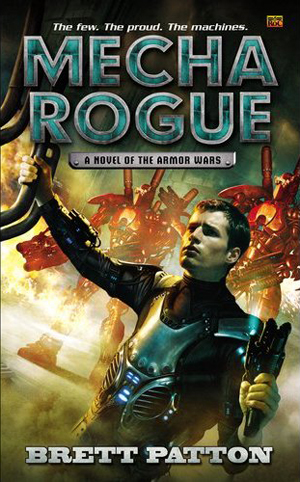
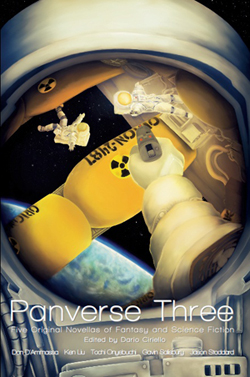
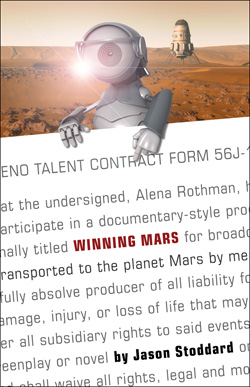
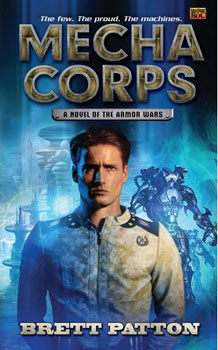
 by Brett Patton. I read a Gundam series awhile back, and the Robotech novels, and Starship Troopers, and Armor. Other science fiction I’ve read has had powered armor in one form or another. They’ve all been good, but Mecha Corps just freakin’ kills it! This book, apparently the start of series called the Armor Wars, is what all mecha fiction should be like.”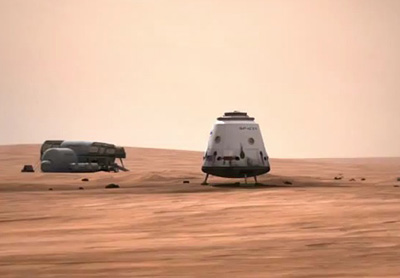
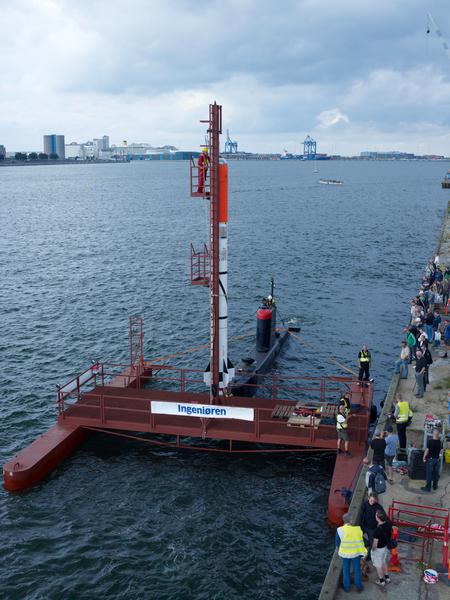


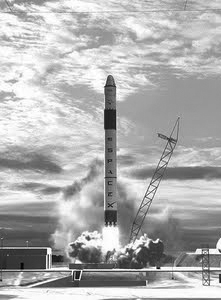
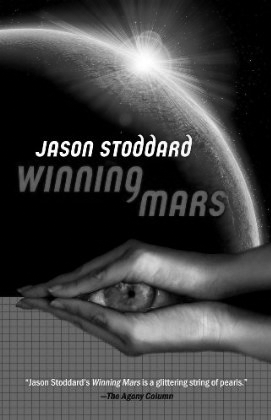
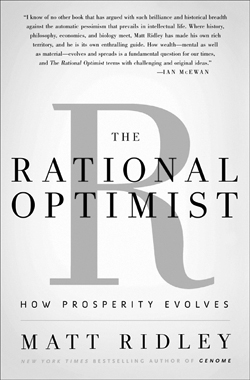

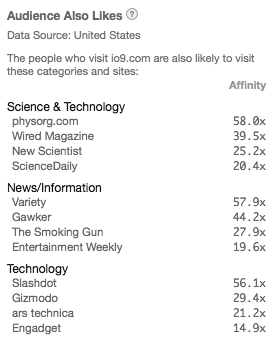

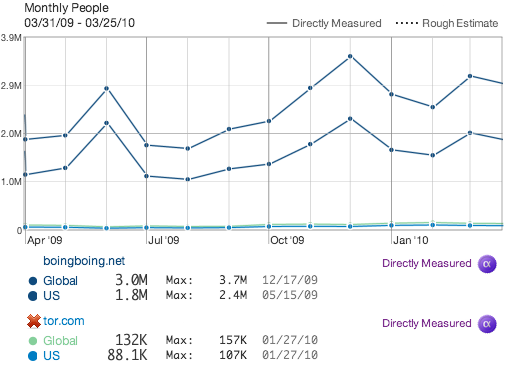
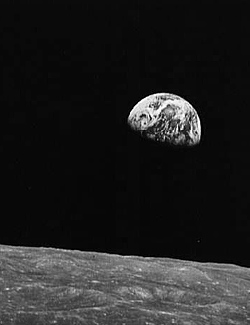
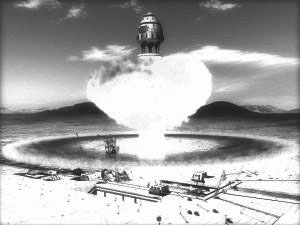

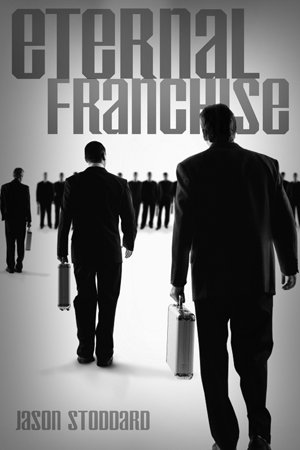

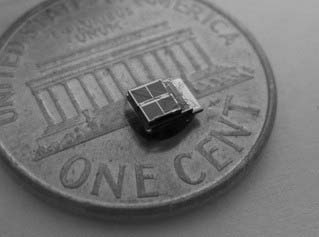
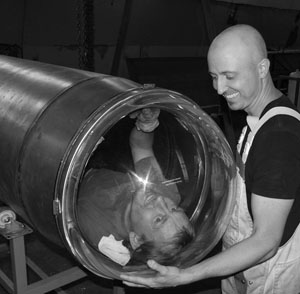
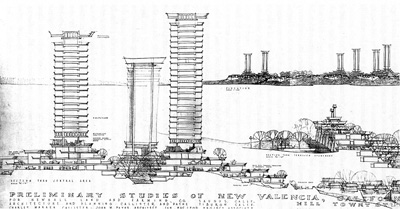


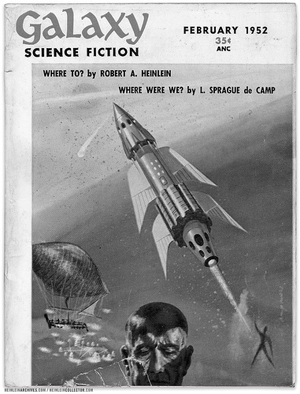
 It’s that time of year again. The frost is in the air, the carolers are out, and everyone’s thoughts turn to Christm–
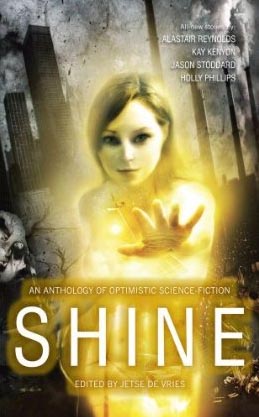 This is one of the most exciting acceptances I’ve had lately, because the Shine ethos aligns so well with my own personal feelings: You know, not only do I think we’ll get through our current crisis–and the next one, and the next–but I think we’ll end up doing better than we ever have in history.
  Patrick’s interview is by far the most interesting one I’ve participated in, because he’s taken the time to read some of each author’s stuff, and tailored the questions–including some really, really tough ones–to the author and their work. Which means I get grilled about social media, creative commons, unusual ways to fund spaceflight, and the like. You might be surprised by some of my answers. Or you might not.
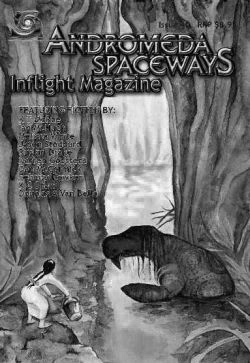 Hey all, just a break from the monotony (?) of Eternal Franchise: my short story “TFT” is out in Andromeda Spaceways In-Flight Magazine #40 (ASIM 40). As you’d expect from
 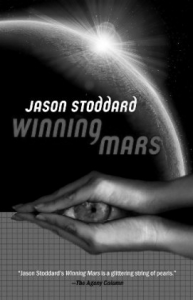 Here are the Amazon links:
 I suspect things will be different next year. With two books out, you’ll see me at signings and cons again. I’ll post up a schedule when I have it solidified, and I hope to meet a few of you there! I’ll be thrilled to sign any of your books.
 So. With that well-covered, I thought I’d throw in my hat on the non-writing space. Specifically, marketing-oriented apps that you may not know about (or, if you do, may be worth more serious consideration.) This list is actually based on using every single one of these tools, and no, I’m not getting paid to recommend them.
 Now, for my two cents:
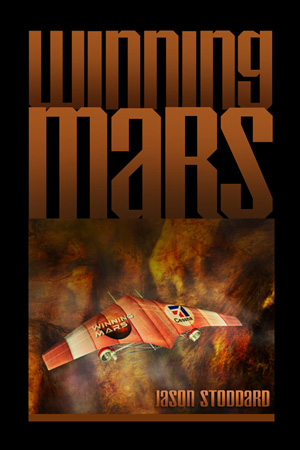 “Wait, didn’t you release Winning Mars under a Creative Commons license a while back? And aren’t you serializing Eternal Franchise right here on the blog?”
 To think that a corporation would voluntarily destroy a middle class (source of most of their income) to replace it with slaves and serfs is really silly. They’d rather see more middle-class. More upper-middle class. More people with more money buying more of their stuff, period.